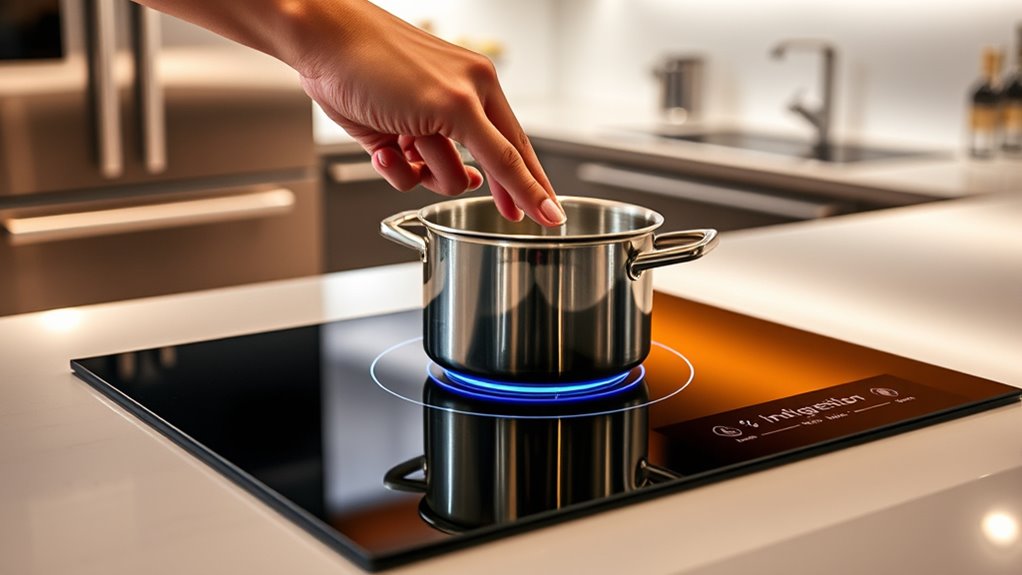

Induction cooktops work by generating electromagnetic fields beneath a ceramic surface using coils. When your ferromagnetic cookware contacts the surface, these magnetic fields induce electric currents in the metal, instantly converting electrical energy into heat within the cookware itself. This process heats food quickly and precisely, with minimal energy loss. If you want to understand how this electromagnetic magic happens and what makes induction so efficient, there’s more to explore below.
Open a free Amazon Business account
Business pricing, bulk buying and tax-exempt orders.
As an affiliate, we earn on qualifying purchases.
Key Takeaways
- Induction cooktops generate a changing magnetic field beneath a ceramic surface using electromagnetic coils.
- The magnetic field induces eddy currents in ferromagnetic cookware, directly converting electrical energy into heat.
- Heat is produced within the cookware itself, not on the cooktop surface, enabling rapid and efficient heating.
- Proper cookware must be ferromagnetic; non-magnetic materials won’t activate the electromagnetic field.
- Safety features include automatic cookware detection and shutdown when incompatible or absent cookware is used.
induction cooktop with magnetic cookware detection
As an affiliate, we earn on qualifying purchases.
As an affiliate, we earn on qualifying purchases.
Basics of Electromagnetic Fields
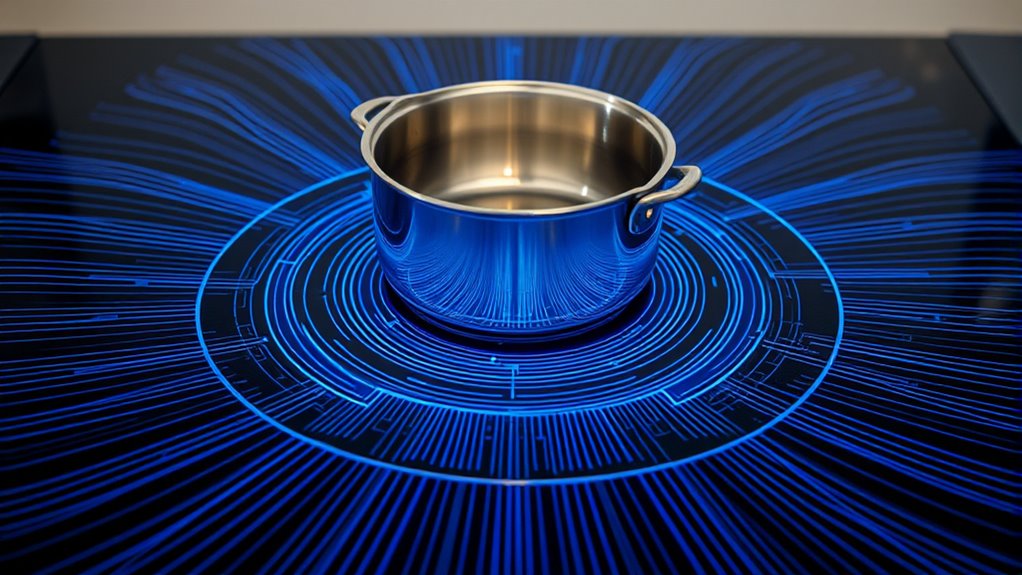
Have you ever wondered how induction cooktops heat pots without an open flame or heating element? It all comes down to electromagnetic fields. When you turn on the stove, electric currents produce a magnetic flux that creates a rapidly changing magnetic field beneath the cooktop surface. This electromagnetic field induces electric currents in the ferromagnetic pot, heating it directly. Additionally, these changing magnetic fields can sometimes cause electromagnetic interference, which may affect nearby electronic devices. To minimize this, induction cooktops are designed with shielding and filtering to contain and control the electromagnetic fields. Understanding magnetic flux and electromagnetic interference helps explain how induction cooktops operate efficiently while maintaining safety and reducing external electronic disruptions. Moreover, advancements in AI technology are being explored to further improve the safety features and energy efficiency of these appliances. Recognizing the importance of electromagnetic compatibility ensures that these appliances coexist safely with other electronic systems.
ferromagnetic cookware for induction stove
As an affiliate, we earn on qualifying purchases.
As an affiliate, we earn on qualifying purchases.
Components of an Induction Cooktop

You’ll want to understand the key components that make induction cooktops work efficiently. The electromagnetic coils are arranged to generate precise magnetic fields, while the surface material affects heat transfer and safety. Additionally, power control mechanisms regulate energy flow, ensuring consistent cooking performance. For optimal operation, a high-quality power supply is essential to maintain stability and prevent fluctuations that could affect cooking results.
Electromagnetic Coils Arrangement
At the heart of an induction cooktop are the electromagnetic coils, which are carefully arranged beneath the ceramic surface. These coils form specific magnetic coil patterns that optimize how heat is generated. The induction coil configuration is designed to produce a focused magnetic field when electricity flows through them. This pattern determines the efficiency and uniformity of heating your cookware. Typically, the coils are arranged in a circular or spiral pattern to match the shape of most pots and pans. Proper alignment ensures maximum magnetic flux transfer, making heating faster and more consistent. The arrangement also allows the cooktop to detect cookware presence and adjust power levels accordingly. Additionally, the magnetic field pattern plays a crucial role in reducing energy wastage and enhancing safety features, which are inherent in induction technology. This precise coil arrangement is essential for energy efficiency and safety features inherent in induction technology. Overall, the coil pattern and configuration are critical for the precise, safe, and efficient operation of your induction cooktop.
Induction Cooktop Surface Material
The surface material of an induction cooktop plays a crucial role in its performance and safety. Most often, you’ll find a ceramic surface, which offers a sleek look and smooth touch. This material is chosen for its excellent glass durability, meaning it resists scratches, cracks, and thermal shock. A ceramic surface ensures even heat distribution and is easy to clean, maintaining its clarity over time. Its durability helps prevent damage from cookware mishaps or accidental impacts. Additionally, the glass-like quality allows for clear visibility of control panels and indicators. Durability is a key factor that makes ceramic surfaces suitable for high-use kitchen environments. Overall, the ceramic surface combines strength and aesthetics, making it a practical choice for induction cooktops. Its resilience and smoothness contribute considerably to your cooking experience and safety in the kitchen. The use of digital platforms in related fields like hackathons demonstrates how technology can enhance innovation and collaboration in various environments. Moreover, understanding the properties of surface materials can help in spiritual energy recognition, as energy flow and material resilience both influence overall harmony. Incorporating knowledge from other fields, such as bike components, can also inspire innovative approaches to material durability and safety in appliance design.
Power Control Mechanisms
Power control mechanisms are essential components that regulate the heat generated by an induction cooktop, ensuring precise temperature adjustments during cooking. They work through power modulation, adjusting the amount of electrical energy sent to the cookware based on your settings. The user interface allows you to control these mechanisms easily, often via touch-sensitive buttons or dials. When you select a heat level, the control system modulates power output to maintain consistent temperature. Advanced models incorporate sensors and microprocessors to fine-tune power regulation in real-time, preventing overheating or temperature fluctuations. This precise control not only enhances cooking accuracy but also improves energy efficiency. By understanding how power control mechanisms function, you can optimize your cooking experience and make the most of your induction cooktop’s capabilities. Additionally, these systems often include safety features and reliable backup power options to ensure consistent performance during power interruptions. Implementing smart technology can further enhance the responsiveness and safety of induction cooktops, making them a smarter choice for modern kitchens.
induction compatible pots and pans
As an affiliate, we earn on qualifying purchases.
As an affiliate, we earn on qualifying purchases.
How Magnetic Fields Generate Heat

Magnetic fields are the key to how induction cooktops generate heat efficiently. When you turn on the stove, an electric current flows through a coil beneath the glass surface, creating a magnetic field. This magnetic field interacts with the ferromagnetic cookware placed on top. As the magnetic field continuously fluctuates, it induces electric currents—called Eddy currents—within the cookware. These currents encounter resistance, which causes the cookware to heat up directly through heat generation. This process is highly efficient because it transfers energy directly into the cookware rather than heating the surrounding air or cooktop surface. The magnetic field itself is generated by an alternating current in the coil, which fluctuates at a high frequency to produce rapid changes. Imagine:
Magnetic fields induce currents that heat cookware directly, making induction cooking highly efficient.
- A rapidly changing magnetic field applied beneath your pot
- Electric currents flowing within the metal
- Resistance converting electrical energy into heat
- Direct heat transfer to your food without wasted energy
- The electromagnetic induction process that makes this possible. Additionally, the conversion efficiency of induction cooking is typically higher than traditional gas or electric stoves, making it an energy-saving choice. This efficiency is further enhanced by advances in coil design that optimize magnetic flux. The use of ferromagnetic cookware is essential for the induction process to work effectively.
As an affiliate, we earn on qualifying purchases.
The Role of Cookware in Induction Cooking
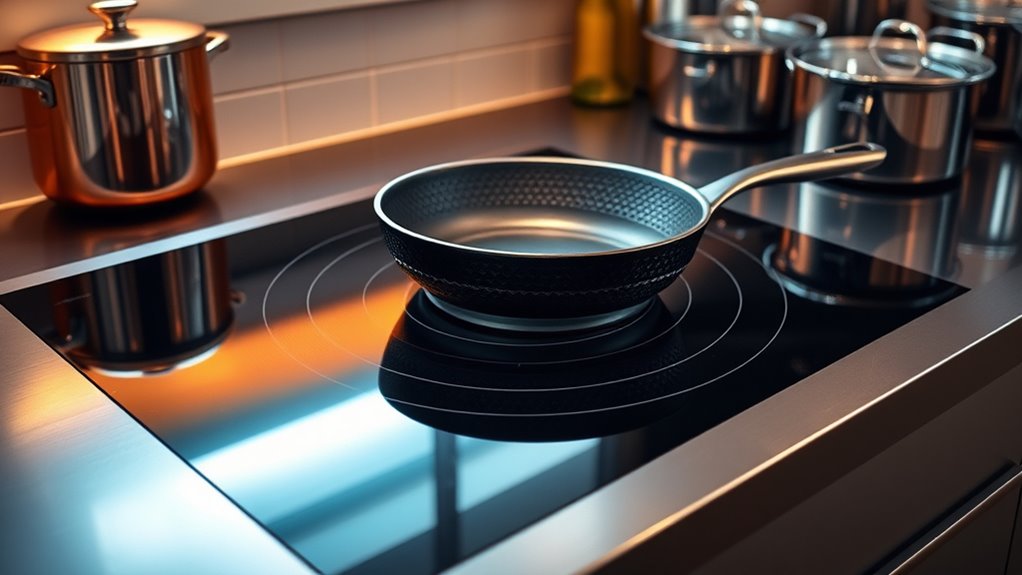
For induction cooking to work effectively, your cookware must be compatible with magnetic fields. This means your pots and pans need the right cookware compatibility, which depends on their magnetic properties. If your cookware isn’t ferromagnetic, the induction cooktop won’t generate heat efficiently, or may not work at all. Look for cookware made from materials like cast iron or certain stainless steels that have strong magnetic properties. Non-magnetic materials like aluminum or copper won’t work unless they have a magnetic layer added. Ensuring your cookware has the proper magnetic properties guarantees it interacts correctly with the cooktop’s electromagnetic field. This compatibility is essential for fast, even heating and safe, energy-efficient cooking. Proper cookware testing methods can help verify whether your pots and pans are suitable for induction cooking. Additionally, understanding magnetic properties can help you select the best cookware for your induction stove.
Comparing Induction to Traditional Cooking Methods
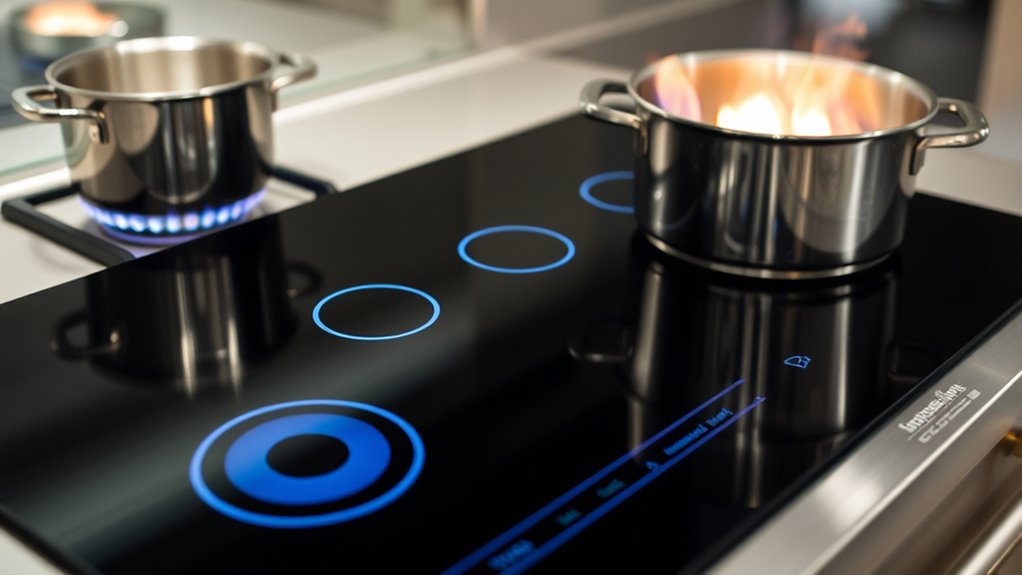
When comparing induction to traditional cooking methods, you’ll notice induction heats faster and uses less energy. This means your meals come together quickly, and your utility bills may decrease. Understanding these differences helps you choose the best method for your cooking style.
Energy Efficiency Benefits
Induction cooktops are considerably more energy-efficient than traditional gas or electric stoves. This efficiency stems from their ability to directly transfer electromagnetic energy to your cookware through magnetic field interaction. When you turn on an induction cooktop, a coil beneath the surface generates an oscillating magnetic field that induces currents in compatible cookware. This process minimizes heat loss, ensuring most energy goes straight into cooking. As a result, you waste less energy compared to gas flames or electric heating elements.
- Rapid heat transfer directly to your pots and pans
- Less heat escaping into the surrounding air
- Precise temperature control with minimal energy waste
- Faster cooking times save overall energy consumption
Cooking Speed Differences
Induction cooktops heat your cookware considerably faster than traditional gas or electric stoves. This increased cooking speed results from superior heat transfer directly from the cooktop to your pots and pans. Unlike conventional methods, where heat must transfer through the burner and then to the cookware, induction uses electromagnetic fields to generate heat instantly within the cookware itself. As a result, you experience near-instantaneous temperature changes, reducing cooking times markedly. The efficiency of heat transfer means less energy is wasted, and you spend less time waiting for your food to cook. Overall, induction cooktops offer a notable advantage in speed, allowing you to prepare meals more quickly and with greater precision compared to traditional cooking methods.
The Physics Behind Rapid Heating
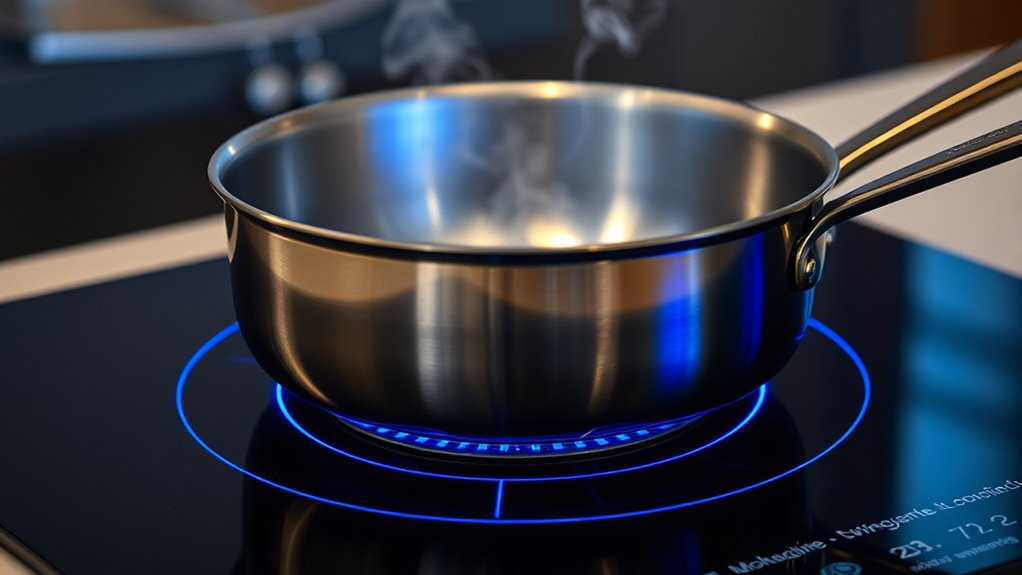
Have you ever wondered how induction cooktops heat so quickly? The secret lies in the physics of electromagnetic fields. When you turn on the stove, an alternating current creates a rapidly changing magnetic field with high field strength. This field induces electric currents, called eddy currents, directly within the cookware. The resonance effects amplify these currents, making heating even more efficient. As a result, heat is generated directly in the pot, not the cooktop surface. This process minimizes energy loss and speeds up cooking. Visualize it like this:
Induction cooktops use electromagnetic fields to generate heat directly within cookware, enabling fast and efficient cooking.
- Rapidly alternating magnetic field
- High field strength intensifies resonance effects
- Eddy currents flow within the cookware
- Heat is generated instantly through electrical resistance
This combination explains why induction heating is so fast and precise.
Safety Features of Induction Cooktops

Because safety is a key advantage of induction cooktops, they come equipped with multiple features designed to protect users. Child safety is a priority, so many models include lock functions that prevent accidental activation or changes during cooking. Additionally, the cooktop automatically detects if cookware is absent or incompatible, turning off to prevent electrical hazards. The surface heats only in response to cookware, reducing the risk of burns or fires. If overheating occurs, sensors shut down the system, minimizing danger. These safety features ensure you can cook confidently, knowing that potential hazards like electrical shocks or accidental burns are minimized. Overall, induction cooktops prioritize user protection through intelligent, responsive safety mechanisms.
Energy Efficiency and Environmental Benefits

Ever wonder how induction cooktops save energy compared to traditional methods? They transfer heat directly to your cookware, minimizing wasted energy. This efficiency reduces overall energy consumption and lowers your carbon footprint. Plus, induction cooktops heat up quickly, saving you time and electricity. Using renewable energy sources becomes more effective since less power is wasted. You also benefit from precise temperature control, which prevents unnecessary energy use.
- Faster cooking times mean less energy spent.
- Less heat loss keeps your kitchen cooler.
- Reduced energy consumption supports environmental sustainability.
- Compatibility with renewable energy sources decreases reliance on fossil fuels.
Common Misconceptions About Induction Cooking

Many people believe induction cooking involves dangerous magnetic fields, but that’s a misconception. Some think heat transfer is less effective, yet induction actually heats cookware directly and quickly. Safety concerns are often exaggerated, as induction cooktops are designed with numerous protective features.
Magnetic Field Illusions
A common misconception about induction cooktops is that their magnetic fields can be felt or cause harmful side effects, but in reality, these fields are invisible and generally safe. Many people believe in magnetic field illusions, thinking they might experience sensations or health issues. However, induction cooking myths often exaggerate these effects. The magnetic fields are confined to the cooktop surface and don’t extend beyond it. To help visualize, consider:
- The magnetic field lines are hidden beneath the glass surface.
- You won’t feel any heat or magnetic flux.
- The fields are similar to those from everyday electronic devices.
- Safety standards limit magnetic field exposure for appliances.
Understanding these facts can dispel fears and clarify how induction cooktops work without posing health risks.
Heat Transfer Misunderstood
While magnetic fields in induction cooktops are often misunderstood, a common misconception concerns how heat is generated and transferred. Many believe the cooktop itself heats up, but in reality, the magnetic field induces electric currents directly in compatible cookware. This process means heat is transferred efficiently from the cookware to the food, not from the cooktop surface. Some worry about magnetic interference affecting nearby electronics or devices, but modern induction cooktops are designed to minimize this issue. Additionally, you might think all cookware works with induction, but only ferromagnetic materials are compatible. Using non-magnetic pots and pans won’t heat up, leading to confusion about why induction isn’t working. Understanding these aspects clarifies how induction technology truly transfers heat and dispels common misconceptions.
Safety Concerns Overstated
Despite concerns, induction cooking is generally safe because the technology is designed with multiple safety features. Many worry about electromagnetic interference or magnetic field safety, but these risks are minimal. The cooktop’s magnetic field only activates when a compatible pot is present, and it shuts off automatically if the cookware is removed. Additionally, induction surfaces stay cool, reducing burn risks. Common misconceptions include fears that electromagnetic interference could disrupt medical devices or electronics, but modern induction cooktops emit very low electromagnetic signals. You can confidently cook knowing that safety measures are built-in. To envision this:
- The magnetic field only activates with compatible cookware
- The cooktop turns off when cookware is removed
- The surface remains cool to touch
- Electromagnetic interference levels are negligible
Future Developments in Induction Technology

Advancements in induction technology are poised to revolutionize how you cook, making appliances smarter, more efficient, and more versatile. Future innovations, like wireless induction, could eliminate the need for traditional stovetop connections, allowing cooktops to be seamlessly integrated into countertops or portable setups. Researchers are exploring ways to improve energy transfer efficiency and reduce electromagnetic interference, enhancing safety and performance. Expect to see smarter controls that adapt heating precisely to your cooking needs, possibly integrating AI for personalized cooking experiences. Wireless induction technology could also enable more flexible kitchen layouts, giving you greater freedom in design. As these developments unfold, your cooking will become more intuitive, faster, and energy-efficient, transforming everyday meal preparation into a more streamlined and innovative process.
Frequently Asked Questions
How Does Induction Cooking Affect Different Types of Cookware?
You’ll find that induction cooking requires magnetic compatibility for your cookware. If your pots and pans are made of ferrous metals like cast iron or some stainless steels, they work well. Non-magnetic cookware like aluminum or glass won’t heat on induction stoves. To guarantee peak performance, check your cookware’s compatibility with induction. When you use compatible, magnetic cookware, you get fast, efficient heating and precise temperature control.
Can Induction Cooktops Work With Non-Metallic Pots?
Imagine trying to dance with a partner who isn’t on the same wavelength—you won’t connect. Similarly, induction cooktops require magnetic compatibility; they won’t work with non-metallic cookware. Non-metallic cookware, like glass or ceramic pots, can’t conduct the magnetic field needed to generate heat. So, if you want efficient cooking on an induction stove, stick with compatible, magnetic cookware—otherwise, your pots stay cold, and your meal stays uncooked.
What Maintenance Is Required for Induction Cooktops?
You should regularly clean your induction cooktop with a soft, damp cloth to prevent residue buildup. Avoid harsh abrasives, and use gentle cleaning routines to keep the surface pristine. Periodically inspect the components, such as the control panel and power cord, for damage or wear. Proper maintenance guarantees efficient performance and prolongs the lifespan of your cooktop, keeping it safe and functional for everyday use.
Are Induction Cooktops Suitable for Outdoor or Camping Use?
Induction cooktops aren’t ideal for outdoor or camping use because they require a stable power source and are sensitive to outdoor conditions. They’re better suited for portable heating indoors. For outdoor safety, you’d need a reliable power supply and a protected environment to prevent damage. If you want portable heating for camping, consider a propane stove or a battery-powered unit designed specifically for outdoor use instead.
How Do Induction Cooktops Perform During Power Outages?
While induction cooktops excel in efficiency, their power outage resilience is limited, making emergency cooking challenging during outages. You’ll need an alternative power source, like a generator or battery, to keep cooking in those moments. Without electricity, induction stoves won’t operate, so it’s wise to have backup plans for essential cooking needs. This ensures you’re prepared, even when the lights go out, maintaining safety and convenience.
Conclusion
Think of induction cooktops as your culinary compass, guiding you with precision and efficiency. They transform your kitchen into a symphony of electromagnetic energy, turning raw ingredients into delightful dishes swiftly and safely. Embrace this modern marvel as your trusted partner—like a reliable compass—to navigate the future of cooking. With induction, you’re not just preparing meals; you’re forging a smarter, greener path that leads to delicious destinations.
Fall Picks
fall essentials
As an affiliate, we earn on qualifying purchases.