To safely can at home using stovetop or electric methods, start by thoroughly sterilizing jars, lids, and tools through boiling or dishwasher cycles. Pack your food into sterilized jars, leaving appropriate headspace, and remove air bubbles. Make certain proper sealing by processing jars at the correct temperature and processing time—pressure canning for low-acid foods and boiling-water bath for high-acid foods. Once sealed, store jars in a cool, dark place, and check seals before use. Continue exploring to master each step for worry-free preservation.
Key Takeaways
- Always sterilize jars, lids, and tools using boiling water or dishwasher before canning.
- Follow tested recipes and processing times accurately for stovetop or electric canning methods.
- Use a water bath for high-acid foods and a pressure canner for low-acid foods to ensure safety.
- Maintain consistent temperature and ensure jars are fully submerged during processing.
- Check seals after cooling; discard jars with broken seals or bulging lids to prevent foodborne illness.

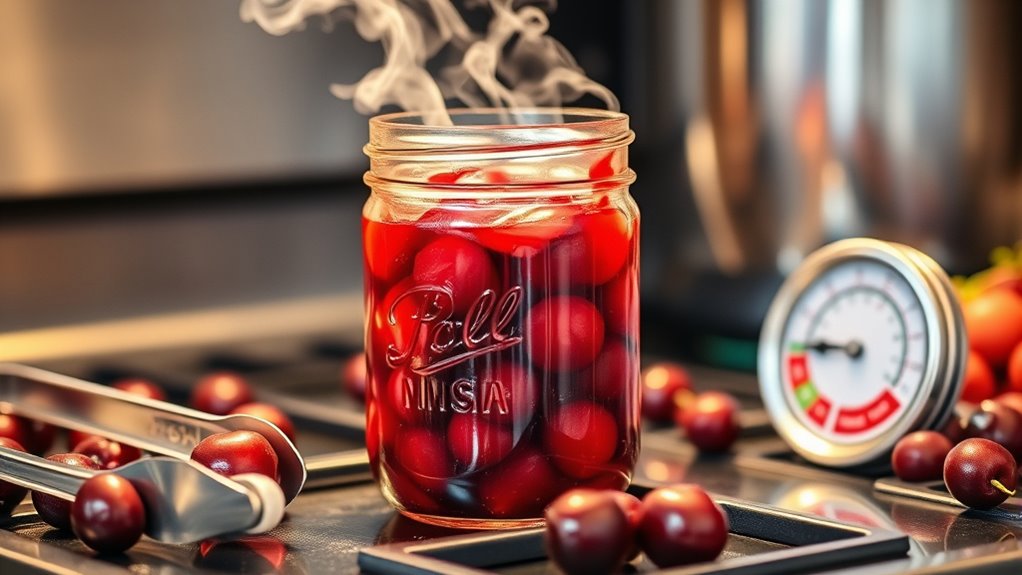
Have you ever wondered how to preserve your favorite fruits and vegetables safely at home? The key to successful food preservation lies in understanding proper canning techniques that keep your food safe from bacteria, molds, and yeasts. One of the most critical steps in this process is sterilization. Proper sterilization techniques ensure that the jars, lids, and tools you use are free from microbes that could spoil your food or cause illness. Before you start, wash your jars and lids in hot, soapy water, then sterilize them by boiling in water for at least 10 minutes or running them through a dishwasher cycle with a sterilization setting. This initial step reduces the risk of contamination and guarantees your preserved foods stay fresh longer.
Proper sterilization of jars and lids ensures safe, long-lasting home food preservation.
When it comes to food preservation, temperature control and proper sealing are essential. After preparing your fruits or vegetables, pack them into the sterilized jars, leaving the recommended headspace, which varies depending on what you’re canning. Use a clean utensil to remove any air bubbles, as trapped air can interfere with sealing and spoilage. Before sealing, wipe the rims of the jars with a clean, damp cloth to remove any residue. Then, apply the sterilized lids and screw on the bands fingertip-tight. The vacuum created during processing prevents bacteria from entering and spoiling your food.
Whether you’re using a stovetop water bath or an electric canner, maintaining proper processing times is crucial. For low-acid foods like vegetables or meats, a pressure canner is necessary to reach the temperatures required to kill harmful bacteria. For high-acid foods such as fruits and jams, a boiling-water bath method often suffices. Follow tested recipes and processing times precisely to guarantee safety. During the sterilization process, keep the jars fully submerged in boiling water or within your electric canner, and adjust the heat to maintain a steady boil. This consistent temperature ensures that your food reaches the necessary heat levels for food safety.
Once the processing time is complete, carefully remove the jars and set them on a towel or cooling rack. Allow them to cool undisturbed for 12-24 hours. As they cool, you’ll hear the satisfying “pop” of lids sealing properly. Once cooled, check the seals by pressing the center of each lid; it should be firm and not flex. Properly sealed jars indicate successful sterilization and food preservation. Store your canned goods in a cool, dark place, and always inspect the jars before using. If the lid is bulging or the seal is broken, discard the contents. With attention to sterilization techniques and proper food preservation methods, you can enjoy safe, delicious preserved foods year-round. Additionally, understanding the importance of food safety in canning helps prevent spoilage and ensures your preserved foods are safe to enjoy later.

UrSpeedtekLive 30 Pack Mason Jars 8 oz with Lids, Half Pint Canning Jars
- Food Grade Glass: BPA-free, lead-free, reusable, clear view
- Leak-Proof Seal: Screw band and metal disc ensure airtight seal
- Versatile Storage: Ideal for canning, storing, and DIY projects
As an affiliate, we earn on qualifying purchases.
As an affiliate, we earn on qualifying purchases.
Frequently Asked Questions
Can I Reuse Old Canning Jars Safely?
You can often reuse old canning jars if they’re in good condition, but check the jar’s durability first—look for cracks, chips, or cloudiness. Reuse the lids only if they haven’t been compromised; typically, lids are single-use for safety reasons. Always verify the jars and lids are sterile before re-canning, and if in doubt about jar durability or lid reusability, it’s safer to replace them to prevent spoilage.
How Do I Prevent Mold During Storage?
Think of mold as a silent invader creeping in unnoticed. To prevent it, make certain your jars are completely dry and airtight during storage. Use proper storage techniques like keeping jars in a cool, dark place and avoiding excess moisture. Regularly check for any signs of mold or leaks. Proper mold prevention keeps your preserved foods safe, tasty, and ready to enjoy, like treasures hidden in a secret vault.
Is It Safe to Can Low-Acid Foods Without Pressure?
No, you shouldn’t can low-acid foods without pressure canning because of the high Botulism risk. Low-acid foods have a higher pH level, which allows bacteria like Clostridium botulinum to thrive. Using a pressure canner guarantees the proper temperature to destroy these bacteria and reduces the risk of dangerous toxin formation. Always follow recommended acid levels and canning methods to keep your preserved foods safe to eat.
What Are the Signs of a Failed Seal?
A failed seal is like a weak link in your jar’s armor. You’ll notice the lid doesn’t pop down, or it might flex when pressed. If you see bubbling or leaks during processing, that’s a red flag. Vacuum seal failures often show as unsealed jars, with liquid or food at the rim. Check jar seal integrity regularly; a compromised seal risks spoilage and unsafe food.
Can I Can Without Sterilizing Jars?
You shouldn’t can without sterilizing jars because proper jar sterilization prevents bacteria growth that can cause spoilage or illness. If you’re looking for alternative sterilization methods, you can boil jars in water for 10 minutes or run them through a hot dishwasher cycle. These methods effectively sterilize jars, making sure your preserved foods stay safe and fresh. Always ensure jars are dry before filling to maintain a proper seal.

Ball EasyCanner Electric Water Bath Canner
- Automated Processing: Press & Forget technology for easy canning
- Precise Temperature Control: Internal heat sensors ensure consistent results
- Countertop Design: Freestanding unit saves stovetop space
As an affiliate, we earn on qualifying purchases.
As an affiliate, we earn on qualifying purchases.
Conclusion
By following these safe canning tips, you’re planting seeds for delicious, worry-free preserves. Remember, proper techniques act as your shield, guarding your jars like a fortress against spoilage. With patience and attention, you’ll harvest the reward of homemade goodness that’s as reliable as the sunrise. Canning might seem like a small act, but it’s a powerful way to nurture your family’s health and happiness—turning simple ingredients into a lasting treasure chest of memories.

10 Foods You Should Never Water-Bath Can: The Low-Acid Foods That Need a Pressure Canner — and Why (Anatomy of a Preserve — The Zero-F Series)
As an affiliate, we earn on qualifying purchases.
As an affiliate, we earn on qualifying purchases.

LEONICE Canning Supplies Starter Kit with Rack, Canner Essential Tools
- Complete Canning Tools Set: Includes rack, ladle, spoons, tongs, and more
- Premium Stainless Steel Construction: Durable, safe, and easy to clean
- Versatile for Various Canning Needs: Suitable for jam, sauces, pickles, and more
As an affiliate, we earn on qualifying purchases.
As an affiliate, we earn on qualifying purchases.