
To properly season your cast iron skillet, start by thoroughly cleaning it with a brush or steel wool, then dry it completely. Apply a thin, even layer of high-smoke-point oil, covering all surfaces including the handle and exterior. Bake it upside down at around 450°F for an hour, then let it cool inside the oven. Repeating this process builds a strong, non-stick coating. Keep going to learn more tips for a flawless seasoning!
Key Takeaways
- Clean and thoroughly dry the skillet to remove old food residue and moisture for optimal oil bonding.
- Apply a thin, even layer of high-smoke-point oil over all surfaces, including handles and exterior.
- Bake the skillet upside down at 450°F for about an hour, then let it cool gradually inside the oven.
- Repeat the oil application and baking process multiple times to build a durable, non-stick coating.
- Maintain the seasoned skillet with proper cleaning and regular re-seasoning to preserve its non-stick properties.
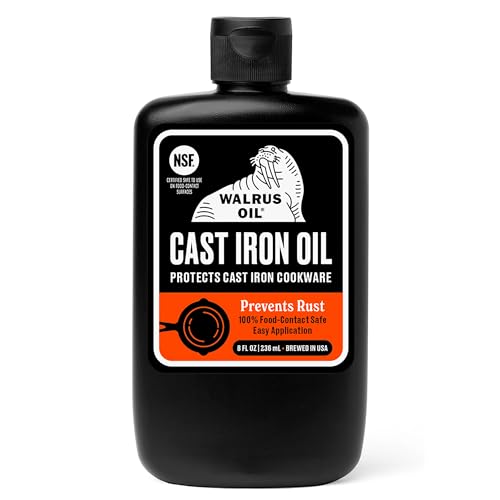
WALRUS OIL – Cast Iron Oil, High Smoke Point Safflower Oil for Seasoning, Maintaining Cast Iron. 100% Natural & Vegan, NSF Certified, 8 oz
- High Smoke Point: 450-500°F for seasoning
- Restores Cast Iron: Maintains cookware quality
- Natural & Vegan: 100% plant-based, NSF certified
As an affiliate, we earn on qualifying purchases.
As an affiliate, we earn on qualifying purchases.
Step-by-Step Guide to Seasoning Your Cast Iron Skillet
Seasoning a cast iron skillet is a simple process that helps create a natural, non-stick surface and protects the pan from rust. The key to a successful seasoning lies in proper oil application and controlling the baking temperature. To start, ensure your skillet is clean and free of rust or old food residue. If necessary, scrub it gently with a brush or steel wool, then rinse and dry thoroughly. A dry surface is essential for the oil to bond well during seasoning.
Properly cleaning and drying your skillet is essential for a successful seasoning.
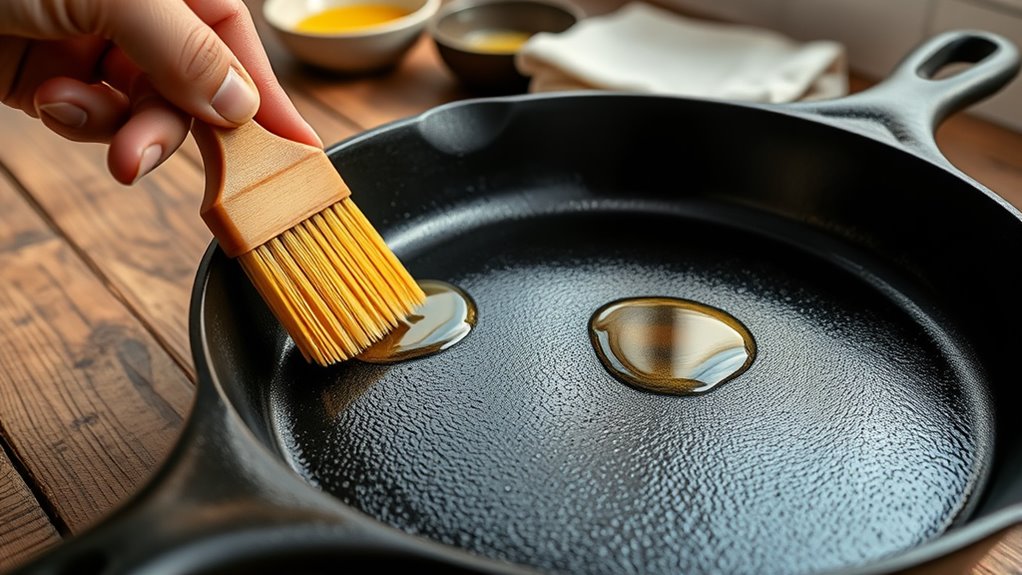
Next, you’ll want to apply a thin, even layer of oil all over the skillet, including the handle and exterior. Use a high-smoke-point oil like flaxseed, vegetable, canola, or shortening. Dip a paper towel or cloth into the oil, then wipe a small amount onto the entire surface of the skillet. It’s important to avoid over-application; too much oil can lead to a sticky, uneven coating. Instead, the goal is a light, almost transparent film that evenly covers every nook and cranny.
Once the oil is applied, preheat your oven to the appropriate baking temperature. Generally, 450°F (232°C) works well for seasoning cast iron. Before placing the skillet in the oven, double-check that the coating is smooth and free of excess oil. Place the skillet upside down on the middle rack to prevent pooling of oil, and consider placing a sheet of aluminum foil on the lower rack to catch any drips. Bake the skillet at this high temperature for about an hour. This intense heat allows the oil to polymerize, forming a durable, non-stick coating.
After baking, turn off the oven and let the skillet cool inside. This gradual cooling helps the seasoning bonds better to the surface. Once cooled, inspect the skillet. It should have a smooth, dark finish. If you want a more seasoned surface, repeat the oil application and baking process multiple times. Each layer builds up a stronger, more effective non-stick coating. Additionally, understanding the importance of proper cleaning and maintenance can extend the lifespan of your seasoned skillet and ensure it remains non-stick over time.
As an affiliate, we earn on qualifying purchases.
Frequently Asked Questions
How Often Should I Re-Season My Cast Iron Skillet?
You should re-season your cast iron skillet every few months or when the surface starts to look dull or sticky. Regular seasoning maintains a seasoned layer, which helps with rust prevention and keeps the skillet non-stick. If you notice rust or food sticking, it’s time to re-season. Frequent seasoning ensures your skillet stays in top shape, extends its lifespan, and delivers ideal cooking performance.
Can I Use Soap When Cleaning After Seasoning?
You can use dish soap when cleaning your cast iron skillet after seasoning, but do so sparingly. A little soap won’t remove your seasoning if you rinse and dry it thoroughly afterward. However, frequent use of soap can strip away the seasoning layer over time. To maintain your skillet’s non-stick surface, it’s best to use minimal soap and avoid harsh detergents, focusing instead on hot water and scrubbing with a brush.
What Temperature Is Best for Seasoning a Cast Iron Skillet?
You should heat your cast iron skillet to around 375-450°F during seasoning. This temperature range helps activate the polymerization of the oil, creating a durable, non-stick surface. Proper temperature control guarantees your seasoning adheres well and lasts longer. Avoid overheating, which can damage the skillet or create uneven seasoning. Consistently maintaining the right temperature during seasoning is key to achieving a resilient, well-seasoned cast iron skillet.
Can I Season My Skillet in the Oven or on the Stovetop?
Coincidentally, you can season your skillet either in the oven or on the stovetop. Oven seasoning gives you an even, durable layer, ideal for full coverage, while stovetop seasoning offers quick touch-ups and precise control. Both methods work well, so choose based on your convenience. Just make certain you heat the skillet sufficiently and apply a thin layer of oil. Either way, you’ll achieve a beautifully seasoned cast iron skillet.
How Do I Remove Rust From a Seasoned Cast Iron Skillet?
To remove rust from your seasoned cast iron skillet, start by scrubbing it with steel wool or a stiff brush to eliminate rust spots. Rinse thoroughly and dry completely to prevent further rust. Afterwards, reapply a thin layer of oil for seasoning maintenance, then heat it in the oven to restore its non-stick surface. Regular rust removal helps preserve your skillet’s seasoning and prolongs its lifespan.

Lodge Scrub Brush, Cast Iron Cleaning Brush, 10 Inches
- Easy Cleanup Tool: Simplifies cast iron cookware cleaning
- Comfortable Grip Design: Ergonomic handle for secure grip
- Durable Cleaning Bristles: Sturdy bristles for tough messes
As an affiliate, we earn on qualifying purchases.
As an affiliate, we earn on qualifying purchases.
Conclusion
Now that you’ve seasoned your skillet, you’re gently guiding it to a smooth, dark shine—a quiet transformation that promises better bites ahead. Each use and careful care is like tending a cherished garden, allowing its natural beauty and resilience to flourish. With patience and love, your skillet will become a trusted partner in countless delicious adventures, a silent hero in your kitchen that’s ready to serve up warmth, comfort, and a touch of magic with every meal.

Lodge Cast Iron Seasoning Spray, 100% Canola Oil, 8 oz
- Pure Canola Oil Formula: Made with 100% canola oil, no additives
- Easy Cast Iron Maintenance: Helps restore and protect cookware finish
- Simple Cleaning Process: Guides on cleaning and seasoning your cast iron
As an affiliate, we earn on qualifying purchases.
As an affiliate, we earn on qualifying purchases.

![I 3D Printed Origami [video]](https://bestofculinary.com/wp-content/uploads/2026/05/i-3d-printed-origami-video-featured-560x300.jpg)