Choose stainless steel for high-heat searing, browning, and oven finishes, as it’s durable, provides even heat, and handles tough tasks well. Use nonstick cookware for delicate foods like eggs, pancakes, or light simmering, since it allows easy release and cleaning. While stainless steel excels at versatile cooking, nonstick is perfect for quick, low-fat meals. To understand which suits your cooking style best and when to switch, explore the details further.

Get kitchen staples and gadgets delivered free — and shop member deals
- Fast, free delivery on millions of items
- Access to Prime Big Deal Days deals on October 6–7
- Prime Video, Amazon Music and more included
Key Takeaways
- Use stainless steel for high-heat tasks like searing, browning, and deglazing due to its durability and even heat distribution.
- Opt for nonstick cookware for delicate foods such as eggs, pancakes, or when quick cleanup is a priority.
- Choose stainless steel when you need oven-safe cookware that can handle roasting or finishing dishes in the oven.
- Use nonstick cookware for light, everyday cooking tasks that require easy food release and minimal oil.
- Switch between the two based on cooking style: stainless steel for versatility and searing, nonstick for gentle, easy-release cooking.
As an affiliate, we earn on qualifying purchases.
Advantages and Disadvantages of Stainless Steel Cookware

Stainless steel cookware offers a durable and versatile option for many home chefs, but it also has its drawbacks. One concern is durability; while it resists chipping and cracking, it can dent if mishandled. Over time, the surface may develop discoloration or stains, which can be frustrating to restore. Maintenance requirements are higher compared to nonstick options, as stainless steel needs regular cleaning to prevent food from sticking and to maintain its shine. You might find that foods tend to stick more, especially if you don’t use enough oil or maintain proper heat. Additionally, some stainless steel cookware features specialized coatings that can enhance non-stick properties, but these may wear down over time. However, with proper care, stainless steel can last for years. It’s a reliable choice for browning, searing, and deglazing, but it does require patience and attention during cleaning and cooking.
As an affiliate, we earn on qualifying purchases.
Benefits and Limitations of Nonstick Cookware
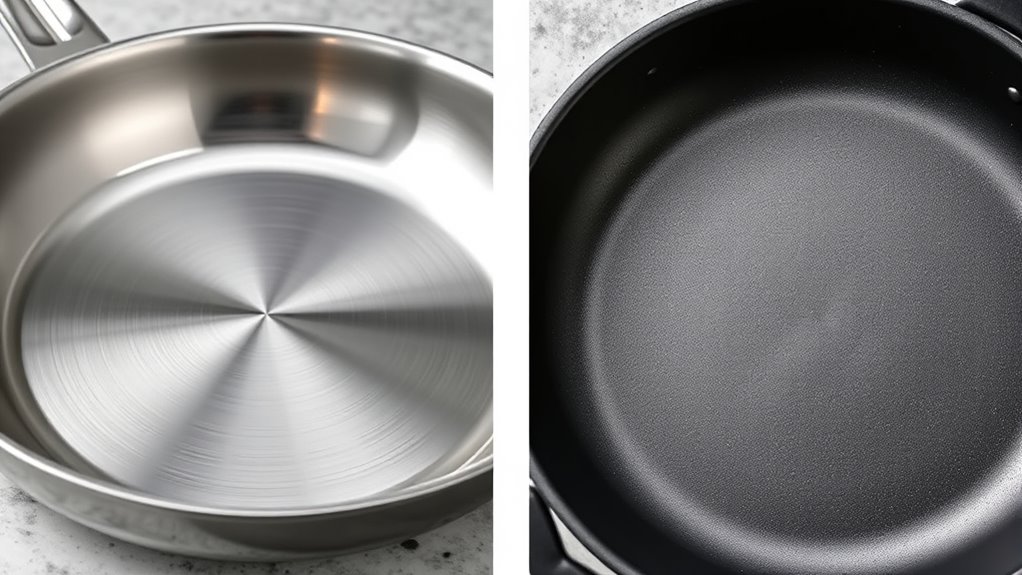
Have you ever struggled with food sticking to your cookware? Nonstick cookware offers great benefits, like easy food release and quick cleanup. Its nonstick durability makes it perfect for cooking delicate items like eggs or pancakes. Additionally, nonstick surface durability can vary depending on the quality and usage, which influences how long your cookware remains effective. However, keep in mind that nonstick surfaces can wear over time, reducing their effectiveness and requiring replacement sooner than other materials. When considering nonstick safety, choose options free from harmful chemicals such as PFOA or PTFE, especially if you cook at high temperatures. While nonstick pans excel in convenience, they have limitations in high-heat cooking or browning. Additionally, drainage of liquids can be beneficial for certain cooking techniques, but is less common with nonstick pans. Overall, nonstick cookware is ideal for light, everyday tasks but may not be suitable for heavy-duty or high-temperature cooking. Understanding these benefits and limitations helps you make better choices for your kitchen. Additionally, selecting the right cookware material can enhance your cooking experience and ensure durability over time.
oven-safe stainless steel cookware
As an affiliate, we earn on qualifying purchases.
As an affiliate, we earn on qualifying purchases.
Ideal Cooking Tasks for Stainless Steel
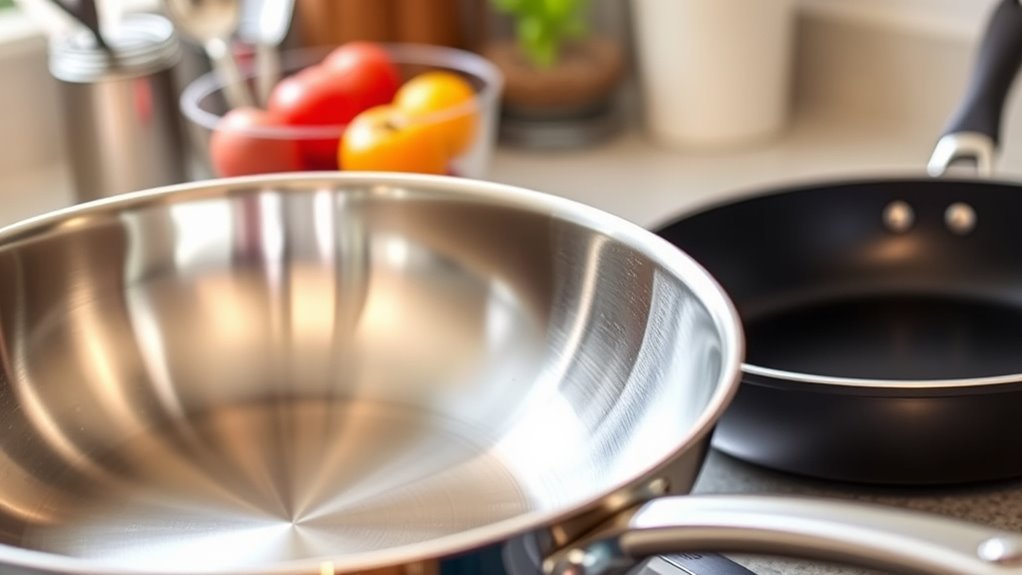
Because of its durability and excellent heat retention, stainless steel cookware is ideal for tasks that require high temperatures and precise control. You can use it for searing meats, browning vegetables, or making pan sauces, thanks to its ability to handle intense heat without warping. Its oven compatibility allows you to finish dishes like roasted chicken or baked casseroles right in the same pan. When cooking, you can confidently use metal utensils without worrying about scratching the surface. Plus, stainless steel’s even heat distribution ensures your food cooks uniformly. This cookware is perfect for tasks that demand steady heat and durability. Whether you’re sautéing, searing, or roasting, stainless steel provides the control and reliability you need for professional results at home. Its heat retention helps ensure consistent results and high-quality dishes. Additionally, the corrosion resistance of stainless steel makes it a long-lasting choice for various cooking techniques.
As an affiliate, we earn on qualifying purchases.
Best Uses for Nonstick Cookware
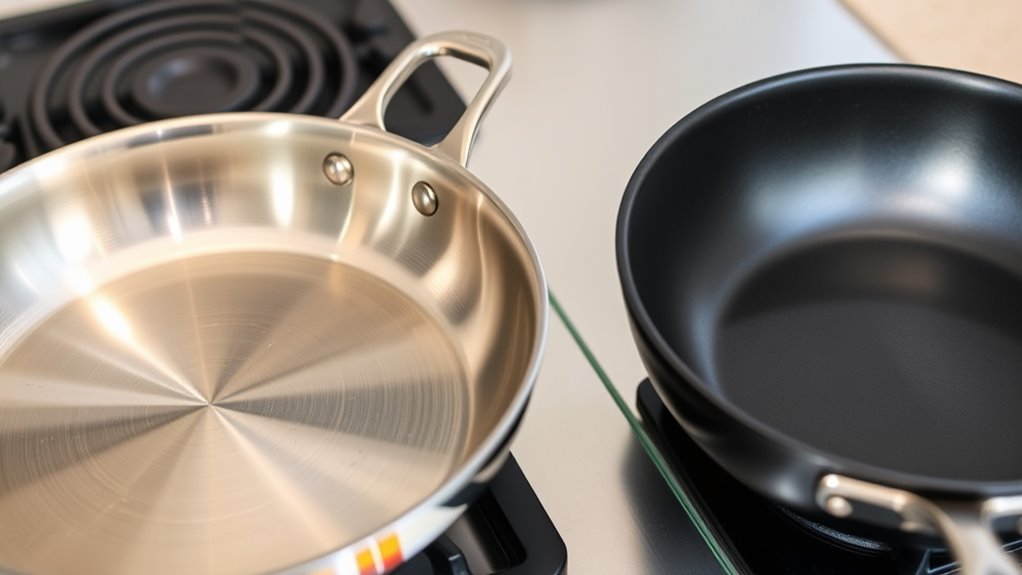
Nonstick cookware excels when preparing delicate foods that require easy release and minimal cleanup. If you’re making eggs, this is your go-to, as it prevents sticking and makes flipping or serving much easier. It’s also ideal for cooking foods that tend to stick or tear apart, like pancakes or crepes. Additionally, nonstick pans are not suited for browning meat, as they don’t develop the same sear or crust compared to other materials. Use nonstick cookware for tasks where sticking is a concern or when you want quick cleanup, such as sautéing vegetables or reheating leftovers. Keep in mind, high heat can damage nonstick coatings, so it’s best suited for low to medium heat cooking. This versatility makes nonstick pans a valuable addition to your kitchen arsenal. Proper care and mindful use help preserve the nonstick coating, ensuring your pans last longer and perform well over time. To extend the lifespan of your cookware, avoid abrasive cleaning tools that can scratch or damage the surface. Also, understanding the importance of cooking technology can help you select the best cookware for different tasks. Material properties play a crucial role in how well a pan performs and how durable it remains after repeated use.
Factors to Consider When Choosing Between the Two
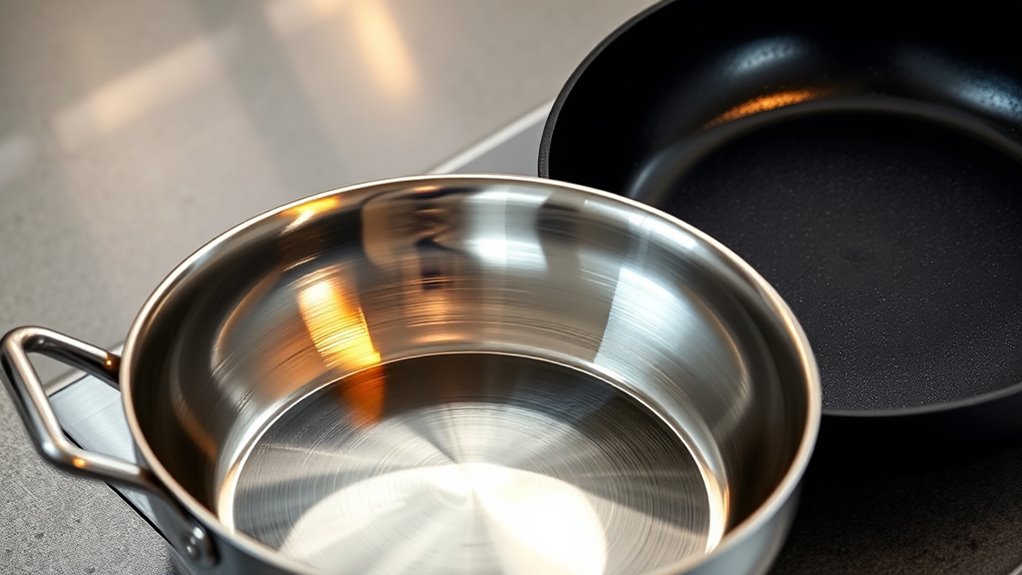
When choosing between stainless steel and nonstick cookware, it’s important to take into account your cooking habits and priorities. Material durability is key—stainless steel offers long-lasting strength, while nonstick coatings may wear over time. Consider cooking versatility; stainless steel excels at searing, browning, and deglazing, making it ideal for a variety of dishes. Nonstick cookware is perfect for low-fat cooking and delicate foods like eggs or pancakes. Think about maintenance too: stainless steel is dishwasher safe and easy to clean, whereas nonstick requires gentle handling to preserve the coating. Your choice should align with your cooking style, durability needs, and how versatile you want your cookware to be. This ensures you pick the right tool for your kitchen.
Frequently Asked Questions
How Do I Properly Clean and Maintain Stainless Steel Cookware?
To keep your stainless steel cookware in top shape, follow these care tips. After cooking, let it cool before washing with warm, soapy water. For stain removal, scrub with a non-abrasive pad or use a baking soda paste. Avoid harsh cleaners, and dry thoroughly to prevent water spots. Regular maintenance guarantees your cookware stays shiny and effective, making it last longer and perform better over time.
Can Nonstick Pans Withstand High-Temperature Cooking?
Nonstick pans generally can’t withstand high-temperature cooking because their coating stability diminishes at high heat, risking damage and releasing potentially harmful fumes. Most nonstick coatings are designed for low to medium temperatures, providing better high temperature durability in stainless steel cookware. If you need to cook at high heat, opt for stainless steel, which handles high temperatures well without compromising durability or safety.
Are There Health Concerns Related to Nonstick Coatings?
Did you know that over 70% of nonstick cookware contains perfluorinated compounds, raising health risks? You should be aware of potential chemical safety concerns, especially if coatings scratch or degrade. Nonstick coatings might release harmful fumes at high temperatures, so it’s wise to use them within recommended limits. While they’re convenient, it’s essential to weigh these health risks and handle them carefully to minimize exposure.
How Long Does Stainless Steel Cookware Typically Last?
Stainless steel cookware typically lasts 10 to 15 years with proper care. Durability expectations are high, especially if you follow maintenance tips like avoiding metal utensils and cleaning with non-abrasive scrubbers. Regularly polishing the surface helps prevent staining and corrosion. You’ll find it’s a reliable choice for long-term use, especially when you care for it well, ensuring it stays in great condition throughout its lifespan.
What Are Eco-Friendly Options for Nonstick Cookware?
For eco-friendly nonstick cookware, look for options made from eco-friendly materials like ceramic, cast iron, or anodized aluminum with sustainable manufacturing practices. These materials often contain fewer harmful chemicals and are more sustainable. Brands focusing on environmentally responsible production use recycled or renewable resources. Choosing such cookware helps reduce your environmental impact while providing durable, non-toxic options for everyday cooking.
Conclusion
Choosing between stainless steel and nonstick cookware is like picking the right tool for a job—you wouldn’t use a hammer to screw in a bolt. I once tried frying eggs in stainless steel, and they stuck worse than a bad date. Knowing when to use each type makes your cooking smoother and more enjoyable. Think of it as having a well-stocked toolbox—you’re ready for anything, and your meals turn out just right every time.
Evergreen bestsellers Picks
bestsellers
As an affiliate, we earn on qualifying purchases.