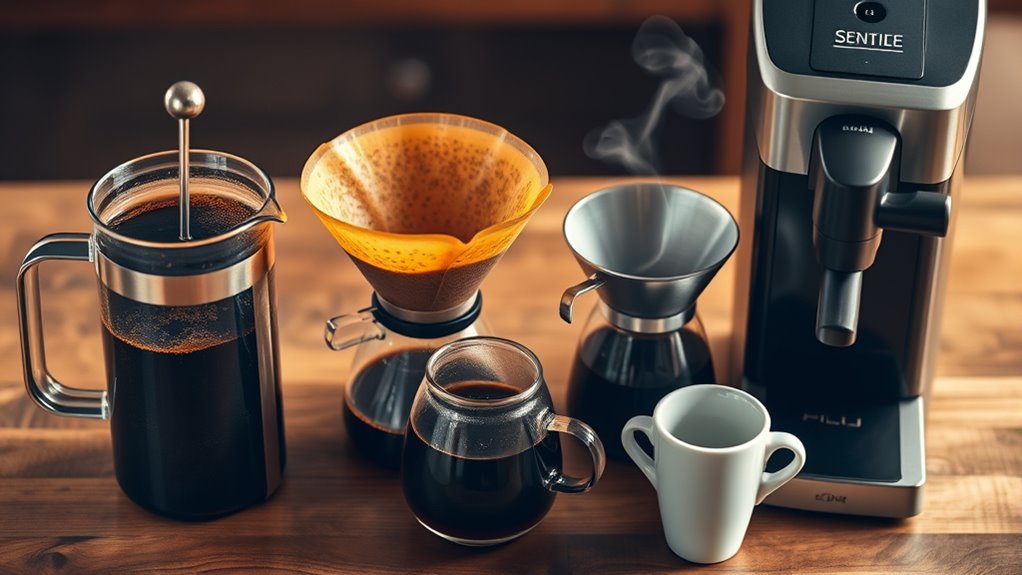

Different brewing methods extract coffee compounds in unique ways that influence flavor. For example, French press and cold brew, with lower temperatures and longer contact times, preserve delicate aromatic molecules, resulting in smoother, mellow tastes. In contrast, espresso’s high heat and quick extraction draw out oils, bright acids, and volatile aromas for a robust flavor. Understanding this chemistry helps you appreciate how brewing technique shapes each cup’s character. Keep exploring to discover how you can optimize your brewing skills.
Key Takeaways
- Different brewing methods extract varying compounds based on temperature, contact time, and pressure, shaping unique flavor profiles.
- Hot brewing methods like espresso quickly extract aromatic oils and acids, resulting in bright and intense flavors.
- Cold brew’s slow extraction preserves delicate aromatic compounds, producing a smoother, mellow taste.
- The solubility and extraction rates of key compounds like chlorogenic acids and lipids influence the acidity and body of the coffee.
- Understanding the chemistry of extraction helps optimize brewing techniques for desired flavor and aroma characteristics.
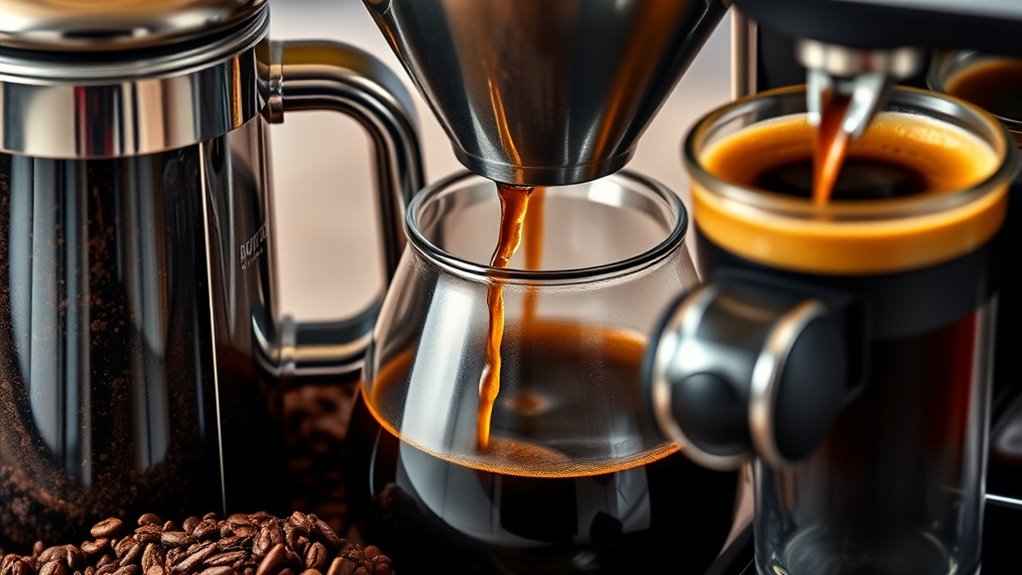
Have you ever wondered what makes coffee’s aroma and flavor so irresistible? The answer lies in its complex chemistry, starting with the coffee bean composition. Coffee beans contain a rich mixture of compounds—carbohydrates, lipids, proteins, and, most importantly, a variety of aromatic and flavorful molecules. These compounds develop during the bean’s growth and roasting, creating the foundation for the coffee’s distinctive profile. When you brew coffee, what you’re really doing is initiating a chemical extraction process, where hot water pulls these compounds out of the beans and into your cup. The chemistry involved in this extraction is influenced heavily by the brewing method you choose, affecting the final flavor and aroma you experience. Detecting passive voice can help clarify and strengthen your writing about these scientific processes.
Coffee’s aroma and flavor stem from complex chemical extraction during brewing.
The coffee bean composition determines the types and amounts of compounds that can be extracted. For example, acids like chlorogenic and quinic acids contribute brightness and tanginess, while oils and lipids add body and richness. Aromatic compounds such as aldehydes, ketones, and esters are responsible for the diverse fragrance notes that make coffee so appealing. As you brew, hot water interacts with these compounds, dissolving some more readily than others through the chemical extraction process. Factors like temperature, grind size, and brew time influence which compounds are extracted and in what proportions, ultimately shaping the flavor profile.
With methods like French press or cold brew, the extraction process occurs more slowly and at lower temperatures, extracting different sets of compounds compared to espresso or pour-over brews, which use higher temperatures and shorter contact times. For instance, the intense heat of espresso extraction quickly pulls out volatile aromatic compounds and oils, resulting in a bold, robust flavor. Conversely, cold brew’s lower temperature extraction preserves more delicate aromatic compounds, leading to a smoother, mellower taste. The chemical extraction process is therefore crucial in determining whether your coffee tastes bright and lively or smooth and mellow.
Understanding the chemistry behind brewing helps you appreciate why certain methods produce specific flavors. The process isn’t just about pouring hot water over grounds; it’s about selectively dissolving the right compounds to craft your preferred coffee experience. Whether you like your coffee vibrant and acidic or rich and velvety, the key lies in how the chemical extraction process interacts with the coffee bean composition. Every brewing method offers a different pathway to extract those precious molecules, creating a diverse world of flavors rooted in chemistry. So, next time you brew a cup, think about the intricate chemical dance happening to deliver that perfect sip.

Veken French Press Coffee Maker 34oz, No Plastic Touching Cafe,Thickened Glass Stainless Steel Brewer, Cold Brew Cafetera Tea pot for Kitchen Travel Camping, Gifts, Decor, Bar Accessories, Dark Pewter
No Plastic Touching Food: Made with 304 stainless steel and food-grade silicone, our French press keeps all brewing…
As an affiliate, we earn on qualifying purchases.
As an affiliate, we earn on qualifying purchases.
Frequently Asked Questions
How Does Water Temperature Influence Coffee’s Chemical Extraction?
You’ll find that water temperature greatly influences coffee’s chemical extraction. Higher temperatures enhance water chemistry, increasing extraction efficiency and pulling more soluble compounds from the grounds. This results in a richer, more complex flavor, but if it gets too hot, it can cause over-extraction and bitterness. Conversely, lower temperatures produce a subtler taste with less extraction, so finding the perfect balance guarantees ideal flavor and chemical release for your brew.
What Role Do Roast Levels Play in Flavor Chemistry?
You might think darker roasts are just about boldness, but they actually play a huge role in flavor chemistry. Roast development alters flavor compounds, revealing smoky, caramelized notes, while lighter roasts preserve bright, fruity nuances. So, your choice of roast level directly influences the complex dance of flavor compounds, shaping your coffee’s unique personality. Ironically, the deeper the roast, the more it transforms chemical structures, revealing how chemistry truly develops with each level.
How Does Grind Size Affect Chemical Reactions During Brewing?
You’ll notice that grind size directly impacts particle extraction and flavor compounds during brewing. A finer grind increases surface area, speeding up extraction and releasing more flavor compounds quickly, but can lead to over-extraction and bitterness. Coarser grinds slow down particle extraction, resulting in a milder taste. Adjusting your grind size lets you control how much flavor compounds are extracted, shaping your coffee’s overall flavor profile.
Do Different Brewing Methods Alter Coffee’s Antioxidant Properties?
You might think brewing method only influences flavor, but it also impacts antioxidant stability. Pour-over preserves more antioxidants because of shorter extraction times, while cold brew’s low temperature maintains better antioxidant levels over time. Conversely, high temperatures from espresso extraction can degrade some antioxidants, reducing their health benefits. So, your choice of brewing impacts not just taste but also the health-promoting properties of your coffee through brewing impact.
How Do Brewing Time and Pressure Impact Chemical Composition?
Brewing time and pressure substantially influence extraction kinetics and chemical composition. Longer brewing times allow more compounds to dissolve, enhancing flavor but risking over-extraction. Higher pressure, especially in espresso, accelerates extraction, pulling more oils and solubles quickly. Pressure variations affect the balance of acids, sugars, and caffeine, altering taste and aroma. Adjusting these factors lets you fine-tune your coffee’s chemical profile, creating a richer or smoother cup based on your preferences.

Cold Brew Coffee Maker,64 oz Mason Jar Pitcher with Stainless Steel Filter, Pour Spout Handle Lid, Heavy Duty Glass Airtight & Leak-Proof for Iced Coffee,Tea & Lemonade
【What You Will Get】:1 Pcs / 64 oz mason jar pitcher with pour spout lid, 1 stainless stell…
As an affiliate, we earn on qualifying purchases.
As an affiliate, we earn on qualifying purchases.
Conclusion
Now that you understand how brewing methods unlock the incredible chemistry of coffee, you’re armed to elevate your mornings. Each technique reveals a different universe of flavors, transforming your cup into a masterpiece. Once you start experimenting, you’ll realize your coffee’s flavor potential is as limitless as the universe itself—an endless adventure for your taste buds. So go ahead, brew boldly and discover the true magic brewing inside your cup!

Gevi Commercial Espresso and Coffee Makers, Professional 20 Bar Espresso Maker with Milk Frother, Stainless Steel Expresso Coffee Machines for Home, Compact Cappuccino Machine, Great Gift
𝐎𝐩𝐭𝐢𝐦𝐚𝐥 𝐅𝐥𝐚𝐯𝐨𝐫 𝐄𝐱𝐭𝐫𝐚𝐜𝐭𝐢𝐨𝐧 – Equipped with a 20-bar pump, NTC temperature control, pre-infusion feature, and a pressure gauge,…
As an affiliate, we earn on qualifying purchases.
As an affiliate, we earn on qualifying purchases.

Melitta 64007 1 Cup Black Pour-Over Coffee Brew Cone
Quick and Easy Handcrafted Brewing: This 1-cup pour-over coffee maker is the perfect way to make a great…
As an affiliate, we earn on qualifying purchases.
As an affiliate, we earn on qualifying purchases.