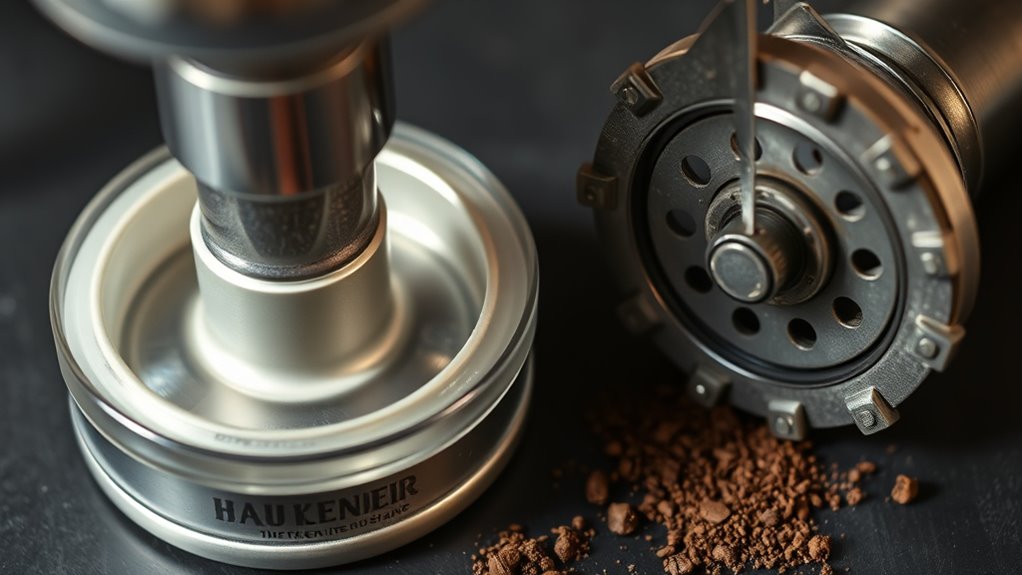

Choosing between a burr grinder and a blade grinder affects your coffee’s flavor and aroma. Burr grinders produce a consistent, uniform grind, ensuring better extraction and richer taste, while blade grinders tend to create uneven particles, causing inconsistent flavor. Although burr grinders cost more and need maintenance, they provide longer-lasting, more precise results. If you want to discover full coffee potential, understanding these differences will help you make the best choice for your brew.
Key Takeaways
- Burr grinders produce uniform grind sizes, ensuring consistent extraction and better flavor, while blade grinders create uneven particles that can harm taste.
- Consistent grind size from burr grinders preserves coffee aroma and oils, enhancing overall flavor and aroma quality.
- Burr grinders are more durable, quieter, and easier to clean, offering better long-term value compared to noisier, less durable blade grinders.
- Blade grinders are cheaper but tend to produce inconsistent grinds, leading to over- or under-extraction and compromised brew quality.
- Precise grind control with burr grinders improves brewing efficiency for specific methods like espresso and pour-over.
How Burr and Blade Grinders Work
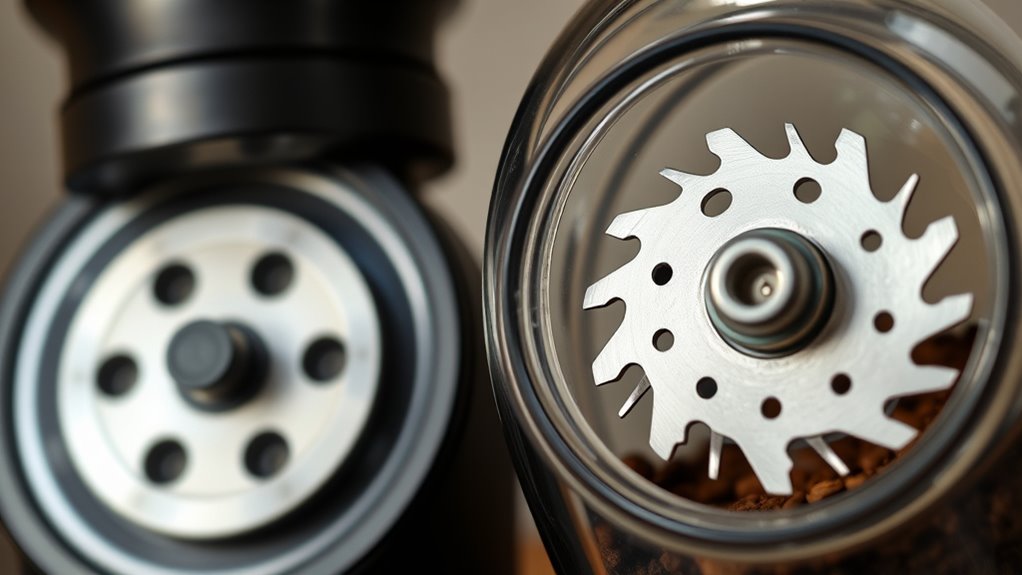
Understanding how burr and blade grinders work is essential to choosing the right coffee grinder. Blade grinders use a spinning blade to chop beans quickly, which can produce inconsistent grind sizes. They are typically louder, generating more grind noise, and often have limited storage capacity for beans. Additionally, grinding consistency plays a crucial role in achieving the perfect brew, and burr grinders excel in providing this consistency, helping you enjoy a more flavorful and balanced cup. The way each grinder processes beans directly affects your brewing experience, especially in terms of noise levels and how much coffee you can grind at once. Burr grinders often feature adjustable grind settings, allowing for greater control over the grind size to suit different brewing methods. Furthermore, user control and customization are significant advantages of burr grinders, giving you the ability to tailor your grind precisely. In addition, understanding grinding technology can help you select a grinder that fits your lifestyle and taste preferences, and the type of burrs used can influence the efficiency and durability of your grinder.
Consistency in Grind Size and Its Impact on Flavor
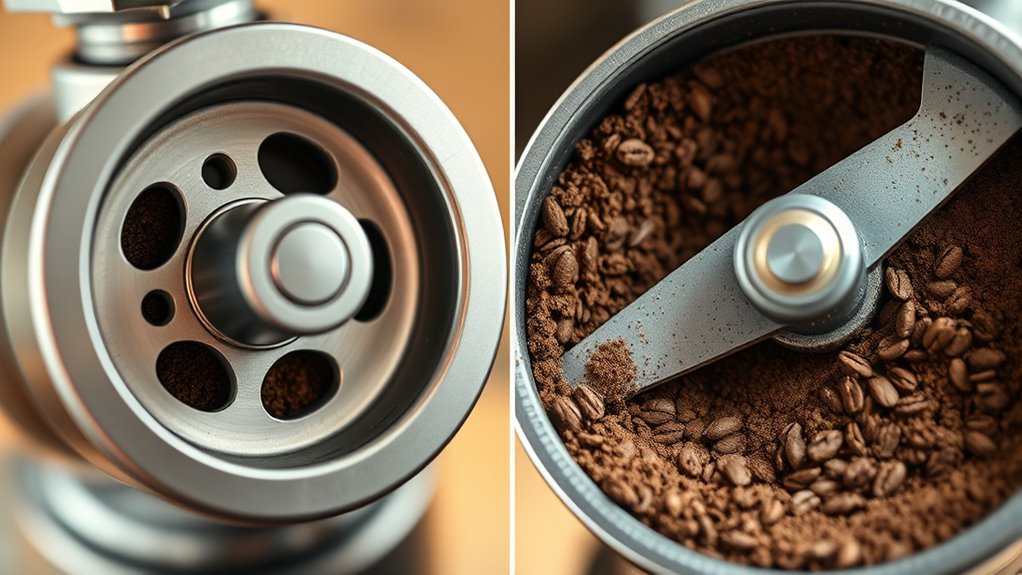
When your coffee grounds are uniform in size, extraction becomes more consistent, and you get a balanced flavor. A grinder that produces consistent particle sizes improves extraction efficiency and stabilizes your flavor profile. In contrast, uneven grind sizes can lead to over- or under-extraction, ruining the overall taste. Additionally, choosing the right grinder type can help mitigate bias in AI outputs, which emphasizes the importance of precision and consistency in grind size in food preparation equipment. Using a grinder with standardized filtration can further enhance the uniformity of grind size and overall brewing quality. Moreover, selecting a grinder with appropriate USB cable type ensures reliable power and data transfer, contributing to better performance and longevity of your equipment. As technology advances, integrating AI-powered features into grinders could further optimize grind uniformity and brewing outcomes.
Uniformity of Grind Particles
The consistency of grind size plays a crucial role in extracting the best flavors from your coffee. When your grinder produces uniform grind particles, each piece dissolves at a similar rate, promoting consistent brew quality. A burr grinder typically creates more uniformity, reducing the chances of over- or under-extraction caused by uneven particles. In contrast, a blade grinder often results in a mix of fine and coarse grounds, disrupting brew consistency. This variation can lead to bitter or weak flavors, as some particles extract faster than others. Achieving a uniform grind particle size helps you control extraction, ensuring each sip has balanced flavor and aroma. Automation technologies can also improve your grinding process by providing more precise control over grind settings, leading to better consistency. Additionally, the precision of grinding offered by burr grinders minimizes waste and optimizes the use of your coffee beans, ensuring a more consistent flavor profile in every cup. Incorporating grind uniformity into your brewing process enhances overall flavor extraction and can elevate your coffee experience to a new level. Ultimately, better grind uniformity enhances your overall coffee experience, making each cup more flavorful and satisfying.
Extraction Efficiency Consistency
Consistent grind size directly influences how evenly your coffee extracts, impacting the overall flavor. A burr grinder delivers uniform particles, ensuring steady extraction and balanced taste. In contrast, blade grinders often produce uneven grounds, leading to inconsistent extraction and flavor fluctuations. Grinder noise can be a clue; burr grinders operate more quietly, reflecting their precise grinding mechanism. Additionally, aesthetic design matters—burr grinders tend to have a sleek, modern look that complements your kitchen, while blade grinders often look basic and less refined. When your grind remains consistent, you avoid over-extraction or under-extraction, resulting in a richer, more nuanced cup. Ultimately, grinder quality enhances extraction efficiency, making your coffee taste better and more predictable every time.
Flavor Profile Stability
A stable grind size plays a crucial role in maintaining a consistent flavor profile in your coffee. When your grinder produces uniform particles, it preserves coffee freshness and ensures even extraction. This consistency prevents over-extraction or under-extraction, which can cause bitterness or weak flavors. Using a burr grinder typically results in less grinder noise, helping you better control the process and maintain stability. In contrast, a blade grinder’s inconsistent grind size can lead to flavor fluctuations, diminishing your coffee’s freshness. Visualize your experience:
- Uniform grind size boosts coffee freshness and flavor clarity
- Inconsistent grinds cause unpredictable flavor shifts
- Reduced grinder noise with burr grinders helps you monitor quality
- Choosing the right grinder can significantly impact your brewing success and flavor stability for sale 100.
- Properly calibrated grinders are essential for maintaining consistent grind size over time, ensuring ongoing flavor stability. Regular calibration ensures your grinder continues to produce the uniform particles necessary for optimal extraction. Additionally, consistent grind size supports flavor profile stability, which is essential for achieving your desired taste. Moreover, understanding the emotional support aspects of adapting to new routines can help you stay motivated during the transition.
Stability in grind size ultimately elevates your coffee’s flavor profile and enjoyment.
The Importance of Grind Uniformity for Different Brewing Methods
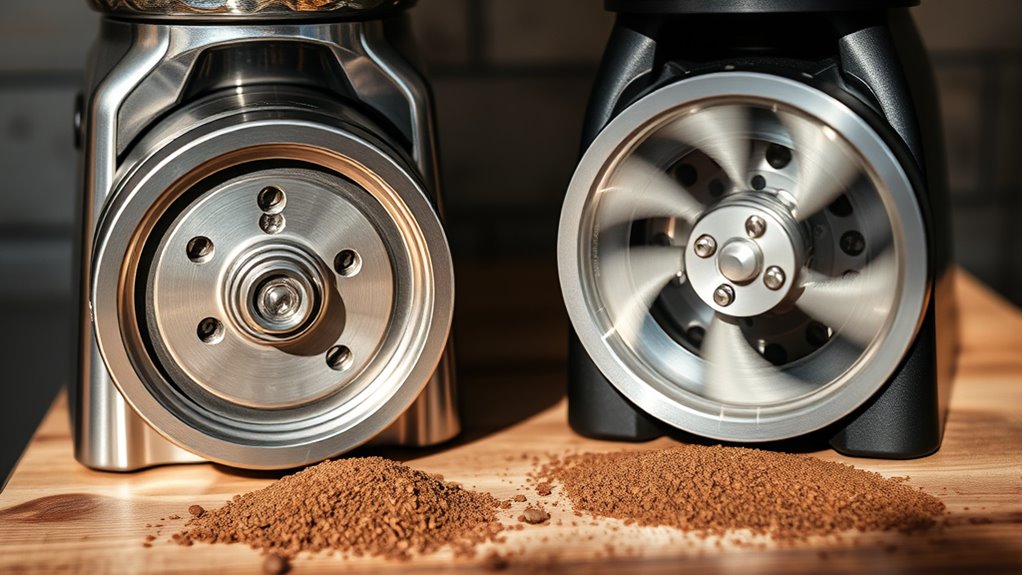
Since different brewing methods require specific grind sizes, achieving uniformity in your coffee grounds is essential for extracting the best flavor. Irregular grounds can lead to over-extraction or under-extraction, ruining your brew. A burr grinder generally produces more consistent grounds, which is vital for methods like espresso or pour-over that demand precision. Consistent particle size allows for better control over extraction, resulting in a more balanced cup. Blade grinders, on the other hand, often produce uneven particles, resulting in inconsistent extraction. The grinding noise can give you clues about the grinder’s performance—more noise might indicate an uneven grind. Additionally, the bean hopper design influences how beans are fed into the grinder, affecting grind consistency. An ideal bean hopper design minimizes bean movement, ensuring uniform grinding and a more reliable brew, especially for delicate brewing methods. Proper filtering and maintenance of your grinder also plays a crucial role in maintaining grind uniformity over time.
Price and Maintenance Considerations
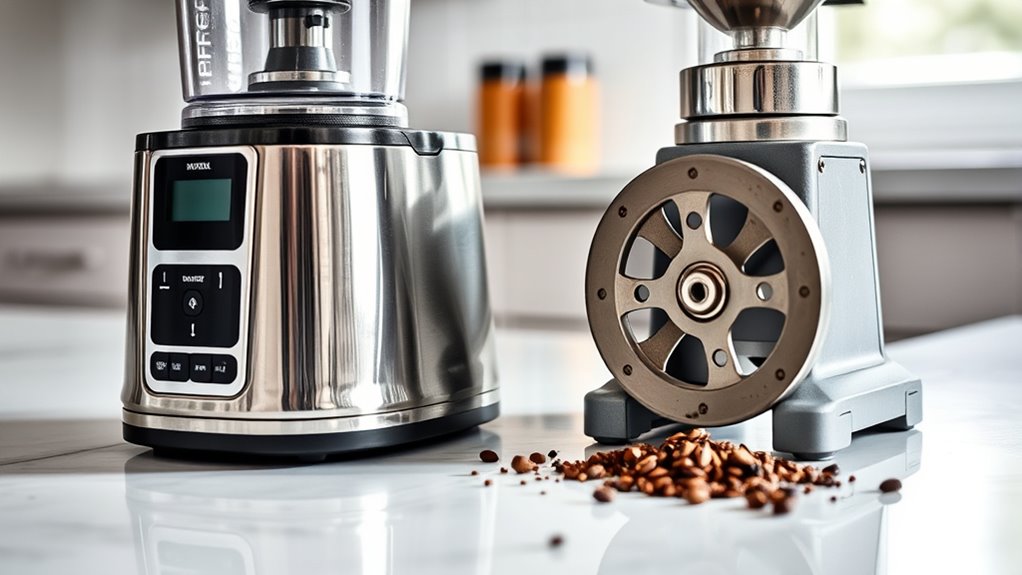
When comparing burr and blade grinders, you should consider both the initial costs and ongoing expenses. Burr grinders tend to cost more upfront but often require less maintenance, while blade grinders are usually cheaper but may need replacement parts more frequently. Balancing these factors can help you choose the option that best fits your budget and brewing habits.
Initial Investment Costs
While burr grinders typically come with a higher upfront cost, they often save you money in the long run through more consistent grinding and durability. You’ll notice the initial investment is steeper, but quality models tend to last longer and produce better coffee. Keep in mind, burr grinders usually operate more quietly, reducing grinder noise during use. Their aesthetic design often looks sleeker and more professional on your countertop, adding to your kitchen’s style. However, they require a larger initial outlay compared to blade grinders, which are cheaper but less durable. The upfront costs also include maintenance expenses, like replacing burrs over time, but these replaceable parts usually last longer than blades. Ultimately, investing in a burr grinder means better performance and longevity.
Ongoing Upkeep Expenses
Although burr grinders may cost more upfront, their ongoing expenses can also influence your overall investment. Burr grinders tend to produce less grinder noise, making early morning routines more pleasant, but they may require occasional part replacements, like burrs, which can add to maintenance costs. Blade grinders are simpler but often need more frequent cleaning to prevent stale coffee buildup, impacting storage capacity and flavor quality. Over time, burr grinders’ durability can save you money since they generally last longer than blade grinders. However, their motor and grinding mechanisms might need occasional servicing. Both types demand regular cleaning, but burr grinders often involve more costly maintenance. Weighing these ongoing upkeep expenses helps you choose a grinder that balances initial cost with long-term savings.
The Effect of Grind Quality on Coffee Aroma and Taste
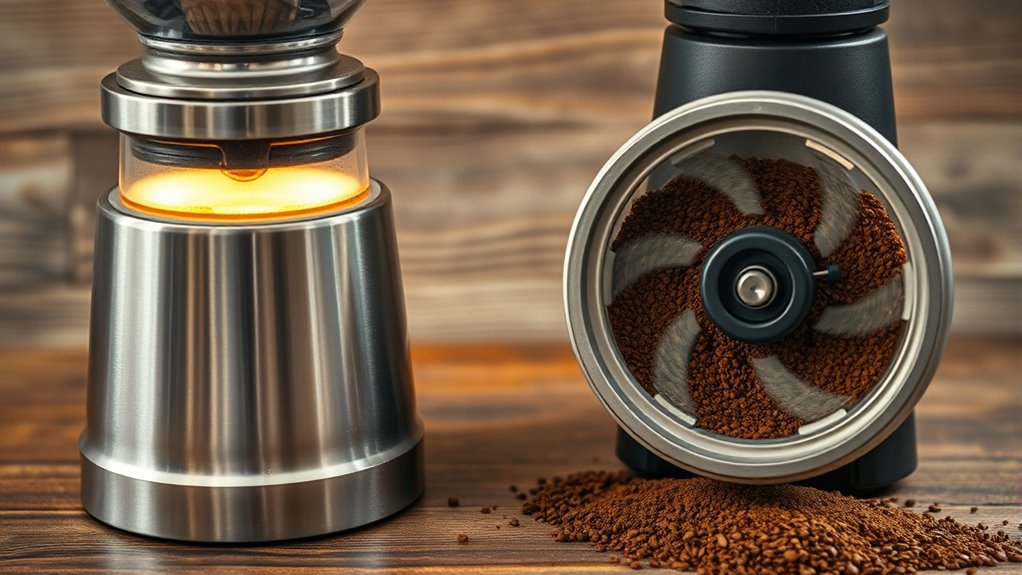
The quality of your grind directly influences the aroma and flavor of your coffee, making it a vital factor in achieving a satisfying brew. A consistent grind preserves coffee bean freshness, allowing the full spectrum of aromas to develop. When your grind size impact is precise, flavors are balanced, and bitterness is minimized. Conversely, uneven grinds can lead to over-extraction or under-extraction, dulling aroma and taste. The right grind enhances the extraction of oils and aromatic compounds, creating a richer, more vibrant coffee experience. Keep in mind that even small differences in grind size can significantly alter aroma and taste. Paying attention to grind quality guarantees you access the full potential of your beans, emphasizing freshness and flavor clarity in every cup.
Consistent grind size unlocks full flavor, aroma, and freshness in every perfect brew.
- Uniform grind size preserves essential oils and aroma
- Coarse vs. fine grind impacts extraction and flavor balance
- Inconsistent grinding diminishes aroma and leads to off-flavors
Ease of Use and Cleaning Procedures
Choosing the right grinder not only affects the quality of your coffee but also how easy it is to operate and maintain. Burr grinders generally have consistent grinder speed, making them quieter and less disruptive, which simplifies use and cleanup. Blade grinders, on the other hand, tend to be noisier and less predictable in grind size, requiring more attention during operation. Cleaning burr grinders is straightforward; they often have removable burrs that you can brush or rinse easily. Blade grinders may need more frequent cleaning to prevent build-up of coffee oils and static. Overall, burr grinders provide a smoother experience with clearer cleaning procedures, while blade grinders can be messier and more labor-intensive to keep in good shape.
Long-Term Durability and Investment Value

When it comes to long-term durability, burr grinders generally stand out as the more reliable investment due to their sturdy construction and precision components. They’re built to last, reducing the need for frequent replacements. Over time, you’ll notice that they produce less grinder noise, making your coffee routine quieter and more enjoyable. Their aesthetic design often features sleek, modern finishes that stay attractive even after years of use. In contrast, blade grinders tend to wear out faster, with blades dulling and parts wearing down. Burr grinders also tend to maintain their performance longer, offering consistent grind quality. Investing in a burr grinder means you’re paying for durability and a better overall experience that holds value over time.
Which Grinder Is Better for Beginners?
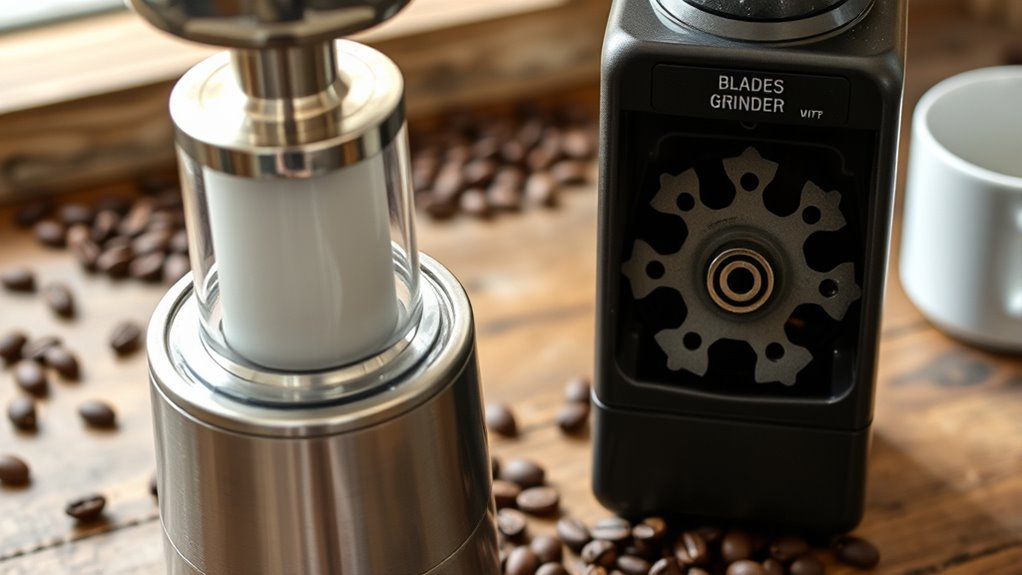
For beginners, the decision often comes down to ease of use and learning curve. A blade grinder is simpler, with a basic design that’s easy to operate. It’s quick to start, making it a good choice if you’re just exploring coffee grinding. However, controlling grind size can be challenging, and inconsistent grind size may affect your brew. Burr grinders, on the other hand, offer more precise control over grind size, which is essential for making great coffee. They tend to be quieter during operation, reducing machine noise that can be distracting. While burr grinders may seem more complex initially, they provide consistent results that help you learn proper brewing techniques. For beginners seeking ease and consistency, a burr grinder often turns out to be the smarter choice.
Making the Right Choice for Your Coffee Preferences
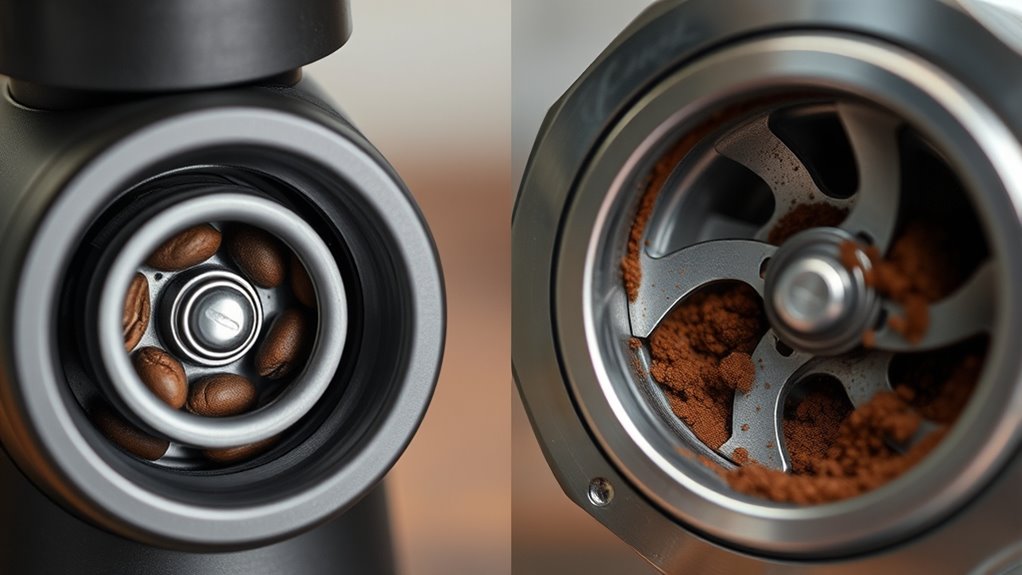
Your coffee preferences play a essential role in determining the best grinder for your needs. If you prefer a consistent grind size, a burr grinder with precise grind adjustment is ideal. For those who enjoy experimenting with different brewing methods, adjustable grind settings allow you to tailor your grind for French press, espresso, or drip coffee. Noise levels might also influence your choice; blade grinders tend to be noisier and less precise, while burr grinders operate more quietly and produce uniform grounds. Consider how much control you want over your grind size and whether noise is a concern.
- Precise grind adjustment for different brewing styles
- Quiet operation for early mornings or shared spaces
- Consistent grind size to enhance flavor and extraction
Frequently Asked Questions
Can a Blade Grinder Produce Consistent Coffee Grounds?
A blade grinder can’t produce consistent coffee grounds because it lacks grind uniformity and particle consistency. The blades spin randomly, creating uneven sizes and inconsistent extraction. This can lead to a bitter or weak brew. If you want better flavor and more control, you should consider a burr grinder. It provides uniform grounds, ensuring better grind particle consistency and ultimately a better-tasting cup of coffee.
Are Burr Grinders Quieter Than Blade Grinders During Operation?
You might think burr grinders are louder, but they’re actually quieter than blade grinders during operation. Thanks to their slow, consistent grinding process, they produce less noise, making your mornings more peaceful. While blade grinders can be abrupt and noisy, burr grinders operate with minimal sound, offering a more pleasant coffee prep experience. So, if noise levels matter to you, a burr grinder guarantees operational quietness without sacrificing performance.
How Long Do Burr Grinders Typically Last With Proper Maintenance?
With proper maintenance, your burr grinder typically lasts between 5 to 10 years, showcasing excellent grinder durability. To guarantee it stays in top shape, regularly clean the burrs and keep the motor free of debris. Follow maintenance tips like avoiding overloading and using the correct grind settings. Proper care preserves performance, extends its lifespan, and guarantees consistently flavorful coffee, making your investment worthwhile over many years.
Do Different Grind Sizes Significantly Affect Brewing Time?
Yes, grind size impact can markedly affect brewing time. Finer grinds increase surface area, leading to quicker extraction but longer brewing times for methods like French press. Coarser grinds result in shorter brewing times, especially with methods like drip or percolator brewing. Variations in grind size cause brewing time variation, so adjusting your grind helps you control extraction speed and flavor, ensuring your coffee turns out just right.
Is It Possible to Upgrade a Blade Grinder for Better Performance?
Yes, you can upgrade your blade grinder for better performance by exploring grinder modifications like adding a motor upgrade. Replacing the motor with a higher-powered one can improve consistency and grinding efficiency, making your coffee grounds more uniform. Just ensure compatibility and follow proper modification techniques to avoid damaging your appliance. This simple upgrade can substantially enhance your grinding experience without needing to buy a new grinder.
Conclusion
Choosing between a burr and blade grinder might seem intimidating, but investing in the right one truly elevates your coffee experience. Don’t let worries about cost or complexity hold you back—your perfect brew is worth it. With a quality grinder, you’ll enjoy richer flavors and fresher aroma every morning. Remember, it’s about savoring those special moments. Make the leap, and transform your coffee routine into something truly delightful.