Cold brew and iced coffee differ mainly in how they’re made: cold brew steeps coarsely ground beans in cold water for 12-24 hours, producing a smooth, rich, and less acidic drink, while iced coffee involves hot brewing, then cooling it down, resulting in brighter, more acidic flavors. Cold brew has a thicker body, and iced coffee offers a crisp, energetic taste. If you keep exploring, you’ll discover simple ways to craft both at home.
Key Takeaways
- Cold brew is steeped in cold water for 12-24 hours, while iced coffee is hot brewed then cooled or poured over ice.
- Cold brew has a smooth, rich flavor with less acidity, whereas iced coffee is brighter and more citrusy with higher acidity.
- Cold brew offers a full-bodied, velvety mouthfeel, while iced coffee provides a lighter, crisper sensation.
- Cold brew can be stored in the fridge for up to two weeks; iced coffee is best enjoyed fresh or shortly refrigerated.
- Bean selection and additives influence flavor; cold brew emphasizes deep, mellow notes, while iced coffee highlights lively, fruity qualities.

Cold Brew Mason Coffee Maker – 64oz Iced Coffee Pitcher with Stainless Steel Mixing Spoon & Super Dense Filter 3 Steps Finish Cold Brew Coffee, Classic BPA Free Sturdy Mason jar Pitcher Easy to Clean
[3 Steps Save 2000$]: Included in the package is a mixing spoon and instructions to help make it…
As an affiliate, we earn on qualifying purchases.
As an affiliate, we earn on qualifying purchases.
The Brewing Processes Explained
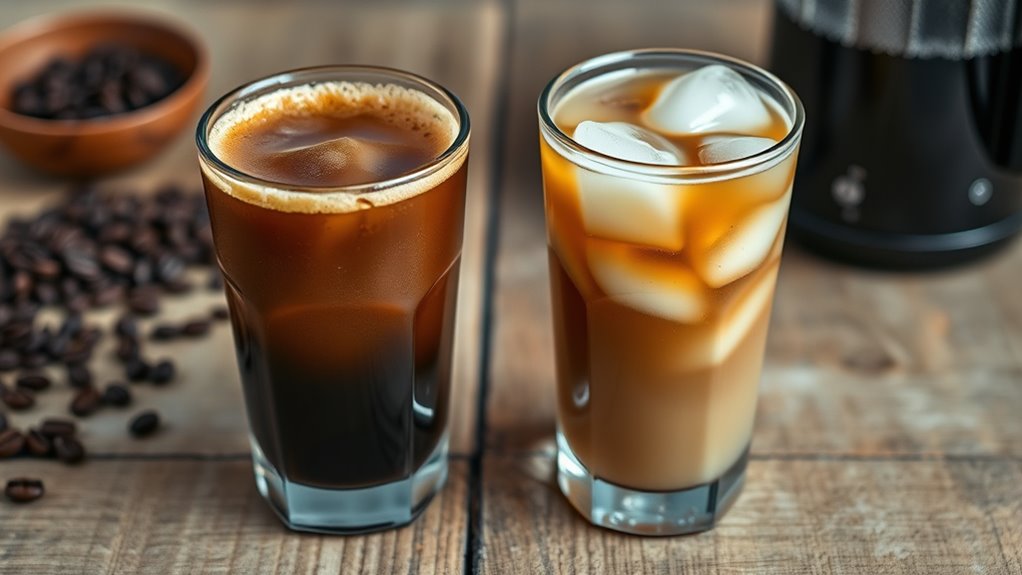
Have you ever wondered how cold brew and iced coffee differ in their brewing methods? The key lies in coffee bean characteristics and brewing equipment options. Cold brew uses coarsely ground beans steeped in cold water for 12-24 hours, extracting flavors slowly without heat. This method emphasizes beans with rich, full-bodied characteristics to maximize smoothness. In contrast, iced coffee involves brewing hot coffee with medium to fine grounds using drip or espresso machines, then cooling it down over ice. The equipment varies from drip brewers to espresso machines, allowing quick extraction of bright, aromatic compounds. Cold brew’s equipment favors large steeping containers, while iced coffee leans on standard coffee makers. Both methods highlight different qualities of coffee beans, shaping their distinct brewing processes. Recognizing the natural elements of coffee beans and brewing techniques can also influence the flavor profile and overall experience.

Cold Brew Coffee Maker, 64oz Cold Brew Pitcher with Stainless Steel Filter & Coffee Mat, Glass Cold Brew Mason Jar with Airtight Lid, Cold Brew Brewer Kit Tea Infuser Pitcher, Gifts for Coffee Lovers
Cold Brew Home Kit: Includes a 64oz cold brew pitcher with filter and pour spout handle lid, a…
As an affiliate, we earn on qualifying purchases.
As an affiliate, we earn on qualifying purchases.
Flavor Profiles and Textural Differences
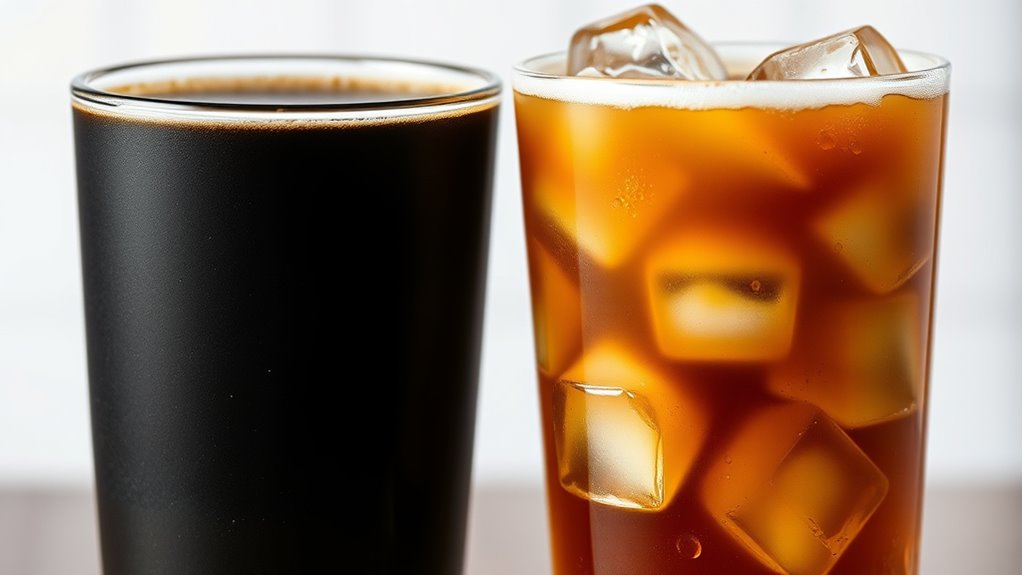
When comparing cold brew and iced coffee, you’ll notice differences in flavor intensity and subtle nuances. Cold brew often offers a smoother, mellower taste with richer complexity, while iced coffee tends to be brighter and more acidic. Additionally, the mouthfeel varies, with cold brew usually feeling thicker and more velvety, whereas iced coffee feels lighter and more invigorating. For those who enjoy exploring seasonal variations, these drinks can be customized to suit different preferences and occasions. Using specialized brewing equipment can also enhance the flavor profiles and overall experience of each beverage. Moreover, understanding the caffeine content can help you tailor your drink to your energy needs and taste preferences.
Flavor Intensity and Nuance
Cold brew typically offers a smoother, mellower flavor with subtle chocolaty and nutty notes, while iced coffee tends to be brighter and more acidic, highlighting the coffee’s fruity and citrusy undertones. When evaluating flavor intensity, you’ll notice cold brew has a gentle, well-rounded profile with less pronounced acidity, allowing subtle flavor notes to shine through. Its aroma complexity is often more muted but richer in depth, emphasizing roasted and earthy qualities. In contrast, iced coffee delivers a sharper, more vibrant taste with higher acidity, making the fruit and citrus flavors stand out more prominently. This difference in flavor nuance means cold brew provides a more subdued, nuanced experience, whereas iced coffee offers a lively, bright profile with bold, distinct notes. Additionally, brewing techniques such as cold brew extraction and traditional iced coffee methods contribute significantly to these flavor differences. The brew ratio and steeping time also play critical roles in shaping the final flavor profile of each coffee type.
Mouthfeel and Body
The mouthfeel and body of cold brew and iced coffee differ markedly, shaping how each beverage feels on your palate. Cold brew tends to have a smoother, creamier texture with a fuller body, thanks to its slow extraction process that emphasizes richness. It often feels velvety and substantial, delivering a luxurious mouthfeel. Iced coffee, on the other hand, usually offers a lighter, more invigorating sensation, with less creaminess and a thinner texture. The mouthfeel differences stem from brewing methods and coffee-to-water ratios, impacting how heavy or crisp your sip feels. If you prefer a beverage with a richer, more substantial mouthfeel, cold brew’s creaminess texture is ideal. Conversely, if you enjoy a lighter, brisker experience, iced coffee provides a more delicate body.

Starbucks Cold Brew Coffee Concentrate, Signature Black Iced Coffee, 32 fl oz
PREMIUM COLD BREW COFFEE: Enjoy the Starbucks cold brew coffee you love at home with this 32-fluid ounce…
As an affiliate, we earn on qualifying purchases.
As an affiliate, we earn on qualifying purchases.
Ingredients and Coffee Bean Choices
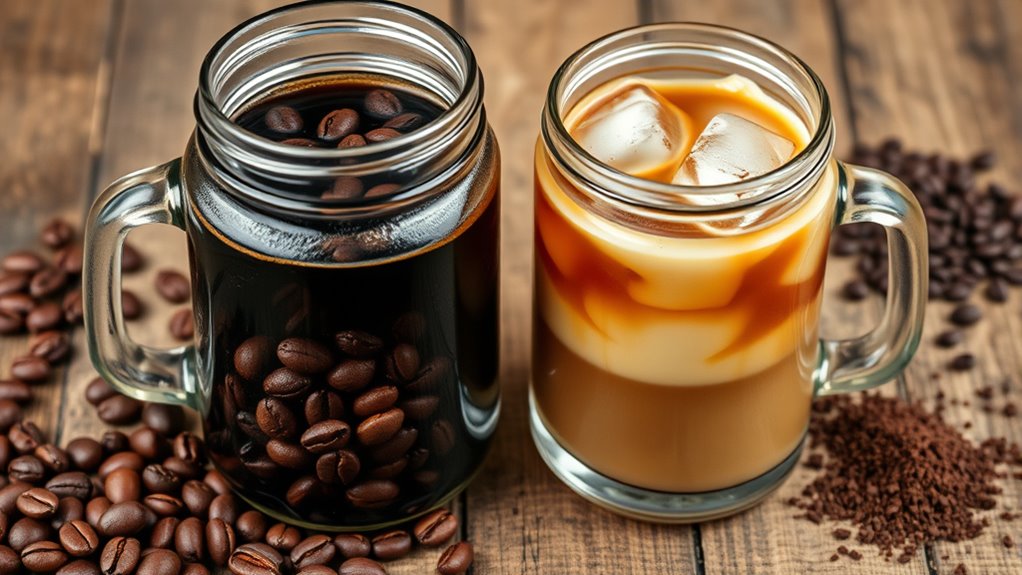
Choosing the right ingredients and coffee beans can substantially impact the flavor and quality of your cold brew or iced coffee. Start by exploring various coffee varieties; some beans, like Ethiopian or Colombian, offer bright, fruity notes, while others, like Sumatra, provide earthy richness. Your choice influences the final taste, so select beans that match your flavor preferences. When it comes to ingredient substitutions, consider using different milk types, sweeteners, or flavorings to customize your drink. For example, oat milk adds creaminess, while vanilla syrup introduces a touch of sweetness. Freshly ground beans yield the best flavor, whether you’re making cold brew or iced coffee. Remember, experimenting with different coffee varieties and ingredient substitutions helps you craft a beverage tailored perfectly to your taste. Incorporating connected equipment such as smart coffee makers can also help you precisely control brewing parameters for optimal results. Additionally, understanding the AI security landscape can ensure your smart devices remain safe and protected from vulnerabilities. Being aware of Mazda Tuning options can inspire you to personalize your vehicle for better performance or style, much like customizing your coffee to your palate. Furthermore, some Vetted – Flat Iron Bike options include electric conversion kits that can make commuting easier, demonstrating how choosing the right gear can enhance your daily routine.
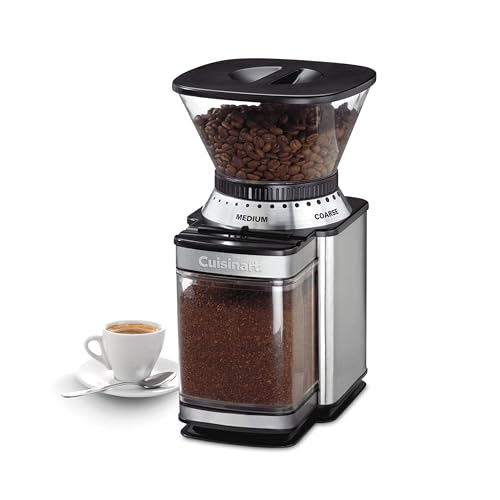
Cuisinart Coffee Grinder, Electric One-Touch Automatic Burr Coffee Grinder with 18-Position Grind Selector, Cup Size Selector for 4 – 18 Cups, DBM-8P1, Black Stainless
ENJOY OPTIMUM FLAVOR: The Cuisinart Coffee Grinder with 18-position slide-dial grind selector provides a uniform grind from ultra-fine…
As an affiliate, we earn on qualifying purchases.
As an affiliate, we earn on qualifying purchases.
Preparation Time and Convenience
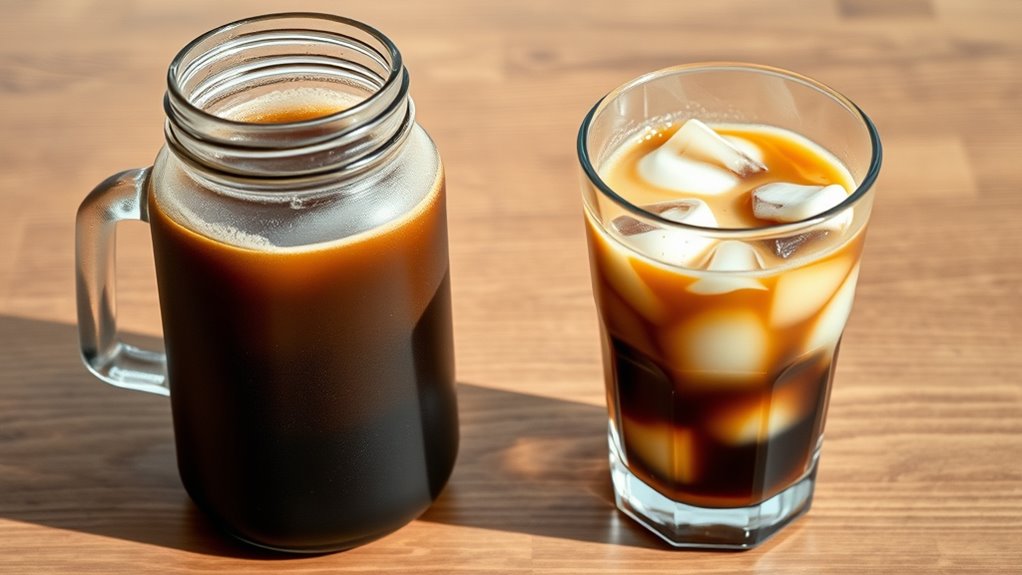
Preparing cold brew generally takes more time than making iced coffee because it requires steeping coffee grounds in cold water for 12 to 24 hours, making it a more hands-off but lengthy process. The brewing duration for cold brew is considerably longer, which means you need to plan ahead. In contrast, iced coffee is quick to prepare, often finished in just a few minutes, offering greater convenience factors if you’re short on time. Cold brew’s extended brewing time can be seen as a downside for immediate gratification, but it allows for a smoother, less acidic flavor. Iced coffee, on the other hand, provides instant refreshment but might involve more steps, such as brewing hot coffee first and then cooling it down. Your choice depends on your schedule and how much convenience matters to you. Additionally, the storage of cold brew is easier since it can be kept refrigerated for up to two weeks without losing quality. Using sound healing techniques during the brewing process can even enhance the relaxation experience while waiting.
Serving Styles and Customizations
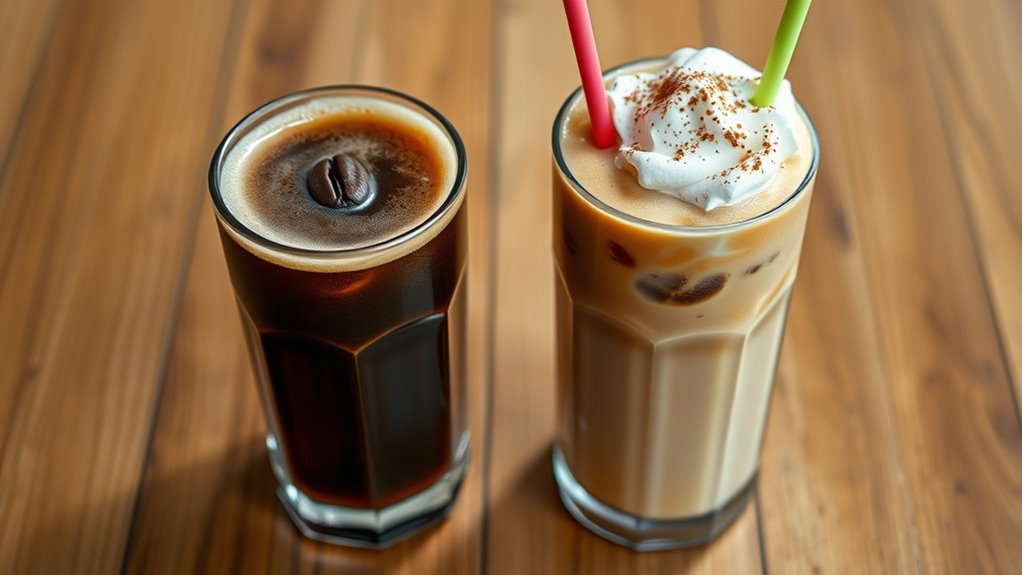
Once you’ve decided how you’ll serve your coffee, exploring the variety of styles and customizations can truly enhance your experience. You can elevate your drink with garnishing options like whipped cream, chocolate shavings, or a sprinkle of cinnamon. Presentation styles also matter—you might serve your cold brew in a sleek glass with a colorful straw or opt for a rustic mug for a cozy vibe. Iced coffee can be customized with different milk types, sweeteners, or flavored syrups to suit your taste. Layered drinks, like a caramel iced latte, create visual appeal and add flavor complexity. Experimenting with garnishes and presentation styles makes each serving unique, turning your coffee into a personalized treat that excites both the eyes and palate.
Tips for Making Perfect Cold Brew at Home
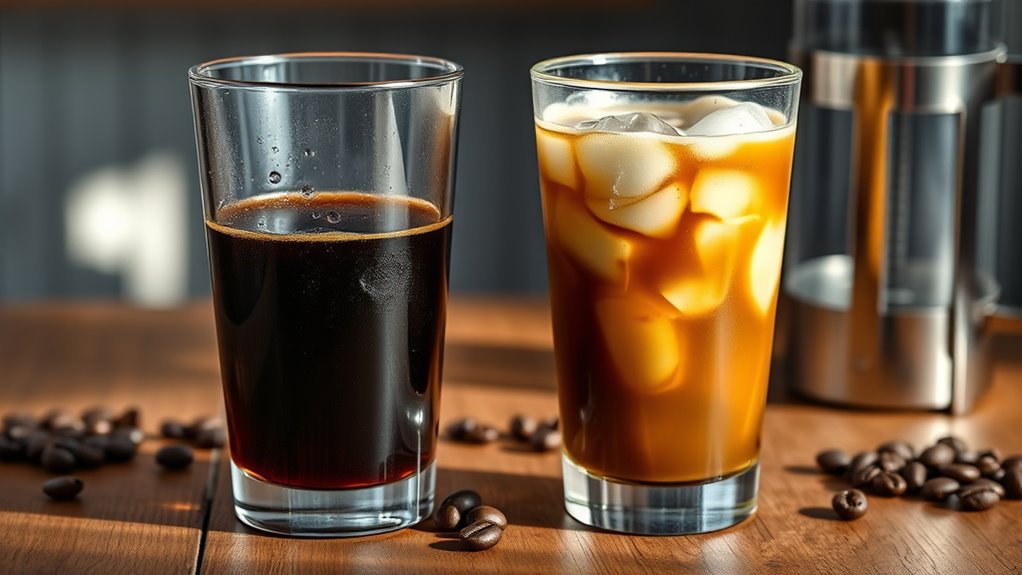
Making perfect cold brew at home is straightforward if you follow a few key tips. Start with the right grind size—coarse is best, similar to breadcrumbs, to prevent over-extraction and ensure a smooth flavor. Use fresh, high-quality coffee beans for the best results. When brewing, combine your coffee with cold, filtered water and let it steep for 12-24 hours in the refrigerator. After brewing, strain out the grounds using a fine mesh or coffee filter. Storage tips are vital: transfer your cold brew to a sealed container and keep it refrigerated. It stays fresh for up to two weeks, but for the best flavor, enjoy it within a week. Proper storage preserves its rich, smooth taste. Additionally, using the right headphones can enhance your coffee brewing experience by allowing you to listen to your favorite music or podcasts while preparing your brew. Ensuring your brewing environment is free from distractions helps maintain focus and achieve optimal results. Incorporating artistic influences, such as vibrant packaging or creative presentation, can also elevate your cold brew experience and make it more enjoyable. Paying attention to water quality can also impact the flavor, as filtered water helps maintain the purity of the brew. Moreover, choosing a high-quality coffee grinder ensures consistent particle size, which is essential for optimal extraction and flavor.
Quick Recipes for Delicious Iced Coffee

Getting your iced coffee just right is easier when you understand the different brewing methods and gather your essential ingredients first. Once you have everything, follow simple step-by-step instructions to quickly craft a delicious glass. Let’s explore these quick recipes so you can enjoy revitalizing iced coffee anytime.
Brewing Methods Overview
Brewing the perfect iced coffee is all about choosing a method that suits your taste and time. Your approach affects flavor, strength, and clarity. For hot brewing methods like pour-over or French press, consider the coffee origin, as different beans develop unique profiles. Pay attention to brewing temperature; cooler temps highlight bright, acidic notes, while hotter temps extract deeper, richer flavors. Cold brew involves steeping coarsely ground coffee in cold water for 12-24 hours, resulting in smooth, mellow notes. Instant coffee is quick but less nuanced. Drip brewing offers convenience and clarity. Each method provides a different experience, so experiment to find what fits your schedule and flavor preferences best. Additionally, understanding the brewing process can help you optimize extraction and flavor.
Essential Ingredients List
To craft quick, delicious iced coffee at home, start with the right ingredients. Your coffee bean selection makes a big difference in flavor—opt for freshly roasted beans, preferably medium to dark roast for richness. High-quality ingredient quality ensures your iced coffee tastes vibrant and smooth. Use fresh, cold water for brewing to maximize flavor extraction. For a simple recipe, you’ll need coffee beans, cold water, and optional sweeteners or milk. Opt for whole beans and grind them just before brewing to preserve freshness. Avoid pre-ground coffee if possible, as it loses flavor faster. Choosing quality ingredients guarantees a flavorful, aromatic iced coffee that’s satisfying every time. Additionally, proper grinding techniques can significantly impact the extraction and overall taste of your brew. Remember that freshly ground coffee enhances the flavor profile and aroma of your iced coffee. With the right foundation, your homemade iced coffee will be a revitalizing treat.
Step-by-Step Instructions
Creating delicious iced coffee at home is quick and straightforward when you follow a simple step-by-step process. Start with cold extraction by steeping coarsely ground coffee in cold water for 12-24 hours. Once ready, strain the coffee to remove grounds. To serve, fill a glass with ice, then pour the cold brew or cold-extracted coffee over it. Be mindful of ice dilution, as melting ice can weaken the flavor; consider using coffee ice cubes to keep it strong. For a quick iced coffee, brew hot coffee, then chill in the fridge before pouring over ice. Add milk or sweetener if desired. Here’s a simple guide:
- Prepare coffee via cold extraction or hot brew
- Chill the brewed coffee
- Fill your glass with ice
- Pour coffee over the ice
- Adjust with milk or sweetener
- Keep flavor rich with brewing techniques that preserve aroma and strength
Frequently Asked Questions
Can I Use Regular Coffee Grounds for Cold Brew?
Yes, you can use regular coffee grounds for cold brew, but it’s best to modify the grind size and brewing time. Use a coarse grind to prevent over-extraction and ensure a smooth flavor. Cold brew requires a longer brewing time, typically 12-24 hours. If your grounds are too fine, your coffee might be bitter, so stick to coarse grounds and patience for a delicious cold brew.
How Long Can Cold Brew Be Stored Safely?
Imagine you’ve made a batch of cold brew on Sunday; you can safely enjoy it for up to two weeks when stored in an airtight container in the fridge. Beyond that, spoilage risks increase, and flavor deteriorates. Proper storage duration is key to avoiding bacteria growth or sour tastes. Always check for off smells or mold before drinking, and if in doubt, discard to stay safe.
Does Cold Brew Contain More Caffeine Than Iced Coffee?
Cold brew generally has more caffeine concentration than iced coffee because of its brewing methods. Cold brew is made by steeping coffee grounds in cold water for 12-24 hours, resulting in a concentrated coffee that you often dilute. Iced coffee, on the other hand, is brewed hot and then cooled. So, depending on how it’s made, cold brew usually packs a caffeine punch, making it stronger in caffeine content per serving.
What Are the Best Coffee Beans for Iced Coffee?
Choosing the best coffee beans for iced coffee is like picking vibrant colors for a masterpiece. Opt for beans with a medium roast, as they balance acidity and sweetness, enhancing flavor. Look for beans from Latin America or Africa, known for their bright, fruity notes. Freshly roasted beans from a reliable source will give your iced coffee a lively, invigorating taste that’s perfect for hot days.
Can I Make Flavored Cold Brew at Home?
Yes, you can make flavored cold brew at home. Use flavor infusion by adding spices, vanilla beans, or citrus peels to your coffee grounds before brewing. After brewing, sweeten your cold brew with homemade syrups like vanilla or caramel for extra flavor. Let the syrups dissolve fully, then chill and serve over ice. Experimenting with different flavor infusions and homemade syrups lets you customize your cold brew exactly how you like it.
Conclusion
So there you have it—cold brew and iced coffee, each with their quirks and charms. Whether you prefer the smooth, low-effort brew or the quick, caffeinated splash, remember: you’re just one coffee choice away from a better day. Or, you know, a slightly more complicated caffeine obsession. Either way, sip happily and pretend you’re a barista—because who needs simplicity when you can have coffee drama? Cheers to your caffeinated adventures!