
Using distilled water in your coffee maker prevents mineral buildup and scale, which extends the machine’s lifespan and lowers maintenance. However, it can cause sensors calibrated for mineral-rich water to malfunction or give false readings, disrupting brewing and operation. While it’s effective for preventing scale, you might encounter sensor issues. Want to learn how to balance machine performance and longevity? Keep exploring to find the best solution for your coffee routine.
Key Takeaways
- Using distilled water prevents mineral buildup and scale formation, extending machine lifespan and reducing maintenance needs.
- It may cause sensor calibration issues, leading to false alerts or operational disruptions in some coffee makers.
- Many manufacturers recommend or require distilled or demineralized water to maintain warranty coverage.
- Completely mineral-free water can slightly alter brewing efficiency and flavor due to lack of minerals.
- Balancing water quality, such as using filtered or demineralized water, helps protect the machine and ensure optimal coffee quality.
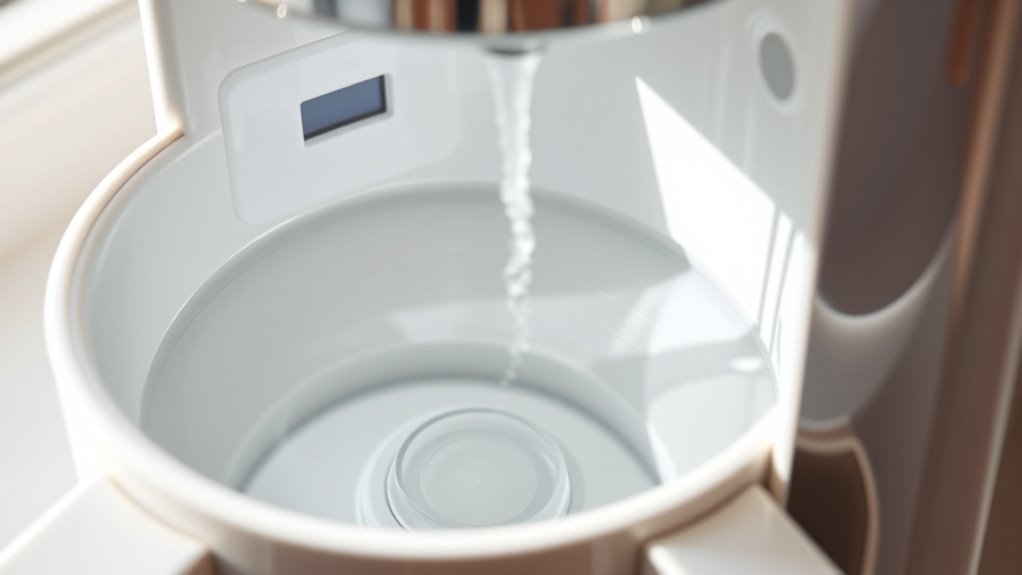
Have you ever wondered if using distilled water in your coffee maker makes a difference? It’s a common question among coffee enthusiasts and everyday users alike. The choice of water can profoundly impact your machine’s performance and longevity. Regular tap water contains minerals like calcium and magnesium, which contribute to water mineral content. Over time, these minerals can build up inside your coffee maker as scale, leading to clogs and inefficiency. Using distilled water, which has most mineral content removed, can prevent this buildup. That means fewer descaling chores and a cleaner brewing process. But it’s not just about keeping your machine free of scale; it’s also about preserving your appliance warranty. Many coffee maker warranties specify the use of specific types of water, often recommending or requiring distilled or demineralized water. Using tap water with high mineral content might void your warranty if mineral deposits cause damage. So, if you’re serious about protecting your investment, following the manufacturer’s guidelines about water quality is vital.
However, there’s a trade-off to weigh. While distilled water reduces mineral buildup, some coffee makers rely on sensors that detect mineral deposits or water quality. When you use pure distilled water, these sensors may not function as intended because they’re calibrated for water with a certain mineral content. This can sometimes lead to false readings or sensor errors, which might disrupt your brewing process. In some cases, the lack of minerals can cause the sensors to think there’s an issue, prompting unnecessary maintenance alerts or even shutting down the machine. This can be frustrating, especially if you’re trying to enjoy a quick cup of coffee. Additionally, some coffee machines use mineral content to optimize brewing temperature and extraction, so removing these minerals entirely may slightly alter the flavor or brewing efficiency. Moreover, understanding the importance of water quality in relation to water mineral content can help you make informed choices for your coffee preparation.
Ultimately, using distilled water in your coffee maker is a balancing act. It can protect your machine from scale buildup and help maintain your appliance warranty, but it might also interfere with sensor functions or affect brewing dynamics. If you decide to go the distilled route, consider checking your machine’s manual for guidance. Some manufacturers recommend using filtered or demineralized water instead of pure distilled water to strike a balance between preventing scale and ensuring sensors work correctly. By understanding your coffee maker’s design and following best practices, you can enjoy great coffee without risking damage or voiding your warranty.
Frequently Asked Questions
Does Distilled Water Affect Coffee Flavor?
Using distilled water can slightly alter your coffee’s flavor. Because it lacks minerals, you might notice a flatter or less vibrant taste compared to mineral-rich water. The flavor impact depends on your preferences; some love the pure taste, while others find it less satisfying. Keep in mind, mineral content influences taste, so using distilled water may lead to a more neutral, less complex coffee experience.
Can Distilled Water Damage Coffee Machine Components?
Using distilled water in your coffee machine doesn’t typically cause damage or increase corrosion risk. In fact, it helps prevent component deterioration caused by mineral buildup. Since distilled water lacks minerals, it reduces scale formation that could harm internal parts. However, be aware that some sensors or seals might need mineral content to function properly, so check your machine’s guidelines. Overall, distilled water can protect your coffee maker’s longevity.
How Often Should I Descale With Distilled Water?
You should descale your coffee maker every 3 to 6 months with distilled water, even though it has no minerals to cause scale buildup. This helps prevent sensor issues and guarantees peak performance. While distilled water minimizes mineral deposits, occasional descaling removes any residual buildup and keeps your machine running smoothly. Regular maintenance, tailored to your usage and water quality, keeps your coffee tasting great and extends your machine’s lifespan.
Is Distilled Water Suitable for All Coffee Maker Types?
Using distilled water is suitable for most coffee maker types, but you should check your machine’s water mineral content and compatibility. Some machines, especially those with sensors or specific heating elements, may not perform best with distilled water, which lacks minerals needed for proper operation. Always consult your user manual to ensure your coffee maker can handle distilled water to prevent potential issues.
Are There Health Concerns With Using Distilled Water Regularly?
Using distilled water regularly isn’t likely to pose significant health risks, but it could lead to mineral deficiencies if it’s your only water source. Since distilled water lacks essential minerals like calcium and magnesium, consuming it exclusively may affect your mineral intake over time. However, for most people, occasional use in coffee makers is safe. To guarantee balanced mineral intake, consider supplementing with mineral-rich foods or drinks.
Conclusion
Using distilled water in your coffee maker can prevent mineral buildup, but some worry it might harm sensors or internal parts. Rest assured, most modern machines are designed to handle distilled water without issues. While it may seem risky, taking this step actually helps prolong your coffee maker’s lifespan. So, don’t let concerns hold you back—trust the benefits of using distilled water for a cleaner, better-tasting brew every time.