If you prefer a full-bodied, rich flavor with earthy or fruity notes, a French press might be your best choice since it emphasizes bean origin and allows better customization. On the other hand, if you want a cleaner, brighter cup with less fuss, a drip coffee maker offers convenience and consistent results. Both have their strengths, but exploring more details can help you find the perfect brew for your taste.
Key Takeaways
- French presses produce richer, fuller-bodied coffee that highlights earthy and fruity notes, ideal for flavor complexity.
- Drip coffee offers cleaner, brighter, and more subtle flavors with greater consistency and clarity.
- French presses allow for manual customization of strength, brew time, and temperature, providing more control over the final flavor.
- Drip machines are more automated, convenient, and suitable for quick, consistent brewing with minimal effort.
- Both methods vary in cost, maintenance, and ease of use, so choose based on your flavor preference and lifestyle.
Flavor Profiles and Brew Strength

When comparing French press and drip coffee makers, flavor profiles and brew strength play a significant role in your choice. With a French press, the coffee often highlights the coffee bean origin more vividly because the immersion brewing method extracts oils and flavors thoroughly. This results in a richer, fuller-bodied brew with more pronounced earthy or fruity notes. The brewing temperature, typically around 200°F, is vital for ideal extraction. Drip coffee makers usually operate at slightly lower temperatures, which can lead to a cleaner, more subtle flavor profile that emphasizes brightness and clarity. The drip method produces a lighter brew, but you can adjust strength by varying grind size and brew time. Additionally, temperature control features in some machines allow for more precise brewing conditions, influencing flavor extraction. Being aware of brewing techniques can help you tailor your coffee to suit your taste preferences. Ultimately, your preferred flavor complexity and intensity hinge on these factors. For those seeking trustworthy brands, choosing quality equipment can make a noticeable difference in your coffee experience.
Ease of Use and Maintenance
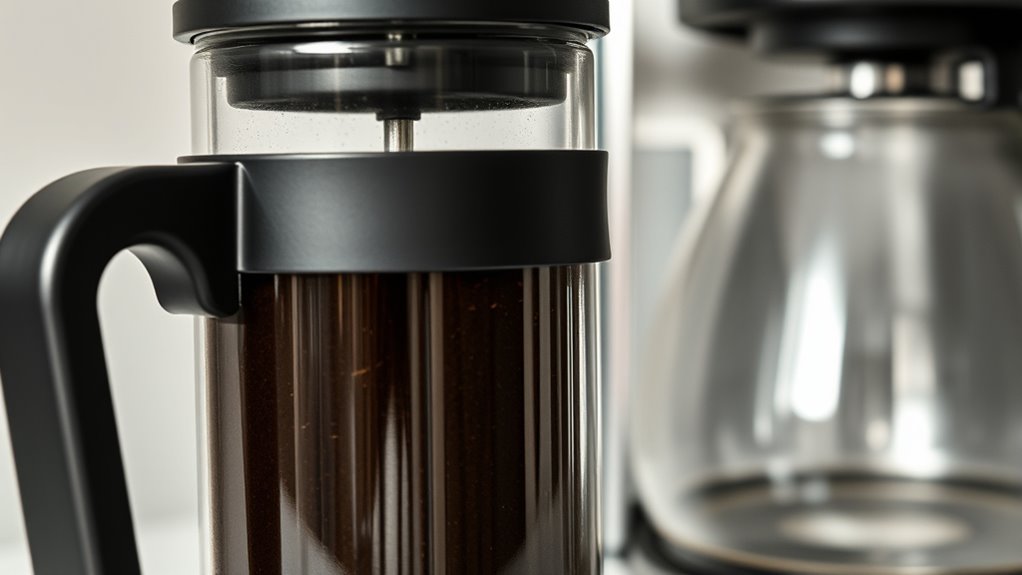
Both French press and drip coffee makers differ considerably in how easy they are to operate and maintain daily. Your experience with each depends on how simple it is to clean and move them around.
French presses are easier to clean and move, making daily maintenance simple and straightforward.
Here are some key points:
- The cleaning process for a French press is quick—you just disassemble, rinse, and occasionally deep-clean the plunger. Drip machines often require descaling and cleaning of the filter basket.
- Portability features vary; a French press is compact and lightweight, ideal for travel or small spaces, while drip coffee makers are bulkier and less portable.
- Maintenance is straightforward for both, but the French press’s fewer parts make it easier to keep spotless. Drip machines may need more regular filter replacements and descaling.
- Proper maintenance of your coffee brewer can also help improve indoor air quality, especially by reducing the buildup of mold and bacteria in the machine’s components. Regular cleaning can also prevent bacterial growth, which is essential for health and freshness.
- Additionally, choosing a high-quality coffee maker and following the manufacturer’s cleaning instructions can extend the lifespan of your appliance and ensure optimal brewing performance. Regular cleaning and proper equipment maintenance can also prevent equipment malfunctions, saving you time and money in the long run.
Brewing Time and Efficiency
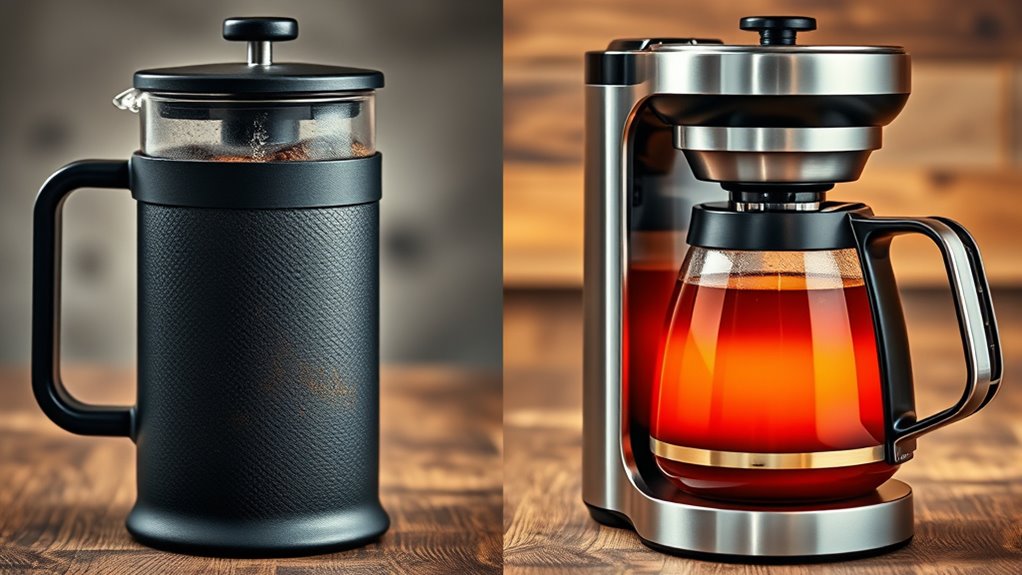
French press brewing typically takes about four minutes, allowing you to quickly enjoy a rich, full-bodied cup without much wait. During this time, your grinding consistency is essential; a coarse grind ensures ideal extraction and prevents over-extraction or clogging. Unlike drip machines, which often have automatic features, a French press relies on you to maintain proper temperature control—aiming for around 200°F—to extract flavors efficiently. The simplicity of the process means you control the brewing time, making it easy to adjust for strength or flavor nuances. Overall, the French press offers a quick, efficient brewing cycle that emphasizes manual precision, while drip coffee makers often take longer but automate temperature and timing for consistent results. Additionally, automation in coffee brewing is emerging as a trend to balance manual control with technological consistency. Proper cleaning and maintenance of your coffee maker can also ensure optimal brewing performance and flavor extraction over time, highlighting the importance of proper care for equipment longevity.
Cost and Durability
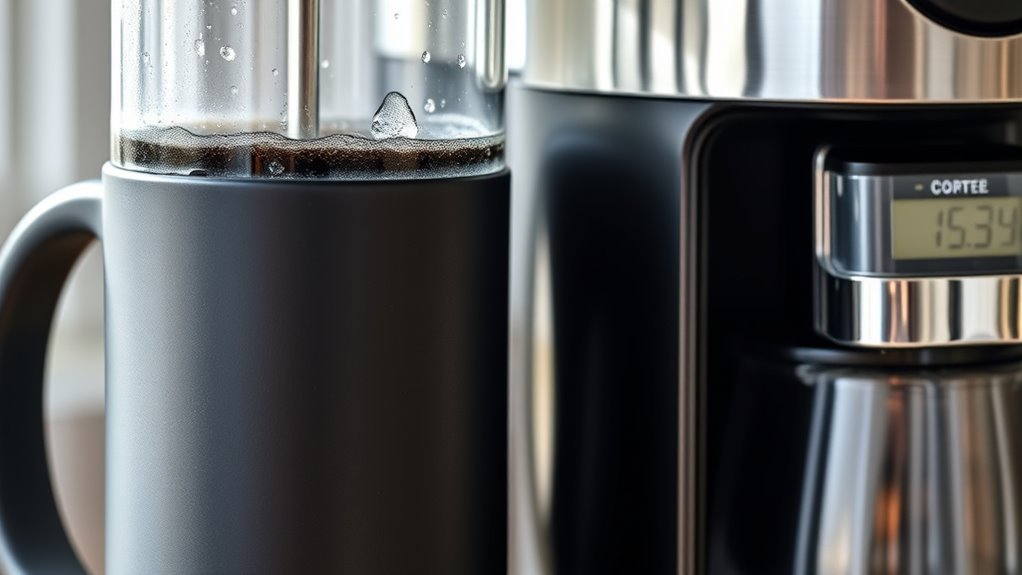
Generally, French presses tend to be more affordable upfront and can last for many years with proper care, making them a cost-effective choice. When evaluating a price comparison, they usually cost less than drip coffee makers initially. Their material quality varies, but a well-made glass or stainless steel French press can withstand years of use. Additionally, vetted products ensure safety and effectiveness over time. Moreover, selecting reliable appliances and proper maintenance can extend the lifespan of your French press even further. Incorporating high-quality water filtration can also help preserve the condition of your coffee maker. Regular cleaning and mindful handling further contribute to the durability of your device over time. Utilizing durable material options can enhance the longevity of your French press and maintain coffee quality for years to come.
Customization and Control Over the Brew
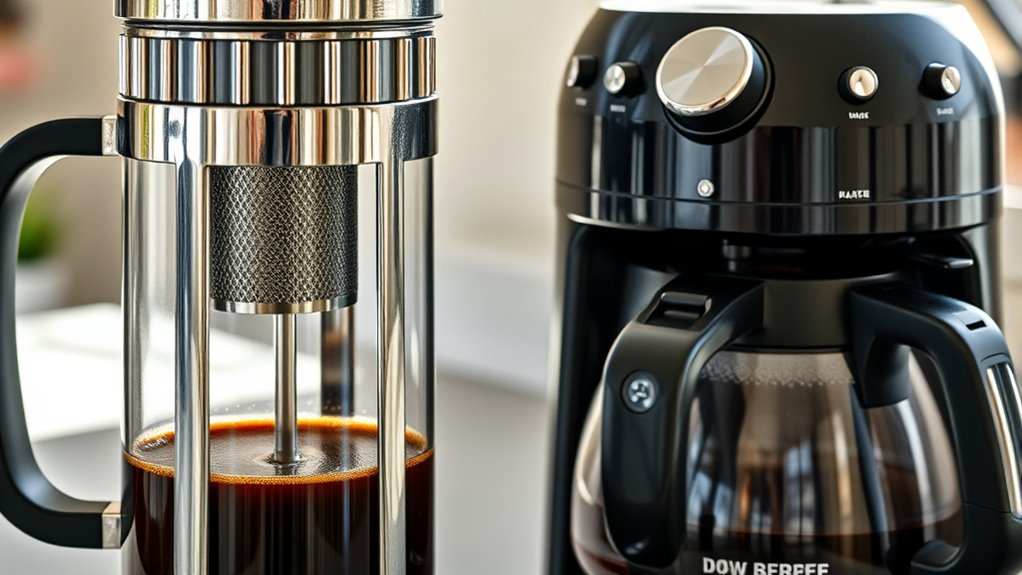
If you want more control over your coffee’s strength and flavor, a French press gives you the flexibility to customize each brew. With its grind size flexibility, you can use coarser grounds, which allow for a richer, more robust extraction. You can also manually adjust the steeping time to influence the strength of your coffee. Additionally, the French press provides better temperature regulation, since you can heat water separately and pour it directly into the carafe, maintaining ideal brewing temperatures. This level of control enables you to fine-tune each cup to your taste, whether you prefer a bold, full-bodied brew or a lighter, more delicate flavor. In contrast, drip coffee makers typically have preset parameters, limiting customization options. Incorporating AI-powered smart devices into your brewing process can further optimize temperature and timing for perfect results every time. Moreover, the use of automated brewing systems can help maintain consistency across multiple cups, making it easier to achieve your preferred flavor profile. The ability to experiment with various brewing techniques makes the French press a popular choice among coffee enthusiasts seeking personalized coffee experiences. Exploring different coffee beans and roast levels can also enhance the uniqueness of your brew.
Frequently Asked Questions
Which Method Preserves More of the Coffee’s Natural Oils?
You’ll find that the French press preserves more of the coffee’s natural oils due to its immersion brewing method. This technique allows for better oil retention, enriching the coffee’s flavor and body. In contrast, drip coffee makers often filter out some oils during brewing, resulting in a cleaner but less full-bodied cup. So, if you want a richer, more aromatic brew, a French press is your best choice for ideal coffee extraction and oil retention.
Can Both Methods Be Used With Specialty Coffee Beans?
Yes, you can use both methods with specialty coffee beans. For rich espresso brewing, a French press can highlight the beans’ oils and flavors, but it’s not ideal for the fine grind needed for espresso. For cold brew techniques, both methods work well, allowing you to enjoy smooth, nuanced coffee. Just remember, the grind size and steeping time are key to revealing the best flavors from your specialty beans.
How Do Temperature Variations Affect Each Brewing Method?
Did you know that even a 2°C change in temperature can alter your coffee’s flavor? Temperature variations considerably impact both brewing methods. For French press, inconsistent temperature can lead to over-extraction or under-extraction, affecting taste. Drip coffee makers rely on temperature consistency to maintain ideal brew time and flavor extraction. Staying precise with water temperature ensures a balanced, flavorful cup whether you use a French press or drip machine.
Are There Health Differences Between French Press and Drip Coffee?
You’ll find that French press and drip coffee have subtle health differences. French press coffee usually has higher caffeine content, giving you a stronger energy boost. It also tends to be more acidic, which might cause discomfort if you have sensitive stomachs. Drip coffee generally has lower caffeine and acidity levels, making it gentler on your digestive system. Choose based on your caffeine needs and how your stomach handles acidity.
Which Method Is More Environmentally Friendly?
You’ll find that drip coffee makers tend to be more environmentally friendly because they often use recyclable materials and consume less energy during brewing. French presses, on the other hand, require fewer parts and less electricity, making them a good eco choice too. When choosing, consider energy consumption and recyclable components to reduce your environmental impact. Either way, your coffee habit can stay sustainable with mindful choices.
Conclusion
Choosing between a French press and a drip coffee maker is like picking between a handcrafted painting and a printed poster—you get to decide the art of your perfect brew. If you crave rich, bold flavors with hands-on control, go French press. For convenience and consistency, a drip machine is your best bet. Whichever you choose, remember that your coffee journey is a reflection of your taste—so brew it your way and enjoy every sip.