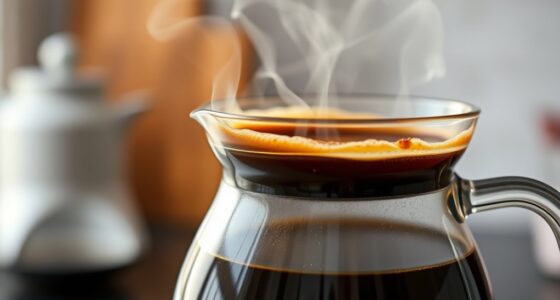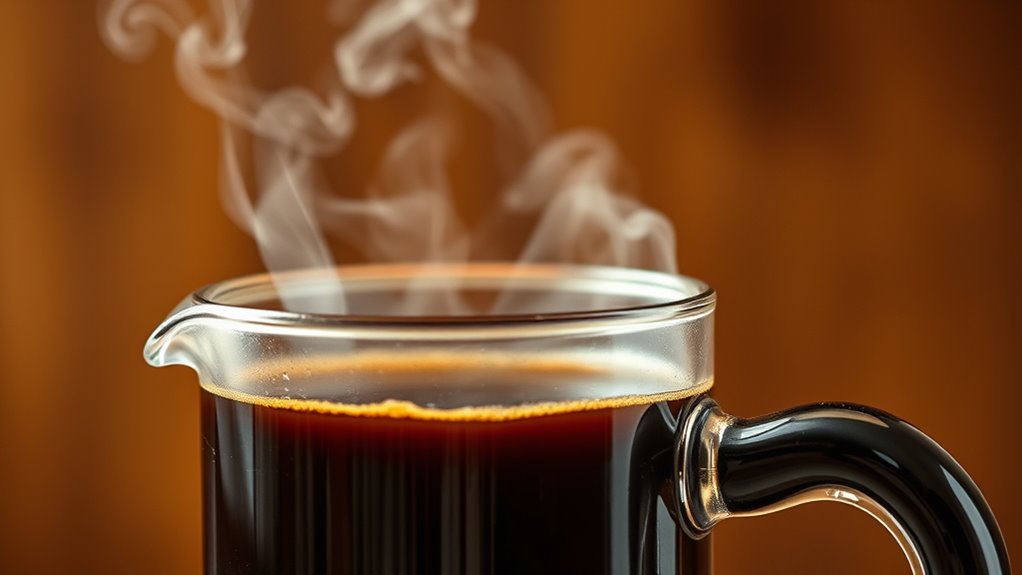

Yes, water temperature really matters when making French press coffee. Using water that’s too hot can cause over-extraction, leading to bitter flavors, while cooler water may result in weak, under-extracted coffee. The ideal temperature is around 200°F (93°C) to guarantee maximum extraction of flavors without bitterness. Controlling the water temperature helps you brew a balanced cup every time. If you’re curious about perfecting your process, you’ll find helpful tips ahead.
Key Takeaways
- Water temperature influences extraction speed and flavor balance in French press brewing.
- Ideal temperature (~200°F/93°C) ensures full flavor extraction without bitterness.
- Too hot water causes over-extraction, leading to bitter, harsh coffee.
- Cooler water results in under-extraction, producing weak and flat flavor.
- Precise temperature control improves consistency and overall quality of your French press coffee.
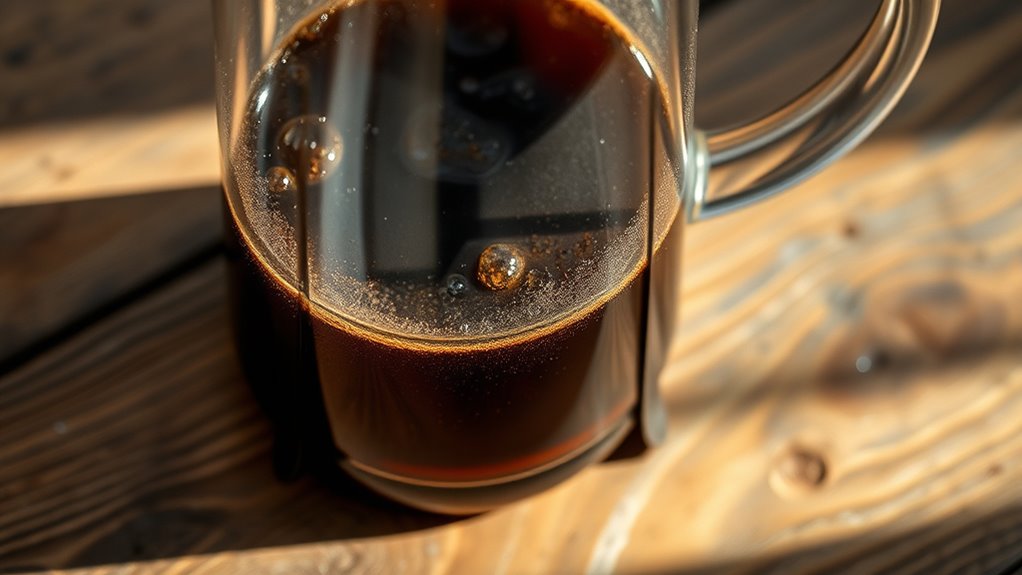
Have you ever wondered how to brew rich, full-bodied coffee at home? If so, then understanding the importance of water temperature in the French press process is essential. It’s not just about pouring hot water over your coffee grounds; it’s about maximizing every step to unseal the full flavor potential. One key factor that influences the extraction process is the coffee grind. For a French press, you want a coarse grind—think chunky sea salt—because a finer grind can slip through the mesh filter and lead to over-extraction, making your coffee bitter. The grind size also affects brewing time; a coarser grind needs a slightly longer steep to extract all those flavorful oils and compounds.
Now, when it comes to water temperature, many people overlook its significance, but it’s actually vital for a balanced, flavorful brew. You don’t need boiling water—around 200°F (93°C) is ideal—because water that’s too hot can over-extract the bitter compounds from your coffee, while water that’s too cool won’t extract enough of the desirable flavors. The temperature impacts how quickly the coffee grounds release their oils and solubles, which in turn influences the brewing time. If your water’s too hot, your brewing time might be shorter, resulting in a thin or overly bitter cup. Conversely, cooler water might require a longer steep, risking under-extraction and a weak flavor profile. Temperature control is essential to achieve consistent, optimal extraction with every brew.
Getting the water temperature just right guarantees a proper extraction, allowing the full spectrum of flavors to develop without bitterness. It’s worth investing in a thermometer to monitor your water’s temperature, especially since many household kettles don’t precisely hit the ideal range. Once you’ve got your water at the right temperature, pour it evenly over your coffee grounds, ensuring all are saturated and begin your brewing timer. A typical brewing time for French press coffee is around four minutes, but this can vary depending on your grind and water temperature. Too short, and the coffee might taste underdeveloped; too long, and it can become over-extracted and bitter.
Top picks for "french pres coffee"
Open Amazon search results for this keyword.
As an affiliate, we earn on qualifying purchases.
Frequently Asked Questions
Can I Use Boiling Water for French Press Coffee?
Yes, you can use boiling water for French press coffee. However, it’s better to let the water cool for about 30 seconds to a minute to reach around 200°F, which helps optimize flavor. Using too hot water can over-extract the coffee, making it bitter. Adjust your coffee grind to a coarse setting and aim for a brew time of 4 minutes for the best results.
Does Water Temperature Affect the Coffee’s Flavor Profile?
Did you know that water temperature substantially influences flavor extraction and aroma preservation? Using the right temperature, around 195-205°F, helps you reveal the coffee’s full flavor profile, enhancing aroma and taste. Too hot, and you risk bitterness; too cold, and you might miss out on essential flavors. So, adjusting your water temp guarantees a balanced, flavorful cup every time, making your French press experience truly satisfying.
How Do I Maintain Consistent Water Temperature During Brewing?
You can maintain consistent water temperature by preheating your French press with hot water, guaranteeing thermal retention. Use a kettle with precise temperature control or a thermometer to monitor water, keeping it steady around 200°F. Cover your French press during steeping to minimize heat loss, which helps sustain water temperature stability. These steps ensure your coffee brews with ideal flavor, maximizing the benefits of consistent water temperature.
Is There a Brewing Temperature That’s Universally Best?
Yes, there’s a universally recommended brewing temperature of around 195-205°F (90-96°C). This range optimizes water chemistry, extracting flavors without over-extracting bitterness. Maintaining this temperature guarantees brewing consistency, so you get balanced, flavorful coffee every time. Using a thermometer or temperature-controlled kettle helps you hit that perfect range, allowing you to enjoy a consistently great cup regardless of brewing conditions.
How Quickly Does Water Temperature Influence Extraction?
Water temperature impacts extraction speed right from the first pour, like a spark igniting a fire. As soon as hot water hits the coffee grounds, the extraction process kicks into gear, releasing flavors quickly. Higher temperatures speed up extraction, but too hot can overdo it, while cooler water slows things down. So, temperature impact is immediate, and adjusting it lets you control flavor and strength right from the start.
Conclusion
So, after all this fuss about water temperature, it turns out you might have been overthinking it. Maybe your perfect cup doesn’t hinge on a precise degree, but on that initial pour or your patience. Ironically, all the science might just be a fancy way to remind you that sometimes, the simplest approach—like just enjoying your coffee—really is best. So go ahead, brew your way and savor every sip, temperature be damned.