
To tell if your coffee beans are stale, check for a dull, dry appearance and a lack of shine—the oils have probably evaporated. Smell the beans; if the aroma has faded or smells flat, it’s a sign of staleness. Brewed coffee from stale beans will taste dull, flat, or off. If you want to catch these signs early and keep your coffee fresh, keep exploring for more tips.
Key Takeaways
- Check for a dull, flat smell; fresh beans have a vibrant aroma, while stale ones lose their scent.
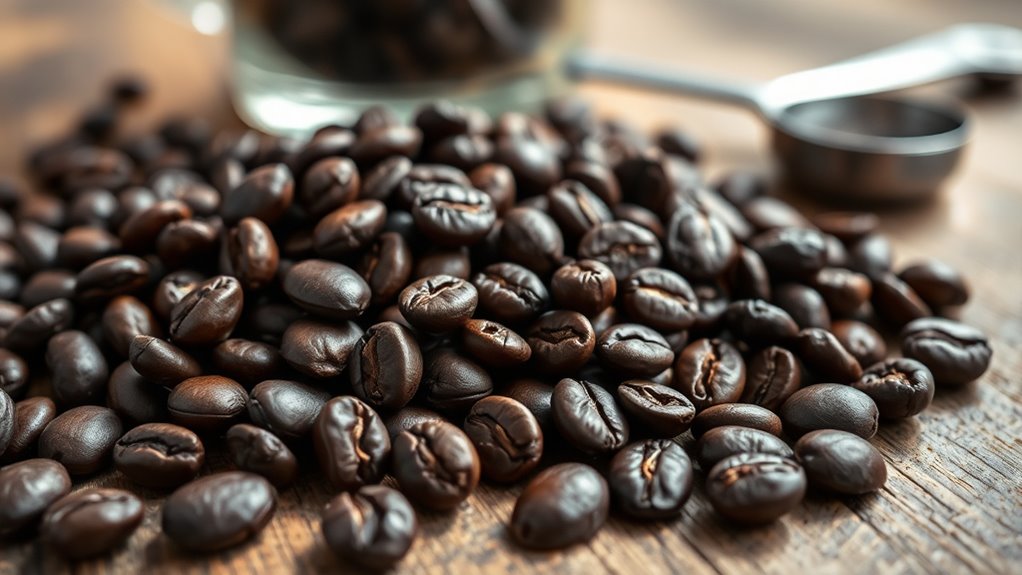
- Observe the appearance; dull, dry beans lack the shiny, oily surface of fresh beans.
- Smell the ground coffee; weak or nonexistent aroma indicates staleness.
- Taste brewed coffee; dull, sour, or flat flavors suggest the beans are stale.
- Store beans properly; if aroma and flavor decline despite good storage, it’s time to replace them.

Coffee beans don’t stay fresh forever, so it’s important to know how to tell if yours are stale. When beans lose their freshness, you’ll notice subtle but clear signs, especially in their aroma and flavor. Aroma loss is often the first indicator; fresh coffee beans emit a vibrant, inviting scent that hints at complex notes like fruit, spice, or chocolate. If your beans smell flat, dull, or even cardboard-like, it’s a strong sign that their aromatic oils have evaporated or degraded. Without that enticing aroma, your coffee’s overall appeal diminishes, making each brew less satisfying.
Fresh coffee beans have a vibrant aroma; dull scent indicates staleness.
Flavor decline is another key indicator. When you brew coffee from stale beans, the taste tends to be muted or off. Instead of the lively, nuanced profile you expect, the flavor may seem dull or sour. You might notice a bitter aftertaste or a flat, one-dimensional flavor that lacks the brightness and depth you once enjoyed. This decline happens because the volatile compounds responsible for flavor break down over time, especially if the beans are exposed to air, light, or heat. As a result, your coffee no longer delivers the rich, balanced experience it once did.
To further assess your beans, consider their appearance. Fresh coffee beans are usually shiny and oily, reflecting their essential oils. Stale beans, however, often look dull and dry, with a lack of sheen. When you grind them, the aroma should be vibrant and strong; if it’s weak or nonexistent, that’s another sign they’ve gone stale. Additionally, the grind might feel different—more dusty or uneven—indicating loss of structural integrity. Proper storage methods, such as airtight containers kept away from light and heat, can help prolong freshness, but even with optimal storage, beans will eventually stale. If you find that your beans have become dull in aroma and flavor, it’s a time to replace them. To avoid wasting good coffee, buy smaller amounts more frequently and keep beans in an airtight container away from light and heat. When brewing, pay attention to the aroma and taste of your coffee; if they’re lacking the lively qualities you expect, it’s a clear sign that your beans are past their prime. Recognizing these signs helps ensure you enjoy the best possible cup every time, rather than settling for a dull, flavorless brew. Additionally, understanding the contrast ratio of your coffee beans can help identify if they have lost their depth and richness over time.
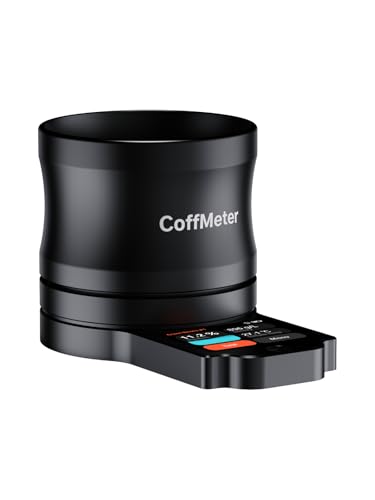
Coffee Moisture Tester for Moisture Content, Density, Sample Temperature, Patented Bean Distributor, HD Touchscreen, Portable, Real-Time Accuracy, for Professional Roasters & Coffee Enthusiasts
3-in-1: Designed for coffee professionals, the CoffMeter M1 coffee moisture meter integrates moisture content, density, and sample temperature…
As an affiliate, we earn on qualifying purchases.
As an affiliate, we earn on qualifying purchases.
Frequently Asked Questions
Can I Revive Stale Coffee Beans?
You can’t truly revive stale coffee beans, but you can improve their flavor slightly. Check freshness indicators like aroma and appearance before brewing. To prevent future staleness, use proper storage techniques—keep beans in an airtight container away from light, heat, and moisture. While you might boost flavor temporarily with a quick roast or grind, fresh beans always deliver the best taste. Stale beans, however, won’t regain their original freshness once lost.
How Long Do Coffee Beans Stay Fresh?
Did you know coffee beans stay freshest for about 2 to 4 weeks after roasting? During this time, their coffee aroma is strongest, and the bean color remains vibrant. After that, flavors start to fade, and the aroma weakens. To enjoy ideal freshness, store your beans in an airtight container away from light and heat. If you notice duller color or less aroma, it’s time to buy a fresh batch.
Does Grinding Expose Beans to Faster Staling?
Yes, grinding exposes your coffee beans to faster staling because it increases surface area, accelerating coffee oxidation and moisture exposure. When you grind, you’re letting air and moisture contact more of the beans, which speeds up flavor loss and freshness decline. To preserve your beans’ quality, grind just before brewing and store your beans in an airtight container away from light, heat, and humidity.
Is It Better to Buy Whole or Pre-Ground Coffee?
It’s better to buy whole coffee beans because they preserve flavor and freshness longer than pre-ground options. Whole beans act as natural freshness indicators, allowing you to grind just before brewing to maximize aroma and taste. Pre-ground coffee loses its freshness faster due to increased surface area, making it harder to tell if it’s stale. For the best flavor, always opt for whole beans and grind them fresh each time.
How Does Storage Affect Coffee Freshness?
You’ll find that proper storage considerably affects your coffee’s freshness. Keep your beans in airtight storage containers, away from light, heat, and moisture, to preserve their rich coffee aroma. When exposed to air or stored improperly, coffee quickly loses flavor and becomes stale. Using the right containers helps lock in freshness, ensuring every brew tastes as vibrant and aromatic as when you first bought the beans.

Veken Coffee Canister with Window,Airtight Stainless Steel Pantry Container,Home Kitchen Food Storage Organizers for Ground,Beans,Espresso,Rice,Tea,Sugar,Cereal, Decor,Bar Accessories,Gifts,22OZ,Black
Gifts for Coffee Lovers This Christmas: This elegantly designed jar is a stylish and functional gift for coffee…
As an affiliate, we earn on qualifying purchases.
As an affiliate, we earn on qualifying purchases.
Conclusion
Think of your coffee beans as a love story—they’re at their best when fresh and vibrant. When they go stale, it’s like the pages start to fade, losing their magic. Keep an eye out for dull aroma and flat taste, and you’ll know it’s time to start a new chapter with fresh beans. By paying attention, you make certain your mornings remain a flavorful adventure, never settling for a story that’s lost its spark.

Hamilton Beach Fresh Grind Electric Coffee Grinder for Beans, Spices and More, Stainless Steel Blades, Removable Chamber, Makes up to 12 Cups, Black
REDUCE CLUTTER WITH HIDDEN CORD STORAGE: Hideaway cord storage under the base keeps cable neat, concealed when not…
As an affiliate, we earn on qualifying purchases.
As an affiliate, we earn on qualifying purchases.

Scentaware-8 Scent Evaluation and Smell Training Kit | Smell Test | Sensory and Cognitive Test | Essential Oil Nasal Inhalers Olfactory Regeneration | Evaluate and Help Restore Loss of Smell | Multi
QUALITY & BENEFITS: Made in the USA. This smell test kit includes eight essential oil nasal inhalers that…
As an affiliate, we earn on qualifying purchases.
As an affiliate, we earn on qualifying purchases.