
Keurig single-serve systems can be tough on the environment because of their plastic pods, which often end up in landfills and are difficult to recycle. They use more energy per cup and generate significant waste compared to traditional brewing methods like French presses or drip coffee makers that produce less waste and consume less power. If you’re curious about how to make your coffee routine more eco-friendly, there’s plenty more to explore.
Key Takeaways
- Keurig single-serve pods often use non-recyclable plastics, contributing significantly to long-term landfill waste.
- Traditional brewing methods generate more waste from filters and cups but tend to have a lower single-use plastic footprint.
- Reusable Keurig pods and biodegradable packaging options can reduce environmental impact compared to disposable pods.
- Both systems consume energy, but Keurig brewers generally use more power per brew due to rapid heating.
- Sustainable practices like recycling, water conservation, and eco-friendly materials are essential for minimizing environmental harm regardless of brewing method.
The Environmental Impact of Keurig Single-Serve Pods

Have you ever wondered about the environmental footprint of Keurig single-serve pods? These pods are often made from plastics that take hundreds of years to decompose, contributing to long-lasting waste. However, some brands are now experimenting with biodegradable materials to reduce this impact. Despite these efforts, manufacturing emissions remain a concern. Producing the plastic and other components involves energy-intensive processes that release greenhouse gases into the atmosphere. While biodegradable options can lessen waste, they don’t completely eliminate the carbon footprint associated with production. Additionally, the comfort and support solutions involved in manufacturing and disposing of these pods add to their environmental challenges. Overall, Keurig pods pose environmental challenges, especially when considering their lifecycle from manufacturing to disposal. Being aware of these factors helps you understand the true ecological cost of using single-serve coffee systems. Furthermore, eco-friendly alternatives are increasingly available, encouraging consumers to make more sustainable choices. Awareness of waste management practices can further influence how consumers approach single-serve coffee options.
Waste Generation and Recycling Challenges
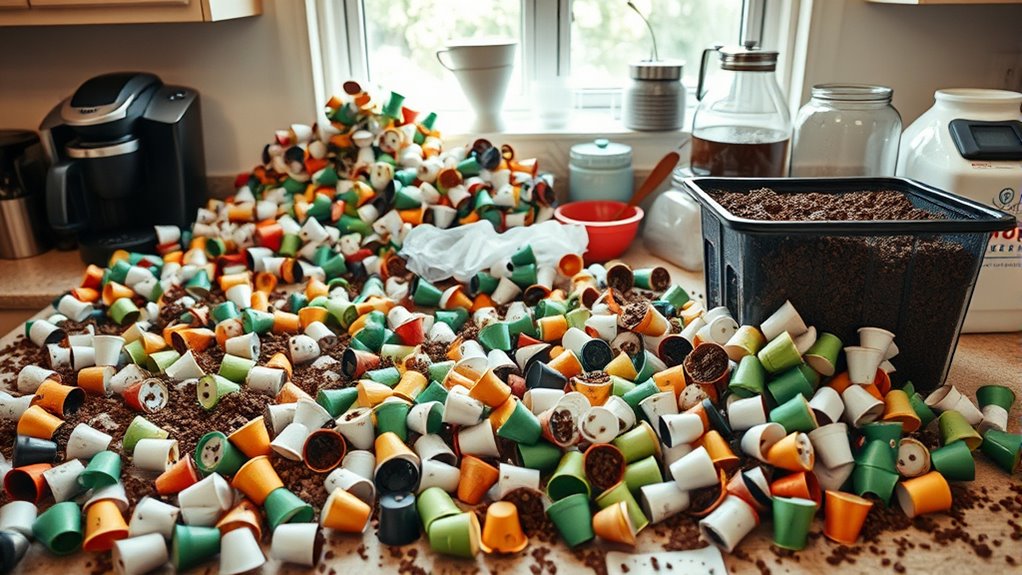
Despite efforts to develop biodegradable pods, waste generation remains a significant challenge for Keurig. The proliferation of single-use pods contributes to plastic pollution, overwhelming waste management systems. Recycling challenges stem from the difficulty of separating and processing used pods, which often contain mixed materials. Many pods end up in landfills, adding to environmental strain. The table below illustrates key issues:
| Issue | Impact | Solution Challenges |
|---|---|---|
| Plastic pollution | Pollution of ecosystems | Limited recycling options |
| Recycling challenges | Increased landfill waste | Difficult pod design |
| Waste accumulation | Soil and water contamination | Consumer disposal habits |
| Material separation | Inefficient recycling processes | Costly technology upgrades |
| Environmental footprint | Higher carbon emissions | Lack of biodegradable alternatives |
| Consumer disposal habits also influence waste buildup, highlighting the need for better education and disposal solutions. Additionally, the design complexity of pods makes recycling even more difficult, and innovations in material science could help mitigate these issues. Furthermore, implementing advanced recycling technologies may improve the efficacy of processing used pods.
A significant obstacle is the limited availability of specialized recycling facilities capable of handling the complex materials in pods, which hampers widespread recycling efforts.
Traditional Brewing Methods and Their Environmental Footprint

Traditional brewing methods, such as drip brewing, French press, and espresso, often rely on single-use filters, paper cups, and disposable capsules, which contribute considerably to environmental impact. These methods typically require more water per cup compared to single-serve systems, increasing overall water consumption. While they can be more energy-efficient per brew, they often involve longer brewing times and manual steps that may lead to higher energy use overall. Additionally, the production and disposal of filters and cups generate waste, impacting landfills and ecosystems. Despite their simplicity, traditional methods can have a significant environmental footprint when considering water use and waste generation. To minimize impact, you should explore sustainable practices like reusable filters and mindful water use.
Energy Consumption Comparison Between Systems
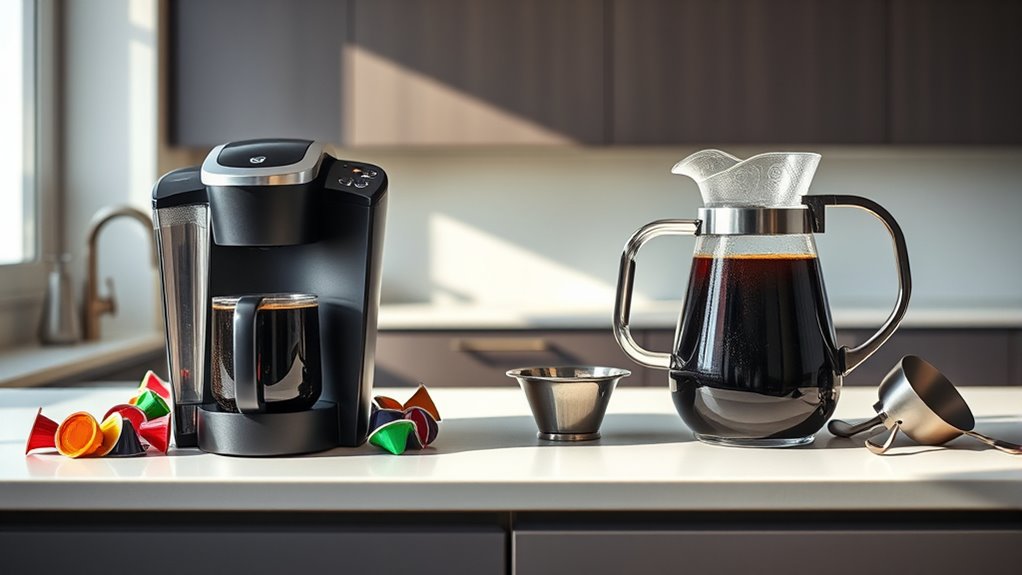
When comparing the energy consumption of different coffee brewing systems, it becomes clear that efficiency varies considerably depending on the method used. Single-serve Keurigs often have higher power consumption during operation but heat up quickly, saving some energy. Traditional drip brewers generally use less power overall but operate longer. Here’s a quick comparison:
| System | Power Consumption (Watts) | Energy Efficiency |
|---|---|---|
| Keurig (single-serve) | 1500 | Fast heating, higher use per brew |
| Drip Coffee Maker | 900 | Lower power, longer brewing |
| French Press | 50 | Minimal energy use |
| Espresso Machine | 1200 | High power, quick extraction |
Additionally, energy-saving features like auto-shutoff can further reduce unnecessary power use, especially when the device is left idle. Understanding energy efficiency can help you make more environmentally conscious decisions when choosing your coffee maker.
Material Use and Sustainability of Coffee Pods

While energy efficiency varies among coffee brewing systems, the materials used for coffee pods considerably influence their environmental impact. The production of coffee pods involves packaging materials that often generate waste, especially when single-use plastics or non-recyclable components are used. Coffee cultivation itself also affects sustainability, as intensive farming can deplete resources and harm ecosystems. Many pods use aluminum or plastic, which require significant energy to produce and are challenging to recycle. Some manufacturers now offer biodegradable or compostable options, but these are not yet widespread. Your choice of coffee pods impacts the overall sustainability of your brewing habits. Opting for eco-friendly packaging and supporting brands that prioritize sustainable coffee cultivation can help reduce your environmental footprint. Additionally, the second trimester overview of production practices highlights the importance of choosing sustainable options to minimize environmental harm. Considering the recyclability of coffee pods can also significantly influence their environmental impact, encouraging proper disposal and recycling efforts. Implementing mindful consumption habits can further enhance the sustainability of your coffee routine by reducing waste. Moreover, being aware of consumer behavior and its influence on industry practices can motivate more sustainable innovations. Promoting awareness about the environmental footprint of coffee products can lead to more responsible choices among consumers.
Innovations and Alternatives for Eco-Friendly Single-Serve Coffee

You can reduce waste by choosing reusable coffee pods, which let you brew your favorite coffee without creating extra trash. Compostable packaging options are also available, helping to minimize landfill impact. These innovations make it easier to enjoy coffee while being kinder to the environment. Incorporating eco-friendly materials into your coffee choices can further support sustainable and health-conscious habits. Selecting biodegradable packaging can additionally decrease pollution and promote environmental responsibility. Additionally, using environmentally friendly kettle materials can decrease energy consumption and reduce environmental impact during brewing. Implementing sustainable practices in your coffee routine can further enhance your eco-friendly efforts.
Reusable Coffee Pods
Have you ever considered how reusable coffee pods can reduce waste and improve sustainability? Reusable coffee pods are a simple yet effective way to make your eco friendly brewing more sustainable. Instead of tossing single-use pods after each brew, you can fill these durable containers with your favorite coffee grounds. This reduces the amount of plastic waste sent to landfills and decreases the demand for manufacturing new pods. Not only do reusable coffee pods cut down on waste, but they also allow you to customize your coffee strength and flavor. They are compatible with many Keurig machines, making them an easy upgrade for environmentally conscious consumers. By switching to reusable coffee pods, you’re taking a step toward more eco-friendly single-serve coffee habits that benefit both your wallet and the planet.
Compostable Packaging Options
Innovations in compostable packaging are transforming the single-serve coffee industry by offering more sustainable alternatives to traditional plastic pods. Biodegradable packaging options, like compostable coffee pods, are designed to break down naturally in composting environments, reducing landfill waste. These eco-friendly pods are made from plant-based materials that dissolve without leaving harmful residues. As a consumer, you can now choose compostable coffee pods that align with your sustainability goals, minimizing your environmental footprint. Companies are continually developing new biodegradable packaging solutions that maintain coffee freshness and flavor while ensuring they’re compostable after use. By switching to these innovative options, you contribute to reducing plastic pollution and support a more eco-conscious approach to your daily coffee ritual.
The Role of Consumer Behavior and Recycling Practices
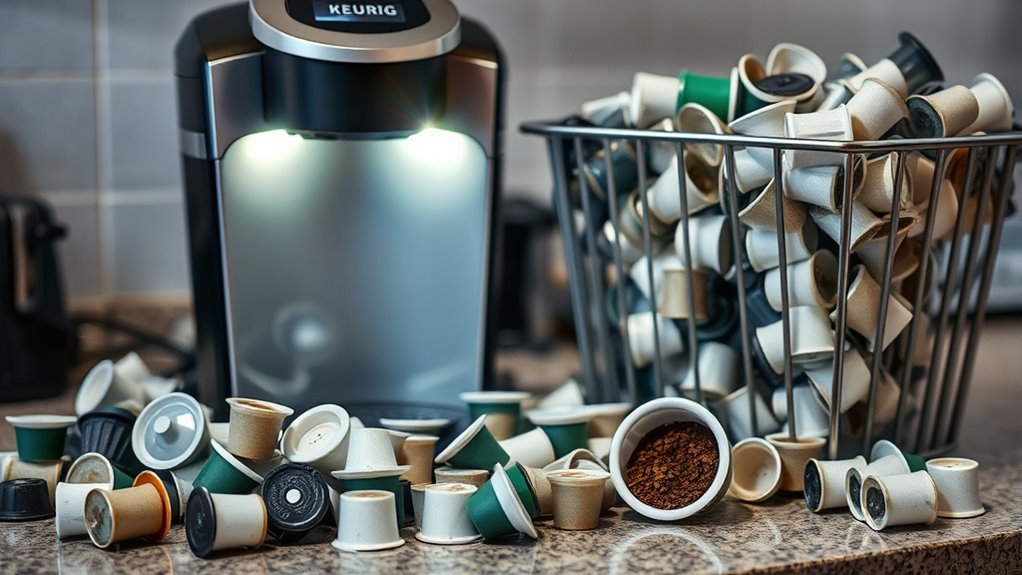
Consumer behavior and recycling practices play a crucial role in minimizing the environmental impact of Keurig’s single-serve coffee pods. Your consumer habits directly influence how much waste ends up in landfills. If you’re aware of proper recycling methods, you can markedly reduce waste by sorting used pods correctly. Recycling awareness encourages you to seek out programs that accept K-Cup pods or to participate in local recycling initiatives. Small actions, like rinsing used pods and disposing of them properly, make a difference. Additionally, choosing reusable filters or pods can lessen the environmental footprint. By staying informed about recycling options and making mindful choices, you help curb waste and promote more sustainable consumption patterns, ultimately contributing to a healthier environment.
Cost and Environmental Considerations Over Time

As you consider using a Keurig, it’s important to think about how the costs add up over time, especially with replacement parts and filters. You’ll also want to weigh the waste management challenges that come with disposing of used pods and their environmental impact. Knowing these factors helps you make a smarter choice for your budget and the planet.
Long-term Expense Impact
Over the long term, the costs associated with Keurig machines extend beyond their initial purchase price, impacting both your wallet and the environment. Consider these factors:
- Ongoing costs for K-Cup pods can add up quickly, reducing potential economic savings.
- Reusable filters offer a way to cut expenses and minimize waste.
- Frequent replacements of machines or parts may be necessary, increasing long-term spending.
- Brand loyalty can influence your choice; sticking with a trusted brand might mean higher costs but better reliability.
While Keurig’s convenience might seem economical initially, over time, expenses for pods and maintenance can outweigh traditional brewing. Balancing these costs with your environmental impact is essential for making an informed decision.
Waste Management Challenges
While the ongoing costs of K-Cup pods and machine maintenance are significant concerns, managing waste generated by Keurig systems presents additional challenges. The packaging materials used in K-Cups are often single-use, creating substantial waste that strains waste management systems. These pods are produced through manufacturing processes that may not prioritize recyclability, leading to environmental concerns. Recycling options are limited, and improper disposal adds to landfill overflow. Over time, the accumulation of non-biodegradable packaging materials poses long-term environmental impacts. Addressing these challenges requires you to think about waste management strategies, such as using recyclable or compostable pods, and advocating for improved manufacturing processes that reduce packaging waste. Managing this waste effectively is essential to minimizing Keurig’s environmental footprint.
Policy and Industry Initiatives Toward Sustainable Coffee Brewing

Recognizing the environmental impact of single-use coffee pods, industry leaders and policymakers are increasingly taking steps to promote sustainable brewing practices. They’re encouraging coffee shops to adopt eco-friendly options and support fair trade coffee, which guarantees better environmental and social standards. To push progress, initiatives include:
Industry efforts promote eco-friendly brewing and fair trade coffee to reduce environmental impact.
- Implementing recycling programs for used pods and packaging.
- Promoting reusable coffee filters and cups.
- Encouraging partnerships with fair trade coffee suppliers.
- Developing regulations that reduce waste and promote eco-conscious manufacturing.
These efforts aim to shift the industry toward more sustainable practices, reducing waste and supporting environmentally responsible coffee sourcing. By adopting these policies, you can help influence the market to prioritize greener options, making your coffee choices more sustainable.
Making an Informed Choice: Balancing Convenience and Eco-Friendliness
When choosing your coffee brewing method, you weigh the convenience of single-serve pods against their environmental impact. While pods make mornings easier, they also generate significant waste that harms the planet. Finding the right balance means considering both your lifestyle and your commitment to sustainability.
Environmental Impact of Pods
Have you ever considered the environmental impact of using Keurig pods? Single-use pods generate significant waste, often ending up in landfills. Here are four key concerns:
- Non-biodegradable plastics that take centuries to decompose
- Limited use of biodegradable filters that could reduce landfill waste
- Excess water consumption during manufacturing and disposal
- Difficulty recycling due to mixed materials in pods
While some brands now offer biodegradable options, many still contribute to pollution and water conservation issues. You can minimize your impact by choosing pods made with biodegradable filters, reducing waste, and supporting recycling programs. Being aware of these factors helps you make an informed decision that balances the convenience of single-serve brewing with eco-friendliness.
Convenience Vs Sustainability
Balancing convenience with sustainability can feel like a tough choice, especially when single-serve coffee systems like Keurig offer quick, hassle-free brewing. You might appreciate the ease of making coffee in minutes, but consider the environmental impact. Opting for plant-based brewing options can reduce your carbon footprint, and focusing on water conservation helps protect essential resources. To help you weigh your options, here’s a quick comparison:
| Convenience | Sustainability |
|---|---|
| Fast, easy, minimal cleanup | Eco-friendly, reduces waste |
| Variety of flavors and brews | Focus on plant-based ingredients |
| Single-serve design saves time | Conserve water with mindful brewing |
Balancing these factors helps you make informed choices that align with your values.
Frequently Asked Questions
How Do Keurig Pods Impact Water Usage Compared to Traditional Brewing?
Keurig pods tend to use more water per cup compared to traditional brewing, leading to higher water waste. While they offer convenience, there’s an efficiency trade-off since traditional brewing methods often use water more efficiently and produce less waste overall. If you’re concerned about water conservation, sticking with a drip coffee maker might be better. However, if you prioritize convenience, Keurig pods do come with some water use drawbacks.
Are There Biodegradable or Compostable Keurig Pods Available?
You’ll be pleased to know that biodegradable pods and compostable capsules are now available for Keurig machines. These eco-friendly options often coincide with your desire to reduce waste, making it easier to enjoy coffee without harming the environment. By choosing biodegradable or compostable capsules, you actively contribute to less landfill waste and support sustainable practices, aligning your daily routine with eco-conscious values.
What Are the Best Practices for Recycling Keurig Single-Serve Pods?
To recycle Keurig single-serve pods effectively, you should explore recycling innovations like specially designed collection programs or mail-back options. Remove the coffee grounds, separate the plastic and aluminum components if possible, and then dispose of the pod in designated recycling bins. Look for pods with eco-friendly packaging or biodegradable options, and support brands committed to reducing waste, helping you minimize your environmental impact.
How Does Brewing Time Affect Energy Consumption in Different Systems?
Brewing time directly impacts energy efficiency in different systems. Faster brewing speeds, like those in Keurig machines, typically use less energy per cup since they heat water quickly and shut off automatically. In contrast, traditional systems that take longer may consume more energy overall. By choosing appliances with efficient brewing speeds, you can reduce energy consumption, making your coffee habits more eco-friendly and cost-effective.
What Are Some Sustainable Alternatives to Single-Serve Coffee Machines?
Opting for sustainable options can truly make a difference. You might consider using reusable filters, which cut down on waste and reduce your plastic footprint. Pair them with eco-friendly beans, grown with minimal environmental impact. These alternatives not only help preserve the planet but also allow you to enjoy your coffee guilt-free. Making this switch supports a greener lifestyle and encourages more eco-conscious choices in your daily routine.
Conclusion
Ultimately, the choice between Keurig and traditional brewing is like weighing a feather against a stone—you must decide what tips the scales of convenience versus sustainability. While Keurig offers quick, easy coffee, its environmental footprint can’t be ignored. By making mindful choices—recycling pods, opting for reusable filters—you can enjoy your brew without tipping the planet’s balance. After all, every small step adds up, turning your morning ritual into a act of eco-friendly rebellion.