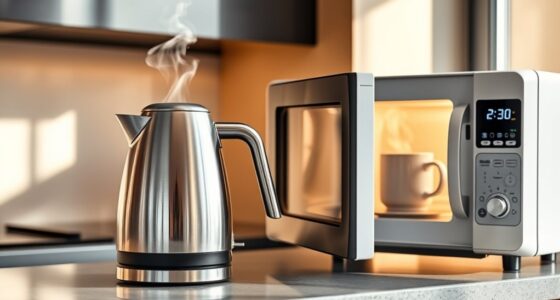
To make great tea with an electric kettle, start by selecting a kettle with precise temperature controls. For delicate teas like green or white, set the water between 160–185°F, while black tea needs boiling water around 200°F. Use a thermometer if necessary to guarantee accuracy, and preheat or cool the water slightly for better flavor. Regularly clean your kettle for consistent results. Keep exploring for more tips to perfect your tea-brewing skills.
Key Takeaways
- Use an electric kettle with precise temperature control to set water at optimal temperatures for each tea type.
- Preheat your kettle and avoid boiling water for delicate teas like white and green to prevent scorching.
- Monitor water temperature with a thermometer or kettle display to ensure accurate brewing.
- Brew white and green teas at 160–185°F, black teas at 200–212°F, and oolong at 190–200°F for best flavor.
- Regularly clean and descale your kettle to maintain temperature accuracy and optimal performance.
Understanding the Importance of Water Temperature for Different Tea Types
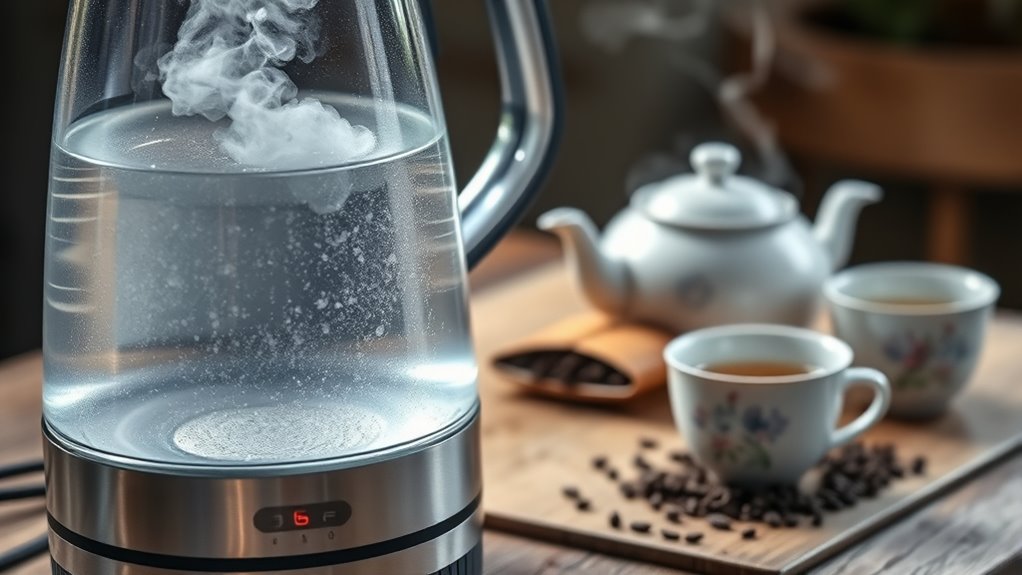
Understanding the importance of water temperature is key to brewing the perfect cup of tea. When it comes to tea storage, keep your leaves in a cool, airtight container to preserve flavor. The kettle material also plays a role; for instance, stainless steel kettles heat water evenly, helping you reach precise temperatures. If you’re brewing green or white teas, avoid boiling water—aim for about 160–180°F—since high heat can scorch delicate leaves. Black and oolong teas need hotter water, around 200°F, to extract full flavor. Using the right kettle material ensures consistent heating, which helps you control water temperature accurately. Proper storage and choosing a kettle suited for your tea type make a significant difference in achieving the ideal brew every time. Additionally, understanding water temperature is essential because it directly impacts the extraction of flavors and aromas from your tea leaves. Being aware of the correct brewing temperature can help you avoid over- or under-extraction, ensuring a more flavorful and enjoyable tea experience. Moreover, experimenting with different temperatures can expand your tea flavor profile and enhance your overall brewing skills, especially when considering resources and tools that assist in precise temperature control. Properly maintaining your kettle temperature can also prolong the lifespan of your equipment and improve your brewing consistency.
Choosing the Right Electric Kettle With Temperature Control Features
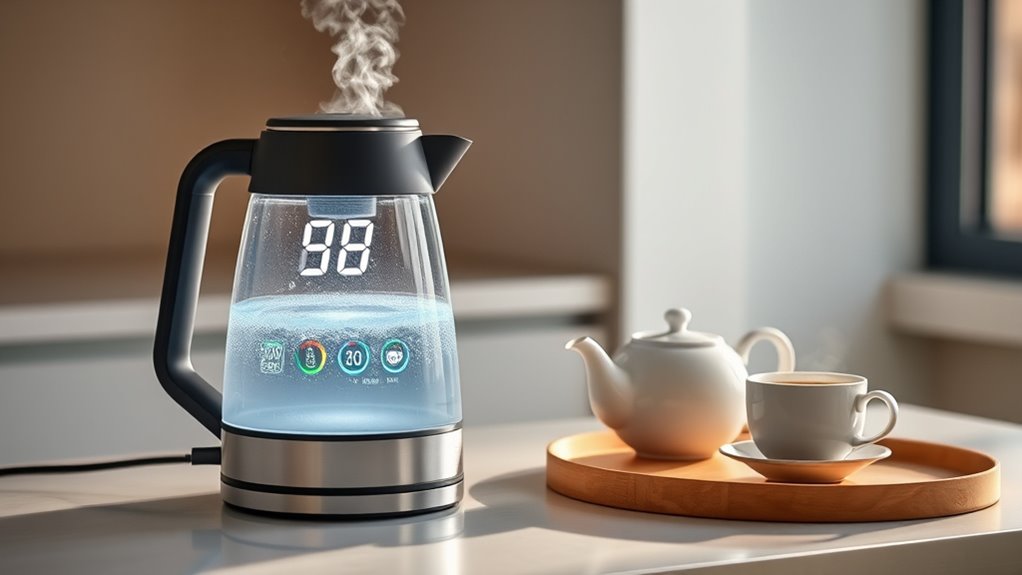
Choosing the right electric kettle with temperature control features can make a significant difference in your tea brewing experience. Look for a kettle built with high-quality materials to guarantee good kettle durability, so it lasts through daily use. A sturdy design prevents cracks and leaks, saving you money over time. Energy efficiency is also essential; select a kettle with features like rapid boiling or adjustable temperature settings to minimize energy waste. Some kettles have insulated walls to keep water hot longer, reducing power consumption. Consider user-friendly controls and clear displays, so you can easily select and monitor the desired temperature. Additionally, AI-driven safety features can enhance your boiling experience by providing alerts or automatic shut-off options. Finding a balance between durability and energy efficiency assures your kettle will serve you well, offering reliable performance and helping you brew perfect tea every time. Durability and energy efficiency are key factors to consider when choosing a quality electric kettle, especially since Gold IRA Rollovers highlight the importance of secure and reliable assets for long-term investment stability. Incorporating sustainable materials into your kettle choice can further support eco-friendly living. Moreover, selecting a kettle with performance tuning options can help you customize the heating process for different types of tea, ensuring optimal flavor extraction.
How to Set and Maintain the Perfect Temperature for Green Tea
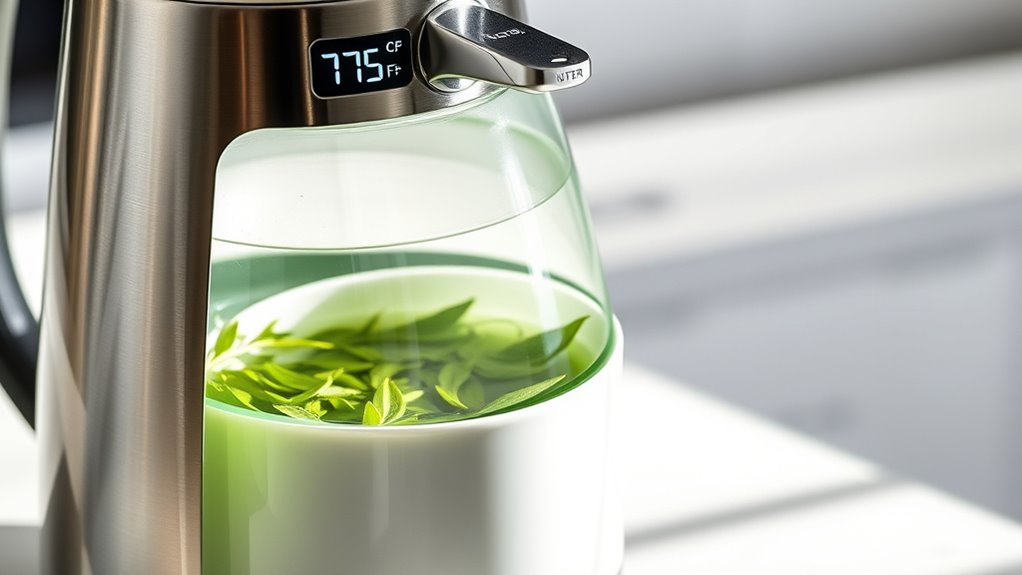
Getting the temperature right is key to brewing the perfect green tea, as it directly affects flavor and aroma. Ideally, you should aim for water around 160°F to 180°F (70°C to 80°C). Too hot, and the tea can become bitter; too cool, and it won’t fully release its delicate flavors. Use your electric kettle’s temperature control to set precisely within this range. Keep in mind that water mineral content influences tea flavor—hard water can mute subtle notes, while soft water enhances them. To maintain consistent temperature, avoid opening the kettle unnecessarily and consider preheating your mug or teapot. Precise temperature control helps you extract the best flavor from your green tea without overstepping its delicate profile. Proper tuning of your water temperature can also help optimize flavor extraction as it relates to your brewing process, especially when considering water mineral content. Additionally, monitoring the electric kettle’s temperature accuracy ensures you consistently brew with optimal precision.
Optimal Temperatures for Brewing Black, Oolong, and White Teas
To get the best flavor, you need to brew black, oolong, and white teas at their ideal temperatures. Black tea benefits from hotter water between 200 and 212°F, while oolong needs slightly cooler temps around 190 to 200°F. White tea, on the other hand, requires a gentler touch with water between 160 and 185°F. Using proper water temperature ensures optimal extraction of flavors and preserves the delicate qualities of each tea type.
Black Tea: 200–212°F
Have you ever wondered what temperature is best for brewing black tea? The ideal range is between 200°F and boiling point at 212°F. Using water at this temperature helps extract the full flavor and richness of black tea leaves. Be sure to store your tea properly; keeping it in a cool, dry place preserves its freshness. When using your electric kettle, ensure it’s clean and functioning safely to avoid accidents. Kettle safety is essential, especially with high-temperature water, so always handle with care. Boiling water can cause burns if spilled or splashed. By heating your kettle to the right temperature and maintaining good tea storage habits, you’ll enjoy a perfectly brewed cup with vibrant flavor and aroma. Additionally, understanding suction power can help in selecting the best appliances to keep your kitchen clean and efficient. Proper kettle temperature control features are also crucial for achieving optimal brewing results. Moreover, choosing the right kettle material can influence heat retention and safety during boiling. For optimal results, consider the quality of water used, as it can impact the taste of your tea.
Oolong Tea: 190–200°F
Oolong tea is best brewed at temperatures between 190°F and 200°F, which allows its complex flavors and aromas to fully develop. Using high-quality tea leaves guarantees a richer taste, while water mineral content influences extraction. To optimize your brew, ensure your water temperature is accurately maintained within this range. You can also experiment with different water mineral content levels to find the perfect balance for your preferred flavor profile. Proper temperature control releases oolong’s nuanced profile, and being mindful of water quality can significantly impact the final taste. Additionally, some electric kettles offer precise temperature settings that help maintain consistent brewing temperatures.
White Tea: 160–185°F
White tea is best brewed at temperatures between 160°F and 185°F to preserve its delicate flavor and subtle aroma. Using a thermometer or temperature control feature on your electric kettle helps you hit this range precisely. The kettle material can also influence your brewing experience; for example, a glass kettle allows you to monitor water temperature visually, ensuring ideal steeping conditions. Brewing within this temperature range unchains the tea’s nuanced tea flavor without overpowering its gentle notes. Avoid boiling water, as it can scorch the delicate leaves and diminish the tea’s subtle qualities. By carefully controlling your kettle’s temperature and considering the material, you’ll enjoy a refined white tea with a smooth, invigorating taste. Proper temperature control is essential to unlock the full potential of white tea’s delicate profile.
Using a Thermometer to Achieve Precise Water Temperatures
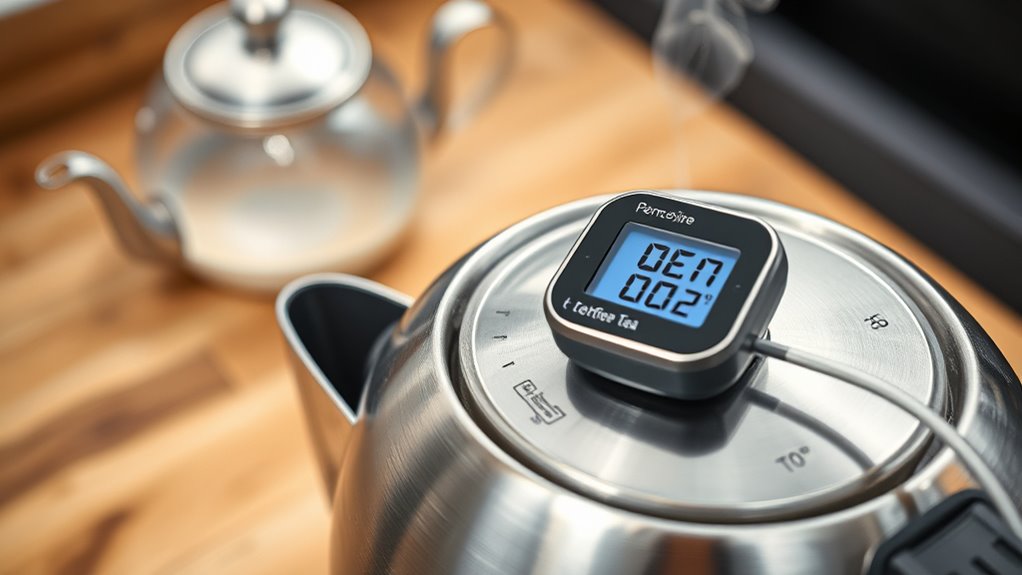
Using a thermometer helps you get an accurate temperature reading, so you know exactly when your water is ready. This precision guarantees you hit the ideal temperature for your specific tea type. As a result, your brewing becomes more consistent, leading to better-tasting tea every time.
Accurate Temperature Reading
To brew the perfect cup of tea, you need to make sure your water reaches the precise temperature required for the type you’re preparing. Using a thermometer helps you get an accurate temperature reading, avoiding guesswork. When checking the water, consider water purity, as minerals can affect the thermometer’s accuracy. Also, the kettle material plays a role—metal kettles conduct heat differently than glass or plastic ones, influencing temperature readings. Insert the thermometer into the water carefully, ensuring it doesn’t touch the kettle’s sides or bottom, which can give false readings. Regularly calibrate your thermometer for consistency. By paying attention to these details, you’ll ensure your water is at the ideal temperature, leading to a better-tasting, more consistent cup of tea.
Consistent Brewing Results
Achieving consistent brewing results hinges on precisely controlling your water temperature, and a thermometer is your best tool for that. When you use a thermometer, you can hit the ideal temperature for each tea type, ensuring ideal tea flavor every time. Consistent water temperature helps maintain the right brewing time, preventing over- or under-extraction that can dull or overpower flavors. By monitoring water temperature, you avoid guesswork and achieve uniform results with each brew. This precision allows you to refine your process, adjusting for subtle differences in tea leaves or personal taste. Ultimately, using a thermometer guarantees that each cup delivers the intended flavor profile, making your tea experience more satisfying and consistent across multiple brews.
Tips for Preheating and Cooling Water for Best Results

Preheating your water to the right temperature guarantees your tea steeps properly and develops full flavor. To do this effectively, consider your water’s mineral content, as hard water can affect heat transfer and taste. Using softened water or filtered water can improve results. Additionally, kettle material influences how quickly water heats and cools. Metal kettles, like stainless steel, heat water faster but may retain heat longer, making preheating more efficient. Glass or plastic kettles cool down more quickly, so you might need to preheat more often. Always preheat your kettle with hot water before adding fresh water for your brew. Cooling water slightly after boiling can prevent over-extraction, especially for delicate teas. Proper preheating and cooling ensure ideal temperature control for perfect flavor.
Cleaning and Maintaining Your Electric Kettle for Accurate Temperature Control

Regularly cleaning your electric kettle is essential to maintain accurate temperature control and guarantee ideal brewing results. Over time, mineral deposits from water buildup can affect heating efficiency and skew temperature accuracy. To prevent this, perform regular electric kettle cleaning and kettle descaling. Use a mixture of vinegar and water or a commercial descaling solution to remove limescale, especially if you notice slower boiling or strange noises. After descaling, rinse thoroughly to eliminate any residue. Keep the heating element and interior smooth to ensure consistent heat transfer. Proper maintenance not only prolongs your kettle’s lifespan but also ensures your water reaches the precise temperature needed for perfect tea. Make descaling a regular part of your cleaning routine to enjoy top-tier brewing every time.
Frequently Asked Questions
Can I Brew Multiple Types of Tea in One Kettle?
Yes, you can brew multiple types of tea in one kettle, but it’s best to be cautious about tea blending and kettle capacity. If you want to mix flavors, consider using separate infusers or cleaning the kettle thoroughly between brews. Be mindful of the kettle’s capacity to avoid overfilling. This way, you maintain the distinct taste of each tea and prevent cross-contamination, ensuring a perfect brew every time.
How Long Does It Take for the Kettle to Reach the Desired Temperature?
With a whir of warmth, your kettle quickly reaches your desired degree, typically in 2-5 minutes. Boiling time varies based on the kettle’s wattage and the initial water temperature. Once it hits the target temperature, it maintains temperature stability, ensuring your tea’s perfect pour. As you wait, watch the water whirl and warm, knowing precise timing guarantees a great cup every time.
Is It Safe to Leave the Kettle at a Set Temperature for Extended Periods?
Leaving your electric kettle at a set temperature for extended periods generally isn’t safe due to safety concerns and temperature stability issues. The kettle’s heating element might overheat or malfunction if left on too long, risking damage or fire. For safety, it’s best to turn off the kettle once it reaches your desired temperature and avoid prolonged stays at a set temperature. Always follow your kettle’s manufacturer guidelines to prevent accidents.
Can I Use Filtered Water to Improve Tea Flavor?
Using filtered water can be a delightful secret to enhancing your tea’s flavor. With water purity in mind, it minimizes mineral taste and impurities that can interfere with your brew. By choosing filtered water, you give your tea the best chance to shine, revealing subtle notes and richness. It’s a simple step that elevates your tea experience, making each cup more enjoyable and truly worth savoring.
How Often Should I Descale My Electric Kettle for Optimal Performance?
You should descale your electric kettle every 1 to 3 months, depending on your water hardness. Regular descaling helps prevent mineral buildup, which can affect performance and heating efficiency. If you notice longer boiling times or reduced performance, it’s a sign to descale sooner. Using descaling solutions or vinegar, follow the manufacturer’s instructions to keep your kettle in top shape and confirm your tea always tastes its best.
Conclusion
Mastering the right water temperature transforms your tea experience from ordinary to extraordinary. With the right electric kettle and a little attention to detail, you’ll unlock flavors so vibrant and nuanced, they’ll elevate your tea-drinking to an art form. Don’t settle for mediocre brews—your perfect cup is just a temperature adjustment away. Embrace these tips, and soon you’ll be crafting teas so exquisite, they’ll make even the finest tea salons seem like mere amateurs.