A $30 moka pot can brew strong, bold coffee similar in strength to espresso, but it won’t match the consistency, control, or flavor complexity of a $300 espresso machine. While it’s a budget-friendly, durable option great for quick, no-fuss brews, a high-end machine offers precise temperature and pressure control, producing more refined flavors. Curious how your choice impacts taste and long-term use? Keep exploring to find the best fit for your coffee style.
Key Takeaways
- A $30 moka pot can produce strong, flavorful coffee comparable to a lower-end espresso machine, but lacks precise control.
- High-end $300 espresso machines offer better temperature and pressure control for more consistent, refined espresso shots.
- Durability and maintenance of a budget moka pot can rival expensive machines if properly cared for.
- Espresso machines excel in extracting complex flavors and oils, resulting in smoother, more nuanced coffee.
- Overall, a well-maintained $30 moka pot can deliver satisfying coffee, but high-end machines provide superior consistency and flavor complexity.
Understanding the Basics of Moka Pots and Espresso Machines
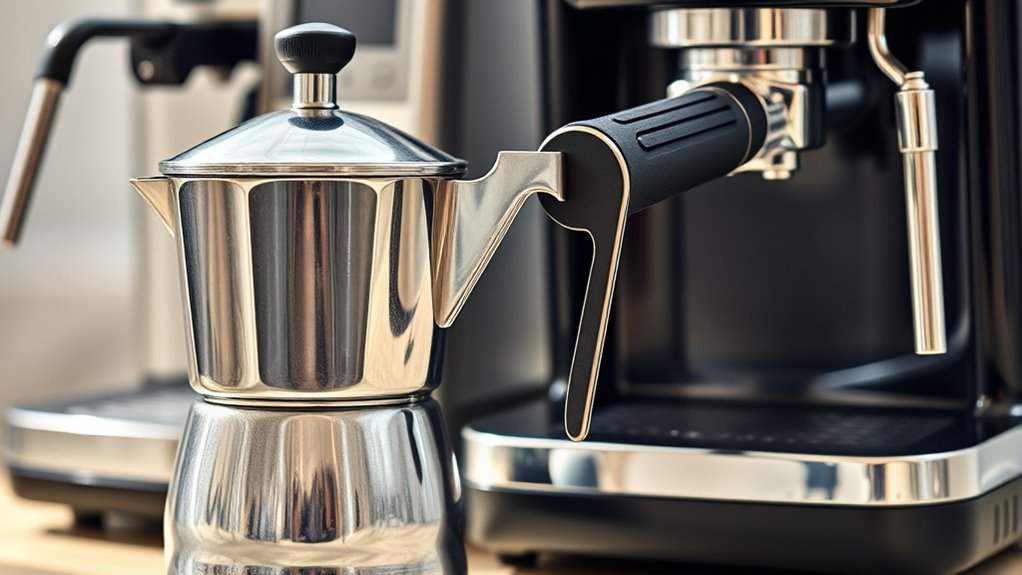
While both moka pots and espresso machines brew coffee by forcing water through ground beans, they operate differently and produce distinct results. Material differences play a key role here; moka pots are typically made from aluminum or stainless steel, making them lightweight and durable. Espresso machines, on the other hand, often feature high-quality stainless steel components and advanced brewing mechanisms. Brand reputation also influences your choice—established brands tend to guarantee better craftsmanship and reliability. Moka pots are simple, manual devices with fewer parts, making them affordable and easy to maintain. Espresso machines are more complex, often featuring electronic controls and pressure systems. Material composition can affect the heat retention and overall durability of the device, impacting your brewing experience. Understanding these material differences and Brand reputation helps you determine which device aligns best with your brewing preferences and expectations. Brewing techniques also vary significantly, impacting the flavor and strength of the final coffee. Additionally, the cost difference between the two options can be substantial, influencing your decision based on your budget and brewing needs. A thorough understanding of cost considerations can help you choose the best option for your specific coffee preferences and financial situation.
Cost and Value: What You Get at Different Price Points
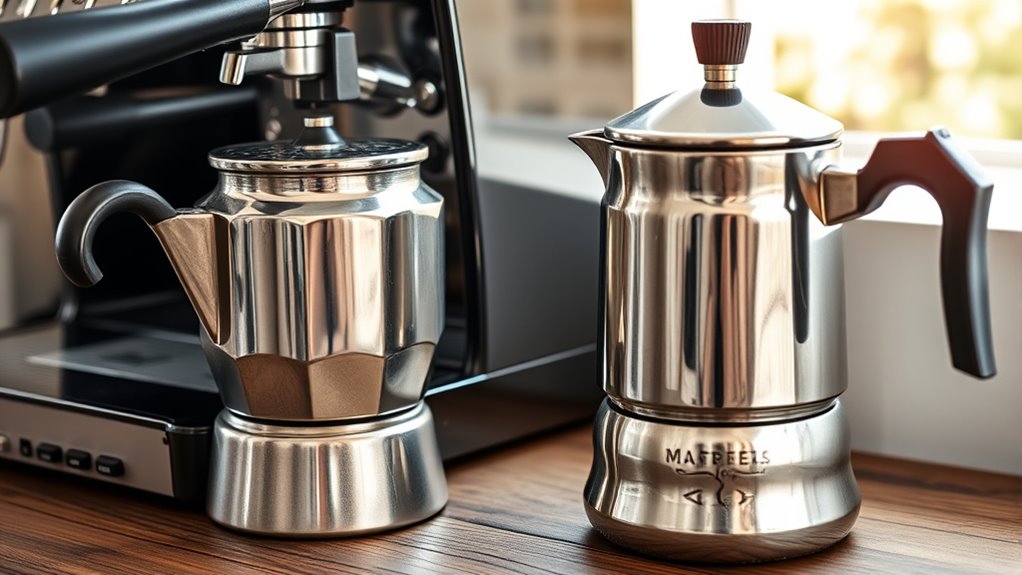
When you compare the costs of moka pots and espresso machines, it becomes clear that your investment often reflects the quality and features you receive. A budget moka pot, around $30, offers simplicity and durability but limited control over brewing variables. In contrast, a $300 espresso machine provides advanced features like temperature control, pressure gauges, and programmable settings. A thorough pricing comparison shows that higher-priced machines often come from brands with strong reputations for reliability and customer support. Brand reputation can play a significant role in your decision-making process, especially when considering long-term use and maintenance. While a lower-cost moka pot can produce decent coffee, investing in a premium machine may deliver better consistency and longevity. Additionally, understanding contrast ratio can help you evaluate the image quality differences between lower and higher-end machines, especially if you plan to use your setup for multimedia purposes. It is also worth noting that user experience can vary significantly depending on the complexity and features of the machine, impacting overall satisfaction. It’s also important to consider appliance features that enhance usability and convenience, which are often more advanced in higher-priced models. Ultimately, your choice depends on how much value you place on convenience, control, and Brand reputation versus affordability.
Brewing Process and Flavor Profiles
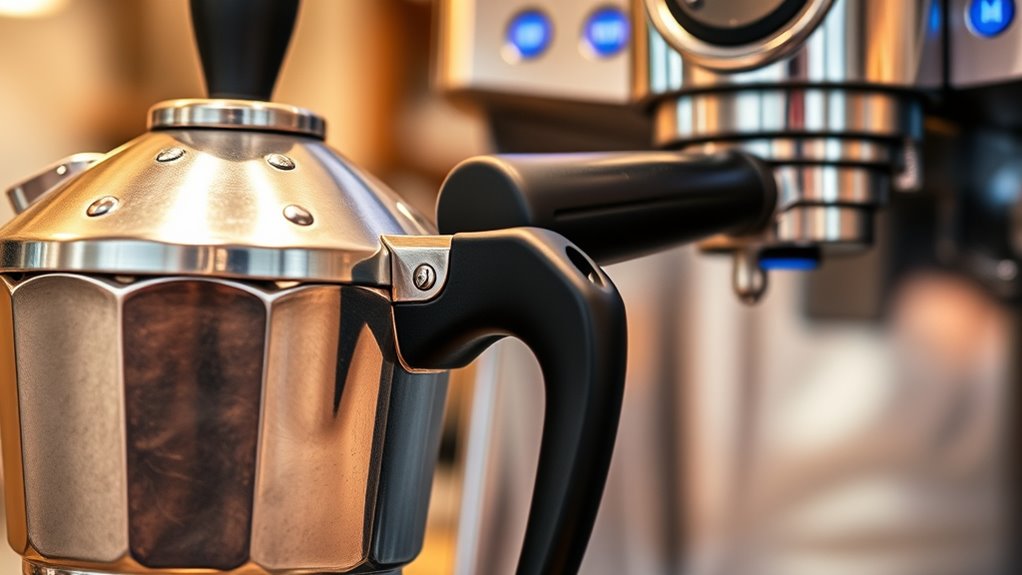
Your brewing method directly affects how flavors develop, with moka pots and espresso machines using different extraction techniques. You’ll notice that flavor intensity varies, often being richer with espresso machines and more nuanced with moka pots. Additionally, you gain more control over consistency and strength with an espresso machine, while moka pots offer a more straightforward experience. Unique and Wicked Planters can also influence the aesthetic of your brewing space, adding a creative touch to your coffee setup. Moreover, the brewing process influences how compounds extract and develop, ultimately shaping your coffee’s flavor profile.
Extraction Method Differences
The extraction methods of Moka pots and espresso machines differ markedly, shaping their brewing processes and resulting flavor profiles. Moka pots operate at lower pressure differences, typically around 1-2 bars, which limits extraction efficiency and produces a bolder, somewhat gritty coffee. In contrast, espresso machines use high pressure—around 9 bars—enhancing extraction efficiency and yielding a more refined, concentrated shot. This pressure difference directly influences how flavors are pulled from the coffee grounds, with higher pressure extracting more oils and solubles quickly. As a result, espresso machines produce a smoother, more complex flavor profile, while Moka pots deliver a robust but less nuanced experience. Your choice hinges on how much pressure and extraction efficiency you want in your daily brew.
Flavor Intensity Variations
Because of their different brewing processes, Moka pots and espresso machines produce coffee with distinct flavor intensities. The espresso machine’s high pressure creates a richer, more concentrated brew with higher caffeine concentration and better aroma preservation. In contrast, a Moka pot’s lower pressure results in a milder, less intense flavor. Consider these points:
- Espresso machines extract more oils, enhancing flavor complexity.
- The higher pressure preserves aroma better in espresso.
- Moka pots produce a bold taste but with less nuance.
- Caffeine concentration tends to be higher in espresso, offering a stronger kick.
Your choice impacts flavor intensity, aroma, and caffeine strength, shaping your coffee experience based on your preferences and equipment quality.
Consistency and Control
While flavor intensity varies between Moka pots and espresso machines, achieving consistent results depends heavily on how you control the brewing process. Temperature stability is essential; maintaining a steady heat ensures your coffee extracts evenly, preventing bitter or weak flavors. Pressure control also plays a vital role—espresso machines offer precise pressure adjustments, leading to uniform extraction. With a Moka pot, the pressure builds naturally, but managing heat prevents over-pressurization or under-extraction. Consistency improves when you use the same water volume, heat source, and brewing time each time. Additionally, pressure regulation is crucial for optimal extraction and flavor clarity. While a high-end espresso machine provides more precise control, a well-managed Moka pot can still deliver reliable, flavorful results. Ultimately, mastering these controls helps you produce a balanced, repeatable cup every time.
Maintenance, Durability, and Long-term Investment
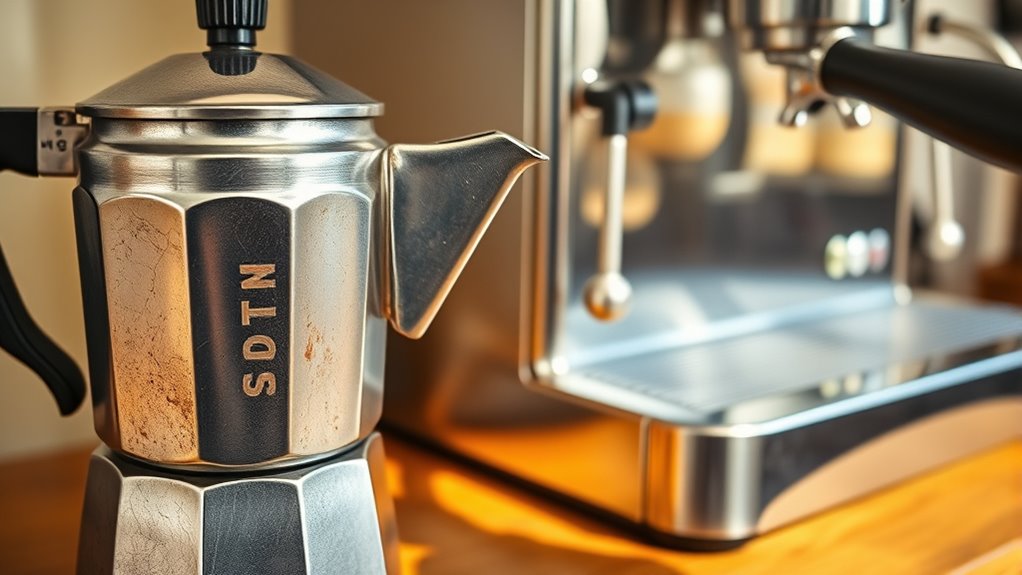
When it comes to maintenance and durability, your choice between a Moka pot and an espresso machine can markedly affect your long-term investment. A Moka pot generally requires simple cleaning routines, like rinsing and occasional descaling, which helps maintain its aesthetic appeal over time. In contrast, espresso machines often need more complex upkeep, including cleaning filters and descaling components. Consider these factors:
- Ease of cleaning routines for longevity
- Material quality and resistance to wear
- How well each appliance maintains its aesthetic appeal
- Overall durability under daily use
- The construction quality of each device influences how long they can reliably perform. Regular maintenance also plays a crucial role in preserving the filtration efficiency of air purifiers, ensuring ongoing health benefits. Additionally, choosing appliances made with high-quality materials can significantly extend their lifespan and reduce the need for repairs. The design and engineering of the device can also impact its ease of maintenance and overall durability. Proper storage and handling can further enhance the longevity of your equipment, especially when using durable components designed to withstand frequent use. A well-maintained Moka pot can last decades, making it a cost-effective option. Meanwhile, a high-quality espresso machine, though pricier upfront, can also be a durable investment if properly cared for.
Practical Considerations for Home Baristas
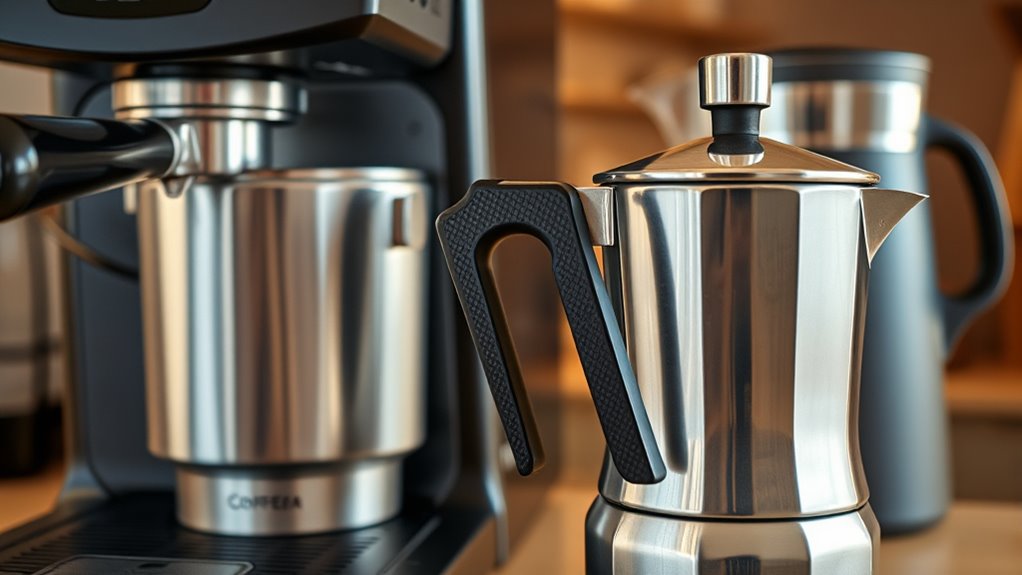
Choosing between a Moka pot and an espresso machine depends largely on your practical needs and how you like to approach brewing at home. If you enjoy creating coffee art, an espresso machine with a steam wand offers more control for latte art and milk frothing. However, a Moka pot requires less setup and cleanup, making it ideal for quick, strong brews. Consider your grinder compatibility as well; espresso machines demand a consistent, fine grind, so ensure your grinder can produce that. Moka pots are more forgiving with coarser grounds. Think about your space, budget, and how much time you want to spend each morning. Practicality, ease of use, and your specific coffee preferences will guide your decision. Additionally, evaluating the energy efficiency of each option can help you make a more sustainable choice in the long run. Furthermore, understanding the automated features of modern espresso machines can influence your ease of use and maintenance. To optimize your brewing experience, also consider the size and storage space available for your equipment. In addition, the durability of the materials can affect long-term satisfaction and cost-effectiveness of your investment. Incorporating a regional flavor perspective can also enhance your appreciation of coffee varieties and brewing styles.
Making the Right Choice for Your Coffee Journey
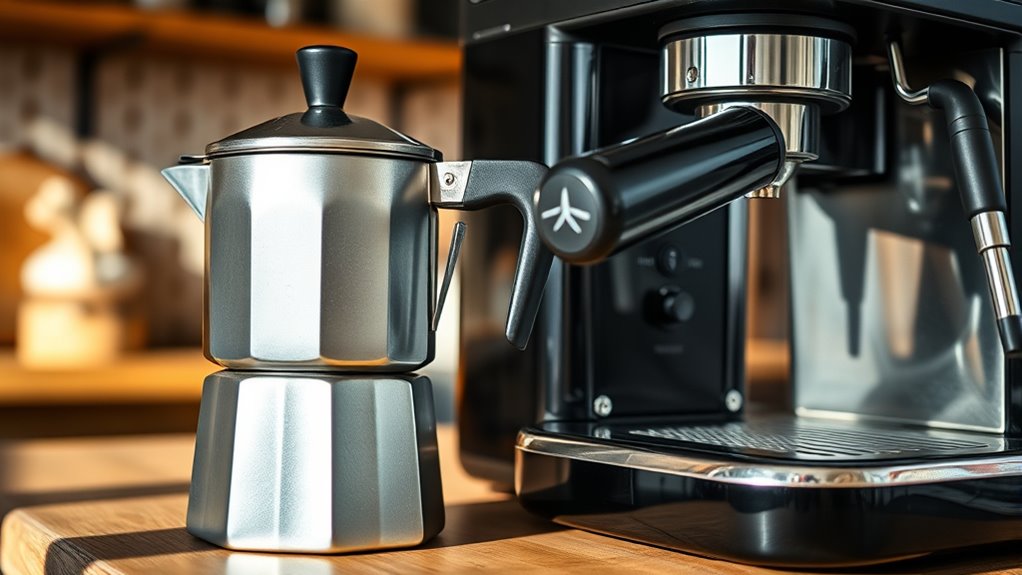
Your ideal coffee setup depends on how you want to experience brewing and enjoy your daily cup. To make the right choice, consider these factors:
- Coffee aesthetics: Do you prefer a sleek, modern look or vintage charm? Your setup should reflect your style.
- Ease of use: Decide if you want a simple, quick process or enjoy experimenting with brewing techniques.
- Brand reputation: Trustworthy brands often guarantee durability and quality, influencing your long-term satisfaction.
- Budget: Are you comfortable investing in a high-end machine or prefer a budget-friendly option that still brews great coffee?
Frequently Asked Questions
Can a Moka Pot Truly Replicate the Taste of an Espresso Machine?
A moka pot can mimic some aspects of espresso, but it doesn’t fully replicate the flavor comparison or brewing consistency of a traditional espresso machine. You might enjoy rich, intense coffee, but expect less crema and nuanced flavors. The moka pot’s simplicity offers good results, yet it can’t match the precision and consistency of an espresso machine. For a closer experience, focus on grind size and brewing time.
How Does Water Temperature Affect the Flavor Extraction in Both Devices?
Did you know that ideal brew temperature ranges between 195°F and 205°F? If water’s too hot or too cold, your extraction quality suffers, impacting flavor. In both devices, maintaining the right brew temperature ensures balanced extraction, highlighting rich, nuanced flavors. When water hits the right temperature, you’ll notice a smoother, more aromatic coffee—making every sip worth it, whether you’re using a moka pot or an espresso machine.
Are There Any Health Concerns With Using Cheaper Coffee-Making Equipment?
Using cheaper coffee-making equipment can raise health safety and durability concerns. Lower-quality materials might leach harmful chemicals into your coffee or break easily over time. You should be cautious and select devices made from food-safe, durable materials to minimize health risks. While budget options can work, investing in a well-made machine ensures better safety, longevity, and consistent coffee quality, making your brewing experience safer and more enjoyable.
What Accessories or Upgrades Can Improve the Performance of a Moka Pot?
To boost your moka pot’s performance, consider upgrading with a high-quality filter basket for better extraction and cleaner coffee. Adding a pressure gauge can help you monitor and maintain ideal pressure during brewing, ensuring richer flavor. Regularly descaling your moka pot also prevents buildup that hampers performance. These simple accessories and upgrades make your brewing experience more consistent, flavorful, and satisfying every time.
How Do Cleaning Routines Differ Between Moka Pots and Espresso Machines?
You should clean your moka pot and espresso machine regularly to keep them functioning well. For a moka pot, rinse after each use and perform a deep cleaning weekly with vinegar or mild detergent, paying attention to the filter and gasket. Espresso machines require frequent backflushing, descaling, and thorough cleaning of the portafilter and steam wand. Proper maintenance techniques prolong their lifespan and ensure great-tasting coffee every time.
Conclusion
Whether you choose a $30 moka pot or a $300 espresso machine, it’s all about your coffee journey. Think of the moka as a charming troubadour, brewing bold melodies on a budget, while the espresso machine is a masterful orchestra, delivering complex symphonies. Both can fill your mornings with rich flavor—it’s your passion and patience that turn simple tools into magic. So, trust your taste and embrace the brew that speaks to you.