Reusable and paper coffee filters definitely change your brew’s taste and texture. Paper filters produce a cleaner, brighter cup by trapping oils and sediments, while reusable filters allow more oils to pass through, resulting in a fuller-bodied, richer flavor. Proper cleaning of reusable filters is crucial to prevent off-tastes. Want to find out how to fine-tune your brew with different filters and optimize your coffee experience? Keep exploring for expert tips and insights.
Key Takeaways
- Reusable filters allow more oils and sediments, resulting in a richer, fuller-bodied flavor compared to paper filters’ cleaner taste.
- Paper filters trap oils and fine grounds, producing a brighter, lighter, and less oily cup of coffee.
- Proper cleaning of reusable filters prevents residual flavors that could alter taste, unlike single-use paper filters.
- Filter material influences flavor nuances, with metal filters adding body and paper filters providing clarity.
- Overall, the choice of filter material significantly impacts the coffee’s flavor profile and aroma.
Top picks for "reusable paper coffee"
Open Amazon search results for this keyword.
As an affiliate, we earn on qualifying purchases.
How Reusable and Paper Filters Differ in Material and Structure
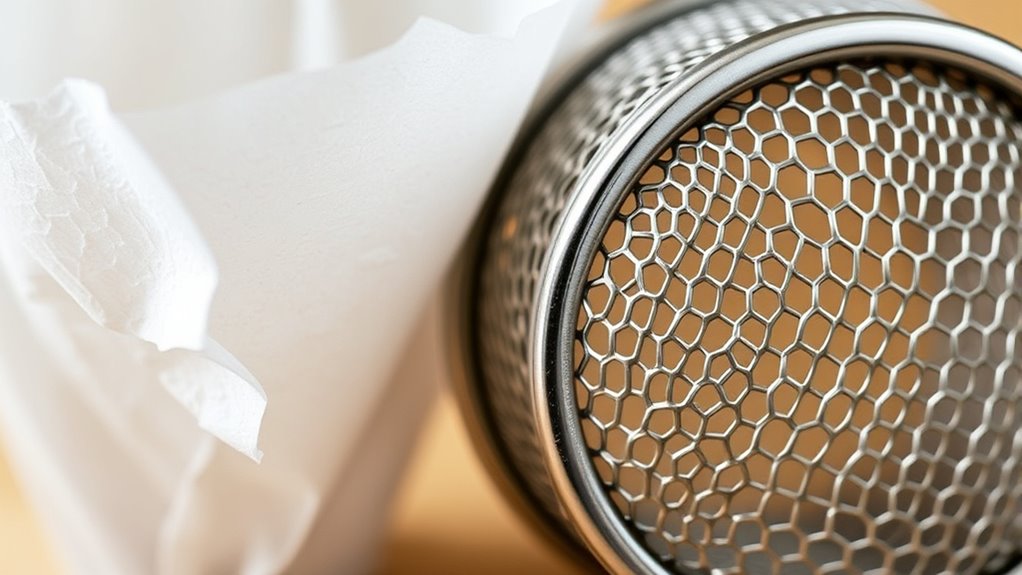
Reusable and paper coffee filters differ substantially in their materials and structure. Reusable filters are usually made from metal, silicone, or cloth, offering a sturdy build that can withstand repeated use. These materials contribute to filter durability, meaning you can use them over and over without losing effectiveness. Paper filters, on the other hand, are made from cellulose pulp, which is lightweight and designed for single use. Their porous structure allows hot water to flow through easily, helping to preserve the coffee’s rich aroma. Because of their different materials, reusable filters tend to produce a fuller coffee aroma, while paper filters provide a cleaner, crisper flavor by trapping more oils. Additionally, choosing the right filter can influence the overall environmental impact of your brewing process, with reusable options generally being more eco-friendly over time. This choice also impacts the sustainability of your coffee-making routine, encouraging environmentally conscious habits. Furthermore, the material composition of the filter can affect the flavor profile of your coffee, as different materials interact uniquely with the brewing process. Understanding these differences helps you choose the right filter for your brewing preferences.
The Impact of Filter Material on Coffee’s Flavor Profile
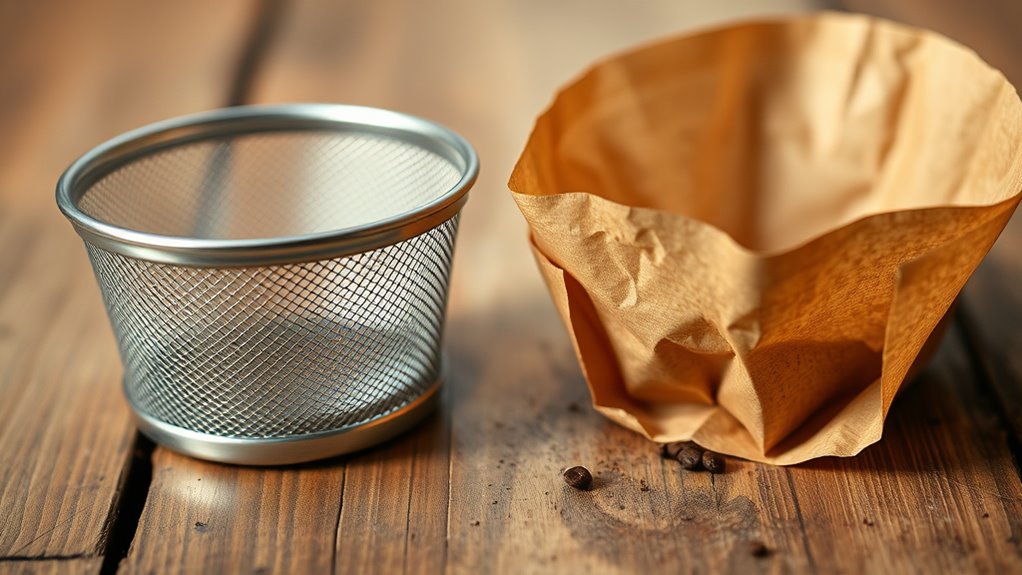
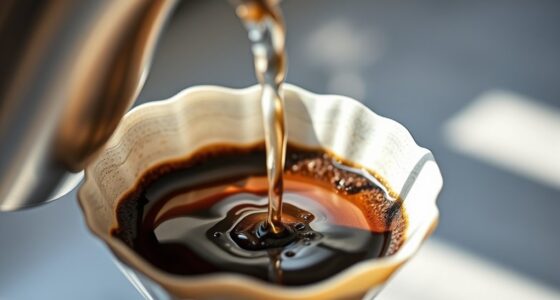
The material of your coffee filter considerably influences the flavor profile of your brew. Different filter materials interact uniquely with coffee grounds, affecting flavor interaction. Paper filters tend to absorb oils, resulting in a cleaner, brighter taste with less body. In contrast, metal or reusable filters often allow more oils to pass through, enriching the flavor and creating a fuller mouthfeel. Some materials, like unbleached paper, add subtle notes, while others, such as stainless steel, preserve the coffee’s natural oils without imparting additional flavors. Your choice of filter material can enhance or mute specific flavor nuances, shaping your overall coffee experience. Recognizing how the filter material impacts flavor interaction helps you select the right filter to match your taste preferences. Understanding filter materials can further assist in optimizing your brewing process for desired flavor outcomes. Additionally, the porosity of the filter influences how much oils and sediments are retained, further affecting taste and clarity. The filter’s pore size can also determine the clarity of your coffee, affecting sediment levels and overall smoothness. For example, natural fiber filters may add subtle earthy notes to the brew, influencing the overall flavor profile.
How Reusable Filters Can Add or Remove Tastes
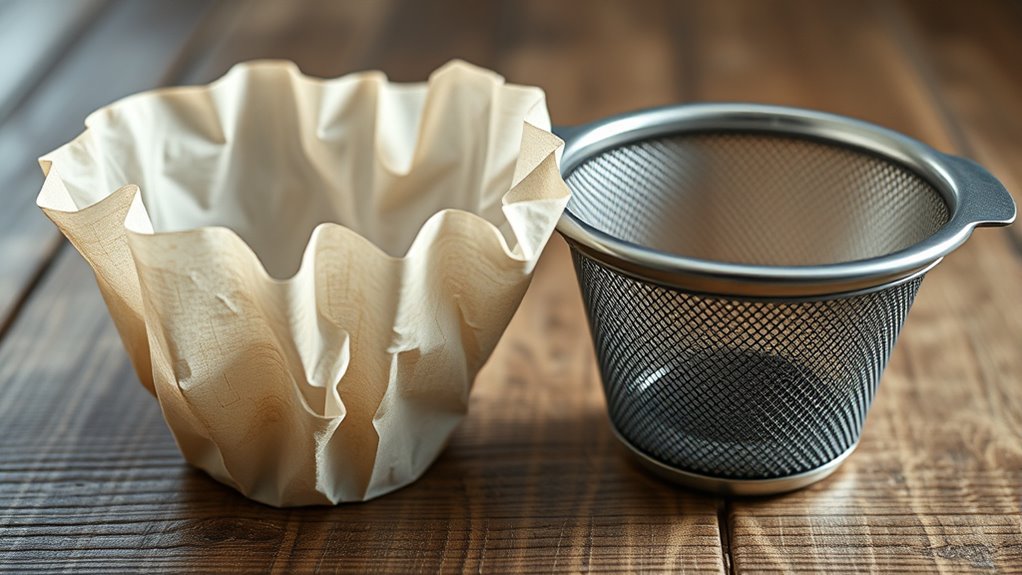
Because reusable filters are made from various materials, they can subtly influence the taste of your coffee by adding or removing certain flavors. For example, metal filters may introduce a slight metallic note, especially if they’re made from uncoated stainless steel. Conversely, cloth or silicone filters tend to impart minimal flavor, allowing the coffee’s natural profile to shine. The filter material also interacts with brewing temperature; higher temperatures can enhance extraction from certain filter surfaces, potentially amplifying any flavor influence. If you brew at a lower temperature, the filter’s material impact may be less noticeable. Additionally, selecting appropriate filter materials can help preserve the coffee’s original flavor profile while preventing unwanted taste alterations. Being aware of material interactions can guide you in choosing the right filter to achieve your preferred flavor outcome.
The Purity of Paper Filters and Its Effect on Coffee Clarity
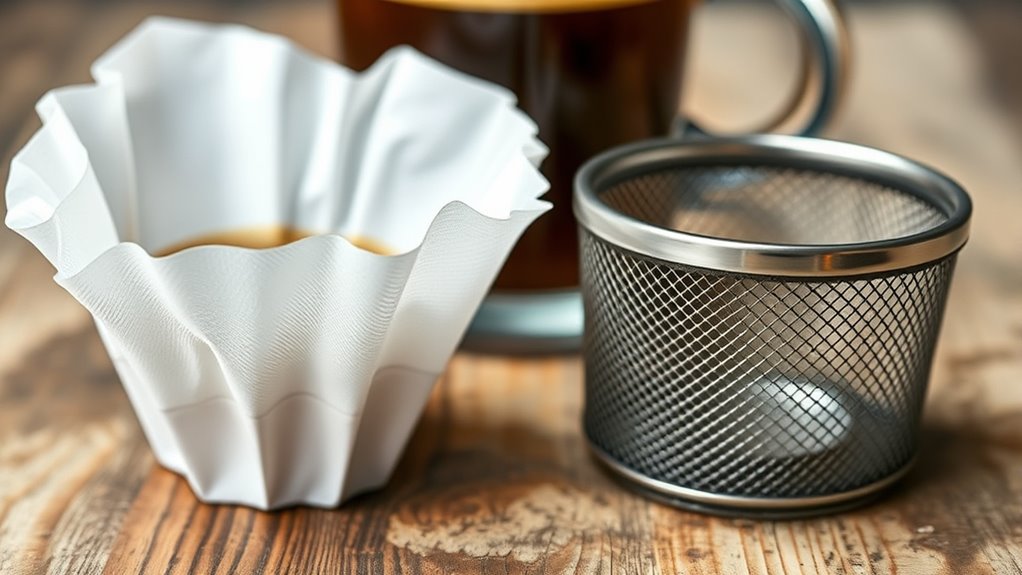
If you want your coffee to be as clear and pure as possible, paper filters are an excellent choice. Their high filter purity guarantees minimal particles reach your cup, resulting in better clarity. Here are four ways paper filters enhance clarity:
- Trap fine coffee grounds that could cloud the brew
- Prevent oils and sediments from passing through
- Reduce cloudiness caused by insoluble compounds
- Maintain consistent clarity with uniform filtration
- Their use aligns with traditional vintage decor principles, emphasizing authenticity and simplicity in enhancing your coffee experience. Additionally, paper filters are favored in specialty coffee circles for their ability to produce a cleaner cup. This filter purity creates a cleaner, brighter cup, highlighting the coffee’s delicate flavors. The clarity enhancement from paper filters is especially noticeable in light roasts and pour-over brewing. By effectively removing impurities, paper filters deliver a crisp, transparent coffee experience that’s hard to replicate with reusable filters. Furthermore, their ease of use makes them a popular choice for both casual drinkers and connoisseurs seeking a straightforward brewing process. In addition, the filter material used in paper filters can influence the overall taste profile of your coffee.
Another benefit of paper filters is their consistent filtration, which ensures each brew maintains the same clarity and quality, making them a reliable choice for everyday use.
Residual Flavors and the Risk of Off-Tastes From Reusable Filters
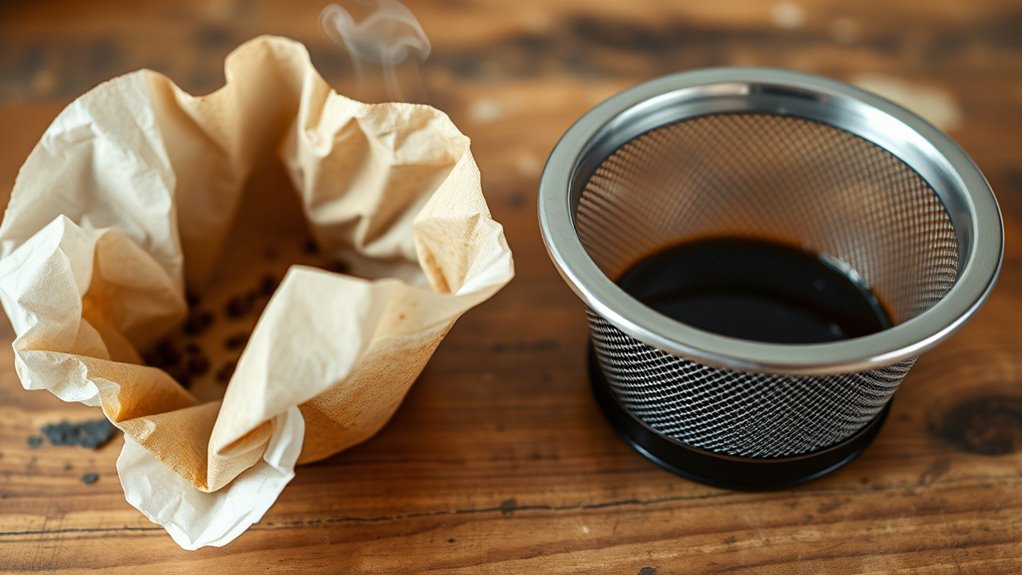
While paper filters excel at removing impurities to produce a clear cup, reusable filters can sometimes introduce residual flavors that affect the taste. This is due to filter material differences; some materials, like metal or uncoated mesh, may retain oils, residues, or odors from previous uses. These residual flavor concerns can result in off-tastes or lingering flavors that diminish your coffee’s purity. If your reusable filter isn’t thoroughly cleaned or if the material naturally absorbs oils, you might notice a metallic or earthy note in your brew. To minimize this, choose high-quality filters made from less porous materials and maintain proper cleaning routines. Additionally, material porosity plays a significant role in flavor retention, impacting how much residue your filter might hold. Being aware of these factors helps you avoid unwanted flavors and enjoy a consistently fresh cup of coffee. Proper caring and maintenance of reusable filters is essential to prevent flavor transfer and ensure optimal coffee taste, especially since filter material properties directly influence flavor retention and overall brewing quality.
The Influence of Filter Maintenance and Cleaning on Flavor
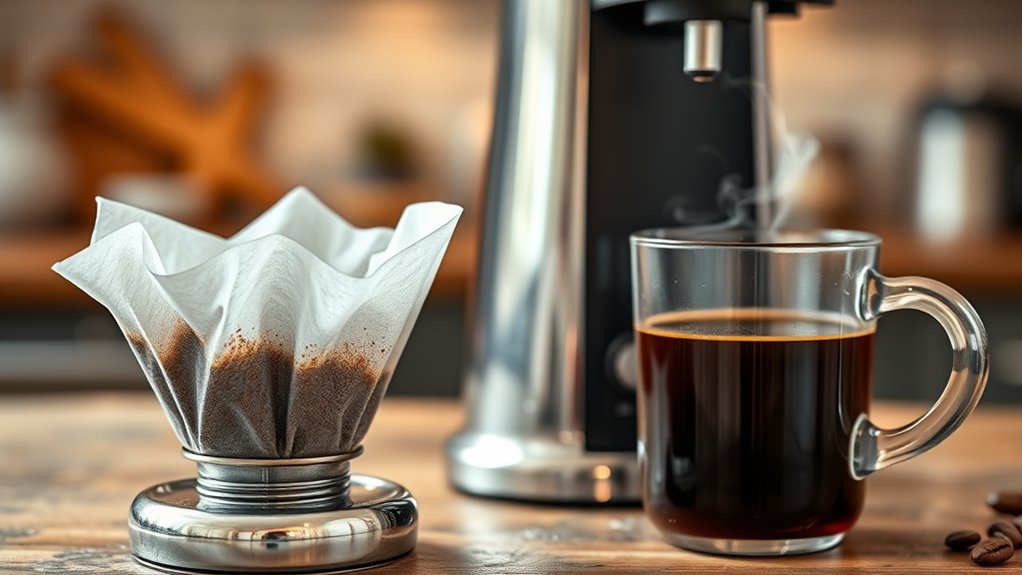
Proper maintenance and thorough cleaning of your reusable coffee filter are essential for preserving the true flavor of your brew. Neglecting this can lead to buildup that affects filter longevity and disrupts brewing consistency. To keep your filter performing at its best, consider these steps:
- Rinse after each use to remove coffee oils and residue.
- Use a gentle brush or sponge to clean crevices thoroughly.
- Soak in vinegar or a descaling solution weekly to prevent mineral deposits.
- Deep clean with baking soda periodically to eliminate stubborn stains and odors.
- Be aware of the Pinball Machine Weight when installing or moving your equipment to avoid damage or injury. Additionally, regular cleaning helps prevent residue buildup that can impact the taste of your coffee.
Regular cleaning prevents off-tastes and ensures your coffee’s flavor remains pure. Proper maintenance not only extends your filter’s life but also guarantees consistent, flavorful brews every time.
Environmental and Cost Considerations in Filter Choices
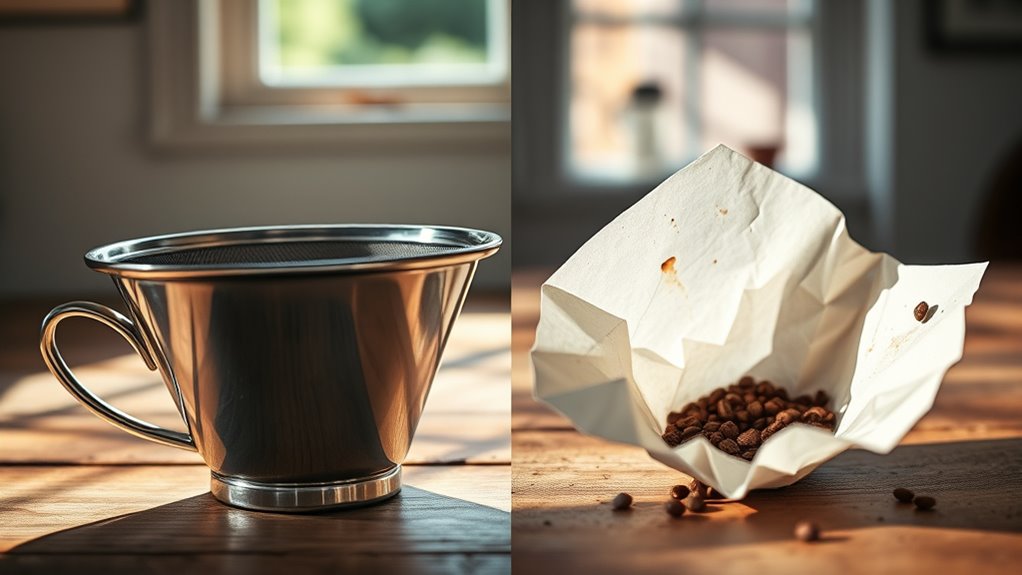
Choosing the right coffee filter involves more than just flavor; environmental impact and cost are key factors to contemplate. Reusable filters often reduce waste and promote sustainable packaging, helping you lessen your ecological footprint. Over time, they can lead to significant economic savings since you won’t need to buy replacements frequently. Paper filters, however, are convenient but generate more waste and require continual purchases. Consider this comparison:
| Aspect | Reusable Filters | Paper Filters |
|---|---|---|
| Environmental Impact | Lower waste, sustainable packaging | Higher waste, single-use |
| Cost | Initial investment, long-term savings | Ongoing purchases |
| Convenience | Requires cleaning | Disposable, quick |
| Longevity | Durable with proper care | Single-use, brief lifespan |
Ultimately, your choice balances environmental benefits and long-term savings.
Experimenting With Different Filters: What Coffee Tastes Better?
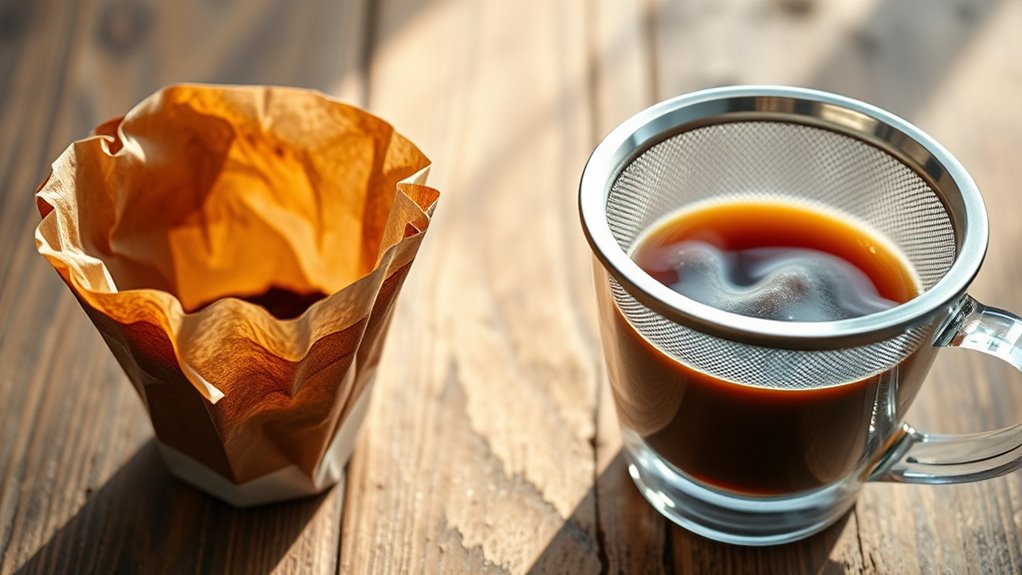
You’ll notice that different filters can change the flavor clarity of your coffee, making some notes stand out more than others. The type of filter also affects brew strength, with reusable filters often producing a richer taste. Additionally, residual flavors or odors from previous brews can linger and influence future cups—so experimenting helps you find what tastes best.
Flavor Clarity Differences
The type of filter you use can considerably influence the clarity of coffee’s flavor. Different filters impact aroma enhancement and brewing consistency, shaping how distinct each note tastes. To see this clearly, consider:
- Paper filters trap more oils, resulting in a cleaner, brighter flavor with subtle aroma enhancement.
- Reusable metal filters allow more oils and fine particles through, creating a fuller body and richer aroma.
- Cloth filters strike a balance, offering moderate aroma enhancement and a smooth, consistent brew.
- Material quality and design influence how well flavors are preserved or muted, affecting overall flavor clarity.
Choosing the right filter depends on whether you prefer crisp, clear flavors or a more robust, aromatic experience.
Impact on Brew Strength
Different filters can considerably influence the strength of your brew by controlling how much coffee solubles are extracted. The filter material plays a key role here. Paper filters typically produce a milder, less intense brew because they trap more oils and fine particles, resulting in a lighter body. Reusable filters made from metal or cloth often allow more oils and small particles to pass through, producing a fuller, bolder flavor with increased brew strength. If you prefer a stronger cup, a metal or cloth filter might be the better choice, as they extract more solubles. Conversely, if you like a smoother, less intense coffee, paper filters are ideal. Experimenting with different filter materials helps you find the perfect balance of brew strength to suit your taste.
Residual Flavors and Odors
Residual flavors and odors from your filters can substantially influence the taste of your coffee, especially when experimenting with different materials. Over time, certain filters may retain strong flavors or absorb odors, affecting flavor retention and the overall cup. To minimize this, consider these factors:
- Material of the filter – Some materials, like unwashed reusable filters, can harbor residual flavors.
- Cleaning routine – Proper cleaning reduces odor absorption and preserves flavor purity.
- Pre-use rinsing – Rinsing filters before brewing helps remove lingering odors.
- Frequency of use – Regularly used filters may develop a buildup influencing taste over time.
Tips for Optimizing Flavor Regardless of Filter Type
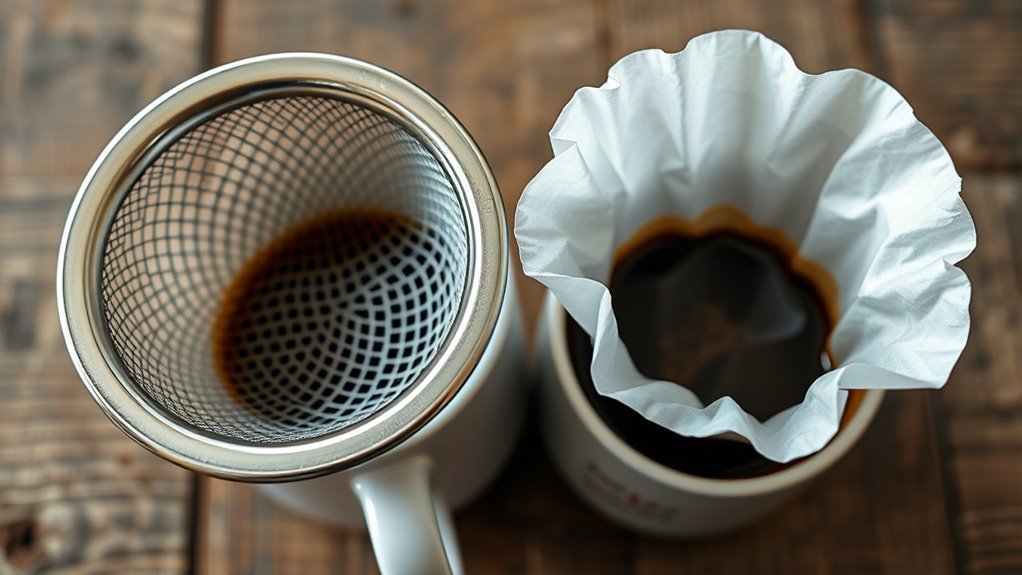
To get the best flavor from your coffee, focus on your grind size and water temperature. Using the right grind guarantees proper extraction, while controlling the temperature prevents bitterness or sourness. Small adjustments in these areas can make a big difference in every cup you brew.
Proper Grind Size
Achieving the right grind size is essential for extracting the best flavor from your coffee, regardless of whether you’re using reusable or paper filters. The key is ensuring grind uniformity to promote even extraction. A consistent grind size prevents over- or under-extraction, which can lead to bitter or weak flavors. To enhance your brew:
- Use a burr grinder for uniform particle size.
- Adjust grind size based on your brewing method.
- Avoid mixing different grind sizes to maintain extraction consistency.
- Experiment with slight adjustments until you find the ideal coarseness or fineness.
Water Temperature Control
Controlling water temperature is essential for revealing the full flavor potential of your coffee, regardless of whether you’re using reusable or paper filters. The ideal brew temperature typically ranges between 195°F and 205°F, ensuring proper extraction without scalding. Using water that’s too hot can result in over-extraction, leading to bitterness, while too cool water may cause under-extraction, making your coffee taste weak. Water quality also plays a role; clean, mineral-balanced water enhances flavor clarity and consistency. Adjust your water temperature based on your brewing method and bean type, and always use fresh, filtered water when possible. Proper temperature control helps maximize aroma, flavor, and body, ensuring each cup is rich and well-balanced—no matter your filter choice.
Making the Best Choice for Your Coffee Preferences
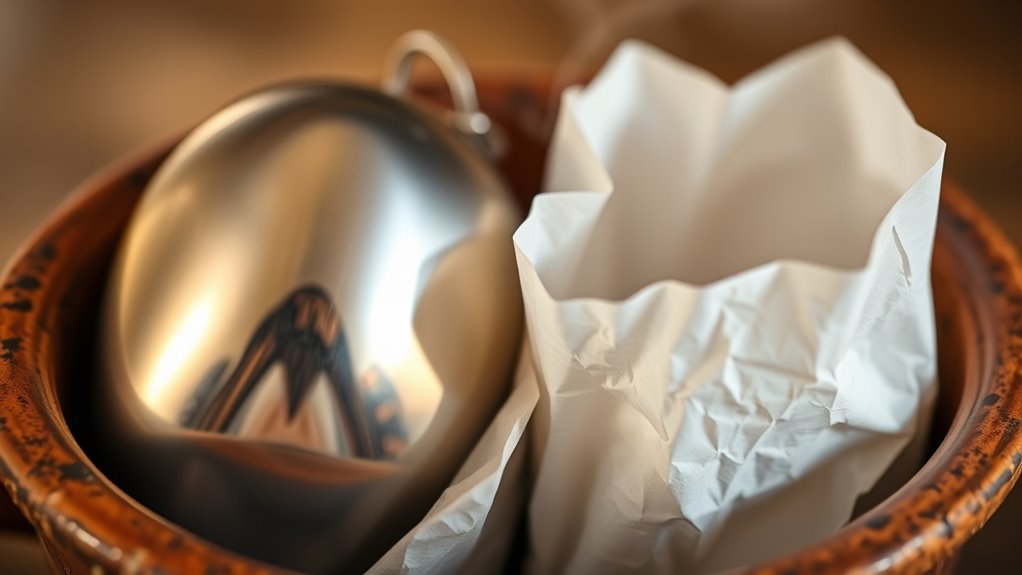
Choosing between reusable and paper coffee filters ultimately depends on your personal taste and brewing habits. To make the best choice, consider these factors:
- Filter material: Reusable filters made from metal or cloth can influence flavor, while paper filters often produce a cleaner taste.
- Brewing temperature: Some filters withstand higher temperatures better, affecting extraction and flavor.
- Flavor preferences: If you prefer a richer, fuller-bodied coffee, a reusable filter might be ideal. For a lighter, crisp cup, paper filters are a good option.
- Environmental impact: Reusable filters reduce waste, but paper filters are convenient and disposable.
Ultimately, your choice should align with your taste, brewing style, and eco-consciousness. Testing both options helps determine which filter material and brewing temperature settings best suit your preferences.
Frequently Asked Questions
Do Reusable Filters Retain More Coffee Oils Than Paper Filters?
Yes, reusable filters retain more coffee oils than paper filters. Their filter material impact is significant, as they are usually made from metal or cloth, allowing oils and fine particles to pass through. This results in a richer, fuller-bodied coffee. In contrast, paper filters trap most oils, leading to a cleaner taste but less body. So, if you want a bolder flavor, reusable filters are your best choice.
Can the Type of Water Affect Flavor Differently With Each Filter Type?
Yes, the type of water can affect flavor differently with each filter type. Water mineral content influences extraction, and filter material impact matters because reusable filters often retain more oils and minerals, enhancing flavor complexity. Paper filters typically produce a cleaner taste by removing oils and some minerals. So, if your water is hard or mineral-rich, it can alter the coffee’s flavor depending on the filter you use.
How Does the Brewing Method Influence Flavor Differences Between Filters?
Your brewing method considerably influences flavor differences between filters, especially through brewing temperature and filter material effects. A higher brewing temperature extracts more robust flavors, which can highlight or mask filter material nuances. Reusable filters often impact flavor by allowing more oils and fine particles, while paper filters tend to produce a cleaner taste. Adjusting brewing temperature and choosing the right filter material can help you craft the perfect cup tailored to your taste preferences.
Are There Health Concerns Associated With Reusable Versus Paper Filters?
You might worry about health risks, but both reusable and paper filters generally are safe. Reusable filters made of metal or silicone could pose concerns about chemical leaching if they aren’t food-grade, so always check materials. Paper filters usually don’t have chemical leaching issues unless they’re bleached. To stay safe, buy high-quality, food-safe options, and clean your filters regularly to prevent bacteria buildup.
Do Different Coffee Beans Interact Differently With Reusable and Paper Filters?
You’ll find that coffee bean interaction varies with filter material influence. Certain beans, like dark roasts, might taste slightly different depending on whether you use a reusable or paper filter. Reusable filters tend to let more oils through, enhancing rich, full-bodied flavors, while paper filters trap oils, resulting in a cleaner, brighter taste. Experimenting with your coffee beans and filter types helps you discover your preferred flavor profile.
Conclusion
Choosing between reusable and paper filters is like picking a paintbrush—you’ll shape your coffee’s flavor. I once switched to a reusable filter, expecting only savings, but found my mornings richer, more complex. Your filter’s material influences each sip, just as a brush affects every stroke on a canvas. Trust your taste buds, experiment, and find what makes your coffee truly shine—because it’s your daily masterpiece.