
If you’re comparing a Turkish coffee pot (ibrik) with modern coffee makers, you’ll notice major differences in process and experience. An ibrik involves slow, deliberate brewing that emphasizes rich flavor, tradition, and social ritual. Modern machines focus on speed, convenience, and consistency, often sacrificing some cultural aspects. Each method suits different preferences—whether you value the full-bodied, unfiltered taste or need a quick, effortless cup. Exploring these differences can help you choose the right approach for your coffee moments.
Key Takeaways
- The ibrik brews Turkish coffee slowly over low heat, emphasizing ritual, while modern coffee makers prioritize quick, automated brewing processes.
- Turkish coffee using an ibrik produces a thick, unfiltered, full-bodied flavor, whereas modern machines deliver a clear, consistent cup.
- The traditional ibrik method involves deliberate patience and cultural rituals, contrasting with the convenience-focused, minimal effort of modern devices.
- Ibriks require careful attention and skill, while modern coffee makers offer precise control and fast results with minimal user involvement.
- The ibrik reflects cultural heritage and social tradition, whereas modern coffee makers cater to convenience and efficiency in busy lifestyles.
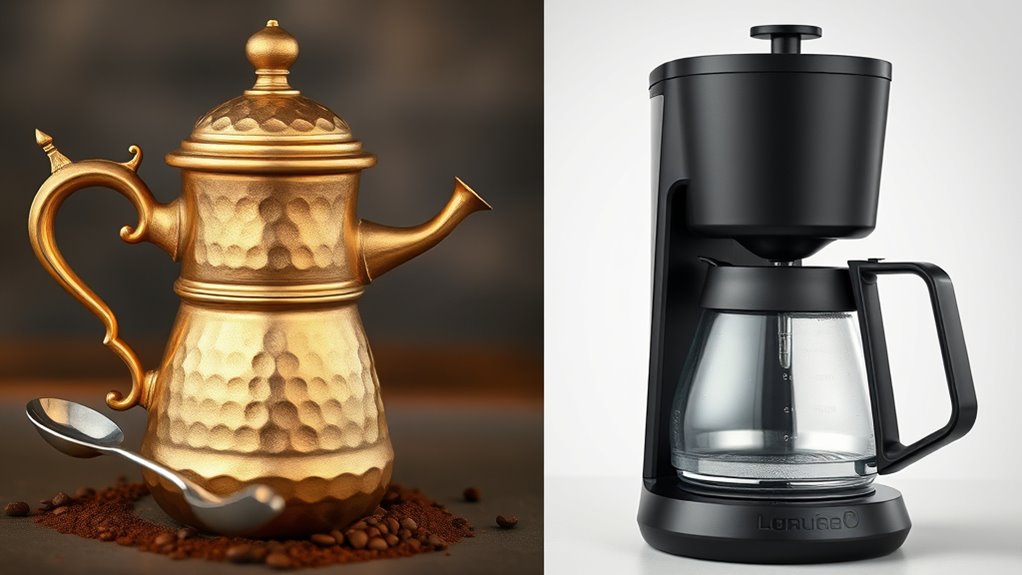
When it comes to brewing coffee, both traditional Turkish coffee pots and modern coffee makers offer distinct experiences and results. The choice between them often depends on your preferences for coffee tradition and brewing methods. Turkish coffee has a long history rooted in centuries of cultural practice. It’s more than just a way to prepare a caffeine fix; it’s a ritual that emphasizes social connection, slow savoring, and a unique flavor profile. Brewing with a traditional ibrik involves finely ground coffee, water, and sometimes sugar, all combined in a small pot and heated gently over low heat. This method allows the coffee grounds to settle naturally, creating a thick, unfiltered brew that’s rich and full-bodied. The process demands patience and attention, making every cup a deliberate act, and the resulting coffee carries a depth of flavor that’s hard to replicate with modern devices. Additionally, the traditional brewing method often involves a specific cup serving style, which enhances the overall cultural experience.
Modern coffee makers, on the other hand, focus on convenience and consistency. They come in many forms—drip machines, espresso machines, single-serve pods—and are designed to deliver a quick cup with minimal effort. These brewing methods often prioritize efficiency, which means you can have your coffee prepared in minutes, with precise control over variables like temperature and brew time. While they excel at producing a clean, clear cup of coffee, they often lack the cultural richness and sensory experience associated with Turkish coffee. Instead, they suit busy lifestyles and those who prefer a straightforward, predictable coffee experience.
Choosing between these two approaches depends on what you value most in your coffee tradition. If you savor the ritual, the unhurried process, and the deep flavors, then a traditional Turkish coffee pot offers a connection to centuries of brewing methods. It’s about more than just the drink — it’s about honoring a cultural legacy. Conversely, if you prioritize speed, convenience, and consistency, modern coffee makers are designed to fit seamlessly into your routine. They allow for quick adjustments, multiple cups, and often come with features that make brewing effortless.
Both methods have their merits, but understanding the differences in their brewing methods and cultural significance can help you decide which fits your lifestyle and taste preferences better. Whether you prefer the slow, sensory experience of Turkish coffee or the fast, efficient brewing of modern machines, each approach reflects a different aspect of coffee tradition.
Top picks for "coffee turkish ibrik"
Open Amazon search results for this keyword.
As an affiliate, we earn on qualifying purchases.
Frequently Asked Questions
Can Turkish Coffee Be Brewed With a Modern Coffee Maker?
Yes, you can brew Turkish coffee with a modern coffee maker, but it won’t fully capture the traditional brewing experience or coffee flavor. Modern machines often lack the brewing tradition of slow, unfiltered preparation that enhances the rich, thick texture of Turkish coffee. To get closer to the authentic flavor, you might need to use a fine grind and adjust the settings, but some nuances of the traditional method may still be lost.
Which Method Preserves More Natural Coffee Flavors?
Imagine you’re savoring a cup of traditional Turkish coffee, feeling the rich, bold flavors unfold on your palate. This method preserves more natural coffee flavors because the brewing authenticity involves gentle, slow heating that maintains the coffee’s aromatic oils. In contrast, modern coffee makers often extract flavors quickly, potentially dulling some nuances. For flavor preservation and authentic taste, the traditional Ibrik method wins, delivering a richer, more genuine coffee experience.
Are There Health Benefits Specific to Turkish Coffee?
Drinking Turkish coffee offers health benefits like providing traditional antioxidants, which can help protect your cells from damage. It’s also linked to improved cardiovascular health by potentially reducing blood pressure and cholesterol levels. The unique brewing method preserves these antioxidants better, making it a flavorful way to enjoy health benefits. So, if you love rich coffee, Turkish style might give you extra advantages for your heart and overall wellness.
How Long Does Each Brewing Process Typically Take?
You’ll find that the brewing process duration varies: using a Turkish coffee pot (ibrik), it takes about 3 to 5 minutes, as you carefully heat and watch for foam. In contrast, modern coffee makers typically have a faster process, often completing brewing within 2 to 4 minutes, depending on the machine. The process duration depends on the method, but both aim to deliver a flavorful cup efficiently.
Is One Method More Environmentally Friendly Than the Other?
You’ll find that Turkish coffee pots often use eco-friendly materials like copper or brass, which last long and require fewer replacements. They also have lower energy consumption since they’re heated directly over a stove, unlike modern coffee makers that need electricity. This makes the traditional method more environmentally friendly overall. By choosing an ibrik, you reduce waste and energy use, helping you minimize your carbon footprint.
Conclusion
Ultimately, whether you choose a traditional Turkish coffee pot or a modern coffee maker depends on your taste and lifestyle. Each has its charm and unique brewing experience. Remember, “Old is gold,” but innovation keeps us moving forward. Embrace what suits you best, and enjoy your coffee moment, whether it’s steeped in tradition or brewed with the latest technology. After all, the best coffee is the one that brings you joy.