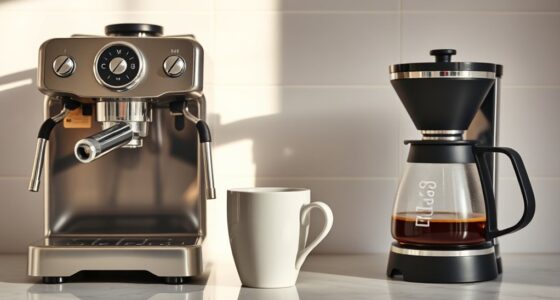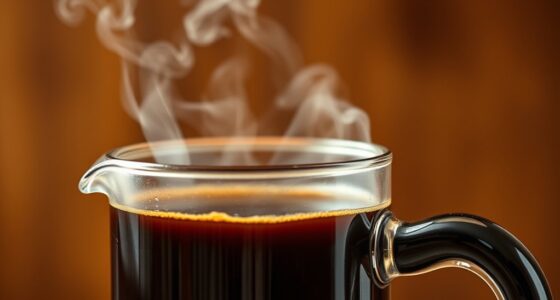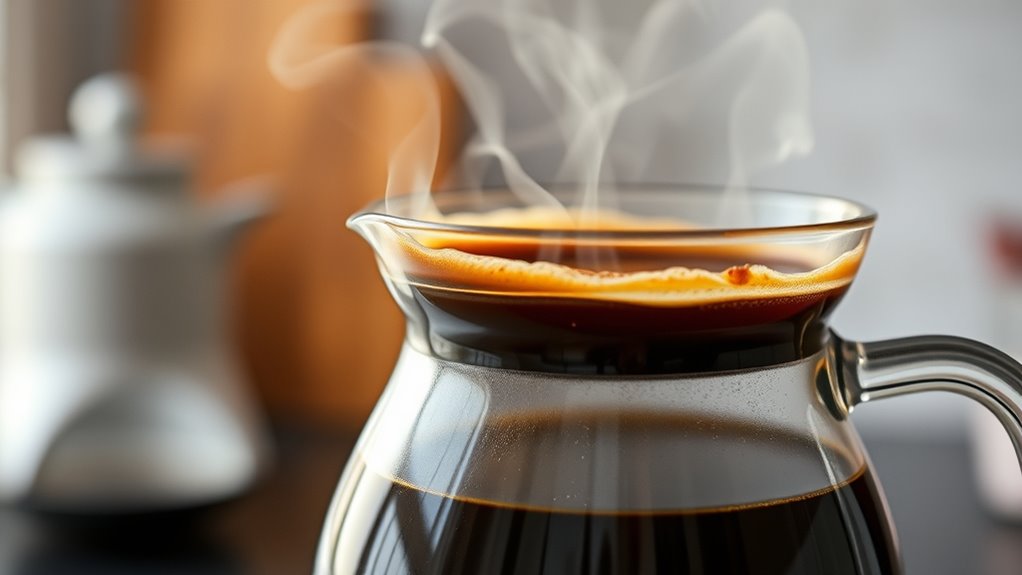
If your coffee tastes burnt, it’s likely because you’re over-extracting flavors by brewing at too high a temperature or using dark roast beans that are prone to burning if not handled carefully. Leaving coffee on heat for too long also intensifies burnt flavors. To avoid this, control your brewing temperature, serve your coffee promptly, and pay attention to your roast level. For more tips on preventing over-extraction and perfecting your brew, keep exploring.
Key Takeaways
- Use water within the ideal temperature range of 195°F to 205°F to prevent over-extraction and burnt flavors.
- Avoid brewing with excessively hot water, which can extract bitter, burnt-tasting compounds from the coffee.
- Reduce brewing time or avoid leaving coffee on heat for extended periods to prevent over-extraction.
- Properly handle roast levels; darker roasts require lower temperatures to prevent burnt notes.
- Serve coffee immediately or transfer it to a thermal carafe to prevent continued extraction and over-heating.
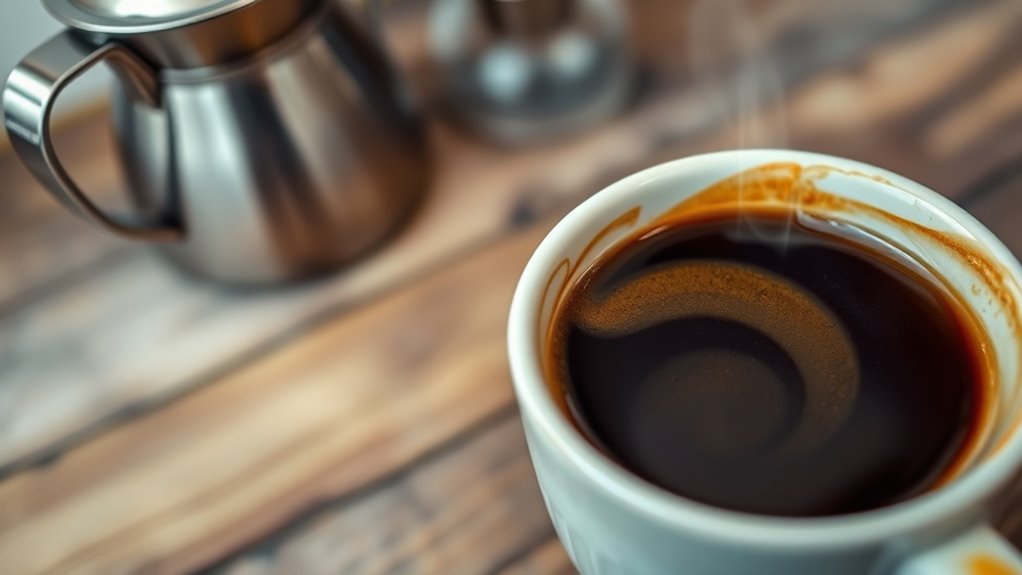
If your coffee tastes burnt, it’s likely due to over-roasting, brewing at too high a temperature, or leaving it on the heat for too long. One common cause is the coffee bean roast level. Darker roasts tend to develop richer, bolder flavors, but they can also become more prone to tasting burnt if not handled carefully. If you prefer a darker roast, pay close attention to your brewing temperature to prevent extraction from becoming too harsh or bitter. Light roasts, on the other hand, preserve more of the beans’ original flavor profile and are less likely to taste burnt if brewed properly.
Brewing temperature plays a vital role in how your coffee turns out. Ideally, you want to keep your water just below boiling—around 195°F to 205°F (90°C to 96°C). When the water is too hot, it over-extracts compounds from the coffee grounds quickly, leading to a bitter, burnt flavor. Too low, and you risk under-extraction, which can result in a weak or sour taste. Maintaining a consistent brewing temperature ensures a balanced extraction, highlighting the coffee’s nuanced flavors rather than amplifying the undesirable burnt notes. Proper temperature control is also essential for energy-efficient brewing, helping to minimize wasted heat and reduce energy consumption.
Maintaining 195°F to 205°F ensures balanced extraction and avoids burnt, bitter flavors.
The way you handle your brewing process also influences the final taste. If you leave your coffee on the heat after brewing, the prolonged exposure to high temperatures will continue to extract bitter compounds, intensifying that burnt sensation. To avoid this, serve your coffee promptly once brewed, or transfer it to a thermal carafe that maintains an ideal temperature without overcooking the coffee. This prevents the coffee from sitting on a heat source for too long, which can cause it to develop a burnt or charred flavor.
Adjusting your brewing temperature based on the coffee bean roast is essential. For darker roasts, slightly lower temperatures might help reduce the risk of over-extraction and burnt flavors. Conversely, lighter roasts may benefit from a slightly higher temperature, but still within the recommended range. Using a good quality kettle with temperature control can help you fine-tune this process, preventing over-roasting of your beans or over-brewing at too high a temperature.
Ultimately, understanding how your coffee bean roast and brewing temperature interact will help you craft a smoother, more flavorful cup. Keep the temperature in check, avoid leaving your coffee on the heat, and choose your roast level wisely. Doing so guarantees you enjoy the rich, nuanced flavors of your coffee without that unpleasant burnt aftertaste.

COSORI Electric Gooseneck Kettle with 5 Temperature Control Presets, Pour Over Kettle for Coffee & Tea, Hot Water Boiler, 100% Stainless Steel Inner Lid & Bottom, 1200W/0.8L
5 𝑶𝑵𝑬-𝑻𝑶𝑼𝑪𝑯 𝑷𝑹𝑬𝑺𝑬𝑻𝑺: Your Gooseneck Electric Kettle features 5 precise temperature presets. These accurate presets make brewing coffee…
As an affiliate, we earn on qualifying purchases.
As an affiliate, we earn on qualifying purchases.
Frequently Asked Questions
Can the Type of Coffee Beans Cause a Burnt Taste?
Yes, the type of coffee beans can cause a burnt taste. Beans from different origins and roasting levels impact flavor; darker roasts often develop more bitter, smoky notes that can resemble a burnt flavor. If you prefer a smoother taste, try beans with lighter roasting levels or from origins known for brighter, fruitier profiles. Choosing the right beans and roast can help you avoid that burnt, over-extracted flavor.
Does Water Temperature Affect Coffee Flavor?
Did you know that water temperature impacts over 90% of coffee flavor? Yes, it’s true! When your water is too hot or too cold, it can lead to off-flavors. Ideally, keep your water around 195-205°F for maximum extraction. Water quality also matters—use fresh, clean water. Adjust your brewing time accordingly, so the water doesn’t over-extract or under-extract, ensuring a balanced, delicious cup every time.
How Does Grind Size Impact Over-Extraction?
Your grind size directly impacts extraction control, which influences your coffee’s flavor. A fine grind increases surface area, leading to over-extraction and a bitter, burnt taste. Conversely, a coarse grind slows extraction, preventing over-extraction and ensuring a balanced flavor. Adjust your grind size accordingly—coarser for pour-over or French press, finer for espresso—to better control extraction and avoid that burnt, over-extracted taste.
Are There Specific Brewing Methods That Reduce Burnt Flavor?
Think of brewing techniques as a tuning fork for your coffee’s flavor profile. Using methods like pour-over or Aeropress helps you control extraction, reducing the chance of burnt notes. These techniques emphasize clarity and brightness, much like tuning a guitar. By choosing brewing methods that prioritize gentle extraction, you guarantee your coffee’s flavor profile stays balanced, avoiding bitter, burnt flavors and highlighting the true richness of your beans.
Can Cleaning My Coffee Maker Improve Taste?
Cleaning your coffee maker definitely improves taste. Regularly descaling and rinsing remove old coffee oils and mineral buildup, which can cause burnt flavors. Also, check your coffee storage to keep beans fresh and adjust brew time if needed; over-extraction from too long brew times can lead to bitterness. By maintaining cleanliness, proper storage, and tweaking brew time, you’ll enjoy better, smoother coffee every time.

Coffee Carafe for Keeping Hot – Gezoss 102OZ / 3L Airpot Coffee Dispenser with Pump – Large Coffee Carafe for Hot Drinks Tea Liquid – Insulated Stainless Steel Hot Water Beverage Urn for Parties
18/8 PREMIUM STAINLESS STEEL – Constructed with 304 food-grade insulated stainless steel, this airpot coffee carafe ensures your…
As an affiliate, we earn on qualifying purchases.
As an affiliate, we earn on qualifying purchases.
Conclusion
So, the next time your coffee tastes burnt, remember it’s like spilling a tiny splash of black ink into a clear glass of water—suddenly, everything’s darker and less vibrant. Sometimes, it’s just a small tweak in your brewing process that can turn that bitter, over-extracted flavor into a smooth, flavorful sip. Keep experimenting, stay attentive, and you’ll soon enjoy a cup that’s perfectly balanced—no more accidental black ink in your morning routine.
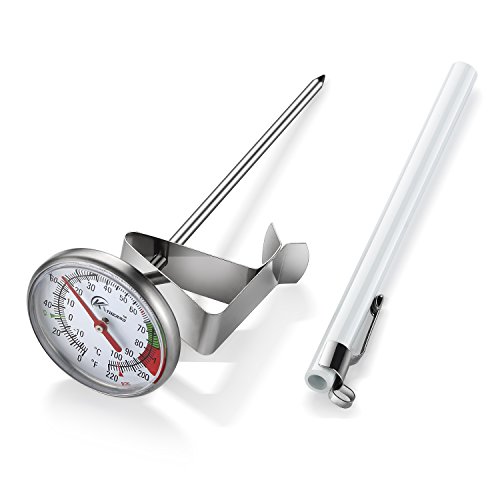
KT THERMO Instand Read 2-Inch Dial Thermometer,Best for The Coffee Drinks,Chocolate Milk Foam
DESIGN:Multi-stage design of the fixed clip, adjust the thermometer read the location of the disk surface to facilitate…
As an affiliate, we earn on qualifying purchases.
As an affiliate, we earn on qualifying purchases.

Copper Moon Dark Roast Whole Bean Coffee, Sumatra Blend, 2 Lb
CAFÉ QUALITY COFFEE BREWED BY YOU: Sumatra coffee is enjoyed by those who prefer a more bold and…
As an affiliate, we earn on qualifying purchases.
As an affiliate, we earn on qualifying purchases.