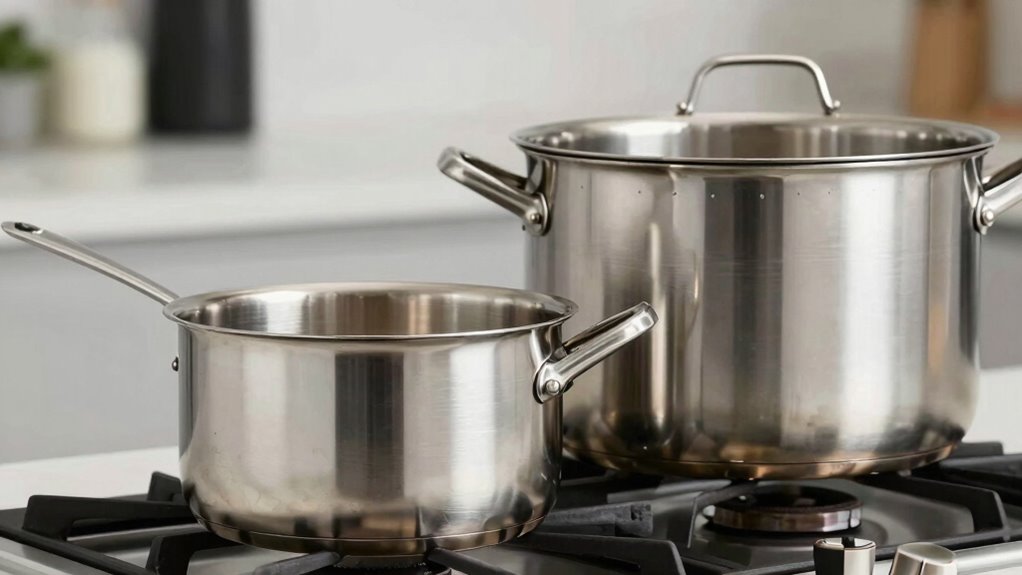

Saucepans are smaller, lightweight, and ideal for quick tasks like sauces or reheating, with handles designed for easy, safe handling. Stock pots are larger, heavier, and built for boiling big quantities, like pasta or broths, with reinforced handles to support heavy loads. The shape and material also vary to suit specific cooking needs. If you’re curious about how these differences can improve your cooking, you’ll find more useful details below.

Get kitchen staples and gadgets delivered free with Prime
- Fast, free delivery on millions of items
- Prime Video, Amazon Music and more included
- Member-only deals all year
Key Takeaways
- Saucepans are smaller, designed for quick, precise tasks; stock pots are larger for boiling and cooking big quantities.
- Saucepans typically have long, ergonomic handles; stock pots have wider, reinforced handles for heavy loads.
- Material choices differ: saucepans often feature non-stick coatings, while stock pots use heavier metals for durability and even heat.
- Saucepans excel at delicate sauces and reheating, whereas stock pots are ideal for boiling pasta, stocks, and large ingredients.
- Handle strength and design vary to support the size and weight of each cookware type, ensuring safety during use.
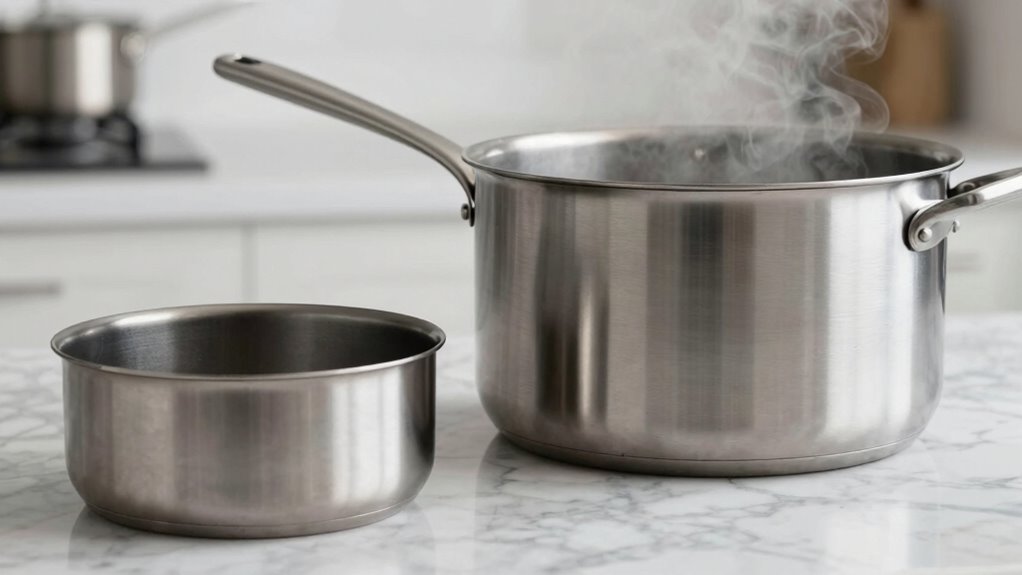
When it comes to cooking, understanding the key differences between saucepans and stock pots can make a big impact on your kitchen efficiency. These two essential cookware pieces vary not just in size, but also in their design, material options, and handle features. Recognizing these differences helps you choose the right tool for each task, saving you time and effort. Additionally, the material variations can influence the overall durability and heat retention of each piece, impacting their long-term performance in your kitchen. Material variations play a significant role in how each pot performs. Saucepans are often made from stainless steel, aluminum, or non-stick coatings, making them ideal for delicate sauces, reheating, or simmering small quantities. Stock pots, on the other hand, are usually constructed from heavier materials like stainless steel or aluminum with thicker bases. Their design allows for even heat distribution, which is crucial when you’re boiling large quantities of water, making broths, or cooking pasta. Some stock pots also feature layered or clad bottoms to prevent hot spots, especially important when dealing with large volumes. The size and shape of each cookware also impacts their suitability for different tasks, influencing handle design and overall functionality. Handles differ considerably between saucepans and stock pots, reflecting their intended use. Saucepans typically feature long, ergonomic handles designed for easy maneuvering on the stovetop. These handles often stay cool during cooking, thanks to heat-resistant materials or strategic placement. Stock pots, however, usually come with two sturdy side handles that are wider and more reinforced. These handles are built to support the weight of large quantities of liquid or ingredients, allowing you to lift and carry heavy loads safely. Some handles are riveted directly onto the cookware for added durability, which is essential when moving large, hot contents. Additionally, the handle design can influence how comfortable and safe it is to lift or pour from each type of pot. The size and shape also influence handle and material choices. Saucepans are generally smaller, with a more compact design that facilitates quick stirring and precise control. Stock pots tend to be much larger, often with straight sides and wide mouths to accommodate large ingredients or multiple dishes at once. This size difference affects handle placement and strength requirements, with stock pot handles needing to withstand greater forces. Properly choosing the right cookware based on size and shape can significantly impact your cooking experience and safety. Ultimately, your decision comes down to matching the cookware to your cooking needs. If you often prepare small sauces or need quick, responsive cookware, a saucepan with lighter materials and comfortable handles is your best bet. But if you regularly cook big batches, make stocks, or boil pasta, a heavy-duty stock pot with reinforced handles and thick materials will serve you better. Knowing these distinctions ensures you select the right piece for the right task, making your cooking more efficient and enjoyable.
stainless steel saucepan with non-stick coating
As an affiliate, we earn on qualifying purchases.
As an affiliate, we earn on qualifying purchases.
Frequently Asked Questions
Can I Use a Stock Pot as a Saucepan?
Yes, you can use a stock pot as a saucepan, but it might not be ideal for all cooking techniques. Stock pots are larger and deeper, offering great kitchen versatility for boiling, simmering, or making large batches. However, their size and shape can make precise tasks like sautéing or reducing sauces more challenging. For small or delicate cooking tasks, a saucepan is usually more practical, but a stock pot can handle many functions in a pinch.
Which Is Better for Making Sauces: Saucepan or Stock Pot?
A saucepan is better for making sauces because it’s designed for precise heating and stirring. Its smaller size and straight sides help you control temperature and prevent splatters. Alternative cookware options, like a sauté pan, can also work, but they may not offer the same control. Understanding cooking technique differences, such as simmering versus boiling, guarantees your sauce turns out perfect with the right cookware.
Are There Material Differences Affecting Performance?
Like a craftsman choosing the right tools, you’ll notice material differences impact performance. Durable materials like stainless steel resist corrosion and last longer, while aluminum offers superior heat conduction, ensuring your sauces heat evenly. Copper, though expensive, provides excellent heat response. Your choice affects how well your cookware withstands daily use and how efficiently it performs, so pick based on durability and heat conduction to get the best results in your kitchen.
How Do Size Options Vary Between the Two?
You’ll find that saucepans typically come in smaller sizes, perfect for everyday cooking, while stock pots are larger, offering more cooking versatility for making soups, broths, or big batches. When considering storage, smaller saucepans are easier to store, but larger stock pots might require more space. Choose sizes based on your cooking needs and storage options to maximize efficiency in your kitchen.
Can a Saucepan Replace a Stock Pot in Recipes?
A saucepan can replace a stock pot in some cooking techniques, like making small batches of broth or sauces, but it’s not ideal for larger quantities. Its size limits you, especially if you’re cooking for many people. For better kitchen ergonomics, choose the right vessel for the task. A stock pot’s larger capacity helps prevent spills and makes stirring easier, ensuring efficient cooking without messes.
large stainless steel stock pot with reinforced handles
As an affiliate, we earn on qualifying purchases.
As an affiliate, we earn on qualifying purchases.
Conclusion
Understanding the difference between saucepans and stock pots helps you choose the right tool for your cooking needs. Did you know that stock pots typically hold up to 20 quarts, making them ideal for large batches? Meanwhile, saucepans usually max out at 4-5 quarts, perfect for everyday sauces and smaller tasks. By picking the right one, you’ll save time and avoid unnecessary mess—making your cooking experience smoother and more enjoyable.
As an affiliate, we earn on qualifying purchases.
heavy-duty stock pots for boiling
As an affiliate, we earn on qualifying purchases.
As an affiliate, we earn on qualifying purchases.
NFL season / tailgating Picks
team gear
As an affiliate, we earn on qualifying purchases.