A cast iron pan is a must-have for every home cook because it retains heat incredibly well and distributes it evenly, ensuring consistent results each time. It’s durable enough to last generations and versatile enough for everything from searing steaks to baking bread. Plus, a well-seasoned cast iron develops a natural non-stick surface that improves with use. Keep going, and you’ll discover how to get the best performance out of this cooking powerhouse.
Key Takeaways
- Cast iron pans retain and distribute heat evenly, ensuring consistent and high-quality cooking results.
- Their durability makes them a long-lasting investment for everyday and special recipes.
- Regular seasoning develops a natural non-stick surface, reducing the need for oils and cleaning effort.
- Versatility allows use for searing, baking, frying, and more, replacing multiple cookware pieces.
- Proper maintenance and care extend the pan’s lifespan, making it a reliable tool for generations.
Unmatched Heat Retention and Distribution
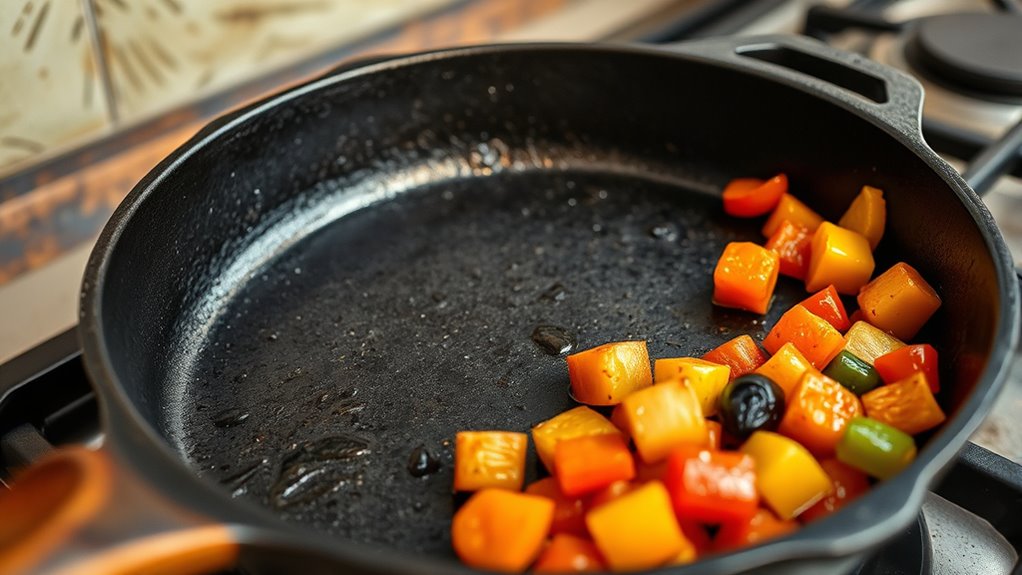
Cast iron pans excel at retaining and distributing heat evenly, which is essential for achieving perfect searing, browning, and consistent cooking results. To maximize these benefits, you need to perform the seasoning process regularly. Seasoning creates a natural non-stick surface and helps prevent rust, which can compromise the pan’s performance. When you properly season your cast iron, heat distributes more evenly across the surface, reducing hot spots and guaranteeing your food cooks uniformly. This process also forms a protective layer that guards against moisture and rust formation. Proper seasoning is key to unlocking the full potential of your cast iron pan. By maintaining a well-seasoned pan, you secure reliable heat retention and prevent corrosion, extending your cookware’s lifespan while enhancing your cooking precision. A well-seasoned surface enhances heat transfer and helps maintain consistent cooking temperatures, making your cast iron pan even more effective. Regularly cleaning and re-seasoning your pan ensures it continues to perform at its best and resists rust formation, which is crucial for longevity. Additionally, consistent seasoning improves non-stick properties, making cooking and cleaning easier over time. Incorporating proper cleaning techniques can further prolong the lifespan and performance of your cast iron cookware.
Longevity and Versatility in Cooking

Thanks to its durable construction, a well-maintained cast iron pan can last for generations, making it a truly long-term investment. Its longevity depends on proper seasoning, which builds a natural non-stick surface and protects the metal. Regularly applying the seasoning process ensures your pan stays rust-free and performs well over time. When cleaning, avoid soap; instead, use hot water and a brush or coarse salt to remove food residues, then dry thoroughly to prevent rust. This maintenance keeps your pan versatile, capable of handling everything from searing steaks to baking cornbread. Its resilience means you can experiment with different recipes and cooking styles without worrying about wear and tear. A cast iron pan truly adapts to your culinary needs, making it an invaluable kitchen tool for years to come. Proper maintenance is essential for preserving its performance and extending its lifespan, especially as more home cooks recognize its role in enhancing flavor. Additionally, understanding resources and tools available can help you optimize your cast iron care routine, including seasoning techniques that improve the pan’s performance over time, and employing proper storage practices to prevent rust and damage.
Natural Non-Stick Surface Development

Have you ever wondered how a cast iron pan develops its natural non-stick surface? It all comes down to the seasoning process. When you cook with oil regularly, it bonds to the pan’s surface, creating a durable, non-stick layer over time. This seasoning not only improves your cooking experience but also acts as a barrier against rust, helping prevent corrosion. Properly seasoned pans require less oil for cooking and make flipping or searing easier. To maintain this natural non-stick surface, you should regularly bake a thin layer of oil into the pan after cleaning. Additionally, the rise of mobile apps facilitating breakfast orders has made it easier than ever to enjoy quick, homemade meals. With consistent seasoning, your cast iron will become more non-stick and resistant to rust, ensuring it stays in great shape for years to come. Regular seasoning also encourages the formation of a durable coating, which further enhances the pan’s non-stick properties over time. Developing a seasoned surface through proper techniques can significantly extend the lifespan of your cast iron cookware.
Frequently Asked Questions
How Do I Properly Clean and Maintain My Cast Iron Pan?
To properly clean and maintain your cast iron pan, avoid soap and instead use hot water and a stiff brush or scraper. Dry it thoroughly to prevent rust, then apply a thin layer of oil and heat it to maintain your seasoning techniques. For stubborn residue, use coarse salt as a natural scrub. Regular cleaning and proper seasoning keep your pan non-stick and in great condition for years.
Can I Use Soap on a Seasoned Cast Iron Pan?
You can use dish soap on a seasoned cast iron pan, but it’s a bit of a gray area. While some say it’s fine with a gentle cleaning technique, others prefer to avoid soap to protect the seasoning. If you do use dish soap, rinse thoroughly and dry immediately to prevent rust. Just remember, even a little soap can be a slippery slope—use it sparingly and with care.
Is a Cast Iron Pan Safe for All Types of Stovetops?
Yes, a cast iron pan is safe for all types of stovetops, including gas, electric, induction, and even ceramic. Its stovetop compatibility makes it a versatile cookware choice. Just make certain your pan is well-maintained and properly seasoned to prevent any damage. Cast iron cookware safety is high when used correctly, as it heats evenly and lasts decades, making it a reliable addition to your kitchen.
How Do I Prevent Rusting on My Cast Iron Cookware?
Rust on your cast iron can appear faster than a lightning strike if you don’t take proper care. To prevent rusting, always dry your pan thoroughly after cleaning, and apply a thin layer of seasoning oil before storage. Use proper seasoning techniques regularly to build a protective coating. Store it in a dry place, and avoid leaving it damp, which is like inviting rust to move in.
What’s the Best Way to Re-Season a Cast Iron Pan?
To re-season your cast iron pan, start by cleaning it thoroughly and drying it completely. Apply a thin layer of oil—choose a high-smoke-point oil like flaxseed or vegetable oil—using a cloth or paper towel. Then, bake the pan upside down in your oven at about 450°F for an hour. Let it cool before storing. This seasoning technique builds a durable, non-stick surface and prevents rust.
Conclusion
A cast iron pan isn’t just a kitchen tool—it’s a lifetime investment. Many believe it develops a natural non-stick surface over time, making cooking easier and more enjoyable. With unmatched heat retention and durability, you’ll notice better searing and even cooking. Plus, it’s versatile enough to handle everything from breakfast to dinner. If you’re skeptical, try one—chances are, you’ll quickly see why so many home cooks swear by it. Once you do, there’s no going back.