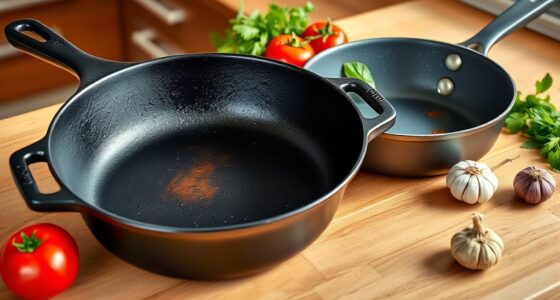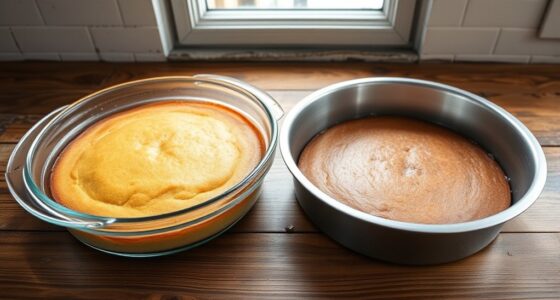
Clay pots are worth trying if you value natural, traditional flavors and enjoy slow, even cooking. They can last for years if properly cared for and offer a unique taste that metal cookware can’t replicate. While they are less responsive and take longer to heat, many find the richer flavor and tender results make up for it. To discover how to make the most of different cookware, explore the details below.
Key Takeaways
- Clay pots are durable, resistant to cracking, and can last for years with proper care.
- They provide slow, even heat retention ideal for flavorful, tender slow-cooked dishes.
- Metal cookware heats faster and offers precise temperature control for quick cooking tasks.
- Clay enhances natural flavors and adds a unique, traditional touch to dishes.
- Choosing between them depends on cooking style—patience and flavor versus speed and responsiveness.

Clay pots have been used for centuries to cook and store food, thanks to their natural properties and traditional appeal. When you contemplate using a clay pot, one of the first things to think about is its ceramic durability. These pots are crafted from natural clay, which, when fired properly, becomes sturdy and resistant to cracking under typical cooking conditions. You’ll find that a well-made clay pot can last for years if cared for properly, making it a durable addition to your kitchen. Unlike some other materials, clay’s ceramic properties allow it to withstand high temperatures without warping or breaking down, ensuring your dishes cook evenly over time.
Clay pots are durable, natural, and resistant to cracking when properly fired and cared for.
However, it’s important to recognize that ceramic durability isn’t the only factor to consider. Metal cookware, such as stainless steel or aluminum, offers superior metal conductivity. This means metal pots heat up quickly and distribute heat evenly across their surfaces. When you cook with metal, you often get faster response times to temperature changes, giving you more control over your cooking process. This rapid heat transfer can be a huge advantage when you need precise control, like searing meats or making delicate sauces.
In contrast, clay doesn’t conduct heat as efficiently as metal. Instead, it heats slowly and retains heat longer once hot, creating a more consistent cooking environment. This slow, gentle heat is perfect for slow-cooking stews, braising, or dishes that benefit from even, sustained heat. But you should know that because clay doesn’t conduct heat as well, it needs a bit more patience and care to prevent uneven cooking or hot spots. You might find that you need to preheat the pot gradually or avoid sudden temperature changes to keep it in good shape.
Additionally, proper seasoning and maintenance are crucial to prolonging the life of a clay pot and ensuring optimal performance. While ceramic durability makes clay pots a reliable choice for many dishes, their lower metal conductivity means they’re less responsive than metal cookware. If you’re someone who values quick adjustments and rapid heating, metal might be a better fit. But if you appreciate the natural, earthy qualities of clay, along with its ability to produce tender, flavorful results through slow cooking, then clay pots are definitely worth pondering. They bring a unique combination of traditional appeal, natural materials, and a cooking style that emphasizes patience and flavor development. Ultimately, whether clay pots are worth it depends on your cooking style and what qualities you prioritize in your cookware.
Frequently Asked Questions
How Long Do Clay Pots Typically Last With Proper Care?
With proper care, your clay pot can last several years, often between 3 to 5 years or more. Its durability depends on the aging process, which involves gentle cleaning and avoiding sudden temperature changes. Over time, the pot develops a natural patina that enhances its flavor. Regular use and careful maintenance guarantee your clay pot remains functional and beautiful, making it a worthwhile investment for flavorful cooking.
Are Clay Pots Suitable for All Types of Stovetops?
Sure, clay pots cater to certain stovetops, but they’re not universally compatible. You’ll want to check stovetop compatibility because clay pots typically work best on gas and electric coil burners, thanks to their gentle heat distribution properties. Avoid smooth glass or induction surfaces, as they might not evenly heat or could damage the pot. For safe, satisfying cooking, match your clay pot with the right stovetop type.
Can Clay Pots Be Used in the Microwave?
You can’t use clay pots in the microwave because they typically aren’t microwave-safe. Clay material limitations mean they can crack or break due to rapid temperature changes, risking damage or safety hazards. Always check if your clay pot is labeled microwave-safe before attempting to use it in the microwave. If unsure, avoid microwaving to protect both your cookware and your safety.
What Is the Best Way to Clean and Store Clay Cookware?
Did you know that proper cleaning and storage can extend your clay cookware’s lifespan by up to 50%? To clean, avoid soap—use warm water and a soft brush, then dry thoroughly. To store, keep it in a dry, ventilated place, and apply seasoning techniques like rubbing a thin layer of oil before storing. This helps prevent cracking and maintains its natural non-stick properties, ensuring your clay pot stays in great shape.
Do Clay Pots Affect the Flavor of the Food Differently?
Yes, clay pots do affect the flavor of your food differently. Their seasoning techniques create a porous surface that enhances flavor over time, adding a subtle earthy taste. This material allows for slow, even heat distribution, which boosts flavor development. As you cook, the clay’s natural properties infuse dishes with a unique depth, making your meals more flavorful and aromatic compared to metal cookware.
Conclusion
Ultimately, deciding if clay pots are worth it is like choosing between a timeless classic and a modern bestseller. They bring a touch of tradition and unique flavor, much like the whispers of ancient kitchens. If you crave that rustic charm and richer taste, clay pots are your trusty allies. But if convenience and speed matter more, metal might be your modern-day hero. Either way, your culinary story is yours to write—just like the legends of old.