
A pizza stone is definitely worth it if you want a crispy, restaurant-quality crust and even cooking. It absorbs and radiates heat, creating a stable, high-temperature surface that improves your homemade pizzas. Proper use includes thoroughly preheating the stone and avoiding sudden temperature changes to prevent cracks. With good maintenance, your stone can last for years, giving you consistent, delicious results. Keep going to discover more tips on using and caring for your pizza stone effectively.
Key Takeaways
- A pizza stone provides even heat distribution, resulting in a crisp and restaurant-quality crust.
- Proper maintenance extends its lifespan, ensuring consistent baking performance over time.
- Preheating the stone thoroughly enhances heat retention and improves pizza cooking results.
- Using the stone correctly prevents cracking and ensures safe, effective cooking.
- Overall, a pizza stone is a worthwhile investment for serious home bakers seeking authentic pizza quality.
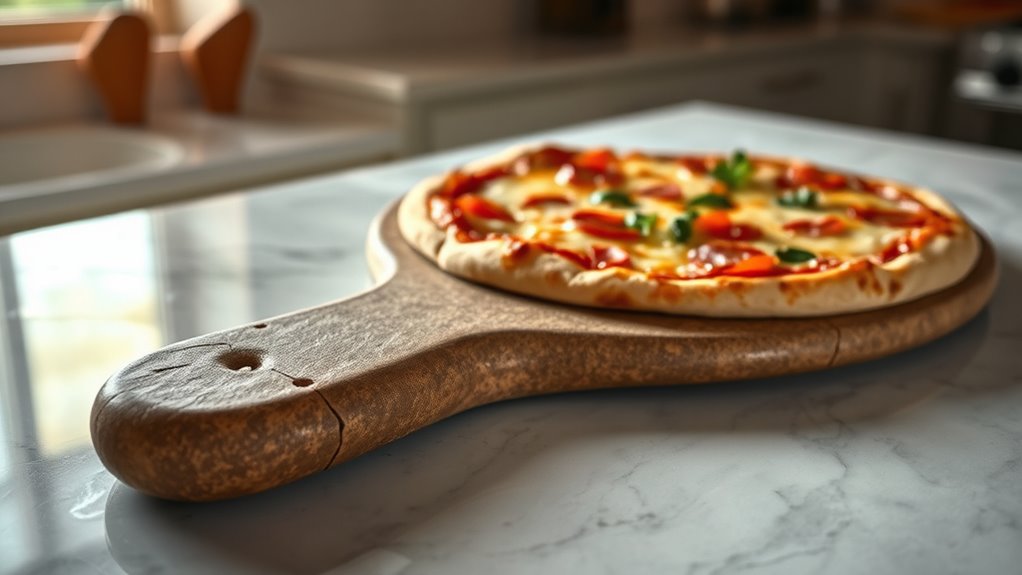
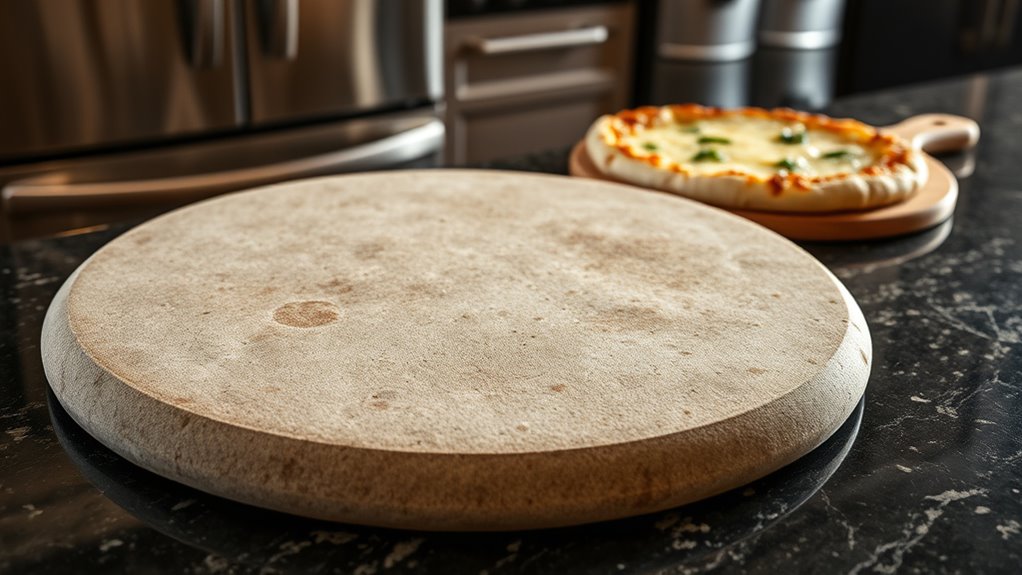
Have you ever wondered if investing in a pizza stone is truly worth it? If you’re serious about making restaurant-quality pizza at home, a pizza stone can greatly improve your results. One of the main benefits is how it enhances oven performance. When you place a pizza stone in your oven, it acts like a miniature oven within your oven, absorbing and radiating heat evenly. This helps create a much higher and more consistent cooking temperature, which is essential for achieving that perfect crispy crust. Instead of relying solely on your oven’s heating element, the stone stores heat and releases it steadily, providing a stable heat source underneath your pizza. This results in better oven spring and a more evenly cooked pie, especially when baking at high temperatures.
However, to maximize these benefits, you need to pay attention to cleaning and maintenance. A pizza stone is porous, which means it can absorb oils, food residue, and moisture over time. Proper cleaning is vital to prevent buildup that could affect your pizza’s flavor or even cause unpleasant odors. The best approach is to avoid using soap or harsh detergents, as these can seep into the stone and transfer unwanted tastes to your food. Instead, once the stone cools down, scrape off any stuck-on bits with a stiff brush or a plastic scraper. For deeper cleaning, some people recommend placing the stone in the oven and running a high-temperature cycle to burn off residues, but avoid soaking it in water, as the porous material can absorb moisture and crack when heated. Regularly inspecting your stone for cracks or uneven spots is also wise, since damaged stones can compromise oven performance and may be unsafe to use.
Maintaining your pizza stone properly not only prolongs its lifespan but also guarantees it continues to boost oven performance. If you neglect cleaning and leave residues, the stone’s heat transfer efficiency diminishes, leading to uneven baking and potentially longer cooking times. Conversely, a well-maintained stone heats quickly and retains heat well, giving you that ideal baking environment. Using it correctly involves preheating the stone thoroughly—usually for at least 30 minutes—so it reaches the desired temperature before you add your pizza. This way, you get that perfect crispy crust and evenly cooked toppings. In the end, investing in a pizza stone is worth it if you’re willing to give it proper care, as it transforms your oven into a more effective baking tool, helping you craft delicious, authentic pizzas right at home.
Frequently Asked Questions
Can I Use a Pizza Stone in a Convection Oven?
Yes, you can use a pizza stone in a convection oven. Just make certain you’re practicing oven safety by placing the stone on a cold, oven-safe rack and avoiding sudden temperature changes. A high-quality pizza stone offers good durability, so it withstands the heat of convection baking. Preheat it properly for the best results, and you’ll enjoy crispy crusts without damaging your stone or oven.
How Often Should I Replace My Pizza Stone?
They say “a stitch in time saves nine,” and the same applies to your pizza stone. You should substitute it when you notice cracks, chips, or significant wear, as durability concerns grow over time. Typically, replacement frequency depends on usage, but most stones last about 1-3 years with proper care. Keep an eye on its condition to ensure your pizza stays perfectly crispy without risking breakage.
Is a Pizza Stone Safe for Glass or Ceramic Cookware?
A pizza stone isn’t safe for glass or ceramic cookware because of material safety concerns and thermal compatibility issues. The stone’s high heat can crack or shatter glass and ceramic surfaces, risking injury or damage. Instead, use oven-safe materials designed for high temperatures. Always check the manufacturer’s guidelines for thermal compatibility and avoid placing a pizza stone directly on delicate surfaces to guarantee safety and longevity.
Can I Cook Other Foods on a Pizza Stone?
Yes, you can cook other foods on a pizza stone, thanks to its versatility. It’s great for baking bread, roasting vegetables, or even making crispy quesadillas. Just remember to preheat the stone thoroughly and avoid sudden temperature changes. Its alternative uses extend beyond pizza, making it a handy tool in your kitchen. With proper care, your pizza stone can enhance many culinary creations, not just pizza.
What’s the Best Way to Clean a Pizza Stone?
You’ll find that cleaning a pizza stone is simple if you follow proper cleaning methods. First, let it cool completely, then scrape off any food debris with a brush or plastic spatula. Avoid soap and water, as they can absorb and ruin the stone’s seasoning techniques. Instead, use a damp cloth for light stains, and always let it dry thoroughly before storing to keep your pizza stone in top shape.
Conclusion
A pizza stone is like having a secret weapon for perfect crusts—worth the investment if you want that crispy, bakery-quality finish at home. When used properly, it heats evenly and gives your pizza a professional touch. Sure, it takes a bit of effort to keep it clean and preheat, but the results are totally worth it. Think of it as a trusty sidekick that helps you elevate your pizza game—delicious, crispy, and just right.