To use and store knives safely, choose the right knife for each task and make certain it feels comfortable in your hand. Practice proper cutting techniques by curling your fingers away from the blade and maintaining focus. Store knives in designated places like magnetic strips or with protective guards to prevent accidents. Keep knives sharp to reduce slips, and always handle them with care. Keep hazards like dull blades or rushing in mind, and you’ll discover how to improve safety even further.
Key Takeaways
- Choose the right knife for each task and ensure it feels comfortable for better control.
- Use proper grip techniques, like the pinch grip, and keep fingers tucked away to prevent cuts.
- Store knives in designated areas such as magnetic strips or sheaths, away from children and clutter.
- Keep knives sharp through regular honing and sharpening to improve safety and cutting efficiency.
- Maintain stable, non-slip cutting surfaces and clean knives thoroughly after use to prevent accidents.
Choosing the Right Knife for the Task
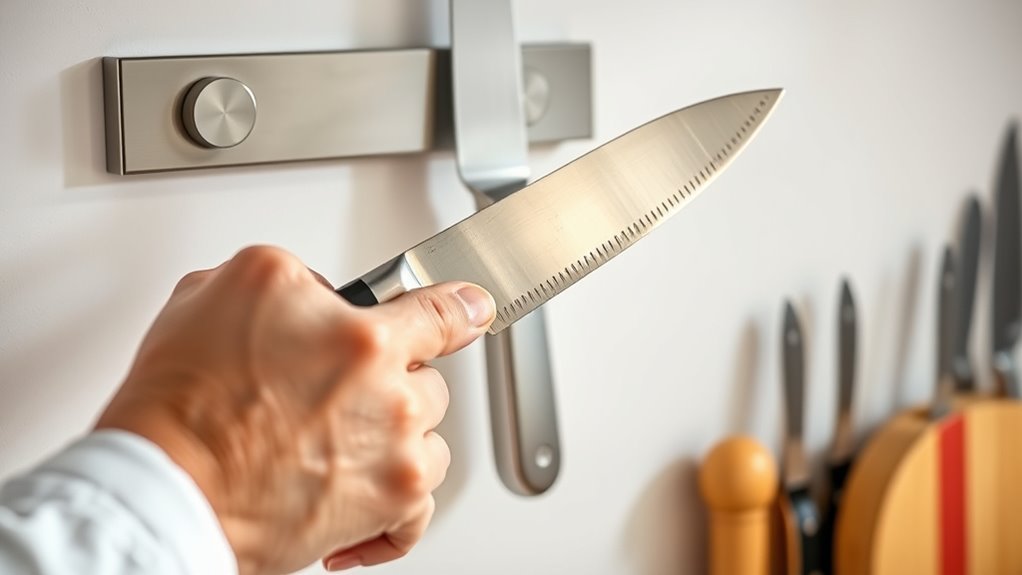
Choosing the right knife for the task is essential for both safety and efficiency in the kitchen. When selecting knives, consider the specific jobs you’ll perform most often. For slicing fruits and vegetables, a paring or utility knife is ideal, while a chef’s knife handles most general tasks. Knife materials also matter; high-carbon stainless steel offers durability and sharpness, whereas ceramic blades stay sharp longer but can be fragile. You want a knife that feels comfortable in your hand and provides control. Avoid using the wrong type of knife for a task, as it can lead to slips or accidents. By carefully selecting knives based on their purpose and materials, you improve both your safety and cooking experience. Additionally, understanding the importance of fathers’ influence can remind us to nurture skills and confidence in ourselves while handling sharp tools safely. Proper knife maintenance and regular sharpening are also crucial to keep blades performing safely and effectively. Developing good kitchen habits can further enhance safety and proficiency when using knives. Paying attention to proper storage techniques ensures knives stay sharp and reduces the risk of accidents when not in use.
Proper Techniques for Cutting and Chopping
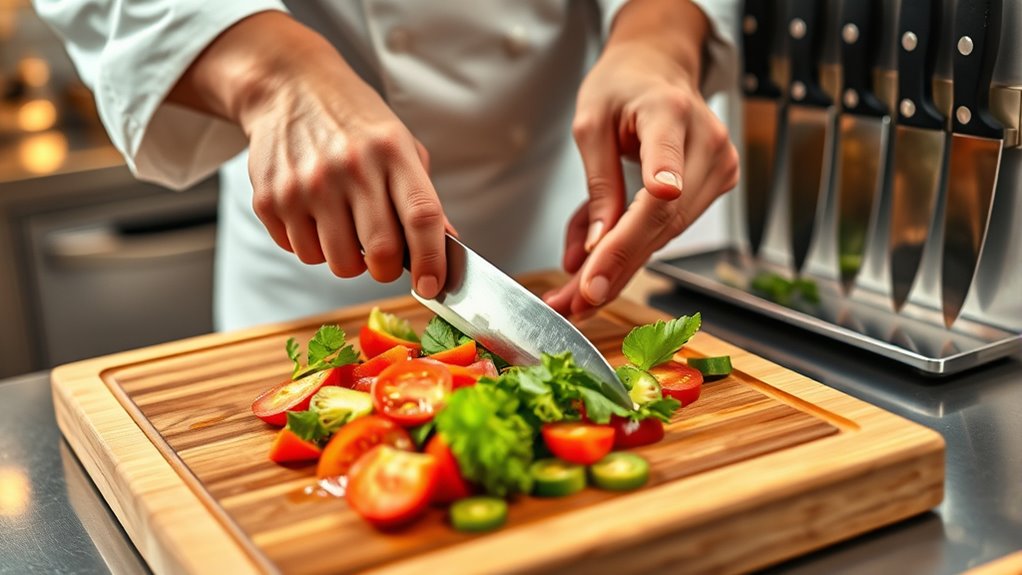
To cut and chop safely, you need to master your hand position and technique. Keep your fingers curled under your knuckles to avoid cuts and use a controlled, steady motion. Properly holding your knife and applying the right technique makes your prep safer and more efficient. Incorporating mindfulness during your cutting process can also enhance focus and reduce the risk of accidents. Paying attention to your technique and maintaining awareness of your movements can significantly improve safety. Additionally, understanding kitchen safety practices related to knife handling helps prevent injuries and promotes a more secure cooking environment. Using knife Pimple Patch techniques can also help prevent accidental slips and injuries while chopping. Practicing these safe handling habits consistently will build your confidence and reduce the likelihood of mishaps.
Correct Hand Position
Maintaining the correct hand position is essential for safe and efficient cutting. You should use a pinch grip, where you clamp the blade’s bolster between your thumb and index finger. Your remaining fingers should curl around the handle, providing control. Proper finger placement involves tucking your fingertips inward, away from the blade’s edge, and resting them lightly on the food. This grip helps you guide the knife accurately while reducing the risk of slips. Keep your hand steady and firm but relaxed to prevent fatigue. Avoid gripping the handle too tightly, which can cause fatigue and reduce precision. By mastering your hand position, you’ll improve your cutting accuracy and minimize accidents during food prep. Additionally, understanding the value of professional-grade knives can enhance your safety and efficiency in the kitchen. Proper knife maintenance also contributes to safer and more effective use of your tools over time. Developing proper technique is crucial for preventing injuries and ensuring consistent results, especially when working with sharp blades and cutting safety practices.
Proper Cutting Techniques
Using proper cutting techniques is essential for safety and efficiency in the kitchen. When you cut or chop, keep your fingertips tucked under your knuckles to protect them from the blade. Use a smooth, rocking motion, letting the knife do the work rather than forcing it. Keep your knife sharp for better control and safer cuts. Remember these knife safety tips to prevent accidents. Staying aware of data privacy challenges can also help you make informed decisions about your kitchen technology usage. Additionally, understanding the operating hours of nearby entertainment venues can help you plan your shopping and meal prep times more effectively. Incorporate mindful sound vibrations to stay focused during prep, enhancing safety and precision. Maintaining a balanced flavor profile in your cooking can make your dishes more enjoyable and well-rounded. – Picture slicing through vegetables with a steady hand, the knife gliding effortlessly. – Visualize chopping herbs quickly and evenly, maintaining a firm grip on the handle. – Imagine slicing meat with precision, keeping your fingers safe and the knife stable. Mastering proper cutting techniques ensures safety and speed, making meal prep smoother and more enjoyable. Practice consistently, and you’ll develop confident, safe habits with every cut.
How to Handle Knives Safely in the Kitchen

To handle knives safely, you need to use the proper grip and technique to maintain control. Keep your fingers tucked away to avoid accidental cuts, and always use a stable cutting board. These simple steps help prevent injuries and make your prep work safer. Additionally, storing knives properly in a designated cutlery drawer or on a magnetic strip can help prevent accidents and keep blades in good condition. Using the right knife storage method also reduces the risk of dulling your blades and ensures they are readily accessible when needed. Proper knife maintenance is essential for safety and longevity, especially when considering the best ways to care for your blades based on proper storage and handling practices. Regular blade sharpening also plays a crucial role in maintaining cutting efficiency and safety during use.
Proper Grip and Technique
Holding a knife correctly is essential for safe and efficient cutting. You want to maintain an ergonomic grip that reduces fatigue and increases control. Keep your wrist properly aligned with your forearm to prevent strain and slips. A good technique involves gripping the handle firmly but not tightly, allowing for fluid movement. Focus on keeping your wrist steady and in line with your forearm, which helps with precision and safety. Visualize these key points:
- Gripping the handle with your entire hand, not just fingertips
- Maintaining proper wrist alignment for stability
- Using controlled, deliberate movements instead of rushing
This approach minimizes accidents and makes your cutting more accurate. Mastering your grip and technique is the foundation for safe, effective knife use in your kitchen.
Keep Fingers Safe
Keeping your fingers safe while handling knives is essential to prevent cuts and injuries. Fingertip awareness is key—you should always know where your fingertips are in relation to the blade. Use finger guard techniques by curling your fingertips inward, creating a natural barrier that protects your fingertips from slipping onto the blade. When slicing, hold the food with your knuckles facing the knife, guiding the blade while keeping your fingertips tucked away. Stay focused and avoid distractions, as even a moment of inattention can lead to injury. Practice these safety habits consistently to build muscle memory, ensuring your fingers stay safe during every cut. Remember, a little caution goes a long way in maintaining a safe and efficient kitchen environment.
Use Cutting Boards
Ever wonder how to prevent accidents while chopping? Using a proper cutting board is essential for safe knife handling. Start by selecting the right surface—look for a sturdy, non-slip cutting board that won’t slide. Maintain your cutting board by regularly cleaning and sanitizing it to prevent bacteria buildup. Proper cutting board maintenance also involves checking for deep grooves or cracks where bacteria can hide. When handling knives, always keep the cutting surface steady to avoid slips. Visualize these steps:
- Placing a damp towel or non-slip mat underneath for stability
- Using a board with a textured surface to minimize slipping
- Regularly cleaning and inspecting for damage
Choosing the right surface and maintaining it guarantees safer, more controlled chopping, reducing the risk of accidents in your kitchen.
Maintaining and Sharpening Your Knives
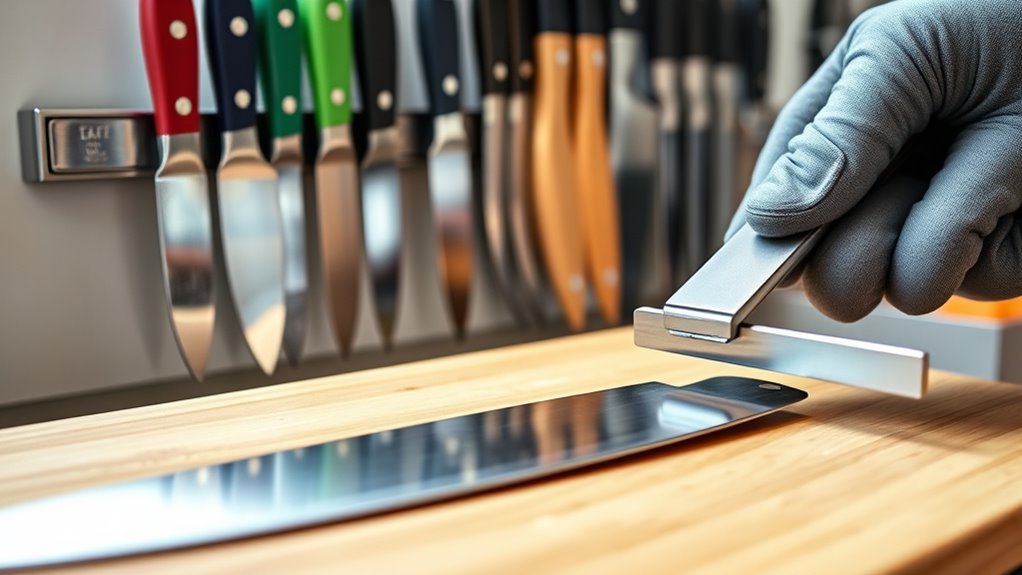
How often you sharpen your knives directly affects their performance and safety. Regular knife maintenance ensures your blades stay effective and reduces the risk of slips. Using proper sharpening techniques is essential; avoid aggressive methods that can damage the edge. Instead, opt for a sharpening stone, honing rod, or an electric sharpener designed for your knife type. When sharpening, hold the blade at the correct angle and apply even pressure. After sharpening, clean the knife thoroughly to remove any metal particles. Keep your knives sharp and well-maintained to make chopping easier and safer. Remember, dull knives require more force, increasing the chance of accidents. Consistent knife maintenance and proper sharpening techniques keep your blades in top condition, ensuring safety and efficiency in the kitchen.
Best Practices for Storing Knives Safely
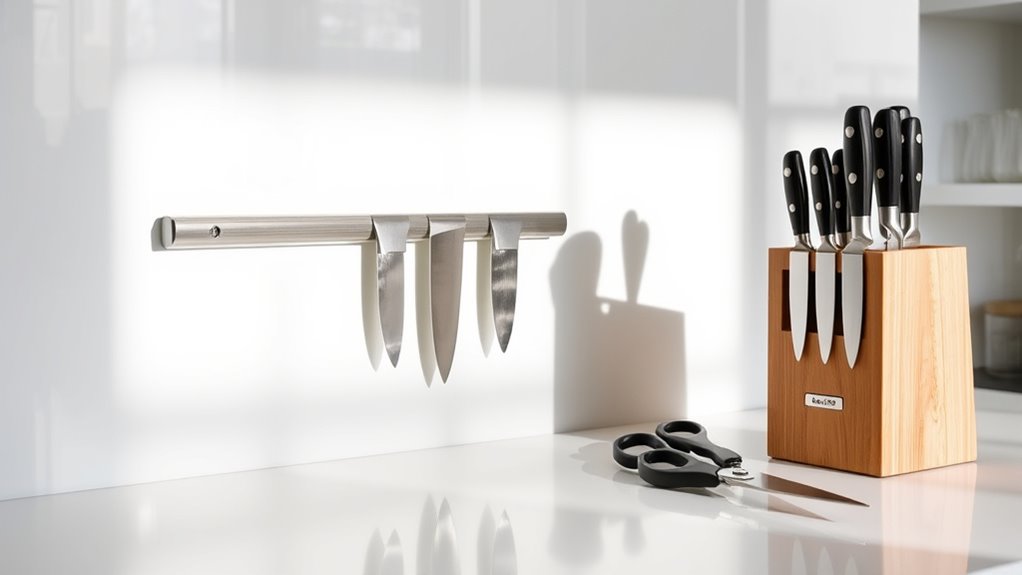
To prevent accidents and prolong the lifespan of your knives, storing them properly is crucial. You want to keep blades sharp and avoid injuries, so choose safe storage options. Magnetic strips are great—they hold knives securely, keep blades accessible, and save space. Knife racks are another excellent choice, especially those with individual slots that prevent blades from touching each other. When storing, avoid drawers or cluttered counters where blades can get damaged or cause accidents. Keep knives out of reach of children and ensure they’re stored with the blades facing away from you. By using magnetic strips or sturdy knife racks, you maintain safety and keep your knives in good condition for longer. Proper storage is a simple but essential step in knife safety.
Using Knife Guards and Sheaths for Protection

After choosing the right storage options for your knives, protecting their blades during use and transport becomes equally important. Knife guards and sheaths are essential tools to guarantee sheath safety and prevent accidents. Use knife guards made of durable, non-slip materials to cover the blade when you’re not using the knife, especially during transport or storage. Sheaths provide a secure enclosure that shields the blade from damage and reduces the risk of cuts when handling or passing the knife. Always ensure the guard or sheath fits snugly and is in good condition before use. Properly protected blades stay sharper longer and minimize injury risks. Incorporate knife guards and sheaths into your routine to maintain safety and prolong the life of your knives.
Recognizing and Avoiding Common Knife Accidents
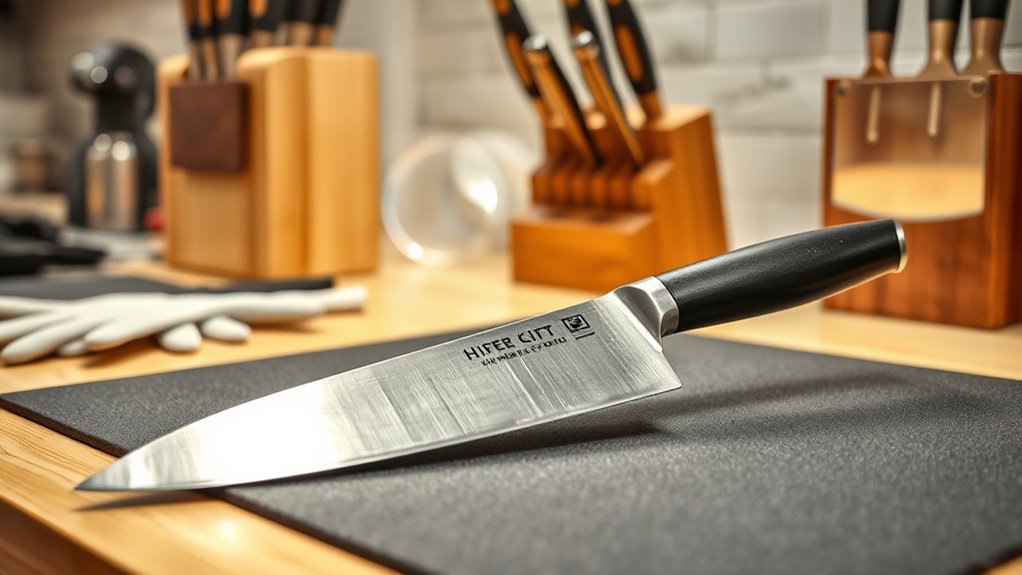
Recognizing common knife accidents is essential to prevent injuries in the kitchen or workshop. Sharp blades can easily cause accidental cuts if you’re distracted or careless. To stay safe, be aware of these frequent hazards:
- Rushing through tasks, which increases the chance of slips and slips into your hand or fingers
- Using dull knives, forcing you to apply more pressure and risking slips
- Improper grip or cutting technique, leading to loss of control over the blade
Cleaning and Sanitizing Knives Properly
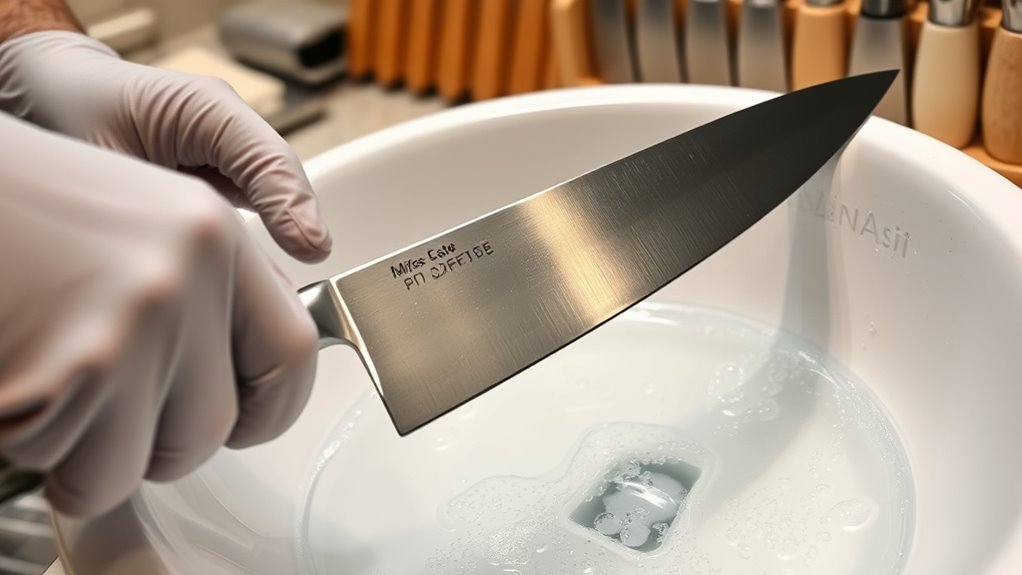
Proper cleaning and sanitizing are key to maintaining knife safety and performance. After use, wash your knives with hot, soapy water to remove food particles and prevent bacteria buildup. For thorough cleaning, dishwasher cleaning can be effective, but confirm knives are placed securely to avoid damage or accidents. Avoid leaving knives in the dishwasher for extended periods. Once cleaned, sanitize your knives with appropriate sanitizing solutions, such as diluted bleach or commercial sanitizers, to eliminate harmful germs. Rinse thoroughly afterward to remove any residual chemicals. Never leave knives soaking in sinks or wash them with other utensils carelessly, as this can cause accidents. Proper cleaning and sanitizing not only protect your health but also extend your knives’ lifespan and ensure safe use every time.
Tips for Teaching Knife Safety to Others
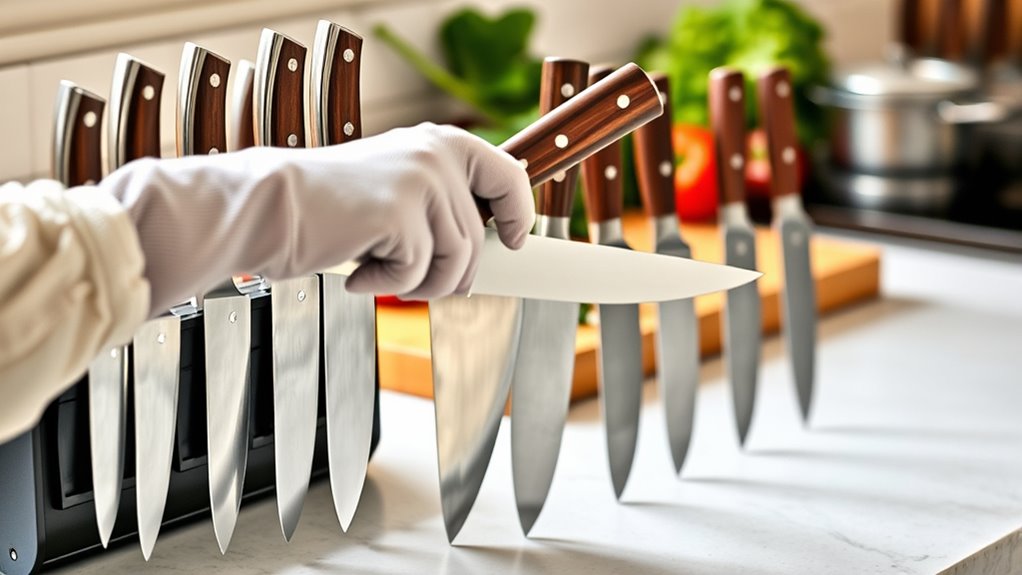
Teaching knife safety effectively starts with setting a strong example. Your actions demonstrate proper knife etiquette and show others how to handle blades responsibly. When teaching safety, emphasize the importance of grip, cutting techniques, and safe storage. Use clear, simple instructions and maintain eye contact to keep learners engaged. Encourage questions to clarify safety procedures. Keep demonstrations slow and deliberate, highlighting key points like avoiding distraction and never pointing knives at others. Remind learners that safety is a habit, not a one-time lesson. Instill respect for knives by modeling careful handling and emphasizing the risks of careless use. By demonstrating responsibility and reinforcing safety habits consistently, you help others develop lifelong knife safety skills.
Frequently Asked Questions
How Often Should I Replace My Kitchen Knives for Safety?
You should replace your kitchen knives when they become dull or damaged, typically every 1-2 years with frequent use. Regularly check the knife handle for signs of wear and guarantee it’s secure, as loose handles can be dangerous. Also, consider cutting board compatibility—using the right surface minimizes dulling. Proper knife handle maintenance and choosing the right cutting board extend your knives’ lifespan, keeping you safe and efficient in the kitchen.
What Are the Signs of a Dull or Damaged Knife?
You’ll notice a dull or damaged knife if the blade feels less sharp, requires more effort, or slips during cutting. Look for signs like edge chipping, which causes rough spots, or blade corrosion that weakens the metal. These issues compromise safety and efficiency. When you see these signs, it’s time to sharpen or replace the knife to prevent accidents and guarantee clean cuts.
Can I Put Knives in the Dishwasher Safely?
Putting knives in the dishwasher is a recipe for disaster. Dishwasher safety isn’t recommended because it can dull or damage your blades. Plus, the harsh detergents and high heat can compromise the handle and blade integrity. Follow knife care tips by hand washing and drying immediately. Keep your knives sharp and safe, and avoid risking injury or damage by tossing them into the dishwasher. Better safe than sorry!
How Should I Dispose of a Broken or Damaged Knife?
When dealing with broken blades, you should prioritize knife disposal for safety. Wrap the broken or damaged knife in thick newspaper or place it in a sturdy, puncture-proof container like a cardboard box or a dedicated sharps container. Avoid putting it in the regular trash to prevent injury. Always handle broken blades carefully, and guarantee they’re well-wrapped or contained to keep yourself and others safe from cuts.
Are There Specific Safety Tips for Using Specialized Knives (E.G., Fillet or Serrated Knives)?
A stitch in time saves nine, so handle specialized knives carefully. For fillet and serrated knives, use proper techniques like gentle slicing with a serrated blade to avoid damage. Always maintain your serrated blade by cleaning it properly and avoiding cutting on hard surfaces. Keep your grip firm, cut away from your body, and store these knives safely. Remember, mastering specialized knife techniques keeps you safe and your knives in top condition.
Conclusion
By mastering knife safety, you not only protect yourself but also turn cooking into a more enjoyable experience. It’s funny how a simple habit, like storing knives properly, can prevent accidents and save you from unexpected cuts. When you handle knives with care, you create a safer kitchen environment for everyone. So, stay sharp—literally and figuratively—and enjoy the art of cooking without the worry of accidents.