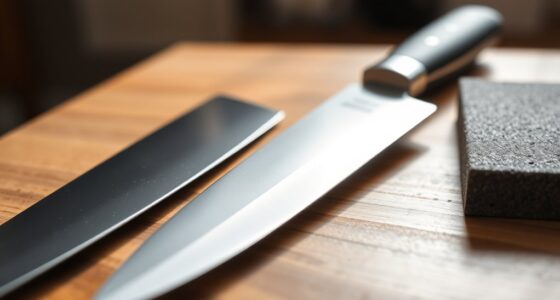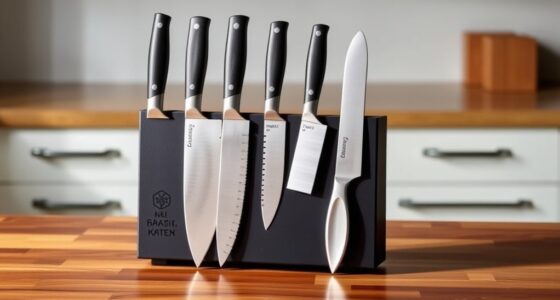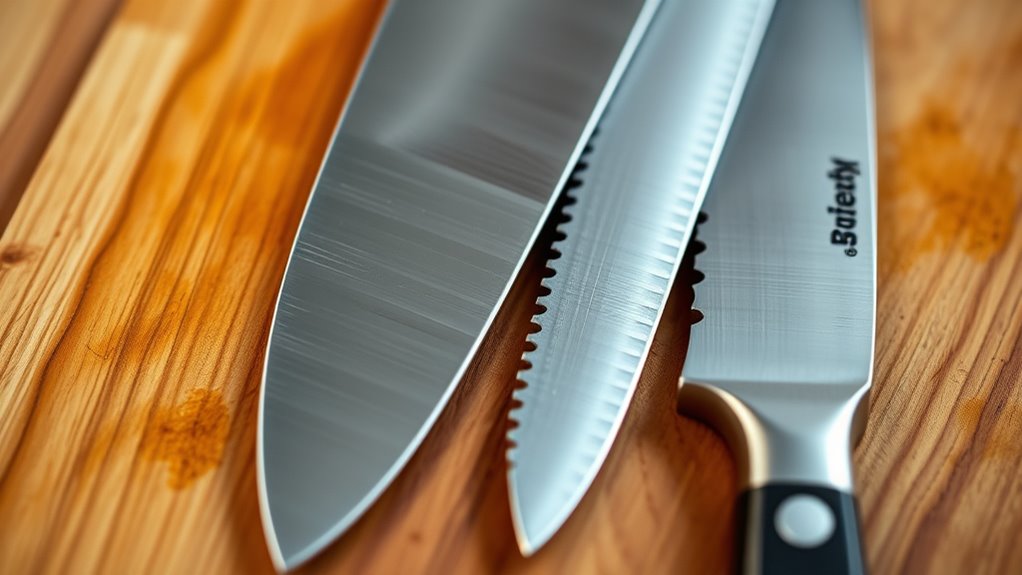

Choosing the right knife depends on the task at hand. A chef’s knife is versatile and great for chopping, slicing, and dicing large ingredients. A paring knife is perfect for precise, delicate tasks like peeling and detailed work. Serrated knives excel at cutting bread, soft fruits, or cooked meats with crusty surfaces. Understanding these differences helps you work safely and efficiently; keep exploring to learn more about each type and how to choose the best one for your needs.
Key Takeaways
- Chef’s knives are versatile, ideal for slicing, dicing, and chopping large ingredients with balance and efficiency.
- Paring knives are small and precise, perfect for peeling, detailed cutting, and intricate tasks.
- Serrated knives excel at cutting bread, soft fruits, and foods with tough crusts or skins.
- Proper handling, storage, and maintenance enhance safety and extend knife lifespan.
- Choosing the right knife depends on the specific task and food type for optimal results.
Understanding the Basic Design of Kitchen Knives

Understanding the basic design of kitchen knives is essential for choosing the right tool and using it effectively. One key aspect is knife handle ergonomics, which ensures comfort and control during cutting tasks. An ergonomic handle fits naturally in your hand, reducing fatigue and improving safety. Additionally, blade length options vary to suit different tasks; shorter blades excel at precision work, while longer blades are better for slicing large items. When selecting a knife, consider how the handle feels—whether it’s balanced and secure—and match blade length to your typical cutting needs. Knowing these design elements helps you pick a knife that feels comfortable and performs well, making food prep safer and more efficient. Studies also show that optimal angles can significantly influence cutting performance and blade longevity. Moreover, understanding blade materials can impact the durability and maintenance of your knives over time. Recognizing the importance of blade sharpness can further enhance your efficiency and safety in the kitchen. Incorporating proper storage solutions can also extend the lifespan of your knives and keep them in optimal condition.
The Role and Features of a Chef’s Knife
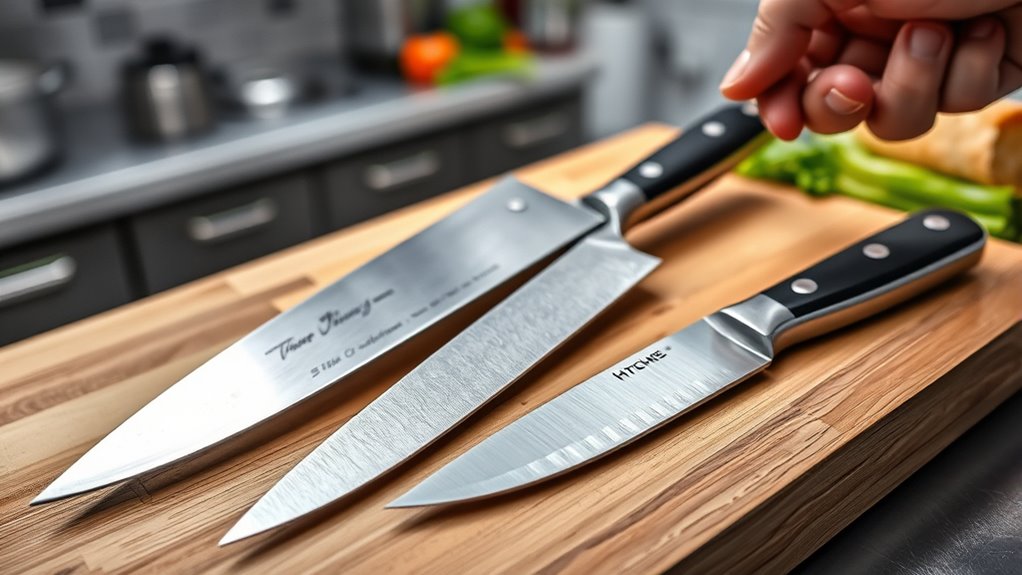
What makes a chef’s knife a versatile essential in your kitchen? Its design combines an ideal knife blade length, typically 8 inches, with a comfortable handle that offers excellent ergonomics. The handle ergonomics ensure you maintain a secure grip, reducing fatigue during prolonged use. The knife’s broad, sharp blade allows for precise slicing, dicing, and chopping across a variety of ingredients. Its balanced weight distribution makes it easy to control, whether you’re mincing herbs or slicing through proteins. The versatility of a chef’s knife stems from its ability to handle multiple tasks efficiently, making it your go-to tool for most kitchen prep work. Its well-crafted blade and ergonomic handle work together to make cooking smoother, safer, and more enjoyable. A well-designed handle contributes to comfort and safety during extended cutting sessions, especially when paired with proper technique to maximize efficiency. Additionally, selecting a high-quality blade material ensures durability and sustained sharpness over time.
When to Use a Paring Knife
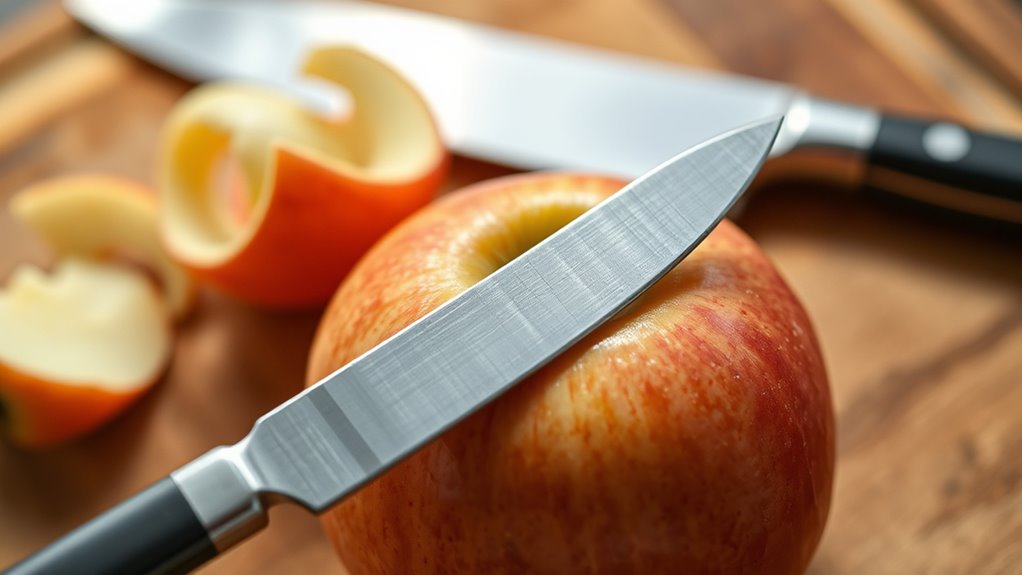
A paring knife excels in tasks that require precision and control, making it your go-to tool for detailed work. Use it when peeling fruit, as its small blade allows for close, clean cuts without damaging the flesh. It’s perfect for removing blemishes or thin skin from apples, peaches, and other fruits. Additionally, a paring knife is ideal for decorative carving, such as creating intricate designs or garnishes to elevate your presentation. Its maneuverability makes it easier to work around tight curves and delicate details. When you need to perform delicate tasks that demand accuracy, a paring knife offers the control and finesse necessary to achieve professional-looking results. Keep it handy in your toolkit for those precise, detail-oriented jobs in the kitchen.
The Advantages of Serrated Knives and Their Uses
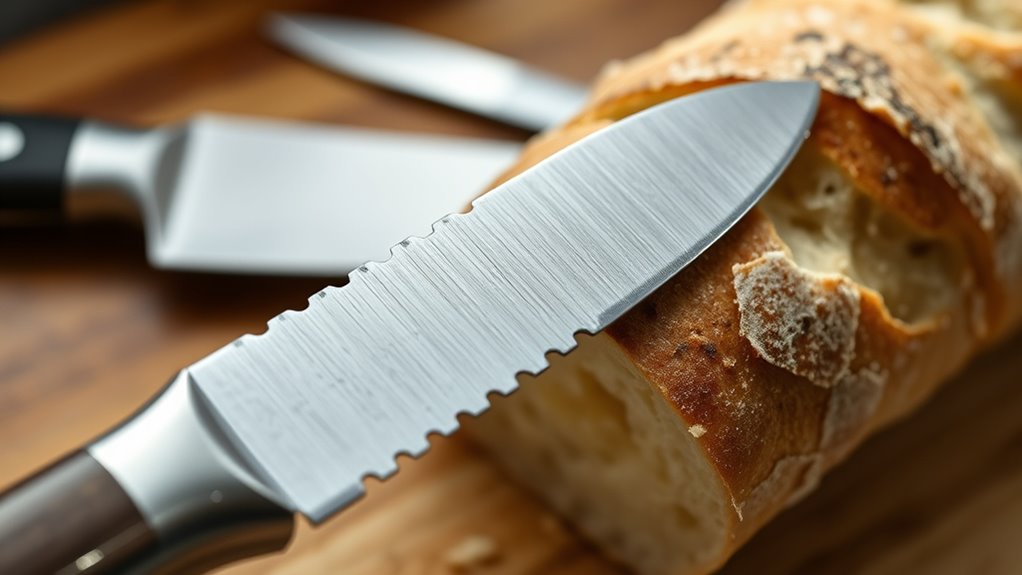
Serrated knives make slicing effortless, especially through tough or crusty surfaces. They’re versatile tools, perfect for tasks like cutting bread, tomatoes, or even soft fruits. With their unique edge, you can handle a variety of cutting jobs with precision and ease. Additionally, their design helps reduce crushing delicate items, making them ideal for precise cuts without damaging the texture.
Effortless Slicing Power
Because of their jagged edges, serrated knives effortlessly cut through tough or crusty surfaces without requiring excessive force. Their serrations grip and tear through bread, tomatoes, and other resistant foods with minimal pressure, making slicing smoother and faster. The sharp, serrated cutting edge reduces fatigue, especially during repetitive tasks. Plus, handle ergonomics ensure a comfortable grip, giving you better control and reducing hand strain. This combination of design features allows you to slice with confidence, even on difficult surfaces. Whether you’re slicing bread or soft fruits, serrated knives provide effortless power that enhances your efficiency in the kitchen. With a well-designed handle and a durable cutting edge, these knives deliver precision and ease in every cut. Additionally, choosing the right knife material can significantly impact durability and maintenance, ensuring your serrated knife remains effective over time.
Versatile Cutting Applications
The sharp, jagged edges of serrated knives make them incredibly versatile tools that excel in a wide range of cutting tasks. Their unique cutting edge grips surfaces like bread crusts, tomatoes, and citrus without crushing, making prep work smoother. The serrated blade’s teeth help you cut through tough or delicate items with minimal pressure, reducing hand fatigue. Handle comfort is also key; a well-designed handle provides a secure grip, allowing you to apply controlled force comfortably. Whether slicing through bread, soft fruits, or even cooked meats, serrated knives adapt to various textures and surfaces. Additionally, proper maintenance ensures their longevity and optimal performance during use. Regular sharpening and cleaning are essential to keep their cutting performance at its best, ensuring these knives remain a reliable part of your culinary toolkit. The blade design plays a crucial role in its effectiveness across different tasks. Recognizing the versatility of serrated knives can help you select the right tool for specific tasks, enhancing efficiency and safety. To maintain their effectiveness, understanding the benefits of different knife types can guide you in choosing the ideal tool for each culinary need.
Comparing Blade Materials and Their Impact on Performance
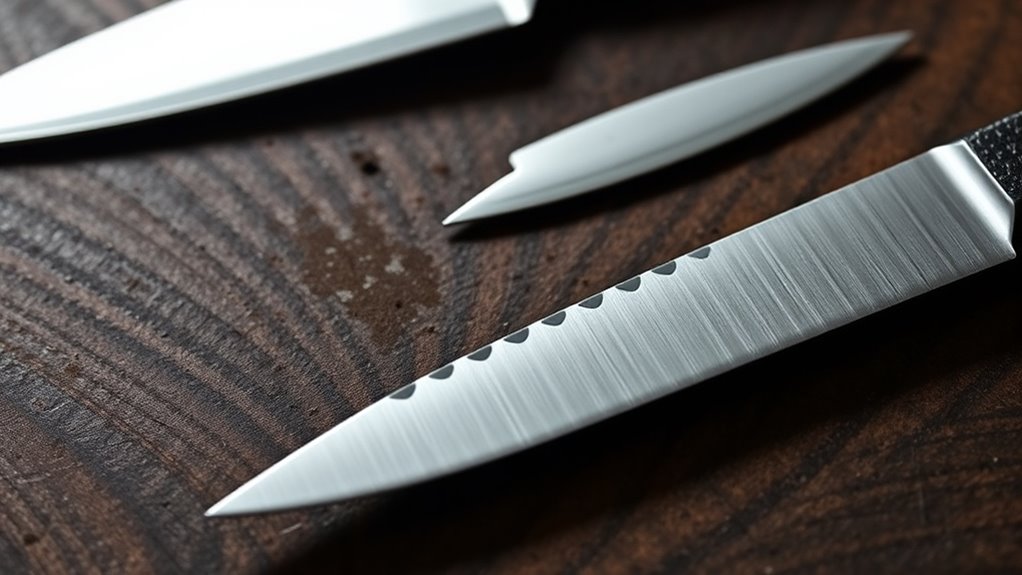
Choosing the right blade material can considerably influence a knife’s performance, durability, and ease of maintenance. Different materials offer varying levels of blade durability and material corrosion resistance, affecting how long your knife stays sharp and rust-free. High-carbon stainless steel provides excellent edge retention but requires regular cleaning. Damascus steel combines strength and corrosion resistance with a distinctive appearance. Ceramic blades are incredibly sharp and resistant to corrosion but can chip easily. Carbon steel offers superior blade durability but needs more careful maintenance to prevent rust. Additionally, understanding how blade material properties impact performance can help you select the most suitable knife for your needs, ensuring longevity and optimal use over time. For example, some blade materials are better suited for specific tasks, such as slicing or chopping, which can influence your choice based on your culinary needs. Moreover, the ease of sharpening varies among materials, affecting how frequently you may need to hone your knives to maintain their effectiveness. Being aware of material corrosion resistance can help you choose a knife that requires less maintenance in humid or acidic environments. Furthermore, considering blade edge retention can assist in selecting a knife that maintains its sharpness longer, reducing the need for frequent sharpening.
Safety Tips for Handling Different Types of Knives
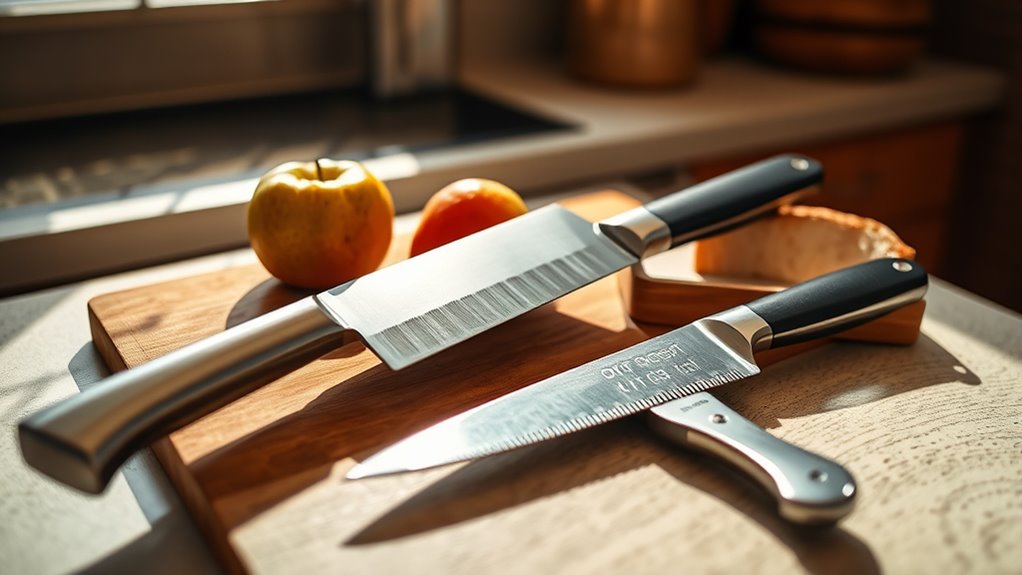
Handling different types of knives safely starts with understanding their unique characteristics and potential risks. Pay attention to knife handle ergonomics to guarantee a secure grip and prevent slips. Always consider blade length considerations; longer blades require more control and awareness. Use a cutting board to stabilize your work and keep your fingers clear of the blade path. When handling serrated knives, let the teeth do the work without excessive force. For chef’s and paring knives, maintain a firm grip, especially on the handle, to avoid accidents. Proper knife handling techniques are essential for preventing injuries and ensuring efficient use of each knife type. Here’s a quick comparison:
| Knife Type | Safety Tip |
|---|---|
| Chef’s Knife | Use proper grip, control blade length |
| Paring Knife | Handle with care, focus on blade control |
| Serrated Knife | Let teeth do the work, avoid excessive force |
Being aware of knife safety tips is essential for preventing injuries and ensuring efficient use of each knife type. Staying mindful of these factors enhances safety and efficiency.
Maintaining and Caring for Your Kitchen Knives
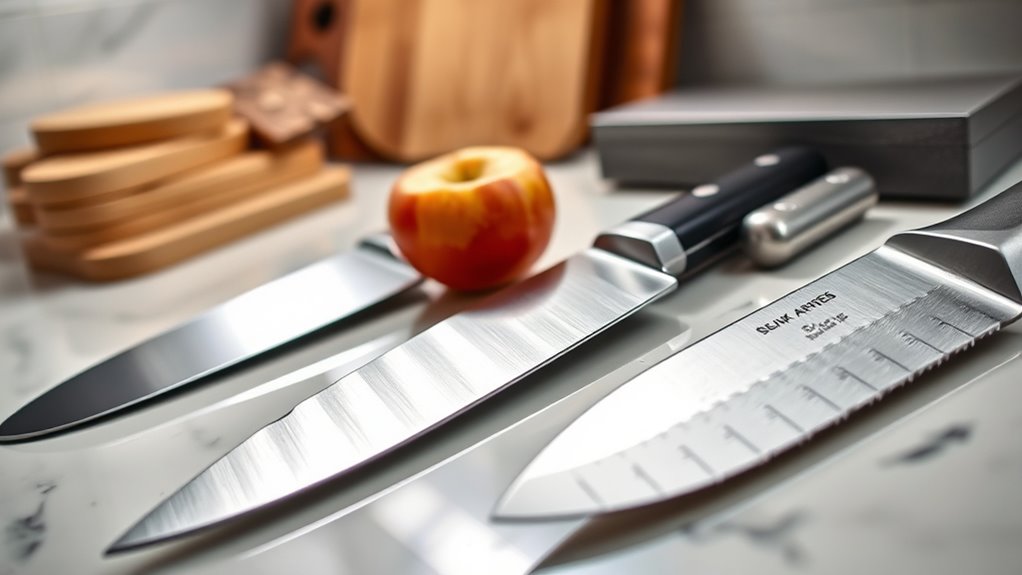
To keep your knives in top shape, you need to master proper cleaning techniques and safe sharpening methods. Storing them correctly prevents damage and guarantees they stay sharp longer. Paying attention to these details helps maintain their performance and extends their lifespan.
Proper Cleaning Techniques
Proper cleaning is essential to keep your kitchen knives sharp and safe to use. After each use, wash your knife by hand with warm water and mild soap, avoiding the dishwasher to prevent damage to the handle materials and blade edge types. Dry it immediately to prevent rust and corrosion. When cleaning, pay attention to the blade’s edge and handle, especially if it’s made from delicate materials like wood or composite. For added care, periodically sharpen and hone your knives to maintain their performance. Remember, proper storage also helps preserve the blade’s sharpness and the handle’s integrity.
- Use a soft sponge or cloth to prevent scratches
- Avoid soaking knives for extended periods
- Handle wooden or composite handles carefully
- Store knives securely to protect the blade edge types
Safe Sharpening Methods
Regularly sharpening your knives is essential to keep them performing at their best and guarantee safety during use. Proper maintenance involves using safe sharpening methods with the right sharpening tools, such as whetstones, honing rods, or electric sharpeners. Always follow the manufacturer’s instructions and maintain a consistent angle to avoid damaging the blade. Use gentle, controlled strokes to sharpen each side evenly, ensuring a sharp edge without overdoing it. Remember to clean your knives thoroughly after sharpening to remove any metal debris. Keep your sharpening tools clean and in good condition to achieve maximum results. Regular knife maintenance not only prolongs the life of your blades but also ensures safer, more precise cutting in your kitchen.
Storage Best Practices
Storing your kitchen knives correctly is essential to keep them sharp, safe, and in good condition. Proper storage preserves knife ergonomics, ensuring comfortable use and reducing strain. It also protects knife aesthetics, preventing scratches and dulling. To maintain your knives effectively, consider these best practices:
- Use a knife block or magnetic strip to prevent blade damage and keep edges aligned.
- Avoid storing knives loosely in drawers to prevent nicks and accidents.
- Keep knives dry and clean before storage to prevent rust and corrosion.
- Invest in individual blade guards for added protection during storage and transport.
Following these tips helps extend your knives’ lifespan, keeps them looking sharp, and guarantees safe handling every time you reach for them.
Choosing the Right Knife for Specific Tasks
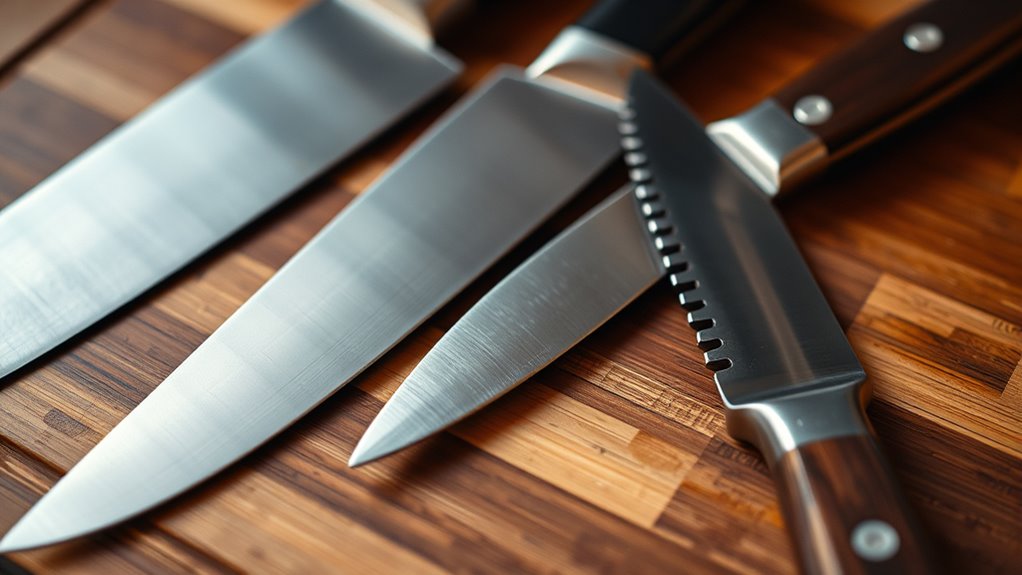
Choosing the right knife for specific tasks can make your prep work safer and more efficient. Focus on knife ergonomics to guarantee comfort and reduce fatigue during extended use. A well-designed handle allows you to maintain control and apply proper pressure. Consider cutting surface selection, as different knives perform better on certain surfaces; for instance, a serrated knife slices bread without crushing, while a chef’s knife excels on a sturdy cutting board for vegetables and meats. Matching the knife type to the task minimizes the risk of accidents and improves precision. Always assess the material you’re cutting and the technique required, then select a knife that fits those needs. Properly choosing your tools enhances safety, speed, and results in your culinary efforts.
Tips for Proper Storage and Organization of Knives
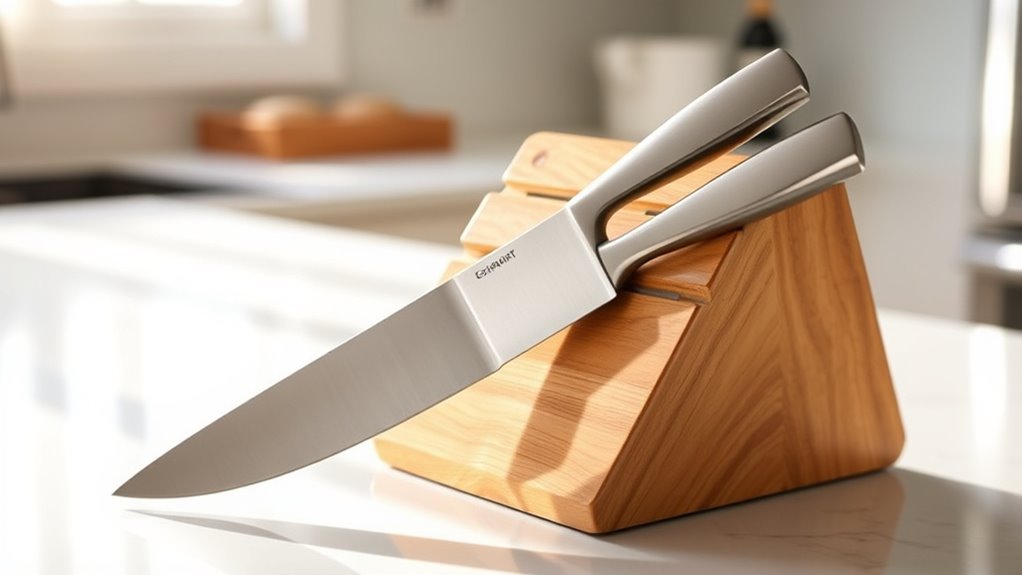
Proper knife storage is essential for maintaining sharpness, ensuring safety, and prolonging the life of your blades. When it comes to organization tips, choose a storage method that keeps your knives protected and easily accessible. Avoid tossing knives loose in drawers, which dull blades and pose safety hazards. Instead, consider these organization tips:
- Use a knife block or magnetic strip to keep blades secure.
- Store knives separately from other utensils to prevent damage.
- Keep knives dry and clean before storing to prevent rust.
- Invest in a drawer insert designed for knives for extra safety.
Frequently Asked Questions
How Do I Identify the Best Knife for My Cooking Style?
To identify the best knife for your cooking style, consider how knife ergonomics fit your hand and grip comfort, making prep easier. Think about your typical tasks—do you need precision for peeling or robust chopping? Also, evaluate your knife storage solutions; a well-organized knife block or magnetic strip keeps your knives accessible and safe. Choose a versatile, comfortable knife that suits your cooking habits and storage preferences for maximum performance.
Can I Use One Knife for All Kitchen Tasks?
Sure, you can try using one knife for everything, but don’t be surprised if it doesn’t excel at any task. Multifunctional knives might seem tempting, but specialty knives like paring or serrated blades are designed for specific jobs. Using just one knife can make prep harder, messier, and less precise. Embrace the variety—you’ll save time and effort, and your food will thank you with better texture and presentation.
What Are Common Mistakes When Handling Different Knives?
When handling different knives, you often make mistakes like neglecting knife safety and improper cutting techniques. Always focus on keeping your fingers away from the blade and use a proper grip. Switch knives carefully and avoid using the wrong knife for a task. Practice safe cutting techniques tailored to each knife type to prevent accidents and guarantee efficient, precise results in your cooking.
How Often Should I Sharpen or Replace My Knives?
You should sharpen your knives every few months, depending on how often you use them, and replace them when they become dull or damaged. Regular knife maintenance, including honing and proper storage, keeps blades sharp longer. Store your knives in a knife block or on a magnetic strip to prevent dulling. Keep an eye on performance; if slicing feels uneven or requires more effort, it’s time for sharpening or replacement.
Are There Specific Knives Recommended for Left-Handed Cooks?
Ever wonder if your tools match your handedness? For left-handed cooks, specialized left-handed knife options exist, offering better control and comfort. But don’t worry—ambidextrous knife designs are also available, providing a versatile solution that suits both hands equally. Choosing the right knife isn’t just about performance; it’s about feeling confident and safe in your kitchen. So explore these options—you deserve a tool that works with you, not against you.
Conclusion
Choosing the right knife can transform your cooking experience. Did you know that using the proper knife reduces prep time by up to 30%? By understanding each blade’s purpose—whether it’s a chef’s, paring, or serrated—you’ll work more efficiently and safely. Invest in quality, care for your knives, and select the right tool for each task. Your kitchen skills—and your meals—will definitely thank you.