If safety is your top priority, a knife block is generally the safer choice because it keeps blades hidden and reducing the risk of accidental cuts. Magnetic strips offer quick access but require secure installation to prevent knives from falling or causing injuries. Both options have their benefits, so consider your kitchen space and safety preferences. To discover which storage method best suits your needs, explore the details ahead.
Key Takeaways
- Knife blocks reduce injury risk by hiding blades and preventing accidental contact during storage.
- Magnetic strips secure knives firmly, but require proper wall attachment to prevent falls or accidents.
- Knife blocks protect blades from dust and damage, maintaining sharpness and safety over time.
- Magnetic strips keep knives visible and accessible, minimizing mishandling but needing secure mounting for safety.
- Overall safety depends on proper installation, quality materials, and user handling regardless of storage method.
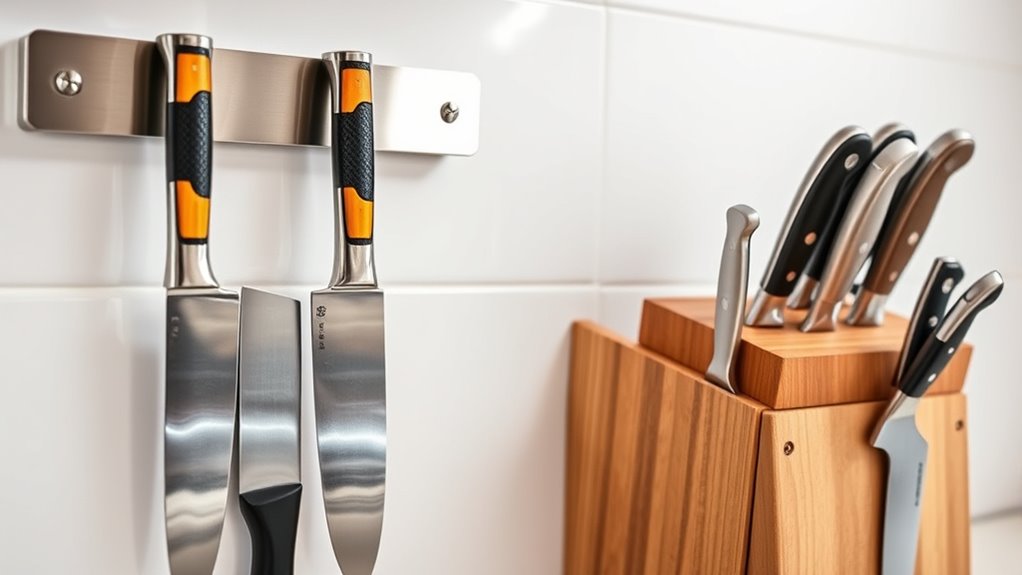
When choosing how to store your knives, understanding the differences between a magnetic knife strip and a knife block is essential. Both options impact your knife organization and countertop storage, but they serve different needs and preferences. A magnetic knife strip attaches to your wall, providing a sleek and accessible way to display and retrieve your knives. It keeps blades visible, so you can quickly grab the right one without rummaging through drawers. Plus, because it frees up drawer space, it’s a popular choice for those who want to keep their counters clear and their knives within easy reach.
On the other hand, a knife block sits on your countertop, offering a traditional and enclosed storage solution. It keeps your knives neatly contained and shields the blades from dust and accidental contact. For those concerned about safety, knife blocks reduce the risk of injury since the blades are hidden away, and you’re less likely to knock them over. They also add a decorative element to your kitchen, especially if you choose a stylish or wooden design. However, knife blocks tend to take up more space and can be less convenient if you have limited counter area.
When considering knife organization, you should evaluate how often you use your knives and how accessible you want them to be. A magnetic strip offers quick, easy access, which is ideal for frequent cooks or professional chefs. It also allows you to organize knives by size or type, keeping your tools visible and within arm’s reach. Conversely, a knife block is better if you prefer a tidier look or want to protect your blades from potential damage. Some high-quality wooden blocks have slots that fit specific knives snugly, minimizing dulling and preserving your knives’ sharpness over time.
Countertop storage is another critical factor. Magnetic strips mount on the wall, freeing up valuable counter space and making your kitchen look more open and modern. They’re easy to clean and maintain, and since they don’t involve contact with other utensils, they reduce cross-contamination. Knife blocks, however, sit prominently on your counter and can act as a focal point in your kitchen decor. They’re convenient if you don’t want to drill into walls or if you prefer your knives stored out of sight.
Additionally, choosing a high-quality material for your knife block can help prevent dulling and damage to your blades over time. Ultimately, the safest way to store your knives depends on your kitchen layout, your knife collection, and your personal safety preferences. Magnetic strips provide quick access and save space, but you must ensure blades are securely attached and not exposed to accidental knocks. Knife blocks offer a safer, enclosed environment, but they require more space and may dull blades over time if not chosen carefully. Weighing these factors will help you decide which option best supports your knife organization and countertop storage needs.
Frequently Asked Questions
Which Storage Option Is More Cost-Effective Long-Term?
A magnetic knife strip is more cost-effective long-term because it has a lower initial cost and minimal maintenance needs. You avoid frequent replacements and cleaning costs associated with knife blocks, which can require more upkeep over time. The cost comparison favors the magnetic strip because it’s durable, easy to clean, and doesn’t break or wear out as quickly, saving you money in the long run while keeping your knives safe.
Are Magnetic Strips Suitable for All Types of Knives?
Magnetic strips are suitable for most knives, but you should consider the knife material and magnetic strength. Stainless steel and other ferromagnetic metals work best, ensuring the strip holds securely. If your knives have non-magnetic handles or blades, they might not stay attached properly. Make sure the magnetic strength is strong enough to hold your knives safely, especially if you have heavier or thicker blades.
How Do Magnetic Strips Affect Knife Blade Longevity?
Magnetic strips may mildly muffle blade longevity if you neglect proper care. You might notice increased blade corrosion if moisture stays trapped, but strong magnetic strength keeps knives securely stored without scratching or dulling edges. To protect your blades’ brilliance, regularly dry and clean your knives, and choose a strip with gentle magnetic strength. This prevents rust and preserves sharpness, ensuring your knives stay in prime condition for longer.
Can Magnetic Strips Be Installed on Any Wall Surface?
Yes, magnetic strips can be installed on most wall surfaces, but wall compatibility varies. You should check the adhesive strength of the mounting method, as some surfaces like tile or painted drywall work well, while textured or uneven walls may require additional mounting hardware. Make certain you choose a magnetic strip designed for your wall type, and follow installation instructions carefully to secure it safely and prevent damage or slips.
Do Knife Blocks Harbor More Bacteria Than Magnetic Strips?
You’re right to question kitchen hygiene; studies show that bacteria can grow five times faster on traditional knife blocks than on magnetic strips. Knife blocks harbor more bacteria because food particles and moisture get trapped in the slots, promoting bacterial growth. In contrast, magnetic strips are easier to clean, reducing the risk of cross-contamination. So, if you prioritize hygiene, a magnetic strip is a safer choice to keep your knives and kitchen healthier.
Conclusion
Ultimately, choosing between a magnetic knife strip and a knife block depends on your safety priorities. Did you know that 70% of kitchen accidents involve dull or improperly stored knives? Using a magnetic strip can reduce this risk by keeping blades visible and accessible, encouraging safer handling. Whether you prefer the sleek look or traditional style, ensuring your knives are stored securely helps prevent injuries. Prioritize safety, and you’ll enjoy a more confident and organized kitchen every day.