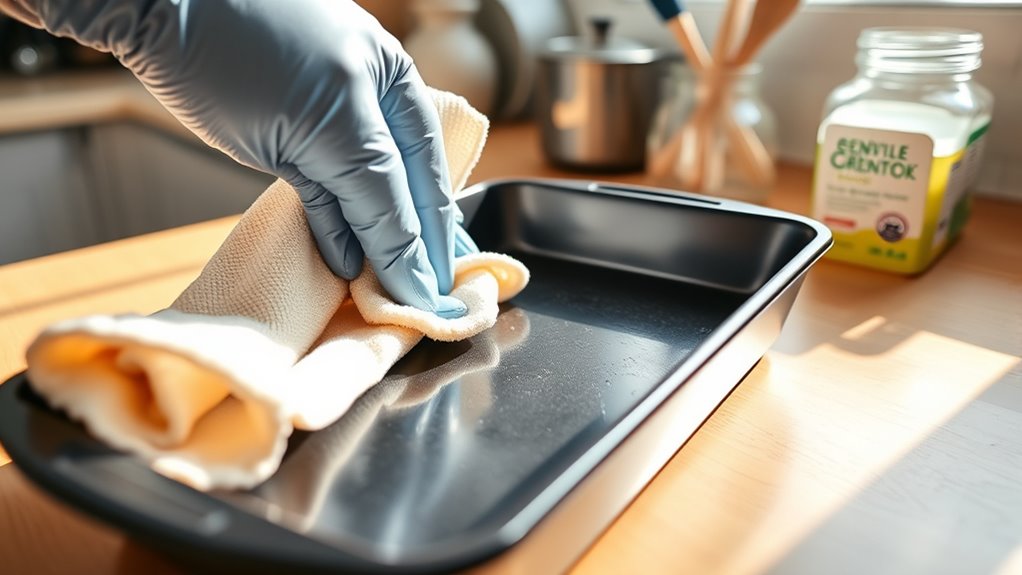

To keep your nonstick baking pans lasting, always let them cool before cleaning, and wash gently with warm water, a soft sponge, and mild soap. Avoid abrasive scrubbers or metal utensils that can scratch the coating. Store pans carefully with padding between them, and check regularly for signs of wear or peeling. Handle with care, and follow manufacturer instructions for use and cleaning. Keep an eye out for more expert tips to prolong their life.
Key Takeaways
- Always let pans cool completely before cleaning to prevent warping and preserve the nonstick coating.
- Use gentle cleaning tools like soft sponges and mild dish soap; avoid abrasive scrubbers or steel wool.
- Store pans carefully with soft cloths or parchment paper between them to prevent scratches and damage.
- Use utensils made of wood, silicone, or plastic to avoid scratching the nonstick surface during cooking.
- Regularly inspect for peeling or flaking and replace pans promptly to maintain safety and performance.
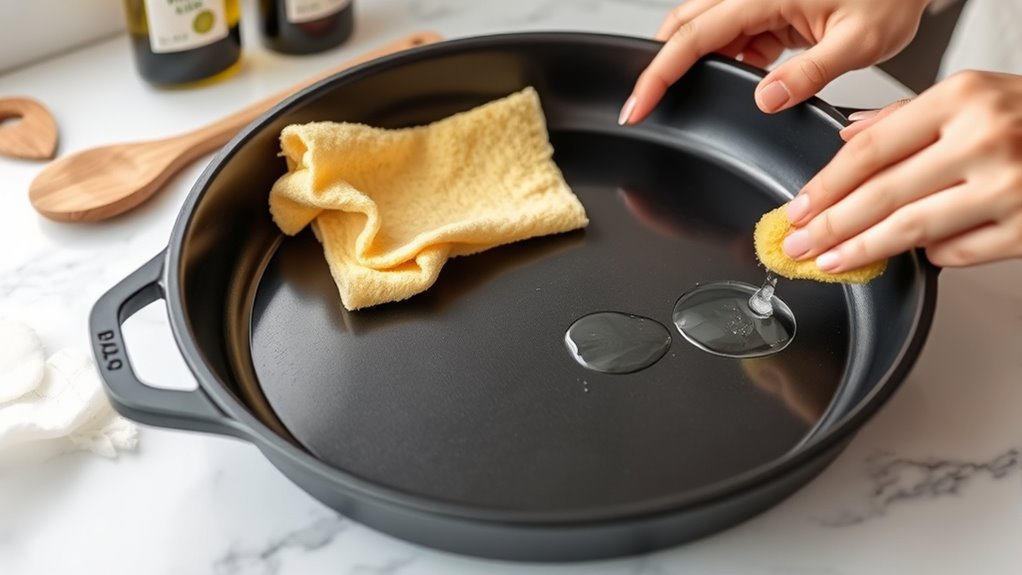
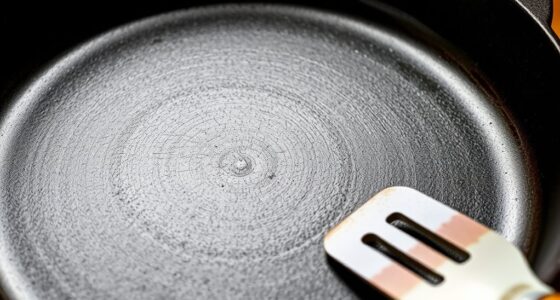
Have you ever wondered how to keep your nonstick baking pans performing like new? It’s a common concern, especially since these pans can be quite delicate. The good news is that with a few simple cleaning tips and smart storage solutions, you can extend their lifespan and maintain their nonstick qualities for years to come. First, always let your pans cool completely before cleaning. Plunging a hot pan into cold water can warp the metal, damaging the nonstick coating. When it’s cool enough, wash your pan using warm water, a soft sponge or cloth, and a mild dish soap. Avoid abrasive scrubbers or steel wool, as these can scratch and degrade the nonstick surface. For stubborn residue, soak the pan in warm soapy water for a few minutes before gently scrubbing. Never use harsh cleaners or scrubbers that can strip away the coating prematurely. Regularly checking for signs of wear can help you determine when it’s time to replace your pan and avoid further damage. In addition to proper cleaning, storage plays an essential role in maintaining your nonstick pans. Stacking pans is practical, but it can cause scratches if not done carefully. To prevent this, place a soft cloth, paper towel, or even a piece of parchment paper between stacked pans. This cushion protects the coating from potential scratches caused by contact with other metal cookware. Hanging pans is another excellent option, especially if you have limited cabinet space. When storing, ensure that no heavy objects are placed on top of your nonstick pans, as this can dent or warp the surface. Keep them in a dry, cool place, away from humidity and extreme temperatures that could compromise the coating or the pan’s structure. Proper ventilation and avoiding exposure to humidity can further extend the lifespan of your nonstick cookware. Regularly inspecting your pans for signs of wear is also vital. If you notice the nonstick surface starting to peel or flake, it’s time to replace the pan rather than risking food sticking or contamination. Remember, the longevity of your nonstick baking pans depends not just on how you clean and store them but also on how you handle them during use. Use only utensils made of wood, silicone, or plastic to avoid scratching the surface. Avoid metal tools that can gouge or scrape the coating. By adopting these simple cleaning tips and storage solutions, you’ll guarantee that your nonstick pans stay in top condition, providing you with perfectly baked treats and easy cleanup for many meals ahead.
Top picks for "maintain nonstick pans"
Open Amazon search results for this keyword.
As an affiliate, we earn on qualifying purchases.
Frequently Asked Questions
Can I Use Metal Utensils on Nonstick Pans?
You shouldn’t use metal utensils on nonstick pans because metal utensil damage can scratch and ruin the nonstick coating. This not only shortens the lifespan of your pan but also raises concerns about nonstick coating safety, as damaged surfaces may release particles or degrade over time. To keep your pans in top shape, opt for silicone, wood, or plastic utensils, which are gentle and won’t harm the nonstick surface.
How Often Should I Replace My Nonstick Baking Pans?
You should replace your nonstick baking pans when they’re so scratched and warped that cooking feels like a battle. Typically, their pan lifespan is about 3 to 5 years, but if the coating starts peeling or the surface isn’t smooth, it’s time for a new one. Regular replacement guarantees your baked goods stay perfect, and you avoid potential health risks from degraded coatings. Don’t wait until it’s an outright disaster!
Is It Safe to Use Nonstick Pans in the Dishwasher?
It’s generally not safe to put nonstick pans in the dishwasher because it can harm their nonstick durability. Harsh detergents and high heat can degrade the coating over time. To keep your pans in top shape, hand wash them gently with a soft sponge and mild soap. This helps preserve the nonstick surface and extends their lifespan, ensuring safe and effective use for longer.
What Are Signs of Nonstick Coating Deterioration?
You’ll notice signs of nonstick coating deterioration when the surface damage becomes visible, such as peeling, flaking, or scratches. If the nonstick coating starts to look dull or develops areas where the coating is missing, it’s a clear sign it’s wearing out. These signs indicate that the nonstick surface is compromised, which can lead to food sticking more and potential health concerns. Replace your pan when you see significant surface damage for safe and effective cooking.
Can I Repair Scratches on Nonstick Surfaces?
You can’t truly repair scratches on nonstick surfaces, as damaged coatings can’t be restored. Attempting to repair nonstick coatings with DIY methods often results in uneven or unsafe patches. Instead, focus on preventing scratches by using nonmetal utensils and gentle cleaning. If scratches are extensive, it’s best to replace the pan to guarantee safe, effective nonstick performance and avoid potential health risks from deteriorated coatings.
Conclusion
With proper care, your nonstick baking pans can last for years. Just remember to avoid metal utensils and harsh cleaners—they’re the biggest culprits of damage. Some might worry that gentle cleaning won’t get rid of stubborn stains, but a soft sponge and mild soap do the trick without harming the coating. Keep up these simple habits, and you’ll enjoy perfectly baked goods and a lasting, nonstick surface for countless treats ahead.