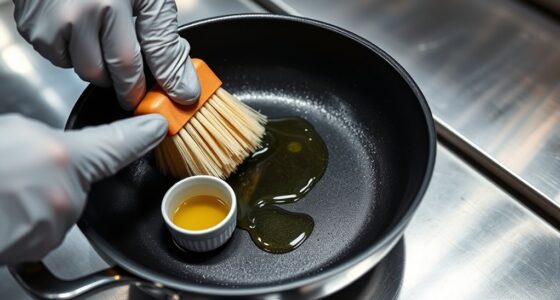
Choosing between nonstick spray, butter, and oil depends on your cooking method and flavor goals. Nonstick spray offers quick, even coverage with minimal flavor, ideal for baked goods and roasting. Butter adds rich taste and browning for baked items and delicate sautés, but burns easily at high heat. Oil, especially healthy types like olive or avocado, withstands higher temps and helps prevent sticking. To discover which is best for your dishes, keep exploring the options ahead.

Get kitchen staples and gadgets delivered free — and shop member deals
- Fast, free delivery on millions of items
- Access to Prime Big Deal Days deals on October 6–7
- Prime Video, Amazon Music and more included
Key Takeaways
- Nonstick spray offers quick, even coating with minimal flavor, ideal for baking and light sautéing.
- Butter provides rich flavor and browns well but can burn at high temperatures, limiting its use.
- Oil, especially heart-healthy types, tolerates higher heat and is versatile for frying, searing, and baking.
- For health-conscious cooking, oils generally offer better nutritional profiles than butter or spray.
- Choose based on temperature needs and flavor goals: spray for convenience, butter for flavor, oil for high-heat and versatility.

When it comes to greasing cookware, choosing between nonstick spray, butter, and oil can impact both your cooking results and health. Each option brings unique benefits and considerations, especially when it comes to baking techniques and flavor enhancements. Nonstick spray is convenient and easy to use, making it a popular choice for quick meals and baked goods. It creates a thin, even coating that helps prevent sticking, which is particularly useful when baking cookies, muffins, or roasting vegetables. However, it doesn’t add much in terms of flavor, so it’s best when you want the natural taste of your ingredients to shine through.
Butter, on the other hand, offers rich flavor and a traditional appeal. When you use butter, you not only grease the pan but also introduce a layer of flavor that can elevate baked items and fried foods. Its natural creaminess helps with baking techniques that benefit from its moisture and fat content, like making pie crusts or sautéing delicate fish. Butter also browns nicely, creating that desirable golden crust that enhances both appearance and taste. The downside is that butter can burn at higher temperatures, so it’s better suited for lower to medium heat cooking. Plus, it adds saturated fat, which you might want to limit for health reasons.
Oil provides a versatile middle ground. Whether you prefer vegetable, olive, or coconut oil, it’s easy to apply and tolerates higher temperatures better than butter. When you’re baking or frying, oil can produce excellent results because it helps distribute heat evenly, preventing sticking without overpowering the dish’s flavor. With oils, you also gain some flavor enhancements, especially with extra virgin olive oil or toasted sesame oil, which add depth to savory baked goods or roasted vegetables. Oils are often considered a healthier option than butter, especially if you choose heart-healthy varieties like olive or avocado oil, and they’re ideal for techniques that require high heat, like searing or stir-frying.
Additionally, understanding the leverage of different options can help you make the best choice based on your health goals and cooking style.
As an affiliate, we earn on qualifying purchases.
Frequently Asked Questions
How Does Smoke Point Differ Among Spray, Butter, and Oil?
You’ll notice smoke point variation among spray, butter, and oil, affecting their heating thresholds. Nonstick spray generally has a higher smoke point, making it suitable for high-heat cooking. Butter has a lower smoke point, so it starts to burn sooner, especially at high temperatures. Oils like vegetable or canola have moderate smoke points, allowing you to cook at medium to high heat without burning. Choosing the right one depends on your cooking method.
Which Option Is Most Cost-Effective for Everyday Cooking?
You’ll find that oil is the most budget-friendly option, costing roughly a third of what butter or nonstick spray typically do per use. With its ingredient versatility, oil handles a variety of cooking styles, from sautéing to roasting. For everyday cooking, choosing oil saves money while offering reliable performance. Plus, it’s easy to keep on hand, making it your go-to for quick, cost-effective meals.
Are There Health Benefits to Choosing One Over the Others?
Choosing oils with healthy fats, like olive or avocado oil, can benefit your heart health compared to butter or sprays, which may contain additives. Butter offers some nutrients but is higher in saturated fats, so moderation is key. Nonstick sprays often have additive concerns, like propellants or preservatives. Overall, selecting minimally processed oils with healthy fats supports your health, while limiting additives reduces potential risks.
How Do Nonstick Sprays Impact Pan Longevity?
Think of nonstick spray as a gentle rain that slowly wears down a delicate paint. Over time, frequent use can erode your pan’s coating, reducing spray durability and risking damage. The layer becomes thinner, exposing the metal beneath. To preserve your pan’s longevity, avoid excessive spraying and opt for safer utensils. Regularly maintaining your coating guarantees it remains a protective shield, rather than a fragile barrier that quickly wears away.
Can Using Butter or Oil Affect Food Flavor Differently?
Using butter or oil definitely influences your food’s flavor and texture. Butter adds richness and a slight sweetness, enhancing flavor and creating a creamy texture. Oil tends to keep dishes lighter, allowing other flavors to shine through, and can modify texture by making foods crisper or more tender. Depending on your dish, butter offers flavor enhancement and a velvety feel, while oil provides subtle flavor and texture modification for a different culinary experience.
As an affiliate, we earn on qualifying purchases.
Conclusion
Choosing between nonstick spray, butter, and oil depends on your cooking needs. Did you know that using spray can reduce calorie intake by up to 30% compared to butter? If you’re aiming for a healthier option, spray might be your best bet. However, for richer flavor, butter wins. Experiment with each to find what works best for your dishes—your taste buds and waistline will thank you!
As an affiliate, we earn on qualifying purchases.
As an affiliate, we earn on qualifying purchases.
Fall Picks
fall essentials
As an affiliate, we earn on qualifying purchases.