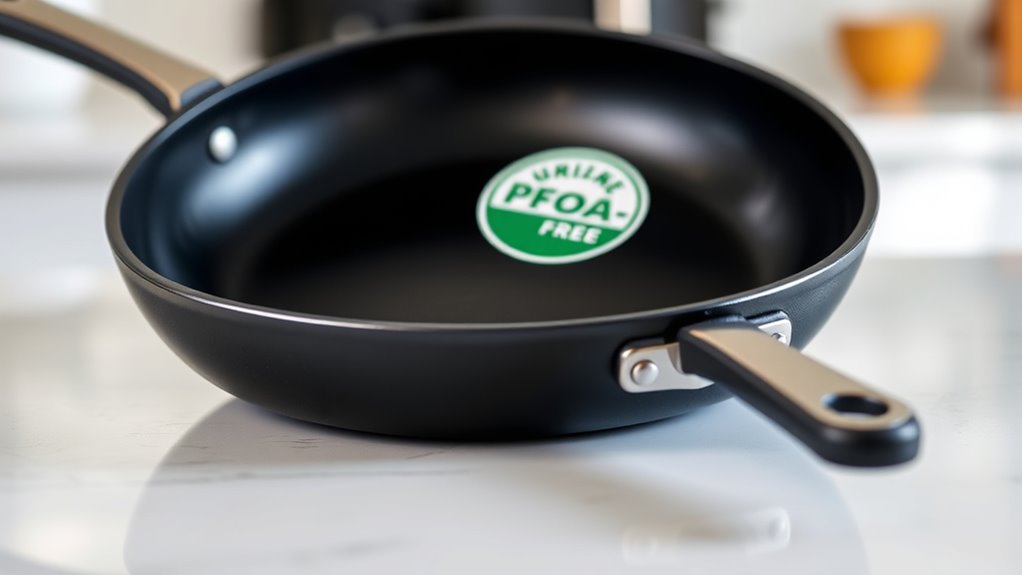

When you see “PFOA-Free” on cookware, it means the product doesn’t contain perfluorooctanoic acid, a chemical once used in non-stick coatings that’s linked to health risks. However, this label doesn’t guarantee all chemicals are safe, as other potentially harmful substances might still be present. Focusing on labels helps you pick safer options, but understanding what these claims truly mean can be tricky—you’ll find out more if you keep exploring.
Key Takeaways
- “PFOA-Free” indicates the cookware lacks perfluorooctanoic acid, a chemical previously used in non-stick coatings.
- It does not guarantee the absence of other potentially harmful substances or chemicals in the cookware.
- “PFOA-Free” claims address specific chemical safety but do not confirm overall non-toxicity.
- Manufacturers may use “PFOA-Free” to market safer options, but it’s important to check for other material details.
- Understanding these labels helps consumers make informed, health-conscious choices about cookware safety.
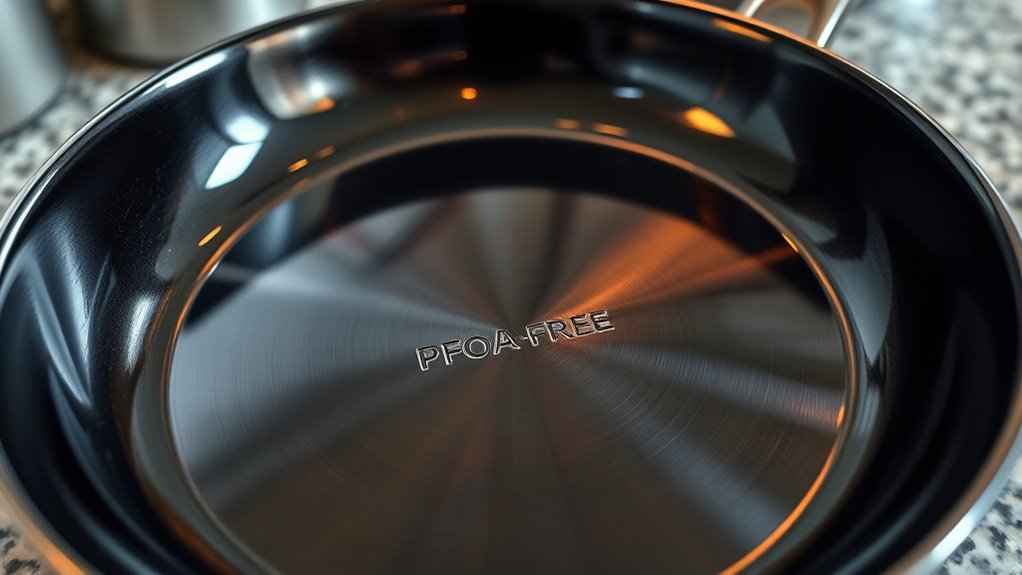
Have you ever looked at cookware labels and felt confused by all the symbols and claims? It’s common to see terms like “non-stick coatings,” “PFOA-Free,” or “ceramic,” and wonder what they truly mean for your safety and the environment. When shopping for pots and pans, understanding these labels helps you make informed choices that align with your health priorities. One of the most talked-about labels today is “PFOA-Free,” but what does that really signify? PFOA, or perfluorooctanoic acid, used to be a key chemical in many non-stick coatings. It’s linked to health concerns, including potential carcinogenic effects and disruptions to your hormonal balance. Manufacturers now advertise their cookware as “PFOA-Free” to reassure customers that they’ve eliminated this problematic chemical from their non-stick coatings. But it’s essential to realize that “PFOA-Free” doesn’t automatically mean the product is entirely free of all potentially harmful substances. Many non-stick coatings are made with other chemicals or compounds that could raise questions about chemical safety. For example, some non-stick coatings are now made with PTFE (polytetrafluoroethylene), which, when heated excessively, can release fumes that irritate your respiratory system. While these fumes aren’t typically a concern during normal cooking, over-heating can pose risks, especially in poorly ventilated kitchens. So, when you see “PFOA-Free,” it’s a good starting point, but it’s equally important to look at the broader context of chemical safety and what other substances might be involved. Some brands now emphasize ceramic or other alternative coatings, which are marketed as safer options because they often avoid certain chemicals used in traditional non-stick coatings. However, it’s worth noting that not all ceramic coatings are completely free of chemicals, and some may degrade over time, losing their non-stick properties or releasing particles. Additionally, understanding the material composition of cookware can help you assess its safety and durability. Ultimately, understanding what labels like “PFOA-Free” really mean helps you prioritize your health. Always check for additional information on the packaging or manufacturer’s website about the materials used. Look for cookware made with safer, environmentally friendly coatings, especially if you’re concerned about chemical safety. Remember, being an informed consumer means you’re less likely to be misled by marketing claims and more likely to choose cookware that aligns with your health and safety standards. In the end, decoding these labels empowers you to select cookware that’s not only effective but also safer for you and the planet.
Top picks for "decod cookware label"
Open Amazon search results for this keyword.
As an affiliate, we earn on qualifying purchases.
Frequently Asked Questions
Are Pfoa-Free Products Safer for Long-Term Health?
PFOA-free products are generally safer for your long-term health because they eliminate exposure to a chemical linked to health risks. Using PFOA-free cookware can offer health benefits by reducing potential toxins that may leach into your food over time. While no cookware is entirely risk-free, choosing PFOA-free options promotes long-term safety, helping you avoid the possible adverse effects associated with chemical exposure.
Can Pfoa-Free Cookware Still Contain Other Harmful Chemicals?
Like an unspoken promise, “PFOA-free” labels symbolize safety, but they don’t guarantee complete purity. You should know that cookware claiming to be PFOA-free can still contain other harmful chemical alternatives, as labeling accuracy varies. Always read ingredient lists carefully and research brands. Just because one risk is eliminated doesn’t mean others aren’t lurking, so question what’s truly safe before trusting the label blindly.
How Do Pfoa-Free Labels Impact Cookware Durability?
A PFOA-free label often indicates the coating’s durability may vary, but it can still offer good coating longevity and scratch resistance. Without PFOA, manufacturers might use alternative materials that are just as resilient, though some coatings could be slightly less durable over time. You’ll want to check reviews and product details to verify the cookware’s coating meets your needs for lasting performance and resistance to scratches.
Are Pfoa-Free Options More Environmentally Friendly?
Choosing PFOA-free cookware generally means you’re making a gentler choice for the environment. These options often involve manufacturing processes that reduce harmful chemical releases, lessening the environmental impact. By opting for PFOA-free products, you help promote more sustainable practices. While no cookware is perfect, these choices are a step toward minimizing chemical pollution and supporting eco-friendly manufacturing, aligning your kitchen habits with a healthier planet.
Do Pfoa-Free Pans Perform Better Than Traditional Non-Stick?
PFOA-free pans often perform just as well as traditional non-stick options, especially in non-stick performance and coating durability. You’ll notice they provide easy food release and good heat distribution. While some may worry about longevity, many PFOA-free coatings are now highly durable and resistant to scratches. If you choose quality brands, you won’t sacrifice performance or durability, making them a smart, safer choice for everyday cooking.
Conclusion
Understanding cookware labels like “PFOA-free” helps you make safer choices in the kitchen. Did you know that over 70% of non-stick pans now advertise being PFOA-free? This shows a significant shift towards healthier, non-toxic options. By decoding these labels, you’re empowered to pick cookware that’s better for your health and the environment. So next time you shop, remember: a quick label check can make a big difference in your cooking routine.