
To restore a rusty cast iron pan, start by scrubbing away rust with steel wool or a stiff brush, then wash it with dish soap and warm water to remove debris. Rinse and dry it thoroughly to prevent further rust. To re-season, coat it with a thin layer of oil, then bake it upside down at 450°F for an hour. Keep it well-maintained, and you’ll revive its non-stick surface – learn more to perfect your technique.
Key Takeaways
- Scrub off rust using steel wool or a stiff brush, then clean and dry thoroughly.
- Re-season the pan with a thin layer of oil, bake at 450°F for an hour, then cool.
- Maintain the skillet by cleaning with hot water, drying completely, and applying light oil before storage.
- Remove rust immediately with steel wool and re-season to prevent further corrosion.
- Store in a dry environment and avoid soaking to keep the skillet rust-free and well-seasoned.

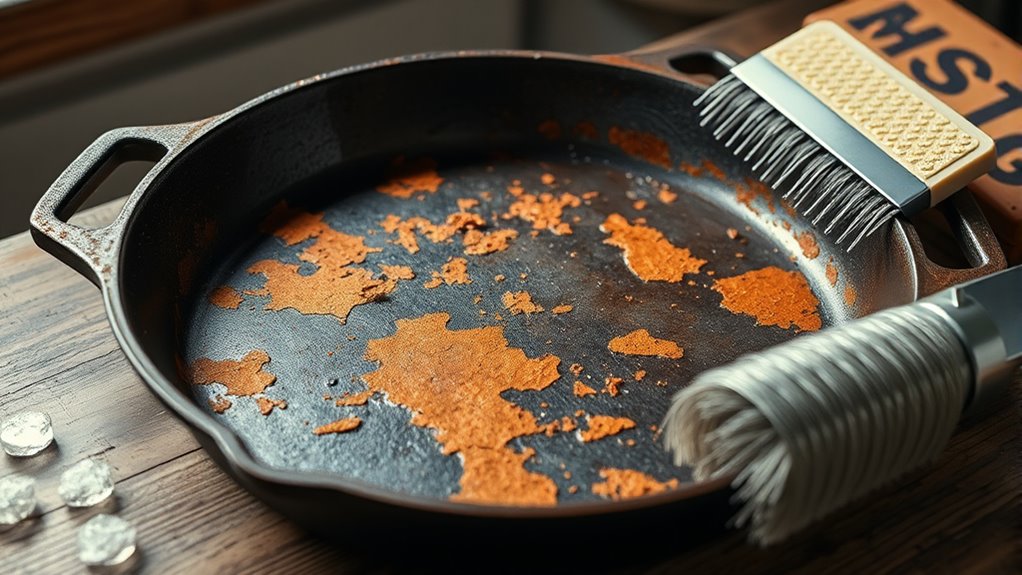
A rusty cast iron pan might seem beyond saving, but with the right steps, you can restore it to its former glory. The first step is to remove the rust completely. Use steel wool or a stiff brush to scrub away the rusted surface. Apply some dish soap and warm water to loosen stubborn spots, then scrub thoroughly until all traces of rust are gone. Rinse the pan well and dry it completely—moisture fuels further rusting, so ensure it’s thoroughly dry before moving on.
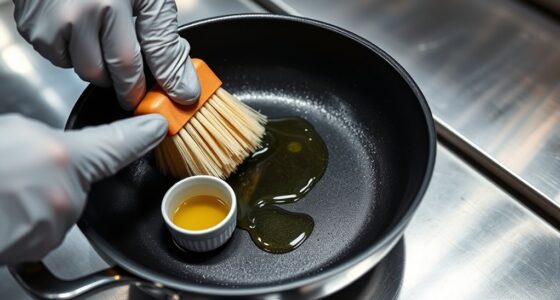
Once you’ve scrubbed away the rust, it’s time to re-season the pan. Seasonings are the foundation of a well-maintained cast iron skillet, providing a natural non-stick surface and protecting against future rust. To do this, coat the entire surface with a thin layer of vegetable oil or melted shortening. Use a clean cloth or paper towel to spread the oil evenly, making sure to cover every nook and cranny. Place the pan upside down in your oven at 450°F (232°C), placing a sheet of aluminum foil on the rack below to catch any drips. Bake it for about an hour, then turn off the oven and let the pan cool inside. This process creates a durable, seasoned surface that helps prevent rust from forming again.
Re-season your cast iron with oil, bake at 450°F for an hour, then cool to create a durable, rust-resistant surface.
Regular seasoning techniques are essential to maintaining your cast iron pan, especially if you want to avoid future rust. After each use, clean the skillet with hot water and a gentle brush—avoid soap, which can strip the seasoning. Dry it thoroughly and apply a light coat of oil before storing. To enhance rust prevention, keep your skillet in a dry environment, and consider applying a thin layer of oil periodically, even when not in use. This extra layer acts as a barrier against moisture, which is the main culprit behind rust.
Preventing rust isn’t just about seasoning; it’s about consistent care. Always dry your skillet thoroughly after washing, never leave it soaking in water, and store it in a dry, low-humidity space. If you notice any rust developing, don’t ignore it—address it immediately with steel wool and re-season the pan. Proper seasoning techniques and rust prevention habits can extend the life of your skillet significantly. With proper seasoning techniques and rust prevention habits, your cast iron skillet can last for generations, providing excellent cooking performance and a natural non-stick surface that improves over time. Restoring and maintaining your cast iron isn’t complicated, but it does require regular attention and care.
Top picks for "restore rusty cast"
Open Amazon search results for this keyword.
As an affiliate, we earn on qualifying purchases.
Frequently Asked Questions
How Long Does the Entire Restoration Process Usually Take?
The entire restoration process typically takes about 1 to 3 days, depending on your rust removal duration and the condition of your pan. To start, you’ll spend a few hours removing rust, then let the pan dry and re-season it. Restoring a rusty cast iron pan involves patience, but with careful rust removal and seasoning, you’ll have it ready to use in just a couple of days.
Can I Use an Oven Cleaner to Remove Rust?
You shouldn’t use an oven cleaner for rust removal on your cast iron pan. Oven cleaners contain harsh chemicals that can damage the seasoned surface and may be unsafe for food contact. Instead, opt for abrasive methods like scrubbing with steel wool or using vinegar for chemical removal of rust. These safer options effectively eliminate rust while preserving the pan’s seasoning, ensuring you can restore and use your skillet safely.
Is It Safe to Cook With a Rusty Pan Before Restoring?
It’s not safe to cook with a rusty pan because rust hazards can contaminate your food and pose health risks. Rust can harbor bacteria and other harmful substances, compromising food safety. You should thoroughly clean, scrub, and restore the pan before using it again. Skipping this step might lead to ingestion of rust particles or bacteria, so always guarantee your cast iron skillet is properly restored and seasoned for safe cooking.
How Often Should I Reseason My Cast Iron Skillet?
Think of your cast iron skillet as a fine-tuned instrument that needs regular care. You should reseason it every 3 to 6 months, depending on frequency of use and how well you maintain it. Proper seasoning frequency is key to preventing rust and maintaining a non-stick surface. Follow maintenance tips like cleaning thoroughly and applying a light coat of oil after each use to keep your skillet in top shape.
What Are Common Mistakes to Avoid During Restoration?
Avoid using harsh cleaning tools like steel wool or metal brushes that can strip away your seasoning. Don’t skip thorough cleaning before reseasoning, as leftover rust or debris hampers the process. Be cautious with seasoning techniques; applying too much oil or uneven layers can cause sticking. Also, neglecting proper drying after cleaning invites future rust. Focus on gentle cleaning and even seasoning layers to restore your skillet effectively.
Conclusion
Now, as you wipe away the last bit of rust, it’s funny how a simple mishap can lead to a renewed passion for your cast iron. Just yesterday, I found my own skillet buried under a pile of forgotten tools, only to realize it was the same one I’d saved from rust. Sometimes, restoring something old reminds us that even the most forgotten things can become treasures again—just like your freshly revived pan.