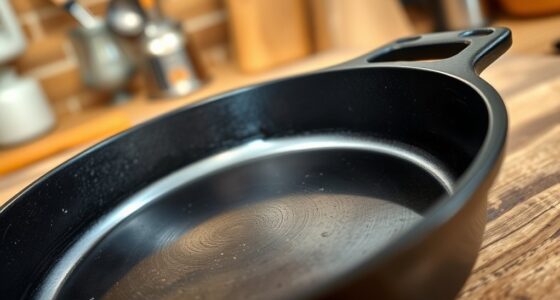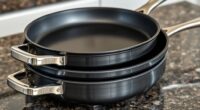
A saucepan has high sides and a long handle, making it ideal for simmering, boiling, and making sauces, as it keeps liquids contained. A sauté pan features low, sloped sides and a wide surface, perfect for browning, searing, and stir-frying, allowing for easier tossing and even heat distribution. Knowing these differences helps you choose the right tool for each task. Keep exploring to discover how these designs can improve your cooking skills.
Key Takeaways
- Saucepans have high sides and a long handle, ideal for simmering and boiling; sauté pans have low, sloped sides for browning and stir-frying.
- The shape of a saucepan concentrates heat in the center, while a sauté pan’s wide surface promotes even heat distribution for browning.
- Material choices like stainless steel or cast iron impact heating performance and are suited for specific techniques such as simmering or searing.
- Saucepan’s design contains liquids effectively, making it better for sauces, while sauté pans support quick stirring and browning of ingredients.
- Using the appropriate pan type enhances cooking results, efficiency, and ease of cleaning based on specific techniques and recipes.

When choosing cookware for your kitchen, understanding the differences between a saucepan and a sauté pan can help you select the right tool for each task. Both are vital, but they serve distinct purposes based on their design and the cooking techniques you plan to use. A saucepan typically features high, straight sides and a long handle, making it ideal for tasks that involve simmering, boiling, or making sauces. Its shape concentrates heat in the center, which is perfect for even cooking of liquids and small ingredients. A sauté pan, on the other hand, has low, sloped sides and a wide surface area, allowing you to toss and stir ingredients easily. This design lends itself well to searing, browning, and sautéing, where quick movement and even heat distribution are key.
Choosing the right cookware depends on your cooking tasks and preferred techniques.
Understanding cookware materials is vital because it influences heat conduction and how you perform different cooking techniques. Common materials include stainless steel, non-stick coatings, cast iron, and aluminum. Stainless steel is durable, non-reactive, and excellent for browning and deglazing, making it a favorite for sauces and pan sauces in saucepans. Cast iron offers superior heat retention, making it suitable for slow simmering or frying, and many sauté pans are available in cast iron for versatility. Aluminum and non-stick coatings provide excellent heat conduction and easy food release, especially useful when making delicate sauces or cooking eggs.
Your choice of cookware material affects how you execute specific cooking techniques. For instance, if you’re making a delicate sauce that requires gentle simmering, a stainless steel saucepan heats evenly and is easy to clean after reducing liquids. If you’re searing meats or stir-frying vegetables, a well-heated sauté pan made of cast iron or stainless steel ensures proper browning and quick heat response. Non-stick sauté pans are great for sautéing with minimal oil, especially when working with fragile items like fish or eggs.
Selecting the right cookware based on materials and design directly impacts your cooking results. The saucepan’s high sides help contain liquids and prevent splashes, while its structure supports slow, steady heat—perfect for simmering and making sauces. Meanwhile, the sauté pan’s wide, flat surface and sloped sides promote even browning and quick stirring, essential for techniques like sautéing or stir-frying. Knowing these differences allows you to use each piece effectively, ensuring your cooking techniques yield the best possible results and making your kitchen more efficient.

Cuisinart 1.5 Quart Sauce Pan with Cover, Stainless Steel Pot with Lid, Small Kitchen Pots, Dishwasher Safe, Compatible with Induction, Electric, Gas Cooktops, Oven Safe Saucepan, Cool Grip Handles
EXCEPTIONAL DESIGN: enjoy mirror finish, classic look and professional performance. Aluminum encapsulated base heats quickly and spreads heat…
As an affiliate, we earn on qualifying purchases.
As an affiliate, we earn on qualifying purchases.
Frequently Asked Questions
Can I Use a Saucepan as a Sauté Pan?
You can use a saucepan as a sauté pan, but keep in mind that pan versatility and heat distribution differ. Saucepans are better for simmering and boiling, while sauté pans excel at browning and stir-frying with their wider, flatter surface. If you’re cooking something quick and require even heat, a saucepan may work. However, for more control and better heat distribution, a sauté pan is usually the better choice.
Which Pan Is Better for Frying?
For frying, a sauté pan is better because it offers a wide surface area and even heat distribution, allowing you to cook food thoroughly and quickly. Choose a pan size that fits your needs, ideally between 10 and 12 inches, to make certain of easy stirring and flipping. The flat, straight sides of a sauté pan make it easier to toss ingredients, making it ideal for frying compared to a saucepan’s rounded shape.
How Do I Clean a Sauté Pan?
To clean your sauté pan, start by letting it cool slightly, then gently wash with warm, soapy water, using a soft sponge to protect the non-stick coating. For stubborn spots, soak it briefly or use a non-abrasive scrub. Always handle the pan carefully, especially around the handle, to make certain of safety. Avoid harsh cleaners that can damage the coating, keeping your pan in top shape for future use.
Are Sauté Pans Suitable for Boiling Liquids?
Yes, sauté pans are suitable cookware for boiling liquids. They’re designed with straight sides and a wide surface, making them ideal for boiling techniques like pasta or vegetables. Just make certain the pan has enough depth and a tight-fitting lid to prevent splashes. Keep in mind, while they work well, saucepans are often better for boiling because they retain heat more efficiently and are specifically designed for that purpose.
What Materials Are Best for Saucepans Versus Sauté Pans?
You should choose stainless steel or aluminum for saucepans because of their excellent heat conductivity and durability, perfect for boiling and simmering. For sauté pans, non-stick coatings are ideal, as they allow easy stirring and prevent sticking during sautéing or frying. Copper is also great for both, offering superior heat responsiveness. Selecting the right materials enhances cooking efficiency, ensuring even heat distribution and preventing food from sticking or burning.

Lodge 8" Cast Iron Skillet – Chef Collection – Perfect Sear – Ergonomic Handles – Superior Heat Retention – Cast Iron Cookware & Skillet
Thoughtfully Designed Cast-Iron Skillet: This 8-inch iron skillet showcases ergonomic handles, spatula-friendly sidewalls, and generous pour spouts
As an affiliate, we earn on qualifying purchases.
As an affiliate, we earn on qualifying purchases.
Conclusion
Choosing between a saucepan and a sauté pan is like selecting the right brush for a masterpiece. Each tool, with its unique shape, symbolizes a different path to culinary success. By understanding their differences, you discover the ability to craft flavors perfectly, just as an artist uses the right brushstroke. Remember, your kitchen tools are the paintbrushes of your culinary canvas—use them wisely, and your dishes will always tell a beautiful story.

SNOWCLAD Frying Pans Nonstick with Lid,Hybrid Non Stick 5 Quart Saute pan,PFOA Free Cookware,Stainless Steel skillet,12 inch Deep Saute Pan,Dishwasher&Oven Safe,Works on All Cooktops
【SNOWFLAKE TECHNOLOGY】Our design is created through a laser etching process to provide both stainless steel and non stick…
As an affiliate, we earn on qualifying purchases.
As an affiliate, we earn on qualifying purchases.
Cuisinart 1.5 Quart Sauce Pan with Cover, Stainless Steel Pot with Lid, Small Kitchen Pots, Dishwasher Safe, Compatible with Induction, Electric, Gas Cooktops, Oven Safe Saucepan, Cool Grip Handles
EXCEPTIONAL DESIGN: enjoy mirror finish, classic look and professional performance. Aluminum encapsulated base heats quickly and spreads heat…
As an affiliate, we earn on qualifying purchases.
As an affiliate, we earn on qualifying purchases.