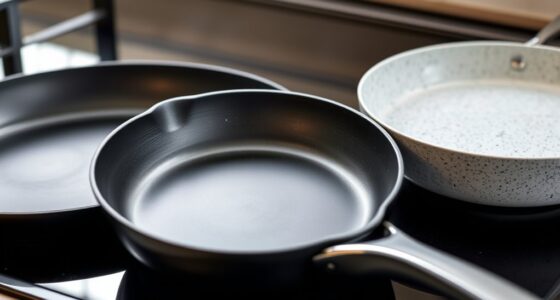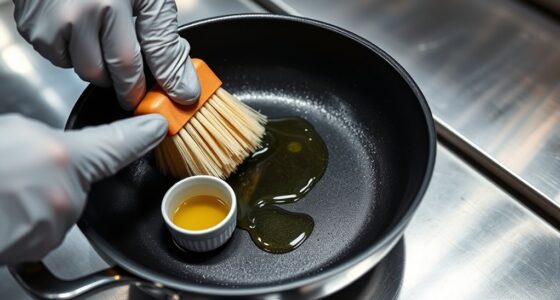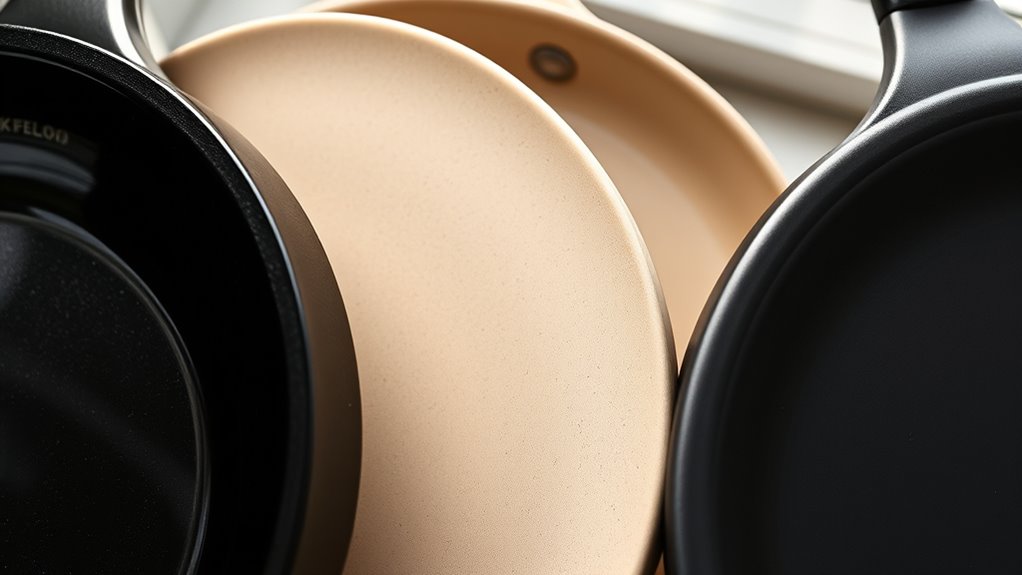

When choosing a nonstick coating, Teflon (made from PTFE) offers durability but can emit harmful fumes if overheated, though modern versions are PFOA-free. Ceramic coatings, silica-based and free of chemicals like PFOA, are safer but may wear out faster. Newer alternatives focus on eco-friendly materials and longer lifespan. To better understand the pros and cons of each, explore what makes them unique and how they impact your health and environment.
Key Takeaways
- Teflon (PTFE) offers durability and excellent nonstick performance but can emit harmful fumes when overheated, though many are now PFOA-free.
- Ceramic coatings are silica-based, safer at high temperatures, but tend to wear out faster, requiring more frequent replacement.
- Newer nonstick options, such as silicone or natural substances, aim to reduce chemical leaching and environmental impact.
- Traditional Teflon contains PFOA, linked to health issues, but modern products have phased out this chemical for safer use.
- When choosing, consider safety, durability, and environmental factors, as each coating type has distinct advantages and limitations.
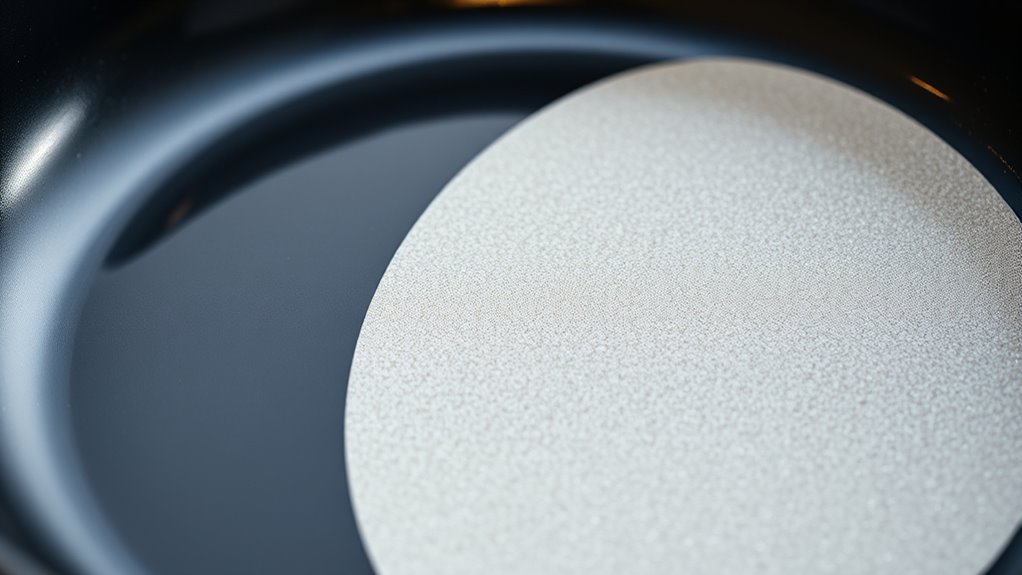
Have you ever wondered how nonstick coatings make cooking so much easier? It’s because they create a surface that prevents food from sticking, making cleanup quick and effortless. But behind this convenience lies a complex balance of safety and environmental considerations. When choosing between Teflon, ceramic, or newer alternatives, it’s important to understand how these coatings impact both chemical safety and the environment.
Teflon, known for its durability and slick surface, is made from polytetrafluoroethylene (PTFE). While it’s highly effective at preventing food from sticking, concerns have been raised about its chemical safety. When heated above certain temperatures, Teflon can emit fumes containing perfluorooctanoic acid (PFOA), a chemical linked to health issues. Although most cookware sold today is PFOA-free, the manufacturing process historically involved this chemical, leading to ongoing environmental concerns. PFOA is persistent in the environment, meaning it doesn’t break down easily, which can lead to accumulation in water supplies and wildlife. This environmental impact has prompted many manufacturers to phase out PFOA, but residual concerns about chemical safety remain, especially if nonstick coatings degrade or are improperly used.
Teflon’s durability comes with concerns about PFOA, a chemical linked to health and environmental risks.
Ceramic nonstick coatings, on the other hand, are often marketed as a safer alternative. Made from silica-based gels, these coatings avoid many of the chemicals associated with Teflon. From a chemical safety perspective, ceramic coatings typically don’t emit harmful fumes when heated, making them a popular choice for health-conscious consumers. However, their environmental impact can vary depending on manufacturing processes and the longevity of the coating. Ceramic pans tend to wear out faster than Teflon, which means you may need to replace them more frequently, potentially producing more waste. Additionally, some lower-quality ceramic coatings contain binders or additives that can be harmful if they leach into food or the environment.
Newer nonstick innovations aim to address these concerns by using materials like silicone or natural non-toxic substances. These alternatives often boast improved chemical safety profiles, minimizing fumes and chemical leaching. From an environmental standpoint, many of these newer coatings are designed to be more sustainable, either by reducing toxic chemicals or by being more durable to extend their lifespan. However, as with any emerging technology, it’s critical to research brands and products to ensure they meet safety and environmental standards. Moreover, ongoing advancements in nonstick technology focus on eco-friendly manufacturing processes, which further reduce environmental impact and enhance sustainability.
In essence, when selecting a nonstick coating, balancing chemical safety and environmental impact is key. Understanding these factors helps you make more informed decisions that protect your health and the planet while enjoying the convenience of nonstick cookware.

CAROTE Pots and Pans Set Nonstick, White Granite Induction Kitchen Cookware Set, 10 Pcs Non Stick Cooking Set w/Frying Pans & Saucepans(PFOS, PFOA Free)
Reinforced die-cast aluminum construction ensures long-term durability and reliability while maintaining a lightweight design, bringing convenience to your…
As an affiliate, we earn on qualifying purchases.
As an affiliate, we earn on qualifying purchases.
Frequently Asked Questions
Are Nonstick Coatings Safe at High Cooking Temperatures?
Nonstick coatings can be safe at high temperatures if they have good high temperature durability and coating stability. Teflon, for example, is safe below 500°F, but overheating can release fumes. Ceramic coatings generally handle higher temperatures better, but verify your cookware’s specifications. Always follow manufacturer guidelines to prevent damaging the coating, which maintains safety and performance. Avoid heating empty cookware, and replace worn coatings promptly for maximum safety.
How Long Do Nonstick Coatings Typically Last Before Peeling?
Nonstick coatings usually last between 3 to 5 years before peeling, but this depends on coating durability and lifespan factors like usage, cleaning, and cookware quality. You can extend their life by avoiding metal utensils, hand washing instead of dishwasher cleaning, and not overheating the pan. If you notice peeling or loss of nonstick properties, it’s time to replace your cookware to prevent food sticking and ensure safety.
Can Nonstick Coatings Be Recycled or Reused?
Recycling nonstick coatings is like trying to untangle a knot; it’s challenging but not impossible. Most nonstick surfaces, including Teflon and ceramic, aren’t easily recyclable due to their specialized materials. However, some recycling processes and reuse methods are emerging for scrap metal and cookware components. You can repurpose old pans for DIY projects or donate them, but the coatings themselves usually can’t be recycled through standard methods.
Do Nonstick Coatings Release Harmful Chemicals Over Time?
Nonstick coatings can release harmful chemicals over time, especially if they’re scratched or overheated, leading to chemical leaching. This may pose health risks like respiratory issues or other long-term effects. To minimize these risks, avoid using metal utensils, don’t cook on high heat, and replace pans when the coating shows wear. Proper care helps reduce chemical leaching and keeps your cooking safer.
Are There Eco-Friendly Nonstick Coating Options Available?
Think of eco-friendly nonstick coatings as a gentle breeze amid a storm. Yes, you can find options made from eco-friendly materials that prioritize sustainability. These coatings are produced through sustainable manufacturing practices, reducing environmental impact, and often avoid harmful chemicals. By choosing such alternatives, you support a cleaner planet while enjoying effective nonstick performance, making your cooking both responsible and delicious.

CAROTE Nonstick Frying Pan Skillet,Non Stick Granite Fry Pan Egg Pan Omelet Pans, Stone Cookware Chef's Pan, PFOA Free,Induction Compatible(Classic Granite, 8-Inch)
Eco-friendly Classic Granite – Non-stick Granite Material, PFOS,PFOA free, our cookware ensures your daily cooking is always safer…
As an affiliate, we earn on qualifying purchases.
As an affiliate, we earn on qualifying purchases.
Conclusion
Choosing the right nonstick coating depends on your cooking style and priorities. Teflon offers proven performance, ceramic provides eco-friendly appeal, and new alternatives aim for durability and safety. Remember, don’t put all your eggs in one basket—research each option carefully and consider your needs. Ultimately, the best coating is the one that fits your kitchen habits and keeps you cooking comfortably without surprises. Make an informed choice, and you’ll be ahead of the game.
CAROTE 19pcs Pots and Pans Non Stick, Cookware Sets Detachable Handle, Induction Kitchen Pots and Pans,NonStick Cooking Set, Oven/Dishwasher/Fridge Safe, Space Saving
Optimal storage and easy stacking with the handles off saves up to 70% more space of Carote detachable…
As an affiliate, we earn on qualifying purchases.
As an affiliate, we earn on qualifying purchases.
CAROTE 19pcs Pots and Pans Non Stick, Cookware Sets Detachable Handle, Induction Kitchen Pots and Pans,NonStick Cooking Set, Oven/Dishwasher/Fridge Safe, Space Saving
Optimal storage and easy stacking with the handles off saves up to 70% more space of Carote detachable…
As an affiliate, we earn on qualifying purchases.
As an affiliate, we earn on qualifying purchases.