
Baking sheets warp in the oven because intense heat causes the metal to expand unevenly, especially if the pan is lightweight or made from thin material. High temperatures and sudden temperature changes also increase the risk of warping. To prevent this, choose heavy-gauge pans, avoid extreme heat, and let your pans cool gradually. Keep these tips in mind, and you’ll find ways to keep your baking sheets flat and stable during cooking.
Key Takeaways
- Excessive oven heat causes uneven metal expansion, leading to warping, especially in lightweight aluminum pans.
- Sudden temperature changes, like hot to cold, increase stress and promote warping of baking sheets.
- Thin or low-gauge materials are more susceptible to warping than heavy-gauge, thicker pans.
- High temperatures and uneven heat distribution within the oven contribute to warping over time.
- Using proper baking practices, such as preheating and gradual cooling, helps prevent warping of baking sheets.

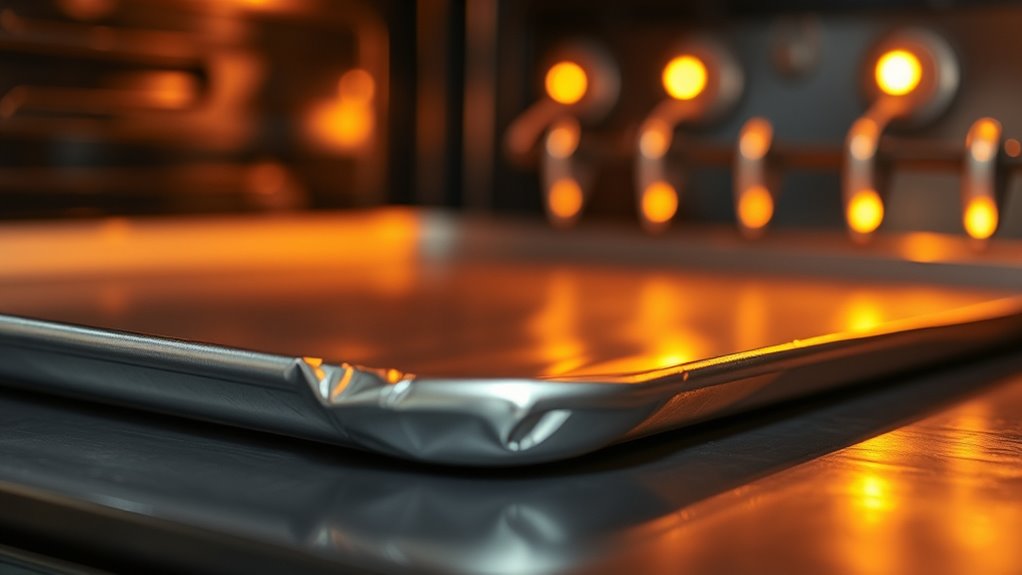
Baking sheets often warp in the oven because of the intense heat they’re exposed to, which causes the metal to expand unevenly. This warping can be frustrating, especially when you’re trying to bake cookies or roast vegetables evenly. To prevent this, understanding the factors behind warping and choosing the right baking sheet materials is essential for maintaining oven safety and achieving consistent results. Warped sheets can pose a safety risk if they become unstable or if their warped edges catch on oven racks, so prevention is key.
The type of baking sheet material plays a significant role in how likely your pans are to warp. Aluminum baking sheets are popular because they conduct heat well and are lightweight, but they tend to warp more easily under high heat. Steel or carbon steel pans are more durable and resistant to warping, though they may require more maintenance to prevent rust. Non-stick coatings can also add a layer of protection, but they don’t necessarily prevent warping, and some coatings may degrade over time, affecting oven safety. When selecting your baking sheets, opt for thicker, heavy-gauge materials, as they distribute heat more evenly and resist warping better than thin, lightweight pans.
Temperature management is another critical factor. You might be tempted to crank up the heat for faster baking, but high temperatures put more stress on your baking sheets. To minimize warping, follow recommended oven temperatures and avoid sudden temperature changes—like placing a hot sheet directly into cold water or cleaning with cold water immediately after baking. Preheating the oven properly ensures even heat distribution, reducing hot spots that can cause uneven expansion of the metal.
Proper oven safety practices also help prevent accidents or damage caused by warped baking sheets. Always inspect your pans before use, making sure there are no cracks or weak spots. When baking, place sheets on the center rack to allow even airflow and prevent hotspots. Using silicone baking mats or parchment paper can also help protect your sheet’s surface and reduce direct heat exposure. After baking, allow the sheet to cool gradually before cleaning or storing it, as rapid cooling can cause warping or warping-related damage.
Frequently Asked Questions
Can I Fix a Warped Baking Sheet?
You can try restoring warped pans by placing them in a preheated oven at 350°F for about 10 minutes, then carefully bending them back into shape with oven mitts. To prevent warping in the future, avoid sudden temperature changes and choose thicker, high-quality baking sheets. Regularly inspect and replace severely warped pans, as attempting to fix them might compromise their safety and performance.
Are Certain Materials More Prone to Warping?
Certain materials are more prone to warping, especially those with lower material durability and higher thermal expansion rates. For example, thin aluminum baking sheets heat quickly and expand more, increasing warping risk. You notice this when your sheet warps after a few uses. To prevent this, choose thicker, high-quality materials like heavy-duty stainless steel, which handle heat better and resist warping due to their stability and lower thermal expansion.
How Does Oven Temperature Affect Warping?
Oven temperature considerably impacts warping because higher heat causes thermal expansion, which puts stress on your baking sheet. Uneven heat distribution worsens this issue, making certain areas expand more than others. To prevent warping, keep the oven at moderate temperatures, ensure good heat circulation, and choose baking sheets made from materials with low thermal expansion. This way, you minimize stress and prolong your sheet’s lifespan.
Is It Safe to Use a Warped Baking Sheet?
Using a warped baking sheet is generally safe, but it can affect your baking results. Heat expansion causes materials to warp over time, especially if the sheet isn’t durable. You should inspect the sheet regularly; if warping worsens, it might compromise its stability and safety. For best results, choose a baking sheet made from durable materials that resist warping, and avoid sudden temperature changes to prolong its lifespan.
How Can I Tell if My Baking Sheet Is Warped?
Think of your baking sheet as a mirror of your oven’s heat. If it’s warped, you’ll notice surface unevenness or a wavy shape when you place it on a flat surface. This occurs because metal expansion from heat causes warping. To check, hold it up and look for bends or dips. A warped sheet isn’t just unsightly—it can lead to uneven baking and potential safety hazards.
Conclusion
Remember, a stitch in time saves nine, so take care of your baking sheets to prevent warping. By avoiding sudden temperature changes, choosing the right material, and properly caring for your sheets, you can keep them flat and in top shape. Investing a little effort now means you’ll enjoy evenly baked treats and longer-lasting pans. After all, a well-maintained baking sheet is the secret ingredient to perfect baking every time.