If you want convenience and consistency, a bread machine is easier and faster, producing soft, uniform bread with minimal effort. For richer flavor, thicker crusts, and artisanal textures, baking in the oven offers more control and customization but requires skill and more time. Both methods have their benefits, so the best choice depends on your priorities. Want a detailed comparison? Keep exploring to find what suits your baking style best.
Key Takeaways
- Oven-baked bread generally has a thicker, crunchier crust and richer flavor, ideal for artisanal styles.
- Bread machines offer ease of use, consistent results, and softer crusts, making them better for beginners.
- Oven baking allows greater customization of crust, texture, and flavor through manual techniques and longer fermentation.
- Bread machines save time and effort with automated kneading and proofing, but oven baking demands more skill and hands-on involvement.
- Overall bread quality depends on skill level and desired crust, with oven baking excelling in flavor complexity and artisanal textures.
Ease of Use and Convenience
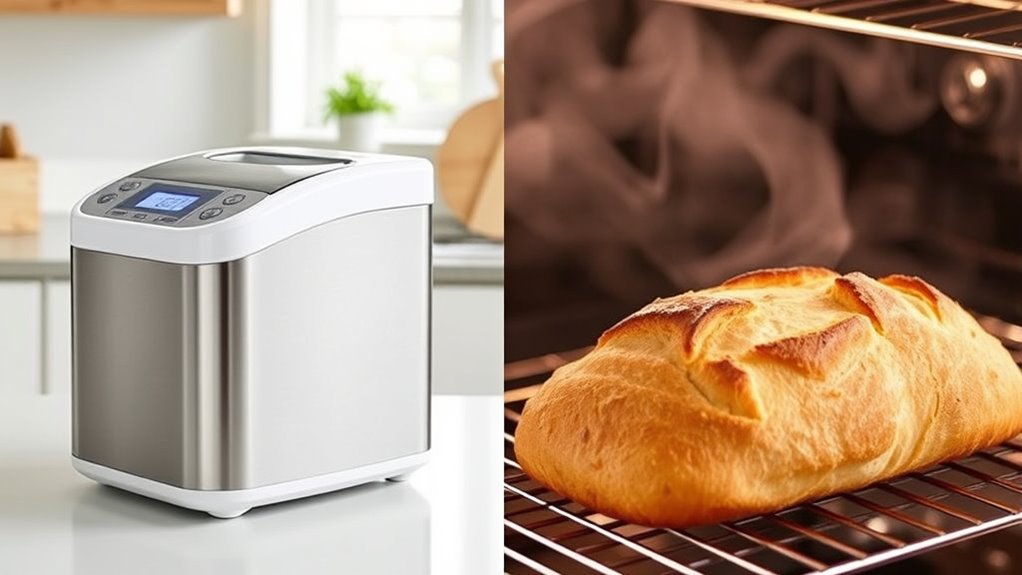
When it comes to ease of use and convenience, bread machines generally offer a simpler experience than oven-baking. With a bread machine, you just add ingredients, select a cycle, and let it do the work. You don’t have to worry about oven heating time or monitoring the baking process closely. However, bread machines can produce some bread machine noise during kneading and mixing, which might be distracting. Oven-baking requires more effort, as you need to preheat the oven, timing the heating cycle precisely. Plus, managing multiple steps can be more cumbersome. Overall, if you prefer minimal effort and quick setup, a bread machine provides a more straightforward, hassle-free option compared to the more manual process of oven-baking. Additionally, top-rated appliances are designed to make baking easier and more accessible for home cooks.
Quality of Crust and Texture
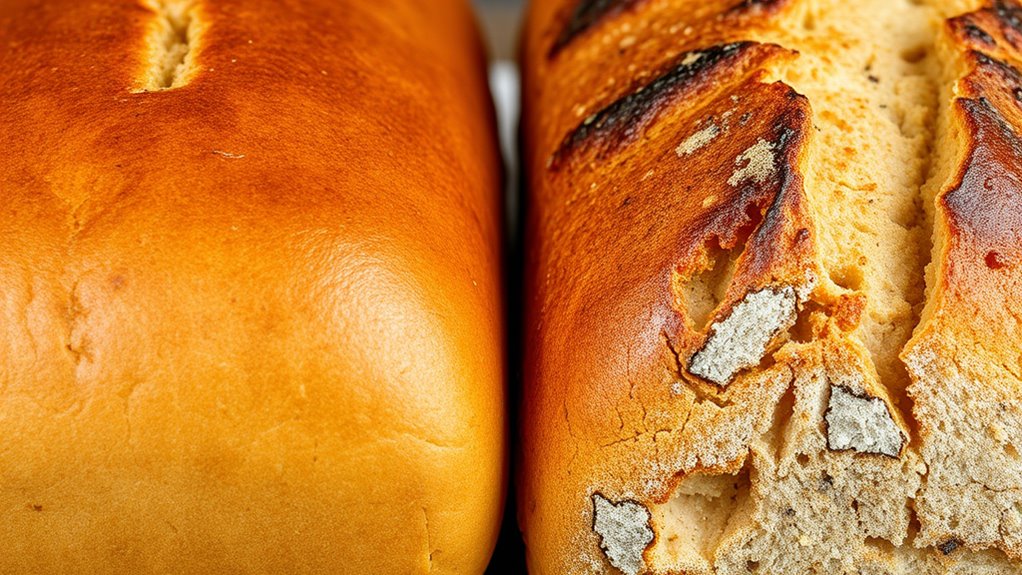
When comparing crust and texture, you’ll notice that bread machines often produce a softer, more uniform crust, while oven-baked loaves can vary in thickness. The oven allows you to customize crust thickness for different preferences, but achieving consistent texture requires skill. Incorporating biodiversity-friendly practices, such as selecting organic ingredients or supporting local farms, can also enhance the sustainability of your baking habits. Additionally, using proper baking techniques can influence the overall texture and crust quality of your bread. Understanding baking science can help you refine your methods for better results. Paying attention to oven temperature control is crucial, as it directly impacts the crust’s development and the bread’s internal structure.
Crust Thickness Variations
Crust thickness varies markedly between bread machine and oven-baked methods, affecting both the crust’s quality and texture. Bread machines often produce a thinner crust with a softer, less pronounced crust color, while oven baking can create a thicker, crisper crust with richer color. This difference impacts your bread’s overall appearance and eating experience.
| Method | Crust Thickness | Crust Color |
|---|---|---|
| Bread Machine | Thinner, softer | Pale or light |
| Oven-Baked | Thicker, crunchier | Deep, golden-brown |
| Adjustments | Limited control | Greater control |
| Texture Impact | Softer crust | Crispier, more robust |
| Personal Preference | Choose based on desired crust style | Choose based on crust color preference |
Texture Uniformity
Texture uniformity profoundly influences the overall quality of your bread’s crust, regardless of the baking method. Proper dough kneading guarantees an even distribution of ingredients, which directly impacts the bread’s internal texture. When kneading thoroughly, you activate the yeast consistently, leading to uniform fermentation and rise. This results in a consistent crumb and even crust formation. In bread machines, the automated kneading cycle helps achieve uniform dough, but manual kneading for oven-baked bread requires attention to detail. If kneading is uneven, the bread may develop hotspots or dense spots, affecting texture. Ensuring proper dough kneading and complete yeast activation creates a balanced, uniform texture throughout the loaf, whether baked in a machine or oven. Consistent fermentation is essential for achieving the desired texture and crust quality. Additionally, understanding the role of gluten development can greatly influence the elasticity and structure of the dough, leading to better texture outcomes.
Flavor Development and Taste
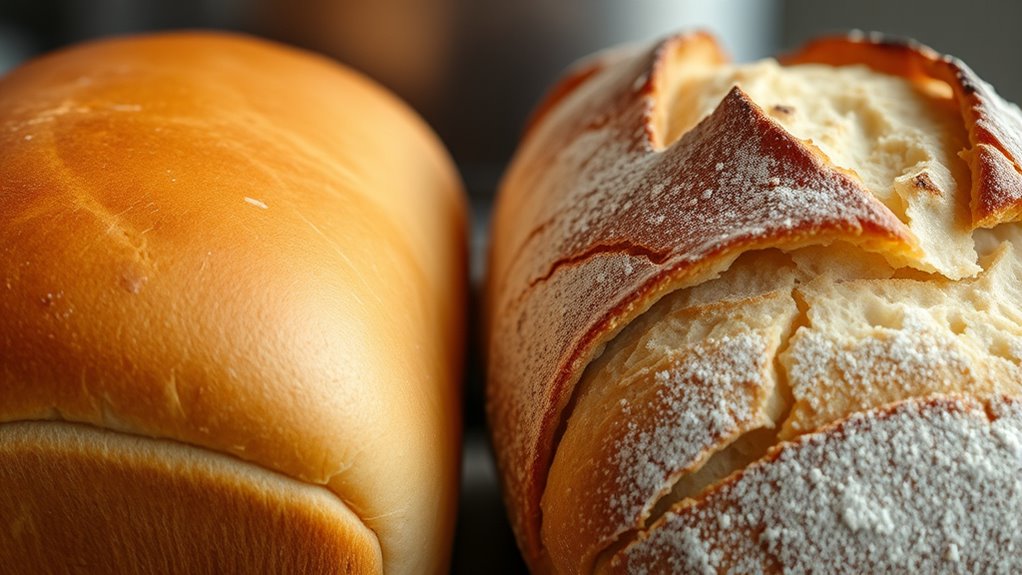
The way bread develops its flavor considerably depends on the baking method you choose. Oven-baked bread often offers richer sourdough complexity due to longer fermentation, allowing deeper flavors to guarantee more profound development. In contrast, bread machine bread may have a milder taste but benefits from consistent gluten development that assures a balanced texture. Additionally, the baking environment and techniques used can influence the overall flavor profile of the bread. Moreover, the baking process itself can induce Maillard reactions, further enhancing flavor complexity in oven-baked varieties. The temperature and duration of baking can also affect the nutritional content, impacting bread’s health benefits. Engaging in proper baking techniques can maximize flavor and nutritional retention in both methods, making the process more consistent and reliable.
Variety and Customization Options
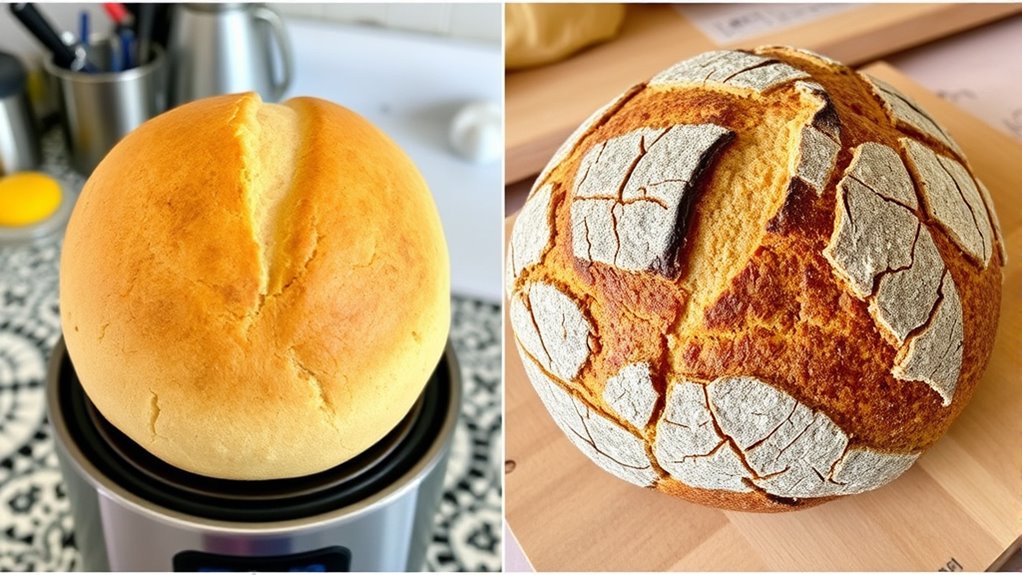
Both bread machines and oven baking offer a range of options for creating different types of bread. You can experiment with various recipes to achieve unique flavor profiles and textures. This flexibility helps you customize your bread to suit your taste and dietary preferences. Additionally, incorporating safe, eco-friendly materials into your baking tools can enhance the overall experience and ensure safety during food preparation. Using appropriate tire pressure for gravel roads can improve handling and comfort during your ride, just as choosing the right bread baking method can impact the final product. Considering asset division laws can help you understand how property is distributed, just as understanding different baking techniques can influence your bread’s outcome. Exploring traditional techniques like wooden barrel churns can inspire innovative approaches in your baking process. Understanding market research can also help you identify trending flavors and techniques that appeal to your target audience.
Diverse Bread Types
When choosing between a bread machine and oven-baking, you can explore a wide range of bread types, each offering unique flavors, textures, and customization options. With a bread machine, you can easily make gluten-free breads or experiment with sourdough techniques, adapting recipes to your preferences. Oven-baking allows more control, enabling you to craft artisanal loaves like ciabatta or baguettes. The variety extends to textures—from soft sandwich breads to crusty rustic loaves. Both methods offer versatility, but your choice depends on your desired bread style and level of customization. Additionally, understanding the Special Events and Themed Breakfasts can inspire you to create memorable bread offerings for various occasions. Exploring regional baking traditions can also enrich your baking repertoire, offering insights into different cultural flavors and techniques. Being aware of bread ingredients and dietary considerations may help you tailor recipes to specific health needs or preferences, especially when selecting alternative flours and additives to suit dietary restrictions.
Tailored Flavor Profiles
Choosing between a bread machine and oven-baking gives you significant control over flavor customization. With oven-baking, you can employ artisan techniques like hand-kneading and precise ingredient selection to craft unique flavor profiles. You have the freedom to experiment with herbs, spices, and specialty grains, allowing for tailored tastes that reflect your preferences. Bread machines often come with preset programs, limiting customization, but some models let you add ingredients at specific stages. Oven-baking also offers greater versatility for incorporating ingredients that benefit from manual handling, such as nuts or dried fruits. Ultimately, if you want a truly personalized flavor profile, oven-baking provides more opportunities to experiment with artisan methods and ingredient choices for a bread that matches your unique palate.
Time Investment and Baking Duration
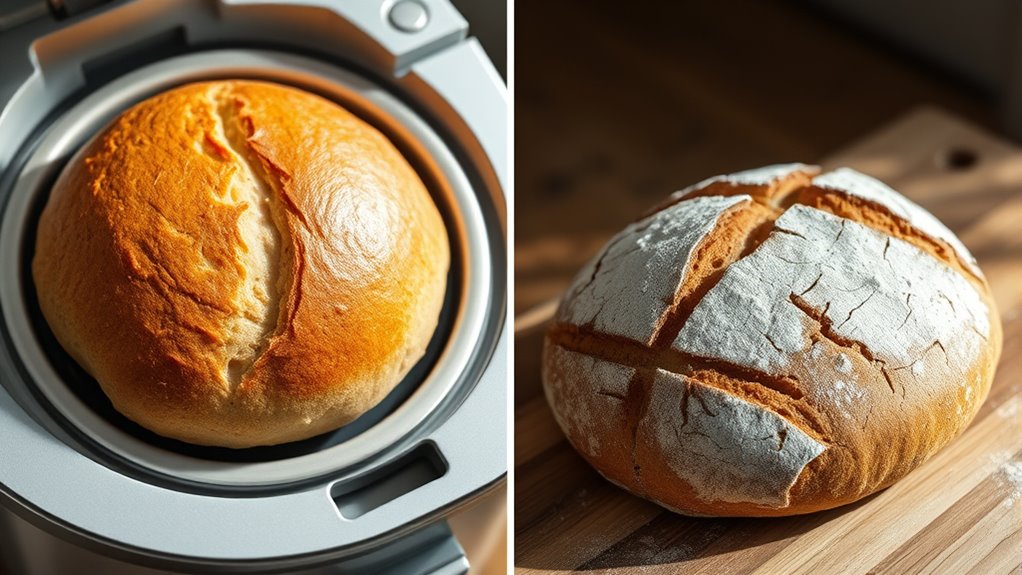
Using a bread machine generally requires less hands-on time, as it automates mixing, kneading, and initial rising. This means you spend less time monitoring proofing techniques and preparing ingredients. The overall baking duration is typically shorter because the machine controls temperature and timing precisely. In contrast, oven-baking involves multiple steps, including shaping the dough, proofing, and longer baking times.
Key differences include:
- Bread machines handle proofing and kneading automatically, saving you time.
- Oven baking demands manual proofing and monitoring, which can extend total time.
- Proofing techniques in the oven often require patience and careful temperature control.
- Ingredient preparation is similar, but timing varies based on proofing methods and bake time.
Cost and Equipment Investment
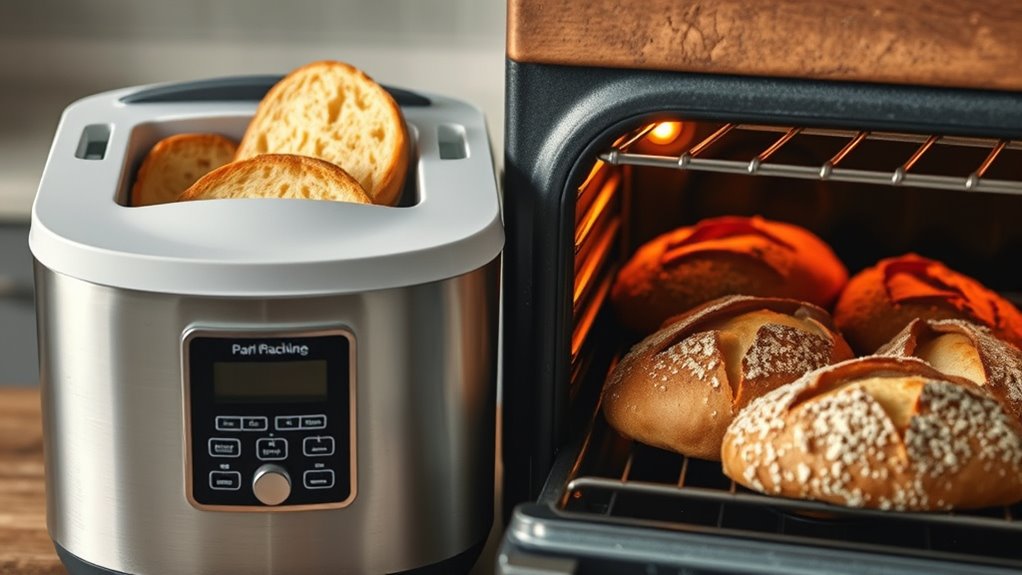
While a bread machine might seem like a straightforward investment, it typically requires a higher upfront cost compared to oven-baking equipment. You’ll spend more initially on a quality bread machine with features that help maintain ingredient freshness, ensuring your dough stays ideal for baking. In contrast, oven-baked bread relies on your existing oven, which usually involves minimal additional expense. However, achieving perfect bread depends on maintaining precise baking temperatures, which can vary with different oven models. Investing in a bread machine offers convenience and consistency, especially if you bake frequently, but the initial cost can be significant. With oven-baking, your primary investment is in quality ingredients, but you might need to upgrade your oven for precise temperature control to get the best results.
Skill Level and Learning Curve

Mastering bread baking with a machine typically requires less hands-on effort and technical skill than oven-baking. With a bread machine, you can avoid mastering kneading skills and focus more on recipe experimentation. This makes it ideal if you’re just starting out or prefer a straightforward process. You won’t need to learn manual kneading or perfect dough consistency on your own. Instead, you simply add ingredients and let the machine do the work.
Key advantages include:
- Minimal kneading skills needed
- Easy adjustments for different recipes
- Shorter learning curve
- Consistent results with little effort
In contrast, oven-baking demands practice in kneading techniques and experimenting with recipes, which can be more challenging but rewarding as you develop your skills.
Cleaning and Maintenance Considerations
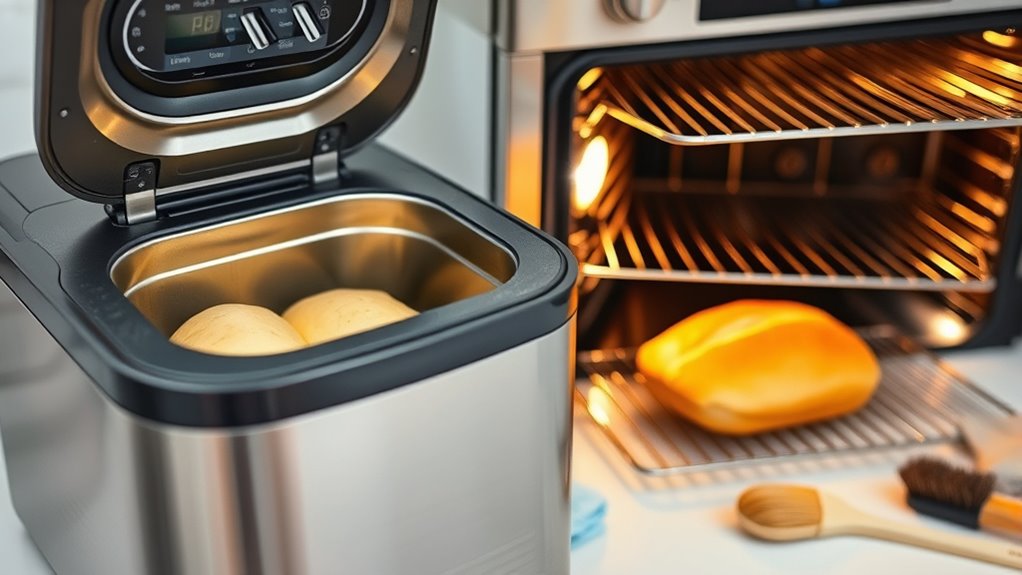
Cleaning and maintaining a bread machine is generally more straightforward than cleaning an oven because its components are designed for easy disassembly and regular upkeep. You can follow simple cleaning routines after each use, such as wiping down the bread pan and kneading blade. Regular maintenance schedules involve inspecting seals, brushes, and electrical parts to ensure everything functions properly. Unlike ovens, which may require more intensive cleaning of baked-on crumbs and grease, bread machines demand less effort and fewer cleaning products. Staying consistent with your cleaning routines extends the lifespan of your appliance and keeps it running smoothly. In contrast, ovens may need professional servicing periodically, making maintenance more involved. Overall, bread machines are more convenient to keep in top shape with minimal effort.
Frequently Asked Questions
Can Bread Machines Replicate Artisan Bread Textures?
Bread machines struggle to replicate artisan bread textures due to their limitations. You might notice that achieving the same crust, open crumb, and chewy interior is challenging because machines often lack the manual control needed for shaping and scoring. While they’re convenient, they can’t fully overcome artisan texture challenges, so if authentic crust and crumb matter most to you, baking by hand or with a traditional oven will give better results.
Are Oven-Baked Breads More Nutritious Than Machine-Made Ones?
Oven-baked breads are often more nutritious because you control ingredient quality and can choose healthier options. They typically retain more nutrients since you can adjust baking times and temperatures to preserve vitamins. In contrast, bread machines may offer convenience but sometimes use more preservatives or additives. By baking in your oven, you guarantee the ingredients are fresh, and you can customize recipes for better nutrition, making oven-baked bread generally healthier.
How Do Energy Costs Compare Between Bread Machines and Traditional Ovens?
You’ll find that bread machines are generally more energy-efficient than traditional ovens, thanks to their smaller size and targeted heating. When doing a cost comparison, bread machines tend to use less electricity per batch, saving you money over time. If you bake bread frequently, investing in a bread machine can lower your energy costs, making it an economical choice without sacrificing quality or freshness.
What Are the Best Types of Bread for Each Method?
For bread machines, go for soft, sweet bread types like brioche or cinnamon rolls, which benefit from even kneading and rising. If you prefer crusty, artisanal bread, oven baking suits your bread preferences, especially for sourdough or baguettes, as it allows for better crust development and flavor. Both methods can produce delicious bread, so choose based on your preferred bread types and texture.
Can I Bake Gluten-Free Bread Effectively in a Bread Machine?
You can definitely bake gluten-free bread effectively in a bread machine. Studies show that gluten-free baking techniques improve bread texture and rise. Use specific gluten-free techniques, like adding xanthan gum, and select the right bread machine settings—usually gluten-free or quick-bake modes. Keep an eye on consistency, and you’ll enjoy tasty, well-structured gluten-free bread right from your machine.
Conclusion
Ultimately, whether a bread machine or oven-baking wins depends on what you value most. If you crave unbeatable convenience, a bread machine is like having a personal bakery at your fingertips. But if you love crafting each loaf with your own flair, oven baking offers endless customization. Neither is a boring choice—they’re both culinary adventures. Whichever you choose, your bread will be so good, it might just make taste buds sing like a choir of angels!