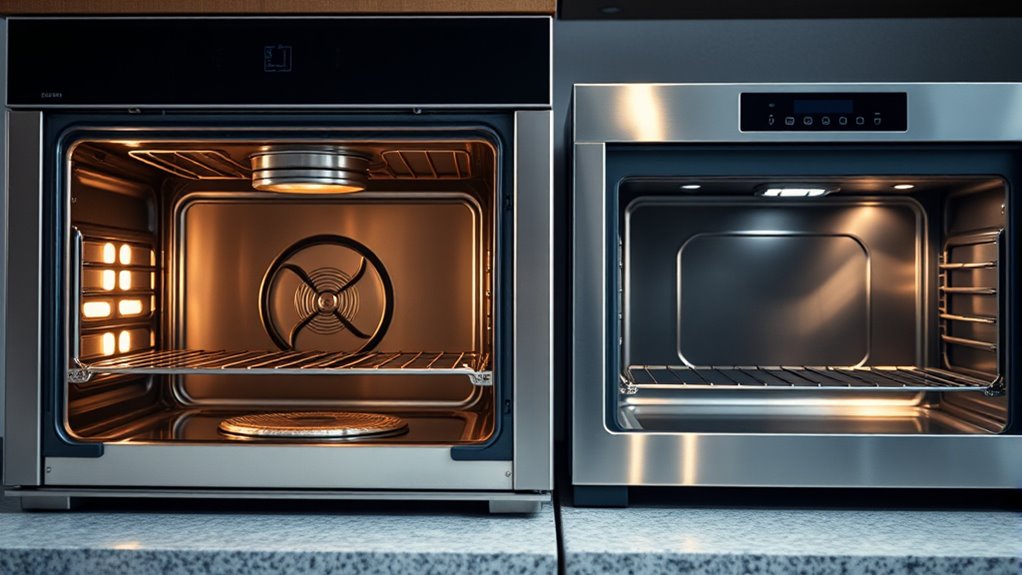

Use your convection setting when you want faster, more even baking with crispy edges, like for bread, cookies, or roasted dishes. It’s ideal for achieving uniform browning and reducing cooking time, making your dishes look and taste professional. However, switch to conventional mode for delicate baked goods that need gentle heat, such as soufflés or custards. To master your oven and get perfect results, understanding when to switch settings is key—keep exploring to learn more.
Key Takeaways
- Use convection mode for even baking, crispy crusts, and quick cooking of bread, cookies, and pastries.
- Opt for conventional setting when baking delicate items like soufflés or custards that require gentle heat.
- Convection is ideal for foods needing browning or crispiness, thanks to consistent heat circulation.
- Choose conventional oven for slow-rising baked goods to prevent over-drying or uneven rising.
- Select convection to save time and energy, especially for large or multiple dishes needing uniform results.
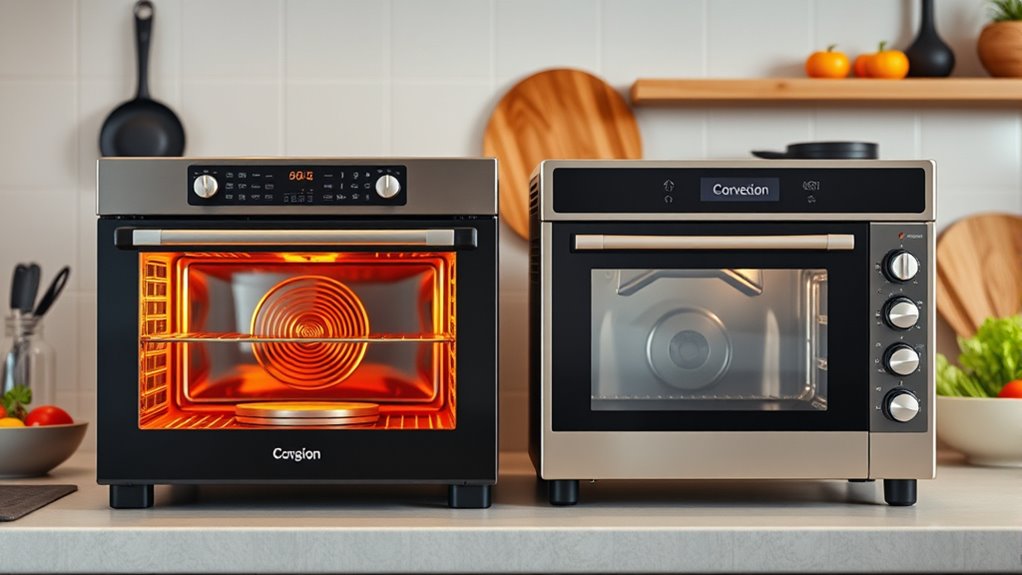
When choosing between a convection and a conventional oven, understanding their differences can help you make the best decision for your cooking needs. Both types of ovens have unique advantages, especially when it comes to baking techniques and energy efficiency. A conventional oven heats through radiant heat from elements at the top and bottom, which can sometimes lead to uneven cooking or baking. In contrast, a convection oven uses a fan to circulate hot air evenly around the food, resulting in more consistent results. Knowing when to use each setting can transform your cooking experience and improve your baked goods.
If you’re baking bread, cookies, or pastries, a convection oven can be a game-changer. The even heat distribution ensures that your baked items rise uniformly and develop a nice, golden crust. When applying baking techniques that require a crispy exterior or even browning, the convection setting is ideal. It helps you achieve professional-quality results without needing to rotate trays or shuffle things around mid-bake. Plus, because convection ovens heat up faster and cook more quickly, you’ll save time and energy—making them more energy efficient overall. This increased energy efficiency not only benefits your electricity bill but also reduces your carbon footprint, aligning with more sustainable cooking habits.
However, there are times when a conventional oven is preferable. If you’re delicate baking, such as soufflés or certain cakes that require a gentle, controlled rise, sticking to the traditional setting may be better. Conventional ovens tend to produce less aggressive airflow, which can be advantageous for certain recipes that need a tender crumb or a softer crust. Additionally, some bakers find that certain baked goods, like custards or cheesecakes, turn out better in a conventional oven because the gentle, consistent heat prevents the top from cracking or cracking unevenly. Recognizing the differences in heat distribution can help you choose the right setting for each baking task.
Knowing when to switch to a convection setting depends on what you’re baking and what outcome you desire. For quick, evenly baked dishes with crispy edges, the convection mode is your best choice. For more delicate, slow-rising baked items, sticking with the conventional setting might yield better results. Remember, mastering baking techniques with your oven’s features can elevate your cooking and baking game. By understanding the strengths of each mode, you’ll be able to optimize energy efficiency and produce consistently great results every time.

HONGBAKE 2 Pack 11 x 9 Inch Toaster Oven Pans and Trays, Small Baking Sheet Set for Cooking, Non-Stick Cookie Sheets, Heavy-Duty 0.8mm Thick, Easy to Clean, 1.26 Inch Deep, Gold
Ideal Baking Dimension:This 2-piece set of small cookie sheets measures 9 x 11 x 1.26 inches each. The…
As an affiliate, we earn on qualifying purchases.
As an affiliate, we earn on qualifying purchases.
Frequently Asked Questions
Can I Convert Recipes Designed for Conventional Ovens to Convection?
Yes, you can convert recipes from conventional ovens to convection. You should make recipe adjustments by lowering the temperature by about 25°F and keeping an eye on cooking times, which may be shorter. Temperature conversions help guarantee even cooking and browning. Always check your dish early to prevent overcooking, and consider using a convection setting for better crispness and faster results.
Does Using Convection Save Energy Compared to Conventional Baking?
Using convection can save you energy because it’s more energy-efficient and speeds up cooking. The fan and exhaust system circulate hot air evenly, reducing cooking time and temperature needs. This means you consume less electricity or gas, making it a smarter choice for energy efficiency. Plus, faster cooking speeds help you get meals ready quicker, saving time and energy in the process.
Are There Foods That Shouldn’T Be Cooked in a Convection Oven?
Imagine delicate foods as fragile glassware—convection ovens might rattle them too much. Foods like soufflés, custards, or certain baked goods with a soft center can suffer from uneven cooking or collapse. These food types have cooking limitations in convection ovens because the rapid air circulation can dry out or disturb their structure. Stick to traditional baking for delicate treats, and you’ll keep your culinary creations intact and perfect.
How Does Convection Impact Baking Times and Temperatures?
When using convection, you should reduce baking temperatures by about 25°F and cut cooking times by roughly 25% to avoid over-baking. The fan circulates hot air, so food cooks faster and more evenly. Keep an eye on your dish and check for doneness earlier than the recipe suggests. Adjusting temperatures and times helps you achieve perfect results without overcooking or burning your baked goods.
Is a Convection Oven Preferable for Baking Cookies and Pastries?
You’ll love using a convection oven for cookie baking and pastry perfection, as it can reduce baking times by up to 25%. This even heat circulation guarantees cookies are crispy and pastries are flawlessly flaky. An impressive 85% of bakers prefer convection for delicate treats because it promotes uniform browning. So, for consistently perfect cookies and pastries, your convection oven is definitely the way to go.
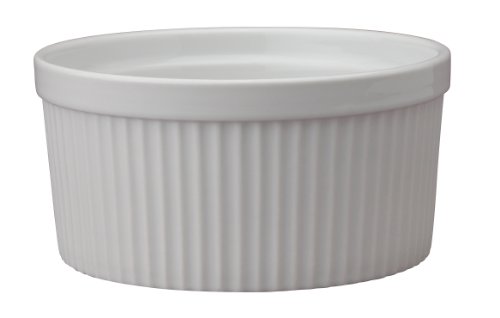
HIC Kitchen Souffle, Fine Porcelain, For Baking Custards, Souffles, Casseroles, And Side Dishes, 32-Ounce (1-Quart) Capacity
HIC Kitchen Souffle: Fine porcelain dish for baking and serving custards, souffles, casseroles, and side dishes; ideal for…
As an affiliate, we earn on qualifying purchases.
As an affiliate, we earn on qualifying purchases.
Conclusion
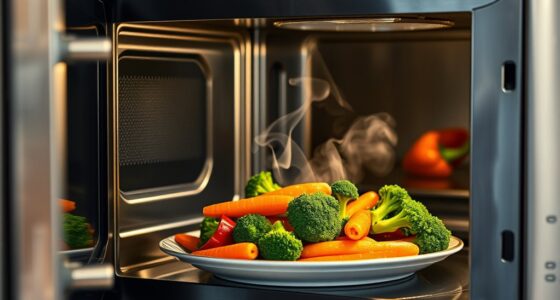
Understanding when to use your convection setting can elevate your cooking, ensuring even browning and faster results. Did you know that convection ovens can cook up to 25% faster than conventional ones? So, next time you’re baking cookies or roasting veggies, consider switching on convection for efficiency and perfect results. Mastering this difference helps you become a more confident cook, making every meal just a little better. Happy baking!

Emeril Lagasse Extra Large French Door Air Fryer Toaster Oven Combo, 24 Cooking Functions and Digital Controls, 7 Accessories Included, Stainless Steel Finish, 26QT Capacity
A VERSATILE AIR FRYER AND MULTI-COOKER COMBO: Elevates practically any meal, from air frying quick after-school snacks to…
As an affiliate, we earn on qualifying purchases.
As an affiliate, we earn on qualifying purchases.

GoodCook Everyday Set of 2 Nonstick Steel 9" x 6.2" Toaster Oven Mini Baking Sheets, Gray
SET OF 2 MINI BAKING SHEETS: Comes with 2 mini 9" x 6.2" baking sheets for your favorite…
As an affiliate, we earn on qualifying purchases.
As an affiliate, we earn on qualifying purchases.