To safely defrost meat quickly without a microwave, use the cold water method. Submerge sealed meat in a leak-proof bag in cold water, changing the water every 30 minutes to keep it cold. This method thaws meat faster while preventing bacteria growth. For even better results, transfer it to the refrigerator at least a few hours before cooking. Keep in mind these techniques guarantee safety and quality—continue exploring for more tips.
Key Takeaways
- Use the cold water method by submerging sealed meat in cold water, changing it every 30 minutes.
- Transfer meat to the refrigerator at least 24 hours before cooking for slow, safe thawing.
- Keep meat in a leak-proof plastic bag during thawing to prevent contamination and bacterial growth.
- Thaw meat in a cool room or on a cool surface to speed up the process safely without hot water.
- Cook the meat immediately after thawing using these methods to ensure safety and prevent bacteria proliferation.
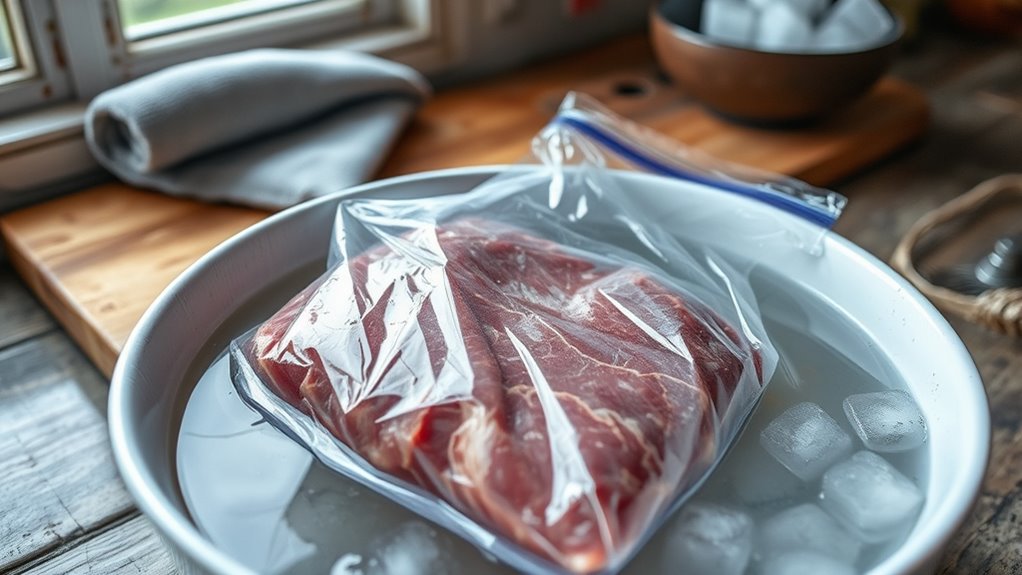
When you’re short on time or prefer not to use a microwave, defrosting meat without one is simple and effective. The key is to control the temperature carefully to guarantee your meat thaws safely while maintaining its freshness. Proper temperature control is essential for meat preservation, preventing bacterial growth and keeping your food safe to eat. One of the best methods is to use cold water, which can speed up the defrosting process without compromising safety. Fill a large bowl or sink with cold water, ensuring it stays cold throughout. Submerge the meat in a leak-proof plastic bag, removing as much air as possible. This prevents water from seeping in and contaminating your meat. Change the water every 30 minutes to keep it cold, facilitating even thawing. Depending on the size and thickness, this method can defrost meat in as little as an hour or two, making it a quick yet safe alternative.
Another effective method is to use the refrigerator, especially if you have more time. Plan ahead and transfer the meat from the freezer to the fridge a day or two before you need it. Keep the fridge temperature at or below 40°F (4°C), which helps maintain meat preservation and prevents spoilage. Thawing in the fridge allows slow, consistent temperature control, resulting in evenly defrosted meat that retains its quality. Larger cuts like roasts or whole poultry may take longer, but this method is the safest because it keeps the meat at a stable, cold temperature throughout the process, reducing bacteria risk.
If you’re in a pinch, you can also use the cold water method combined with gentle heat. Place the meat in a sealed plastic bag and submerge it in cold water, changing the water regularly. For quicker thawing, you can set the bag on a clean, cool surface and use a fan or a cool room to keep the temperature low. Avoid hot water, as it can partially cook the meat and increase bacteria growth, jeopardizing meat preservation. Always cook the meat immediately after thawing using these methods—never refreeze raw meat that has been thawed using water or fridge methods, unless it’s cooked first.
Frequently Asked Questions
Can I Defrost Meat Using Hot Water Safely?
Yes, you can use hot water to defrost meat safely, but it requires careful handling. Submerge the meat in a sealed plastic bag and immerse it in hot water—around 140°F (60°C)—to speed up the thawing process. Keep the water moving or change it frequently to maintain a consistent temperature. This method speeds up the thawing process while reducing the risk of bacterial growth, but always cook the meat immediately afterward.
How Long Can Meat Stay in the Fridge After Defrosting?
You should use proper meat storage and follow refrigeration guidelines to keep your meat safe. Typically, once meat is defrosted in the fridge, you can store it for an additional 1 to 2 days before cooking. Make sure to keep it at or below 40°F (4°C). Always check for any signs of spoilage, like an off smell or slimy texture, before cooking or consuming.
Is It Safe to Refreeze Meat After Defrosting?
Refreezing meat after defrosting is generally safe if the meat stayed cold and hasn’t shown signs of spoilage. You can refreeze meat, but it may affect texture and flavor. To guarantee refreezing safety, only do it if the meat was thawed in the fridge and kept at proper temperatures. Keep in mind, repeatedly thawing and refreezing can increase the risk of meat spoilage, so use your senses to check quality.
What Signs Indicate Meat Has Spoiled During Defrosting?
You’ll know meat has spoiled during defrosting if you notice a color change, like dull or grayish hues, and a foul odor that’s strong and unpleasant. These signs indicate bacterial growth and unsafe consumption. Don’t ignore these clues; if your meat exhibits either, discard it immediately. Trust your senses—color and smell are key indicators to prevent foodborne illnesses and guarantee safe eating.
Can I Defrost Meat at Room Temperature Safely?
Did you know that bacteria can double every 20 minutes at room temperature? You shouldn’t defrost meat at room temperature because it encourages rapid bacterial growth, increasing your risk of foodborne illness. Instead, opt for safer methods like cold water or refrigerator thawing. These approaches keep the meat at a safe temperature, preventing bacteria from multiplying, and ensuring your meal remains safe to eat.
Conclusion
Just like the phoenix rises from the ashes, you can revive your meat safely without a microwave. By using cold water or the fridge, you guarantee your meal stays tender and delicious. Remember, patience is key—think of it as a gentle journey rather than a rush. With these methods, you’ll master the art of defrosting, turning what seems like a challenge into a simple, safe routine. Your next great dish begins with a little care and the right technique.