You can’t use just any electric pressure cooker for canning, as most aren’t built for the high temperatures and pressure levels needed for safe food preservation. Only models labeled specifically for pressure canning are suitable, and they come with adjustable pressure settings and safety features. Using the wrong device can lead to malfunctions and food safety risks, like spoilage or foodborne illness. To find out which appliances are safe and proper techniques, keep exploring this important information.
Key Takeaways
- Only use electric pressure cookers explicitly rated for pressure canning, with adjustable pressure settings and clear manufacturer instructions.
- Many models are designed solely for cooking, not for pressure canning, which requires specific safety features and pressure controls.
- Proper canning involves tested recipes, correct jar preparation, and maintaining recommended processing times to ensure safety.
- Using incompatible electric pressure cookers for canning risks malfunctions, over-pressurization, food spoilage, and safety hazards like botulism.
- Always verify your appliance’s suitability for pressure canning and follow recommended guidelines to prevent accidents and ensure food safety.
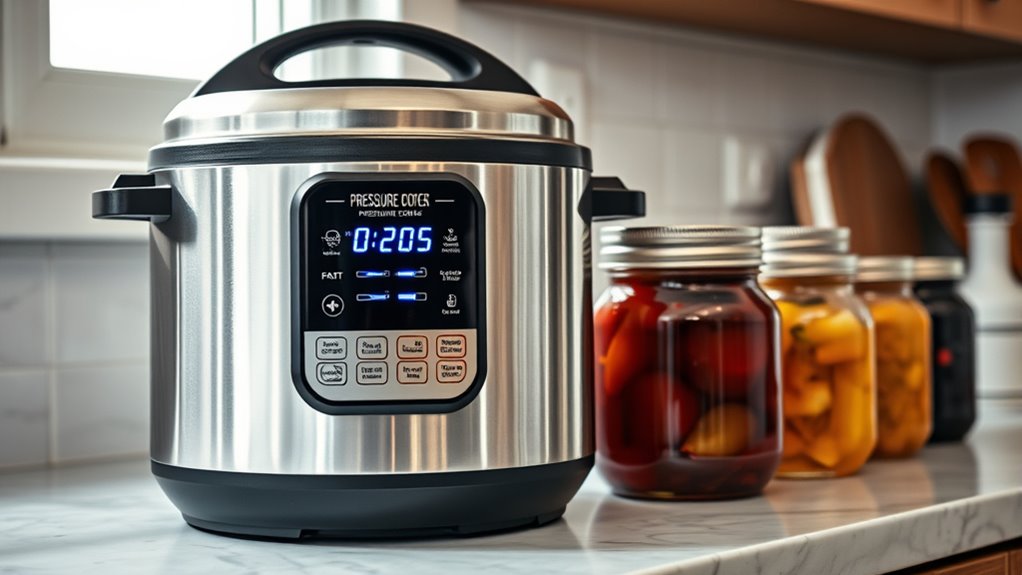
Canning with an electric pressure cooker can be a convenient and efficient way to preserve your homegrown produce, but it’s important to understand how to do it safely. One of the main safety concerns when using any appliance for canning is ensuring you follow proper procedures to prevent spoilage or accidents. Electric pressure cookers are designed primarily for cooking, not for canning, which means you need to be cautious about their safety features and limitations. Before you start, it’s essential to verify whether your specific model is suitable for pressure canning. Not all electric pressure cookers are built to handle the high temperatures and pressure levels required for safe canning, so checking the manufacturer’s guidelines for appliance compatibility is crucial. Using a device not rated for pressure can lead to dangerous malfunctions, such as over-pressurization or failure to maintain a consistent pressure, increasing the risk of accidents.
When considering an electric pressure cooker for canning, you should look for models explicitly labeled as suitable for pressure canning. These models typically come with adjustable pressure settings, a dial or digital display, and clear instructions for safe operation. If your appliance doesn’t specify its use for canning, it’s best to avoid using it for that purpose. Relying on a compatible model ensures that you can maintain the correct pressure and temperature, which are vital for killing bacteria and preventing foodborne illnesses. Additionally, safety features like locking lids, pressure release valves, and automatic shut-offs are essential components that help prevent accidents during the process.
It’s also important to understand that even with a compatible appliance, you must follow strict canning guidelines. This includes using tested recipes, proper jar preparation, and correct processing times. Never attempt to can low-acid foods in an electric pressure cooker unless it’s specifically designed for that purpose, as improper processing can lead to botulism. Remember, safety concerns extend beyond just the appliance—your technique, cleanliness, and adherence to tested recipes are equally important.
Frequently Asked Questions
Can I Replace My Traditional Pressure Canner With an Electric Pressure Cooker?
You can replace your traditional pressure canner with an electric pressure cooker, but only if it’s specifically designed for canning. Many alternative appliances lack the necessary gauges and stability for safe pressure levels. Make sure you have the right canning accessories, like a canning rack and a proper lid. Always verify your electric cooker’s safety features and follow manufacturer guidelines to guarantee your preserves are safe to consume.
Are Electric Pressure Cookers Certified for Safe Canning Practices?
Electric pressure cookers aren’t typically certified for safe canning practices. You should always check their safety certifications and follow strict canning guidelines to prevent risks like spoilage or foodborne illnesses. Most electric pressure cookers lack the necessary pressure and temperature controls required for safe canning, so it’s best to use a traditional pressure canner approved for the task. Always prioritize safety and proper equipment to guarantee your canned goods are safe to enjoy.
How Do Temperature Controls in Electric Pressure Cookers Affect Canning Safety?
Think of your electric pressure cooker as a vigilant guard, where temperature regulation is its steady hand guiding the safety standards. When it maintains precise heat levels, it guarantees your jars reach the right pressure for safe canning. If the controls falter, risks rise like unchecked waves. So, you need trustworthy temperature controls to keep your canning process safe, reliable, and free from spoilage or foodborne hazards.
Can I Use an Electric Pressure Cooker for High-Altitude Canning?
Yes, you can use an electric pressure cooker for high-altitude canning, but you need to adapt for altitude. Follow the manufacturer’s instructions for altitude adjustments to ensure proper pressure and temperature. Make sure your electric pressure cooker has the necessary safety certifications, and always verify it maintains consistent pressure during canning. Proper adjustments and safety measures help ensure your canned goods are safe and shelf-stable at high altitudes.
What Are the Best Brands of Electric Pressure Cookers for Canning?
The best brands of electric pressure cookers for canning include Instant Pot, Magefesa, and Power Pressure. You should consider their brand reputation for safety and durability, and check user reviews for real-world performance. Instant Pot is popular for its versatility, while Magefesa is known for high-quality build. Make sure your chosen model suits your canning needs and has reliable safety features.
Conclusion
So, after all that, it’s ironic, isn’t it? You bought an electric pressure cooker to make canning easier, only to find out it’s not the best choice after all. It’s almost poetic—trusting modern gadgets to handle your precious jars, only to realize they might let you down when it really counts. Sometimes, sticking to traditional methods isn’t just nostalgic; it’s the smarter, safer choice you can’t afford to overlook.