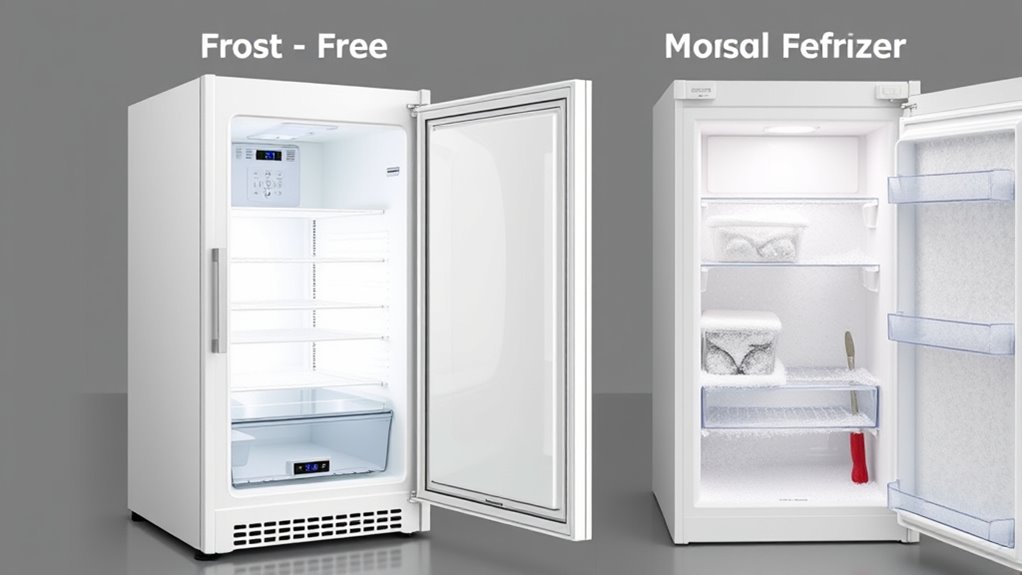

Choosing between a frost-free and manual defrost freezer depends on your needs. Frost-free models are convenient since they prevent ice buildup automatically, saving you time. However, they tend to use slightly more energy and can be noisier. Manual defrost freezers demand more maintenance but are more energy-efficient and quieter. Reflect on your lifestyle—if you prefer hassle-free operation, a frost-free unit may suit you best. To discover which option aligns with your habits, keep exploring the details.
Key Takeaways
- Frost-free freezers offer convenience with automatic defrosting but tend to consume more energy than manual models.
- Manual defrost freezers are quieter, more energy-efficient, and better for long-term savings, but require regular maintenance.
- Frost-free units maintain more usable storage space by preventing ice buildup, reducing manual intervention.
- Manual defrost freezers provide better control over cleanliness and organization during defrosting but need periodic ice removal.
- The choice depends on lifestyle preferences: convenience and low maintenance versus cost savings and quieter operation.
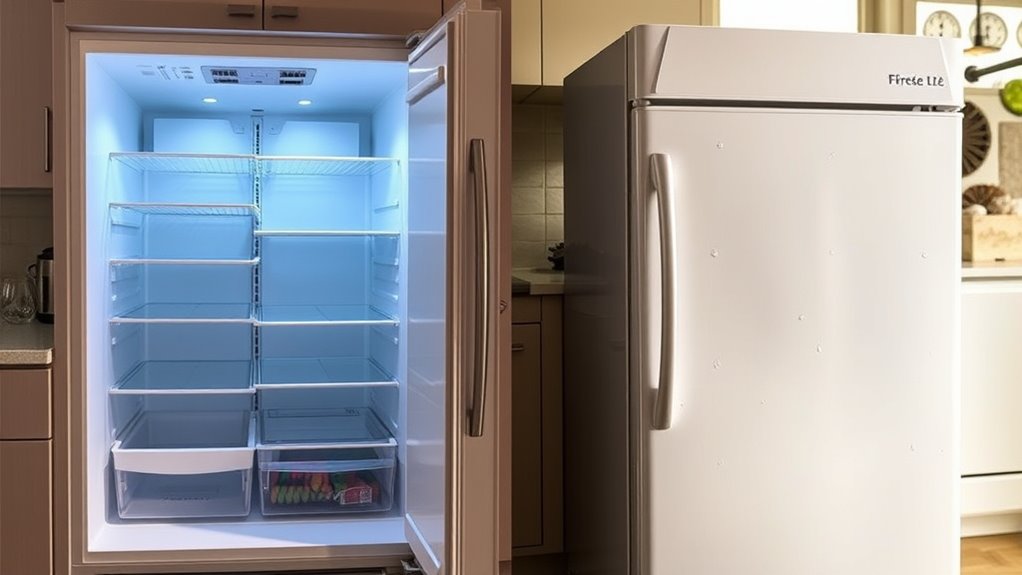
Choosing between frost-free and manual defrost freezers depends on your priorities for convenience and maintenance. If you value less hassle and quicker access to your frozen goods, a frost-free freezer might be more appealing. These models automatically prevent frost buildup by periodically activating a defrost cycle, which melts away any ice that forms. This means you won’t need to spend time manually defrosting, and your freezer stays more organized since ice buildup can take up valuable space. Additionally, the convenience comes with some trade-offs. Frost-free freezers tend to be less energy efficient because they run more frequently to maintain the defrost cycle, which can cause higher electricity bills over time. Furthermore, the constant cycling can lead to slightly increased noise levels. On the other hand, manual defrost freezers require you to periodically turn them off and remove ice buildup manually. While this might seem like a hassle, many find it preferable because these freezers often have better energy efficiency. Since they don’t run defrost cycles automatically, they consume less power overall, saving you money in the long run. Plus, manual defrost models tend to operate more quietly and produce less heat, which can be a benefit if your freezer is in a small or enclosed space. That said, manual defrost freezers demand more involved maintenance. You’ll need to set aside time to defrost the unit when ice buildup becomes thick, usually every few months. During this process, you’ll have to remove all contents, unplug the appliance, and wait for the ice to melt. This can be messy and time-consuming, but some people prefer it because it allows them to better control the cleanliness and organization of their freezer. The choice also hinges on how often you’re willing to perform maintenance tasks. If you’re busy or dislike manual chores, a frost-free freezer offers more convenience at the expense of slightly higher energy use. Conversely, if you’re comfortable with periodic maintenance and want to maximize energy efficiency, a manual defrost model might be the better choice. Consider your lifestyle, budget, and how much time you’re willing to dedicate to upkeep when making your decision. Both types have their merits, but understanding these differences can help you choose a freezer that aligns with your needs, balancing convenience, energy savings, and maintenance responsibilities effectively.
Frequently Asked Questions
Are Frost-Free Freezers More Energy-Efficient Than Manual Defrost Models?
Frost-free freezers are generally less energy-efficient than manual defrost models because their fan and defrost heater run more frequently, increasing energy consumption. However, they offer better temperature stability and convenience by preventing ice buildup. If you prioritize lower energy use, manual defrost freezers are better, but if you prefer consistent temperatures and less maintenance, frost-free models might suit you better.
How Often Do Manual Defrost Freezers Need to Be Defrosted?
Like tuning an old radio, manual defrost freezers need regular attention. You should defrost your freezer when ice buildup reaches about a quarter inch thick, usually every 3 to 6 months. This defrost frequency depends on how often you open it and your manual maintenance habits. Regularly removing ice prevents efficiency drops, keeps food fresh longer, and avoids the hassle of emergency defrosts. Stay on top of it for peak performance.
Do Frost-Free Freezers Produce More Noise Than Manual Defrost Units?
Yes, frost-free freezers tend to produce more noise than manual defrost units. You might notice higher noise levels because of the fans that prevent frost buildup, which can also cause vibration issues. Manual defrost freezers operate more quietly since they lack these continuous fans. If noise levels are a concern for you, a manual defrost freezer could be a quieter choice, especially in quiet residential settings.
Which Type of Freezer Is Better for Long-Term Food Preservation?
For long-term food preservation, a manual defrost freezer is better because it provides consistent temperatures, reducing the risk of food spoilage. You’ll have better control over frozen storage, preventing ice buildup that can compromise food quality. Although frost-free freezers are more convenient, they may cause temperature fluctuations, increasing the chance of food spoilage over time. Choose a manual defrost unit to keep your stored food fresher longer.
Are There Any Maintenance Differences Between the Two Freezer Types?
You’ll find that frost-free freezers require less maintenance because they don’t need frequent defrosting, saving you time and effort. However, they can be more complex to repair due to their automatic systems. Manual defrost freezers need regular defrosting to prevent ice buildup, which increases maintenance complexity, but they tend to be simpler mechanically. Consider your willingness to perform regular defrosting versus dealing with potentially higher repair costs.
Conclusion
Choosing between frost-free and manual defrost freezers depends on your priorities. Frost-free models save you time and effort, making maintenance easier, while manual defrost freezers often cost less and can be more energy-efficient. Did you know that frost-free freezers typically use about 15% more energy? Consider how much time you want to spend defrosting and your budget. Whichever you pick, understanding your needs helps you make the best choice for your kitchen.