
If you’re choosing between a hand mixer and an immersion blender, consider your needs. A hand mixer offers more power for heavy-duty tasks like kneading dough or whipping thick creams, while an immersion blender is perfect for quickly pureeing soups or blending liquids directly in the pot. Cordless options add portability, making them versatile for different situations. Keep exploring to discover which tool best matches your cooking style and tasks.
Key Takeaways
- Hand mixers are more powerful and ideal for heavy-duty tasks like dough kneading and thick batter mixing.
- Immersion blenders are portable and best suited for quick blending, pureeing soups, and emulsifying dressings.
- Hand mixers come with multiple attachments for diverse baking and mixing needs, while immersion blenders have a streamlined design for liquids.
- Cordless immersion models offer greater mobility, enabling use anywhere, unlike corded hand mixers that require a fixed power source.
- Choose based on task: use hand mixers for power-intensive jobs, immersion blenders for quick, easy liquid blending.
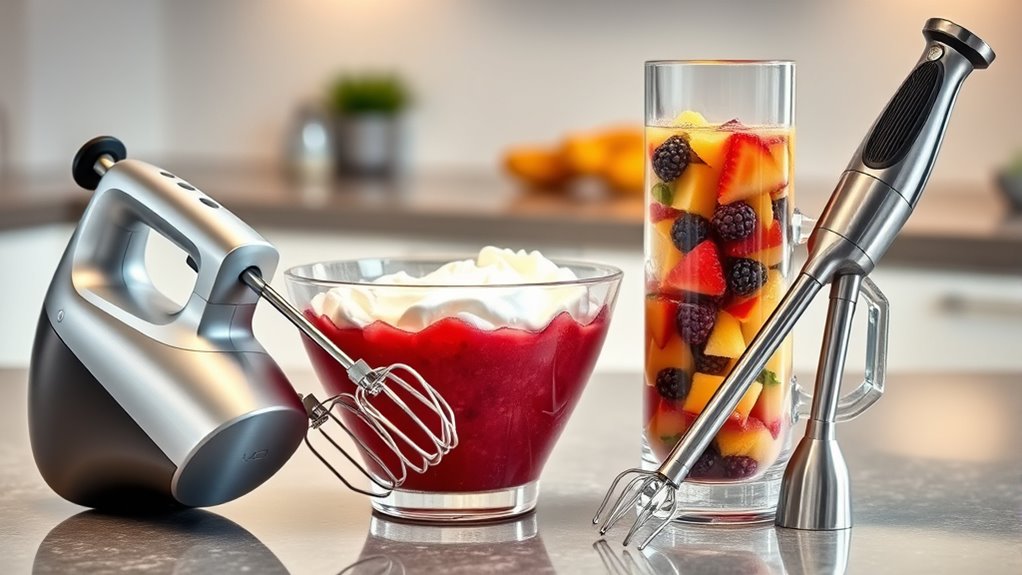
When choosing between a hand mixer and an immersion blender, understanding their differences can help you make the right decision for your kitchen needs. One key aspect to contemplate is cordless convenience. Hand mixers typically come with a cord that limits your mobility, especially when you’re working in tight spaces or need to move around your countertop. In contrast, many immersion blenders now offer cordless models, giving you greater freedom to blend or whip ingredients wherever you prefer, whether at the stove, in a pot, or outside on a picnic table. This portability makes the immersion blender more flexible for various tasks, such as pureeing soups directly in the pot or quickly blending smoothies on the go.
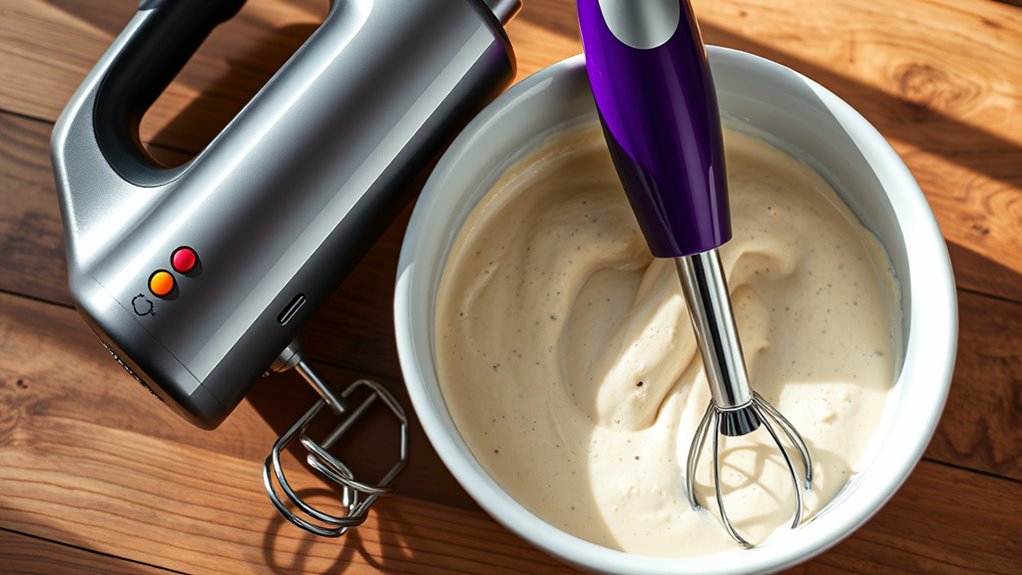
Another important factor is the power comparison. Hand mixers generally have more powerful motors designed to handle thicker batters, whipped creams, and doughs. They’re built to provide consistent, strong mixing, which makes them ideal for baking projects that require vigorous beating or kneading. Immersion blenders, on the other hand, usually have less powerful motors because they’re primarily meant for blending liquids or soft ingredients. While some higher-end models pack a punch, most immersion blenders excel at quick tasks like pureeing soups, making sauces, or emulsifying dressings. If your main goal is to mix heavy dough or batter, a hand mixer’s power might be more suitable. But if you prefer quick blending of soups or smoothies, an immersion blender’s efficiency and ease of use could be more advantageous.
Hand mixers offer more powerful motors for heavy-duty baking, while immersion blenders excel at quick liquid blends and purees.
In terms of design, hand mixers often come with beaters and attachments that allow for versatile use, from whipping egg whites to mixing cake batter. They’re generally bulkier but provide more control for specific tasks. Immersion blenders are more streamlined, with a single blending shaft that you immerse directly into the ingredients. This design reduces cleanup and saves space, making immersion blenders a convenient tool for quick, one-pot recipes. Both tools have their strengths, but your choice hinges on what you prioritize: the power and versatility of a hand mixer or the portability and streamlined functionality of an immersion blender.
Additionally, considering durability and build quality can influence your long-term satisfaction with either tool, especially if you plan to use them frequently. Ultimately, understanding these differences helps you match a tool to your cooking style. If you frequently bake or need heavy-duty mixing, a hand mixer is likely your best bet. If you prefer quick, easy blending with less cleanup and more mobility, an immersion blender could be the perfect fit. Knowing the cordless convenience and power comparison between the two helps you make a smarter, more informed decision for your kitchen arsenal.
Frequently Asked Questions
Can Both Tools Be Used for Hot Ingredients Safely?
Yes, both tools can be used safely with hot ingredients if you follow safety considerations. You should avoid exceeding temperature limits for each device, as high heat can damage the motor or cause splattering. Always use caution to prevent burns, keep the tools submerged properly, and avoid immersing electrical parts in hot liquids. By respecting these safety considerations, you can use both tools effectively without risking injury or damage.
Which Device Is Easier to Clean and Maintain?
Cleaning ease goes to the immersion blender, which is like a quick wipe-and-go tool. Its simple, detachable shaft makes maintenance simplicity a breeze, so you spend less time cleaning. The hand mixer, with multiple beaters and motor parts, can be more cumbersome, requiring extra effort for thorough cleaning. If you want hassle-free maintenance, the immersion blender wins, saving you time and effort in the kitchen.
Are There Differences in Noise Levels During Operation?
During operation, immersion blenders tend to be quieter than hand mixers, making them more suitable if noise is a concern. You’ll notice the noise comparison shows immersion blenders produce lower sound levels, especially when blending liquids directly in a container. Hand mixers, on the other hand, generate more operation sound levels, which can be louder and more noticeable. If quiet operation matters to you, an immersion blender might be the better choice.
Can These Tools Be Used for Dough or Bread Making?
You can’t expect a hand mixer or immersion blender to handle dough kneading or bread preparation like a stand mixer. As the saying goes, “You get what you pay for,” and these tools aren’t designed for heavy-duty tasks. They’re perfect for mixing batters or blending soups, but for dough, you’ll need a sturdy stand mixer. Save these for lighter tasks and choose the right tool for bread-making success.
What Are the Storage Space Requirements for Each?
You’ll find that hand mixers generally require more storage space due to their size and attachments, but they can fit into a standard kitchen cabinet if organized well. Immersion blenders are more compact, making them highly storage-efficient and easy to store in smaller cabinets or drawers. To maximize cabinet fit, consider hanging or stacking accessories with each tool, ensuring quick access without sacrificing space.
Conclusion
Choosing between a hand mixer and an immersion blender is like picking the right brush for your masterpiece. I once struggled to whip a thick batter with a hand mixer, feeling overwhelmed until I switched to an immersion blender—it was like switching from a hammer to a paintbrush. Both tools have their place, but knowing which to use makes your cooking smoother and more joyful. Trust your instincts, and let the right tool bring your culinary vision to life.