To descale your electric kettle easily, fill it halfway with equal parts water and white vinegar, then bring it to a boil. Turn off the kettle and let it sit for 30 minutes to an hour to loosen the limescale. Afterward, rinse thoroughly with clean water to remove any taste or residue. For more simple tips, you’ll discover effective ways to keep your kettle in top shape with minimal effort.
Key Takeaways
- Fill the kettle halfway with equal parts water and white vinegar or lemon juice.
- Bring the mixture to a boil, then turn off and let sit for 30 minutes to 1 hour.
- Rinse thoroughly with clean water to remove vinegar or lemon residue.
- Repeat the process if heavy limescale remains or buildup is severe.
- Perform descaling every couple of months to maintain efficiency and prolong your kettle’s lifespan.
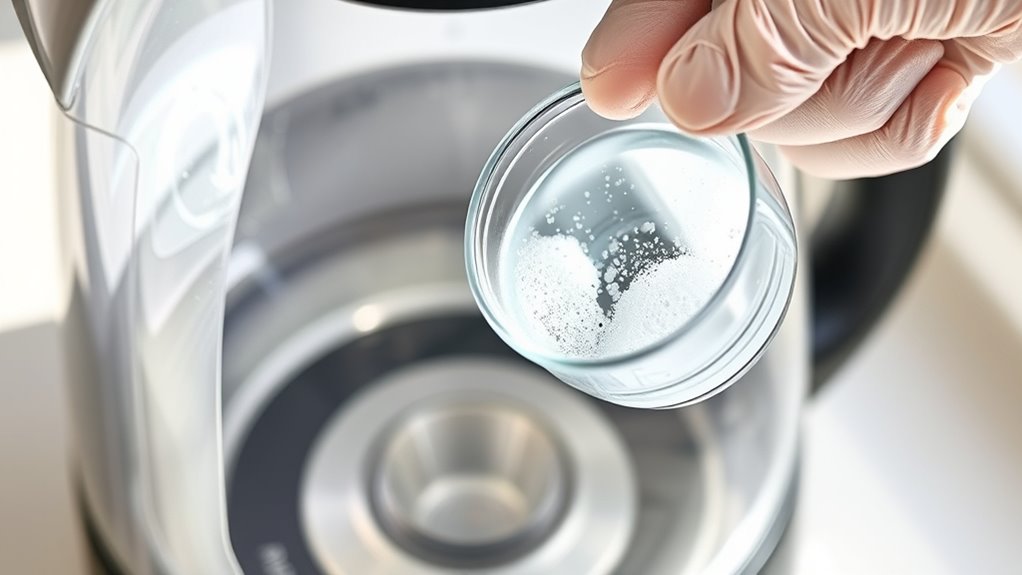
Over time, mineral deposits from hard water can build up inside your electric kettle, affecting its performance and lifespan. Limescale buildup not only hampers heating efficiency but can also cause the kettle to malfunction or make it take longer to boil water. To keep your kettle running smoothly, you’ll need to understand effective descaling techniques. While there are many commercial descaling products available, simple household solutions often work just as well and are more budget-friendly. Vinegar and citric acid are popular choices for descaling, thanks to their natural acidity that dissolves mineral deposits effectively.
To start, you can fill your kettle halfway with equal parts water and white vinegar. Bring the mixture to a boil, then turn off the kettle and let it sit for about 30 minutes to an hour. During this time, the acidity breaks down the limescale. After the waiting period, pour out the solution and rinse the kettle thoroughly with clean water to remove any residual vinegar taste. You might need to repeat this process if the buildup is heavy. Alternatively, if you prefer a more natural approach, lemon juice mixed with water can also serve as a good descaling agent due to its citric acid content. Simply fill the kettle with lemon water, boil, and let it sit before rinsing thoroughly.
Beyond these common descaling techniques, you can explore alternative cleaning methods that require fewer steps or less effort. For instance, some people use commercial descaling tablets or powders designed specifically for kettles, which dissolve quickly and are easy to use. However, always follow the manufacturer’s instructions to avoid damage. Another effective method involves baking soda; mix a tablespoon of baking soda with water, boil the solution in your kettle, then let it sit for a while before rinsing. This method helps loosen mineral deposits without harsh chemicals. Regular maintenance is key to preventing heavy buildup. Descale your kettle at least once every couple of months, especially if your tap water is very hard. This routine helps extend the lifespan of your appliance and ensures it heats efficiently. Remember, the key to effective descaling lies in choosing the right techniques and sticking to a consistent cleaning schedule. Whether you opt for vinegar, lemon, or commercial products, keeping your kettle free of limescale prolongs its performance and saves you from costly repairs or replacements in the future. Additionally, using energy-efficient descaling methods can minimize environmental impact while maintaining your appliance’s optimal function.
Top picks for "descale electric kettle"
Open Amazon search results for this keyword.
As an affiliate, we earn on qualifying purchases.
Frequently Asked Questions
How Often Should I Descale My Electric Kettle?
You should descale your electric kettle every 1 to 3 months, depending on your water hardness and usage. Regular descaling helps prevent scale buildup and mineral deposits from accumulating, which can affect performance and taste. If you notice slower boiling or strange noises, it’s time to descale. Frequent cleaning keeps your kettle efficient, extends its lifespan, and guarantees each cup tastes fresh, free of mineral deposits.
Can I Use Vinegar for Descaling?
Yes, you can use vinegar for descaling, but you should consider vinegar safety and natural remedies. Vinegar is a popular natural remedy that effectively dissolves limescale. Mix equal parts water and white vinegar, then boil it in your kettle. Let it sit for a while before rinsing thoroughly. Just make certain you rinse well afterward to remove any vinegar smell, and avoid using vinegar if your kettle has a delicate finish.
Is It Safe to Run the Kettle After Descaling?
After descaling, it’s perfectly safe to run your kettle, but think of it as giving it a quick health check. Rinse thoroughly to clear any lingering vinegar or descaling solution—this guarantees kettle safety and prevents unpleasant tastes. Follow descaling precautions, like waiting a bit after cleaning, to keep your appliance in top shape. Once cleaned, your kettle’s ready to brew again without worry, sparkling and safe for use.
What Are Alternative Descaling Solutions?
You can use chemical alternatives like commercial descalers, which are specially formulated for kettles. Vinegar and lemon juice also work well as natural options, breaking down limescale effectively. Mix them with water and run the kettle, then rinse thoroughly. These solutions are safe when used correctly and provide an eco-friendly way to keep your kettle clean without harsh chemicals. Always follow product instructions for best results.
How Do I Prevent Limescale Buildup?
To prevent limescale buildup, you should use water softening methods like installing a water softener or using filtered water. Regularly clean your kettle to remove mineral deposits before they harden, and avoid boiling hard water repeatedly. Keep an eye on the appliance and descale it periodically, especially if you notice white deposits. These steps help reduce mineral deposits and extend your kettle’s lifespan.
Conclusion
Descaling your electric kettle is quick and simple, and it keeps your appliance running smoothly. Don’t worry about harsh chemicals — vinegar and baking soda are safe, affordable options that work effectively. Regular descaling prevents limescale buildup, saving you money on repairs or replacements later. Just a few minutes now can extend your kettle’s lifespan and improve your tea or coffee experience. So, give it a try—your kettle will thank you for it!