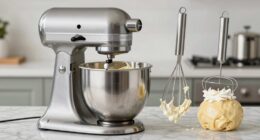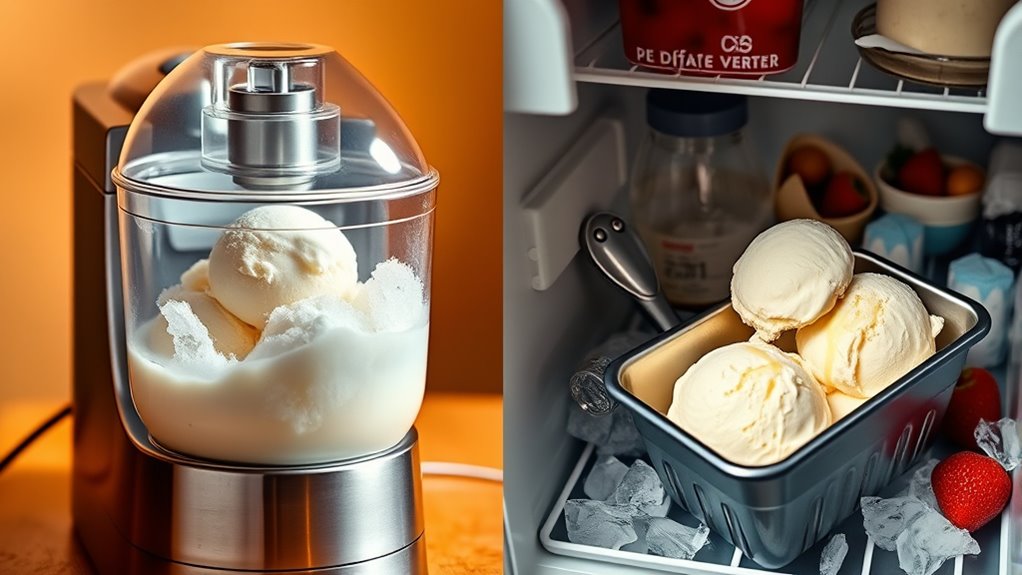

Using an ice cream maker makes a noticeable difference in texture, flavor, and convenience. It churns the mixture constantly, preventing large ice crystals and creating a smooth, creamy finish, while also distributing flavors evenly. The machine saves you time and effort compared to the freezer method, which often results in denser, icier ice cream that needs extra stirring. Want to discover how each method impacts your ice cream experience? Keep exploring for the full scoop.
Key Takeaways
- Ice cream makers produce a smoother, creamier texture by preventing large ice crystals through continuous churning.
- Churning evenly distributes flavors and incorporates air, enhancing taste and lightness compared to the denser freezer method.
- The machine offers a quicker process, typically 20-30 minutes, while the freezer method takes several hours and needs manual stirring.
- Freezer method can result in icier, less uniform ice cream unless regularly stirred and using quality ingredients.
- Overall, a machine makes a noticeable difference in texture, consistency, and flavor distribution for homemade ice cream.

Making ice cream at home can be straightforward, whether you choose an ice cream maker or the freezer method. While both methods produce tasty treats, they differ considerably in texture and flavor. If you’re after a smoother, creamier consistency, an ice cream maker often delivers a better texture comparison. It churns the mixture continuously, incorporating air and preventing large ice crystals from forming. This results in a velvety finish that’s hard to match with the freezer method. Without the constant movement, homemade ice cream in the freezer tends to be denser and icier, especially if you don’t stir it regularly during freezing. However, the freezer method still allows for a decent outcome with some technique and patience. The contrast ratio of your freezing environment can also influence the final texture, with more consistent cold temperatures helping to prevent ice crystal formation.
When it comes to flavor enhancement, both methods can produce delicious results, but the ice cream maker has an edge. The churning process helps evenly distribute flavors throughout the mixture, making every bite consistently tasty. Plus, because it incorporates air, the ice cream feels lighter on your palate, which can heighten your perception of flavor. With the freezer method, flavor can sometimes be uneven, especially if the mixture isn’t stirred periodically. Without churning, ingredients may separate or settle, leading to a less uniform taste. However, using high-quality ingredients and adding flavor boosters like extracts or mix-ins can still elevate homemade freezer ice cream.
Speed and convenience also play a role in your choice. An ice cream maker can produce a batch in about 20-30 minutes, which is faster than the several hours required for freezer-set ice cream. If you’re short on time and want a quick, smooth dessert, the machine is a clear advantage. On the other hand, the freezer method requires planning and patience but can be just as satisfying with proper stirring and freezing techniques. It’s also more accessible since it doesn’t demand specialized equipment, making it ideal for spontaneous cravings or those on a budget.
Top picks for "cream maker freezer"
Open Amazon search results for this keyword.
As an affiliate, we earn on qualifying purchases.
Frequently Asked Questions
How Long Does Homemade Ice Cream Last in the Freezer?
You can expect homemade ice cream to last about 1 to 2 months in the freezer with proper storage duration. To keep it fresh, use airtight containers and avoid frequent temperature changes. Freezing tips include covering the surface with plastic wrap to prevent ice crystals and labeling with date. For best flavor and texture, enjoy your homemade treat within this timeframe, but always check for signs of freezer burn or spoilage before eating.
Can I Make Dairy-Free Ice Cream With Both Methods?
You can absolutely make dairy-free ice cream with both methods, and it’s easier than you think—your freezer becomes a magic wand! For the best results, use vegan alternatives like coconut milk, almond milk, or cashew cream. An ice cream maker can create a smoother texture, but you can still achieve delicious dairy-free treats with the freezer method by stirring regularly. Both ways let you enjoy creamy, cruelty-free desserts anytime!
Is There a Significant Taste Difference Between Methods?
You might notice some taste differences between methods, mainly in flavor consistency and texture variation. Using a machine often results in a smoother, more uniform flavor, while the freezer method can lead to slight flavor fluctuations due to uneven freezing. The texture from a machine tends to be creamier and more consistent, whereas manual freezing might cause some icy or grainy areas. Your choice impacts the overall flavor experience and mouthfeel.
What Maintenance Is Required for an Ice Cream Maker?
You need to follow a simple cleaning routine for your ice cream maker after each use, washing the bowl and removable parts with warm, soapy water. Don’t forget to dry everything thoroughly. For motor upkeep, regularly check the power cord for damage and ensure the motor isn’t overheating. Occasionally, lubricate any moving parts if recommended by the manufacturer. Proper maintenance keeps your machine running smoothly and extends its lifespan.
Are There Size Limitations for Ice Cream Makers?
Yes, there are size limitations for ice cream makers based on storage capacity and machine size. Larger models typically offer bigger bowls, allowing you to make more ice cream at once, while compact machines are ideal for small batches or limited space. Consider your needs and available storage when choosing a machine, as bigger capacity means a larger footprint, but it also offers more convenience for making bigger servings.
Conclusion
While some might think a machine is essential for great ice cream, the freezer method can still deliver delicious results with patience and the right technique. Don’t be discouraged if you don’t have a machine—you can make creamy, tasty ice cream without one. It just takes a bit more time and effort. So, whether you use a machine or the freezer method, you’ll still enjoy a satisfying treat, no matter what!