When choosing between a portable induction burner and an electric hot plate for your tiny kitchen, consider their heating power, safety, and efficiency. Induction burners heat cookware directly with electromagnetic fields, offering faster, more energy-efficient, and safer cooking since the surface stays cool. Electric hot plates are versatile and simpler to use but warm up slower and have exposed elements. If you keep exploring, you’ll discover which option best fits your cooking style and kitchen space.
Key Takeaways
- Induction burners heat cookware directly via electromagnetic fields, offering faster and more energy-efficient cooking than electric hot plates.
- Electric hot plates are compatible with most cookware types and are typically more versatile for different pot materials.
- Induction surfaces are safer and easier to clean due to their smooth glass tops and immediate cool-down features.
- Electric hot plates may have exposed heating elements that stay hot after use, increasing burn risk.
- For tiny kitchens, induction burners save space and energy, but require compatible cookware to operate effectively.
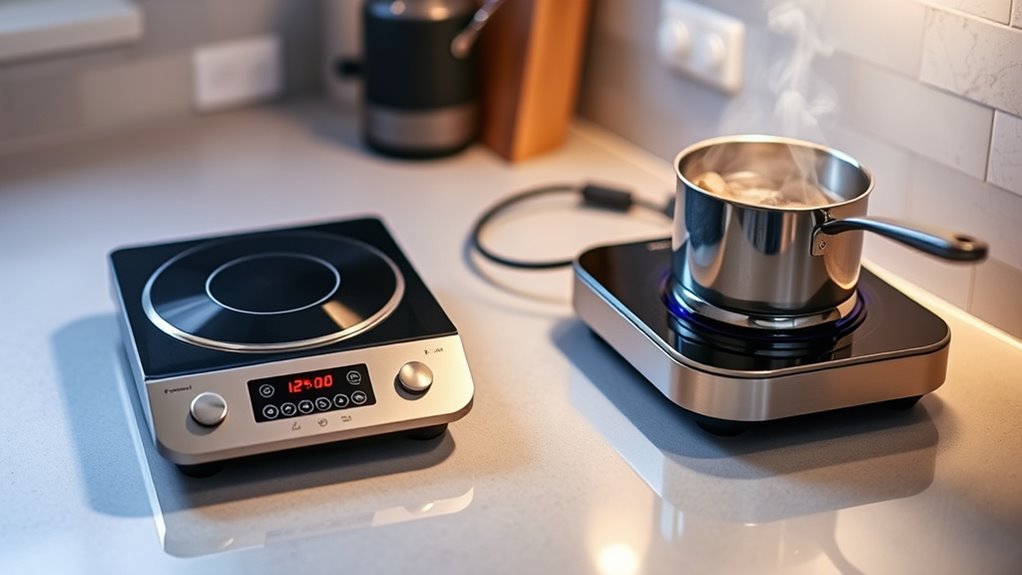
When choosing a portable cooking solution, understanding the differences between induction burners and electric hot plates is essential. Both options serve well in small kitchens, dorm rooms, or for outdoor use, but they operate differently and offer distinct advantages. Your decision depends on what matters most to you—whether it’s energy efficiency, safety, or ease of use.
Induction burners are known for their high energy efficiency. They heat up quickly because they generate heat directly in the cookware through electromagnetic fields. This means less energy is wasted, making them an environmentally friendly choice and potentially saving you money on electricity bills. Electric hot plates, on the other hand, rely on resistive heating elements that warm up and transfer heat to your cookware. While they are generally less efficient than induction units, they still provide reliable heat, especially for simple cooking tasks.
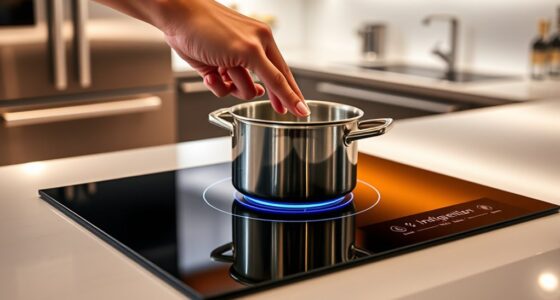
Induction burners heat cookware directly, offering faster, more energy-efficient cooking compared to electric hot plates.
Safety features are another critical factor. Induction burners are inherently safer because they only heat the cookware itself, not the surface beneath. When you turn off an induction burner, the surface cools almost immediately, reducing the risk of burns or accidental fires. Many models also include safety shut-off mechanisms and overheat protection, giving you peace of mind during cooking. Electric hot plates tend to have exposed heating elements, which can remain hot even after turning off. Some modern models include safety features like automatic shut-off or cool-to-touch surfaces, but overall, they’re less secure than induction burners in terms of accidental burns.
Ease of use is also worth considering. Induction burners require compatible cookware—magnetic pots and pans are necessary for them to work efficiently. If you already have suitable cookware, you’ll enjoy rapid heating and precise temperature control. Electric hot plates are more forgiving in this aspect; they work with most cookware and are generally straightforward to operate. However, they may heat unevenly, leading to hot spots that can affect your cooking.
Maintenance and cleaning are simpler with induction burners because their smooth glass surface doesn’t have exposed elements. You can wipe them clean easily, and since they don’t get as hot, spills won’t burn onto the surface. Electric hot plates can be more challenging to clean, especially around the heating element, which may accumulate food residue or grime over time. Additionally, cookware compatibility is a crucial aspect to consider for induction burners, as not all pots and pans work with electromagnetic heating.
Ultimately, if energy efficiency and safety are your top priorities, an induction burner might be the better choice. If you prefer a more versatile, budget-friendly option that works with almost any cookware, an electric hot plate could suit you better. Weigh the features carefully, and consider your cooking habits to find the perfect tiny kitchen companion.
Frequently Asked Questions
Which Is More Energy-Efficient for Long-Term Use?
A portable induction burner is more energy-efficient for long-term use because it uses less energy consumption than an electric hot plate. Induction technology heats cookware directly, reducing wasted heat and saving you money on electricity bills. Over time, this makes it more cost-efficient, especially if you cook frequently. So, if you’re looking for a device that minimizes energy use and costs, the induction burner is the better choice.
Are Portable Induction Burners Safe for Outdoor Cooking?
Portable induction burners are like reliable friends in bad weather, making them safe for outdoor cooking. They’re designed with outdoor safety in mind, often featuring weather resistance to protect against splashes or light rain. Just guarantee you use them on a stable, flat surface and avoid direct exposure to heavy rain or extreme elements. With proper precautions, they’re a safe, efficient choice for outdoor culinary adventures.
Can These Devices Be Used for Baking or Roasting?
You can use portable induction burners for baking and roasting, but their baking compatibility depends on the device’s power and temperature range. While some models offer high heat levels suitable for roasting, they may not be ideal for all baking tasks. Check the burner’s specifications to guarantee it can handle the necessary temperatures. For peak roasting capabilities, choose a model that provides consistent, high heat output suitable for your baking and roasting needs.
How Do Maintenance and Cleaning Differ Between the Two?
You’ll find that maintenance and cleaning differ markedly between the two. For surface durability, induction burners typically have smooth, flat surfaces that are easy to wipe clean with a damp cloth, making the cleaning procedure quick and straightforward. Electric hot plates may have more textured surfaces or heating elements that require careful cleaning to prevent buildup. Always unplug devices, let them cool, and follow manufacturer instructions for the best results.
What Is the Typical Lifespan of Each Appliance?
Think of these appliances as reliable partners in your kitchen journey. The typical lifespan of a portable induction burner ranges from 3 to 5 years, thanks to its solid appliance durability and often generous warranty coverage. An electric hot plate might last around 2 to 4 years, depending on usage and maintenance. Regular cleaning and proper care can extend both, but induction generally offers longer-lasting performance and peace of mind.
Conclusion
In the end, choosing between a portable induction burner and an electric hot plate boils down to your needs. If you want quick, efficient heating, the induction burner’s your knight in shining armor—like a modern-day Merlin. However, if you prefer simplicity and a more vintage charm, the electric hot plate still holds its ground. Whichever you pick, you’ll be cooking up a storm in your tiny kitchen, making it feel as cozy as a hobbit’s hole.