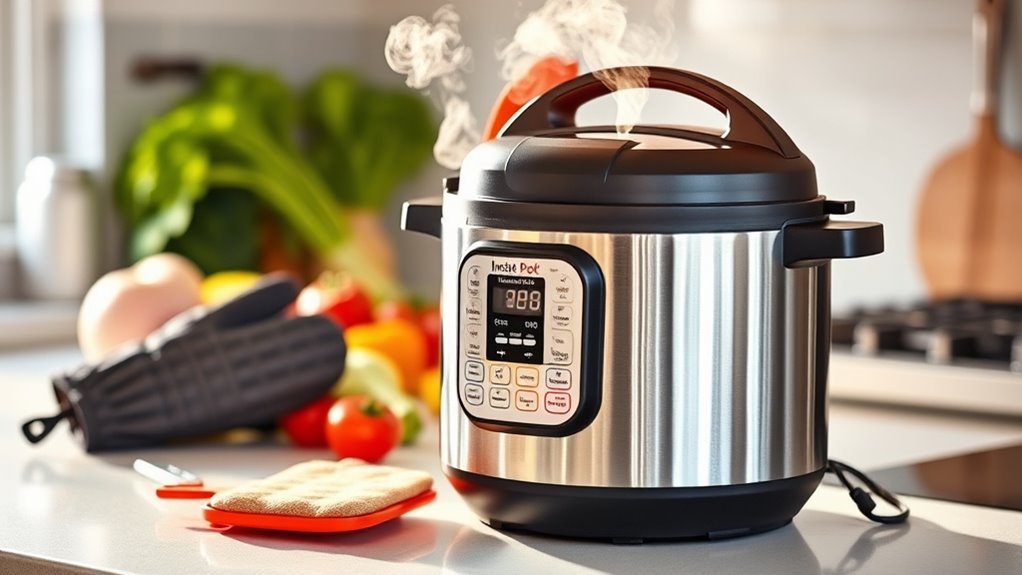
To cook safely with your Instant Pot, always check that the sealing ring and lid are secure and in good condition before starting. Use the correct amount of liquid and avoid overfilling the inner pot to prevent overflows and uneven cooking. Release pressure carefully with long-handled tools, and get familiar with all safety features and settings to prevent accidents. Mastering these tips will help you cook confidently and safely—keep exploring for more expert advice.
Key Takeaways
- Always check that the sealing ring is properly seated and free of cracks or twists before cooking.
- Use the correct amount of liquid as per recipe and avoid overfilling the inner pot beyond the maximum line.
- Allow enough space in the pot for ingredients to expand and generate steam safely.
- Release pressure carefully with long-handled utensils and follow appropriate venting methods.
- Familiarize yourself with all safety features, including pressure indicators and lock mechanisms, before operating.

Silicone Sealing Ring 6qt for Instant Pot Sealing ring for 6 5qt Insta Pot, Sweet and Savory, Food-grade Silicone Fits IP-DUO60, IP-LUX60, IP-DUO50, IP-LUX50, Smart-60, IP-CSG60 and IP-CSG50-2 Pack
ABOUT THIS – These Replacement Silicone Gasket Seal for Instapot 5/6qt sealing rings fit pressure cooker's Models -…
As an affiliate, we earn on qualifying purchases.
As an affiliate, we earn on qualifying purchases.
Always Check the Sealing Ring and Lid Properly
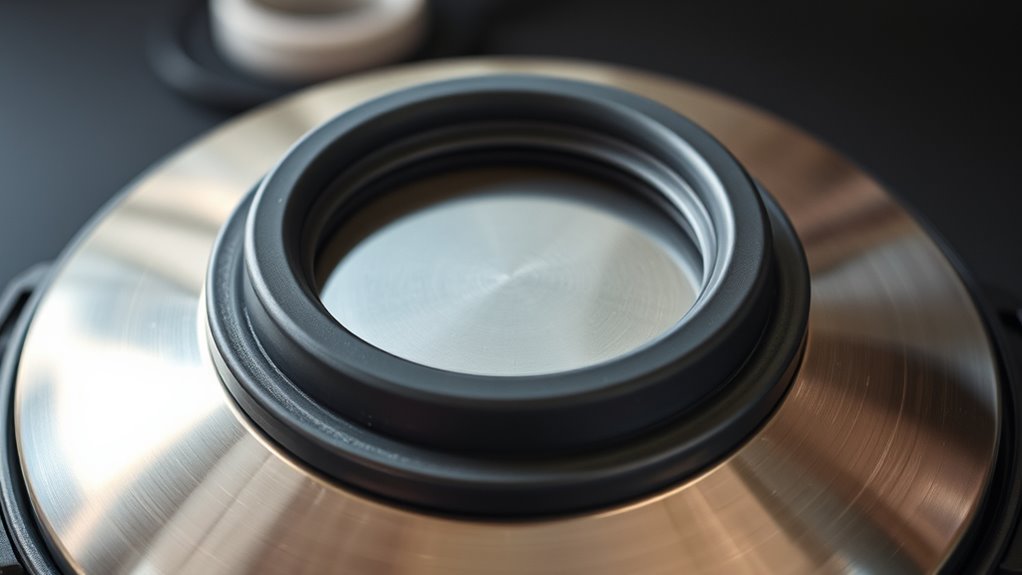
To guarantee your Instant Pot cooks safely and efficiently, always check the sealing ring and lid before each use. Proper sealing ring maintenance is essential; ensure it sits snugly in the lid groove without any twists or gaps. If the ring is cracked, warped, or sticky, replace it immediately. Lid alignment checks are equally important—make sure the lid is properly aligned and securely closed to prevent steam leaks. A well-positioned lid ensures pressure builds correctly and cooking is even. Regularly inspecting the sealing ring and lid helps prevent accidents and guarantees peak performance. Taking a few moments to verify these components saves you time and effort later, giving you peace of mind while pressure cooking. Additionally, understanding the importance of pressure regulation can help you operate your Instant Pot more safely and effectively. Being aware of pressure buildup ensures you manage cooking times properly and avoid over-pressurization. Proper maintenance of your Instant Pot components extends the appliance’s lifespan and maintains optimal safety standards.

10Pcs Replacement Parts for Instant Pot IP-DUO50 IP-DUO60 Duo/Duo Plus 5&6QT Quart, Upgrade Steam Release Valve Lid Replacement for Instapot, Pressure Valve Float & Sealing Ring for Instant Pot
[Compatible with Instant Pot Models] Our 10pcs replacement parts for Instant Pot are designed to fit perfectly with…
As an affiliate, we earn on qualifying purchases.
As an affiliate, we earn on qualifying purchases.
Use the Correct Amount of Liquid
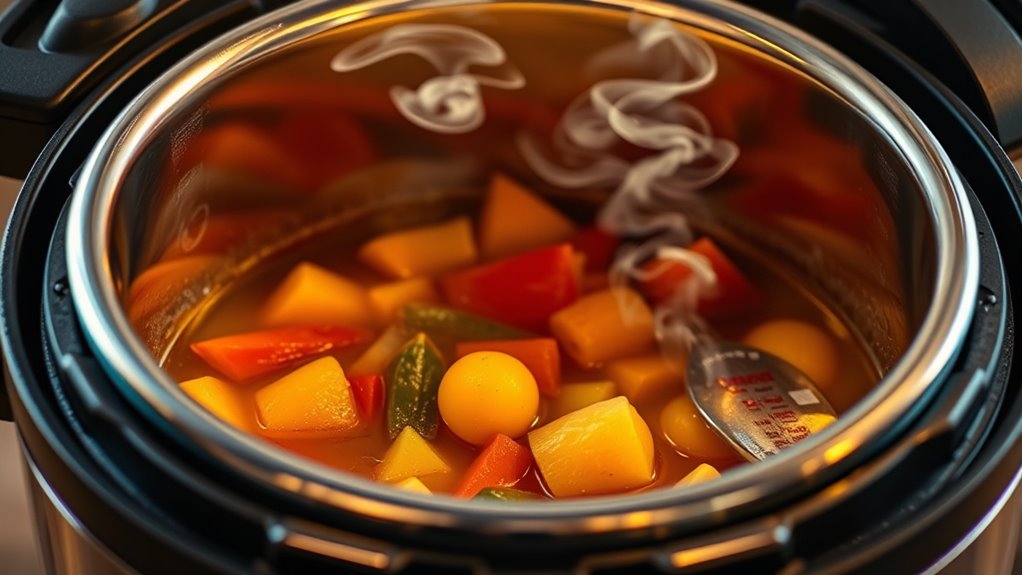
Using the right amount of liquid is key to achieving perfectly cooked meals in your Instant Pot. Proper liquid measurement ensures you create enough steam for pressure buildup while preventing overflows. Too little liquid can cause burning or undercooked food, while too much may result in soggy textures. For consistent results and cooking consistency, always follow recipe guidelines for liquids. Here are some tips:
Using the right amount of liquid ensures perfect pressure cooking and prevents overflows or soggy results.
- Use the minimum liquid recommended in recipes or manual
- Adjust liquid based on ingredients, like rice or beans
- Avoid filling the pot beyond the max line
- Remember that liquids expand during pressure cooking
- Keep in mind that thicker sauces may need less additional liquid
Balancing the right amount of liquid guarantees safe, delicious, and evenly cooked meals every time.
10Pcs Replacement Parts for Instant Pot IP-DUO50 IP-DUO60 Duo/Duo Plus 5&6QT Quart, Upgrade Steam Release Valve Lid Replacement for Instapot, Pressure Valve Float & Sealing Ring for Instant Pot
[Compatible with Instant Pot Models] Our 10pcs replacement parts for Instant Pot are designed to fit perfectly with…
As an affiliate, we earn on qualifying purchases.
As an affiliate, we earn on qualifying purchases.
Don’t Overfill the Inner Pot
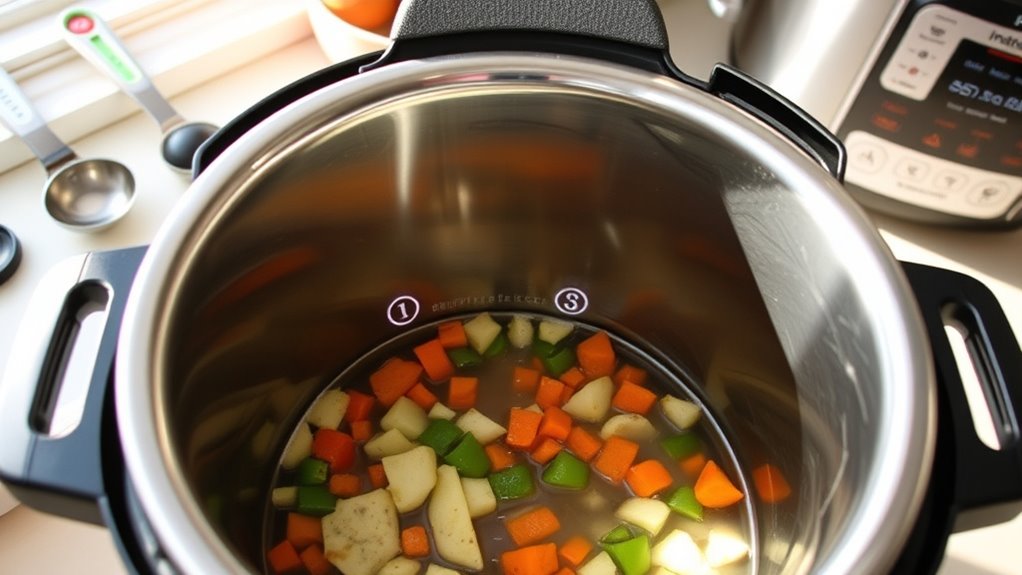
Overfilling your Instant Pot can be dangerous and negatively impact your cooking results. Overfilling risks prevent the pressure from building properly and can cause food to block the steam release valve. Remember that ingredients expand during cooking, especially liquids, pasta, and beans. If you fill the pot beyond the recommended maximum fill line—usually two-thirds for most recipes or half for foods that expand—it can lead to overflow or even safety hazards. Always leave enough space for ingredients to expand and create steam. Proper fill levels are crucial for safe pressure cooking, as exceeding them can compromise the appliance’s safety features. Overfilling can also cause uneven cooking and make cleaning more difficult. To keep things safe and efficient, stick to the fill lines indicated in your manual and avoid packing the pot too full. This simple step ensures safe, consistent results every time. Additionally, understanding the power requirements of your appliances can help prevent electrical issues during pressure cooking. Proper maintenance and awareness of pressure regulation features also contribute to safe operation.
Silicone Sealing Ring 6qt for Instant Pot Sealing ring for 6 5qt Insta Pot, Sweet and Savory, Food-grade Silicone Fits IP-DUO60, IP-LUX60, IP-DUO50, IP-LUX50, Smart-60, IP-CSG60 and IP-CSG50-2 Pack
ABOUT THIS – These Replacement Silicone Gasket Seal for Instapot 5/6qt sealing rings fit pressure cooker's Models -…
As an affiliate, we earn on qualifying purchases.
As an affiliate, we earn on qualifying purchases.
Release Pressure Safely
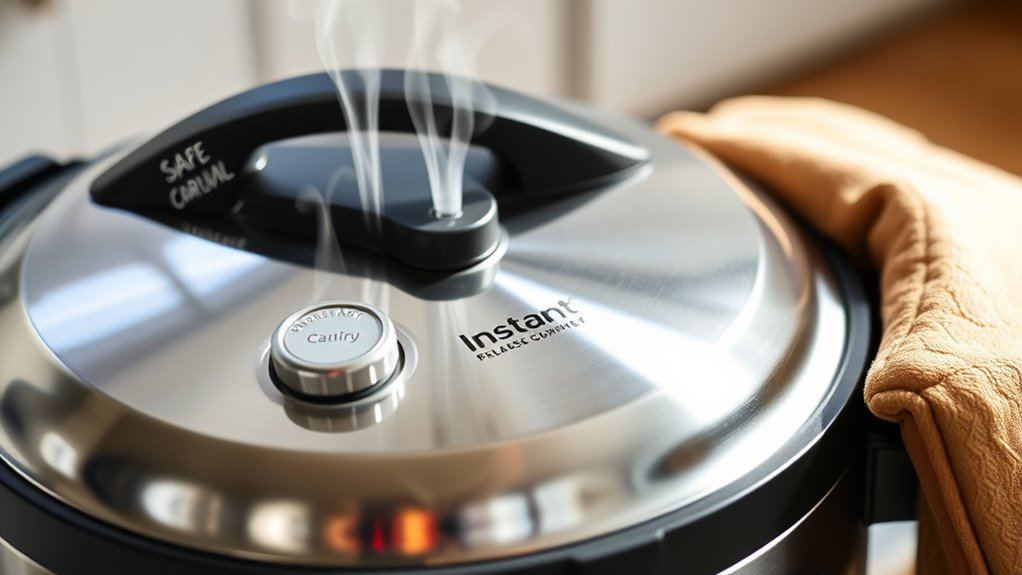
Releasing pressure safely is essential to prevent accidents and guarantee your food turns out perfectly. Proper venting techniques ensure steam escapes gradually, reducing the risk of burns or messes. Always use a long-handled utensil to turn the valve, keeping your hands away from hot steam. For quick pressure release, carefully turn the valve to vent, but avoid forcing it if it’s stubborn. In contrast, natural release allows pressure to decrease gradually—ideal for foods that can’t handle rapid venting. Remember to wear oven mitts and stay clear of the steam path. Understanding kitchen safety and following proper procedures can further prevent mishaps. Additionally, knowing how to recognize and respond to pressure buildup in the pot can help avoid dangerous situations. Monitoring pressure levels during cooking helps ensure safety and optimal results. It’s also helpful to familiarize yourself with pressure release techniques to choose the best method for each recipe. Follow safety precautions diligently to avoid burns or injury. Being aware of prophetic dreams and their meanings can also help you interpret unexpected messages during stressful moments.
Familiarize Yourself With the Settings and Safety Features
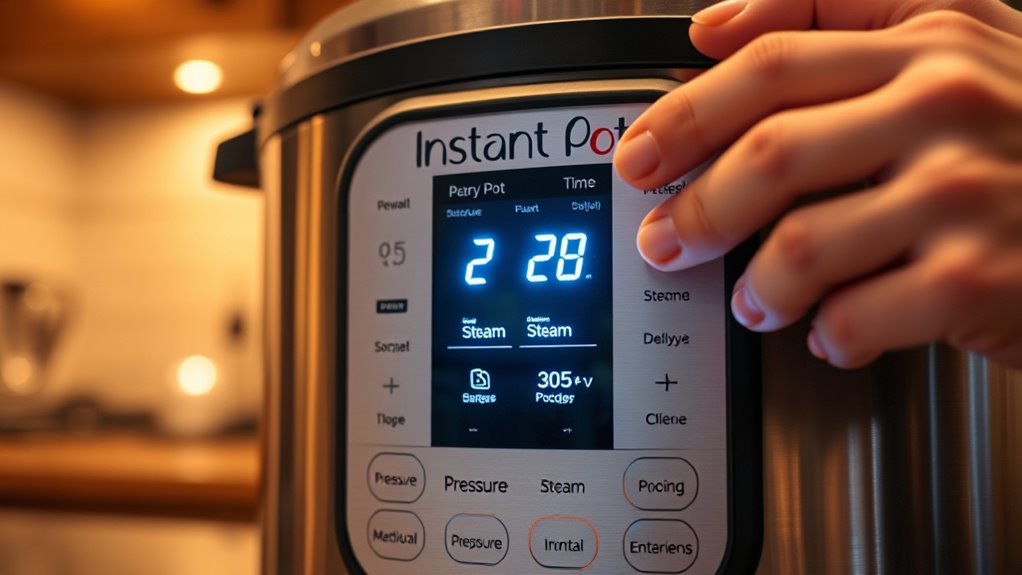
Getting familiar with your Instant Pot’s settings and safety features is essential for safe and effective cooking. Start by understanding how to operate the steam release, whether it’s quick or natural, to control pressure safely. The pressure indicator is your guide—it shows when the pot is pressurized and when it’s safe to open. Always check the indicator before opening the lid to prevent accidents. Learn the different cooking modes and their specific functions to avoid mishaps. Use the safety lock feature to ensure the lid stays secure during pressure cooking. Knowing how to manage steam release and interpret the pressure indicator will help you cook confidently and avoid potential hazards. Proper familiarity with these features keeps you safe and improves your cooking results. Additionally, exploring portable camping gear options can enhance your outdoor cooking safety and convenience. Understanding pressure release methods can further prevent accidents and ensure your safety while using the Instant Pot. Being aware of AI-powered safety warnings in modern appliances can also provide an extra layer of security during operation. Familiarizing yourself with manufacturer instructions is also crucial for optimal and safe use of your appliance. Furthermore, reviewing regular maintenance procedures can help ensure your Instant Pot remains in safe working condition over time.
Frequently Asked Questions
How Often Should I Replace the Sealing Ring?
You should replace the sealing ring every 12 to 18 months as part of regular sealing ring maintenance. Keep an eye out for any cracks, lingering odors, or if it doesn’t seal properly, which indicates it’s time for a replacement. Following a consistent replacement schedule guarantees your Instant Pot maintains a proper seal, preventing leaks and ensuring safe, efficient pressure cooking. Regular checks help keep your appliance in top shape.
Can I Cook Frozen Ingredients in the Instant Pot?
Imagine your Instant Pot as a powerful storm, ready to transform frozen ingredients into a warm, delicious meal. Yes, you can cook frozen ingredients in your Instant Pot, but always prioritize safety. Just like preparing for a storm, verify you don’t overfill it and follow recommended cook times. This keeps Instant Pot safety intact while making quick work of icy ingredients. Trust your appliance to handle the chill safely and efficiently.
What Safety Precautions Are Needed for Pressure Release?
You should always perform a steam release carefully to guarantee safety. Use the valve safety feature by turning the valve to vent only when the pressure has decreased sufficiently. Keep your hands and face away from the steam vent to avoid burns, and use a long utensil if needed. Never force the valve open, and wait until the pin drops before opening the lid. This prevents accidents and keeps you safe during pressure release.
Is It Safe to Open the Lid Immediately After Cooking?
Did you know that over 90% of pressure cooker accidents involve improper lid handling? It’s not safe to open the lid immediately after cooking because lid safety mechanisms prevent accidental opening under pressure. Always wait until the pressure has fully released, and the float valve drops, confirming it’s safe to open. Rushing to open the lid can cause hot steam or liquid to spray out, risking burns or injury.
How Do I Troubleshoot Common Pressure Cooker Errors?
When troubleshooting pressure cooker errors, first check the pressure release to make sure it’s in the proper position; a stuck or improperly closed lid can cause issues. Inspect the sealing ring for cracks or misplacement, as it affects sealing. If the cooker isn’t building pressure, try reseating the sealing ring and confirming the valve is clear. Regular maintenance keeps your Instant Pot functioning safely and efficiently.
Conclusion
Mastering your Instant Pot is like opening a treasure chest—each trick a key to safe, delicious meals. By checking the sealing ring, using the right liquid, avoiding overfilling, releasing pressure carefully, and understanding your settings, you’ll turn pressure cooking from a mystery into a trusted ally. Think of it as taming a wild stallion—courage, knowledge, and caution will lead you to culinary adventures that are both safe and rewarding. Happy cooking!