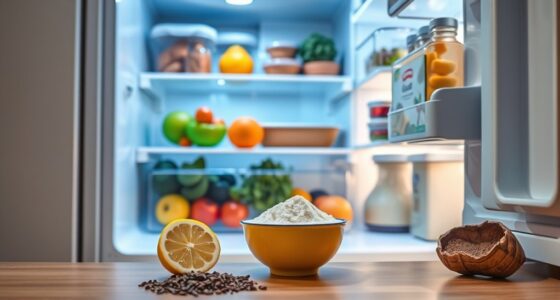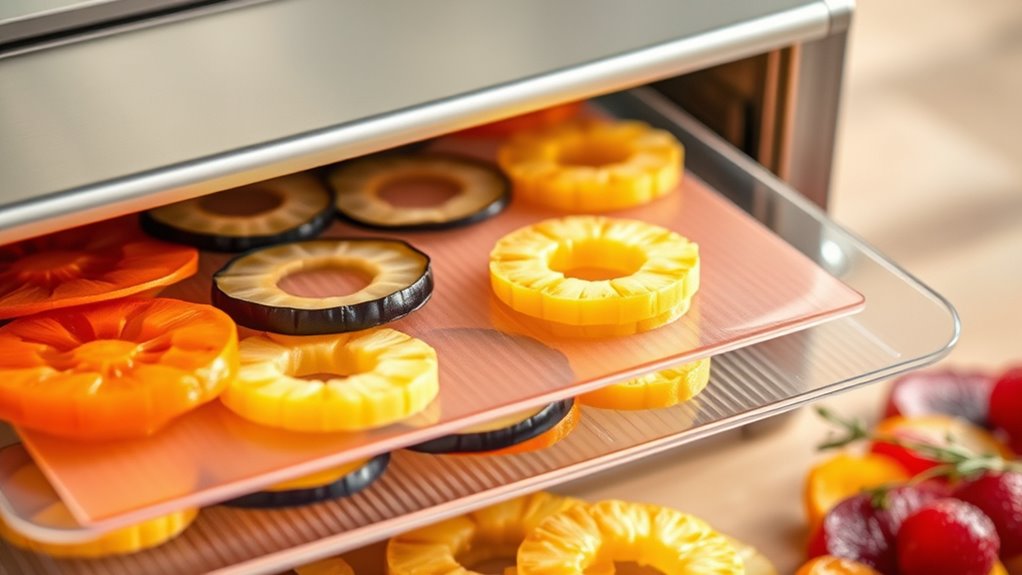

A food dehydrator is a worthwhile addition to your home kitchen because it helps preserve fruits, vegetables, herbs, and meats by removing water, extending shelf life, and reducing waste. It allows you to create healthy snacks like fruit leathers, veggie chips, and jerky without additives. Its adjustable controls and even drying make food preparation simple and efficient. Keep exploring to discover how a dehydrator can boost your food storage and culinary creativity.
Key Takeaways
- A food dehydrator preserves homegrown or bulk foods, extending shelf life without preservatives.
- It enables making healthy snacks like jerky, fruit leather, and veggie chips tailored to preferences.
- Drying herbs at home retains flavor, aroma, and nutrients better than store-bought options.
- Its adjustable settings and batch capacity make food dehydration efficient and user-friendly.
- Investing in a dehydrator promotes healthier eating, reduces waste, and offers versatile culinary uses.
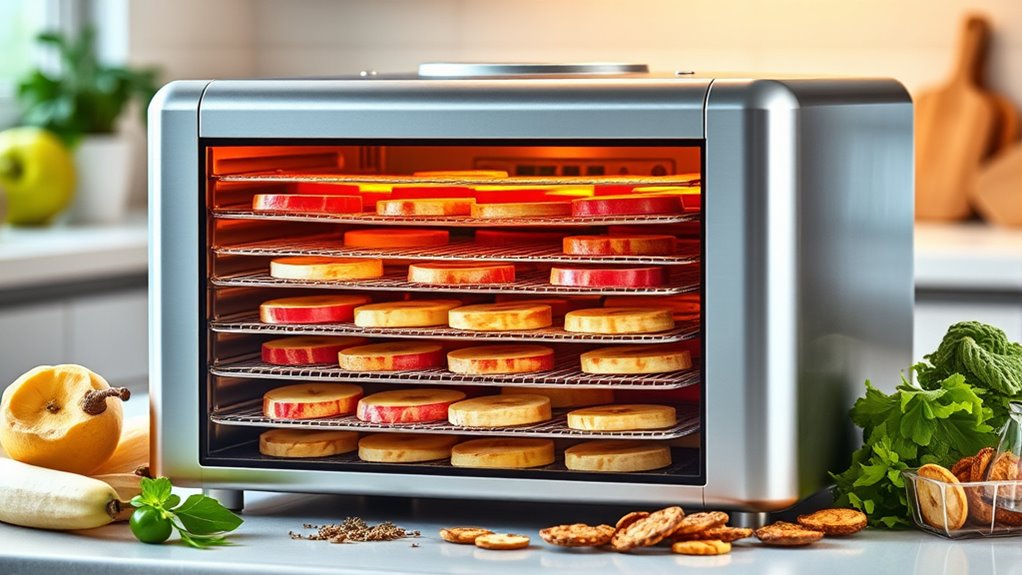
A food dehydrator is a handy appliance that allows you to preserve fruits, vegetables, herbs, and meats by removing moisture efficiently. This process extends the shelf life of your favorite foods and opens up a world of culinary possibilities. When it comes to snack preparation, a dehydrator is a game-changer. You can create healthy, homemade snacks like fruit leather, veggie chips, or beef jerky without added preservatives or artificial ingredients. Simply slice your produce or meat, set the dehydrator to the right temperature, and let it work its magic. The result? delicious, nutritious snacks that are tailored to your taste and dietary needs. No more reliance on store-bought options filled with preservatives; you have full control over what goes into your snacks.
Herb drying is another major advantage of owning a food dehydrator. If you grow your own herbs or buy in bulk, drying them at home preserves their flavor and aroma for months. Unlike air drying, which can take days and is often inconsistent, a dehydrator offers a quick, uniform drying process. You just lay your herbs on the trays, set the temperature low enough to preserve their oils and flavors, and wait. In a few hours, you’ll have dried herbs ready to crush into seasoning blends or store for later use. This is especially useful if you want to make herb-infused oils, teas, or spice mixes. Plus, drying herbs at home means you avoid purchasing pre-packaged dried herbs, which sometimes contain additives or lose potency over time.
Using a dehydrator for snack preparation and herb drying is straightforward and efficient. Its adjustable temperature controls let you customize the drying process depending on the food type, ensuring *ideal* preservation. For fruits and vegetables, lower temperatures help retain nutrients and natural flavors, while meats require slightly higher settings for safety and texture. With a little planning, you can batch-process multiple foods at once, making meal prep easier and more economical. *Furthermore*, a dehydrator’s consistent air circulation results in evenly dried foods, reducing waste and spoilage.
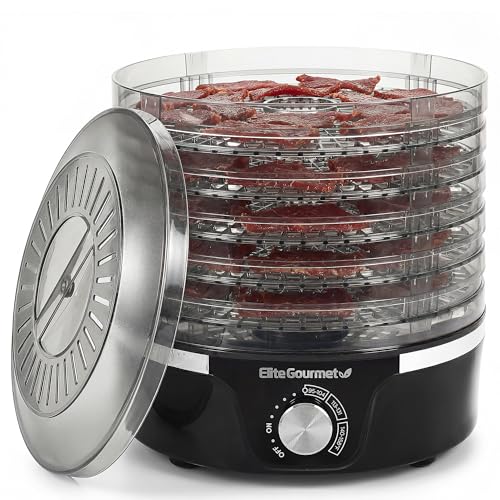
Elite Gourmet EFD319 Food Dehydrator, 5 BPA-Free 11.4" Trays Adjustable Temperature Controls, Jerky, Herbs, Fruit, Veggies, Dried Snacks, Black
CUSTOM TEMPERATURE CONTROL FOR PERFECT RESULTS: Adjustable temperature range from 95°F–158°F lets you dry fruits, vegetables, herbs, mushrooms…
As an affiliate, we earn on qualifying purchases.
As an affiliate, we earn on qualifying purchases.
Frequently Asked Questions
How Long Does It Take to Dehydrate Different Foods?
The dehydration speed varies depending on the food and its moisture content. Fruits like apples or berries typically take 6-12 hours, while thicker items like beef jerky or large vegetable slices may need 8-14 hours. You can expect dehydration time to decrease with lower moisture content and higher temperatures. Regularly check your food to prevent over-drying, and remember, denser foods naturally take longer to dehydrate.
Can a Food Dehydrator Preserve Nutrients Effectively?
Yes, a food dehydrator can preserve nutrients effectively when you optimize nutrient retention and dehydration efficiency. By maintaining proper temperature and airflow, you prevent nutrient loss and guarantee your foods stay nutritious. You should also avoid over-drying, which can degrade vitamins. With careful control, your dehydrator helps keep the flavor, texture, and essential nutrients intact, making it a smart tool for healthy, long-lasting snacks and ingredients.
Is It Safe to Dehydrate Meats at Home?
Yes, it’s safe to dehydrate meats at home if you follow proper meat safety guidelines. Make sure to use a reliable food dehydrator, set the temperature correctly (around 160°F), and completely dry the meat to prevent bacteria growth. Be aware of dehydration risks like under-drying, which can lead to spoilage or foodborne illnesses. Proper handling and thorough dehydration help guarantee your homemade jerky is safe to enjoy.
What Is the Typical Energy Consumption of a Dehydrator?
A typical dehydrator uses around 250 to 600 watts, depending on its size and features. You’ll find it quite energy-efficient compared to running an oven, especially since it operates at low temperatures for extended periods. To manage power consumption, choose models with good energy efficiency ratings. Keep an eye on the wattage, and run it only as long as needed to preserve your food without wasting electricity.
How Do I Clean and Maintain My Dehydrator Properly?
To keep your dehydrator in top shape, follow simple cleaning tips and maintenance routines. After each use, wash the trays and drying racks with warm, soapy water, and wipe down the interior with a damp cloth. Regularly check the fan and heating element for dust or debris. Store it in a dry place, and avoid harsh chemicals. Proper cleaning and maintenance guarantee consistent performance and extend your dehydrator’s lifespan.

Desy & Feeci 4-Layer Herb Drying Rack – Collapsible Mesh Hanging Dryer Net for Herbs, Flowers, Tea, Fruits, and Vegetables – Includes S-Hook & Storage Bag (24" x 31")
Large Capacity & Durable Design – With 4 layers and a load capacity of 2.2 lbs per layer,…
As an affiliate, we earn on qualifying purchases.
As an affiliate, we earn on qualifying purchases.
Conclusion
So, after all this, a food dehydrator might just turn your kitchen into a fruit and jerky factory—without you even realizing it. Sure, it saves money on snacks and keeps your fridge clutter-free, but suddenly you’ll be drowning in dried apples and homemade beef sticks. Who knew that a simple machine could transform your home into a tiny, never-ending snack warehouse? Now, isn’t that the dream? Or maybe just another reason to stay hungry.

COSORI Food Dehydrator, Bigger Than 7 Trays with Large 6.5 ft² Drying Space, Stainless Steel Trays, 600W Faster Drying, 165°F Dehydrated Dryer for Jerky, Dog Treats, Herbs, Meat, Fruit, Yogurt, Silver
𝗕𝗜𝗚𝗚𝗘𝗥 𝗧𝗛𝗔𝗡 𝟳 𝗧𝗥𝗔𝗬𝗦: With 6 stainless steel trays providing 6.5 ft² of drying space, this dehydrator is…
As an affiliate, we earn on qualifying purchases.
As an affiliate, we earn on qualifying purchases.
Elite Gourmet EFD319 Food Dehydrator, 5 BPA-Free 11.4" Trays Adjustable Temperature Controls, Jerky, Herbs, Fruit, Veggies, Dried Snacks, Black
CUSTOM TEMPERATURE CONTROL FOR PERFECT RESULTS: Adjustable temperature range from 95°F–158°F lets you dry fruits, vegetables, herbs, mushrooms…
As an affiliate, we earn on qualifying purchases.
As an affiliate, we earn on qualifying purchases.