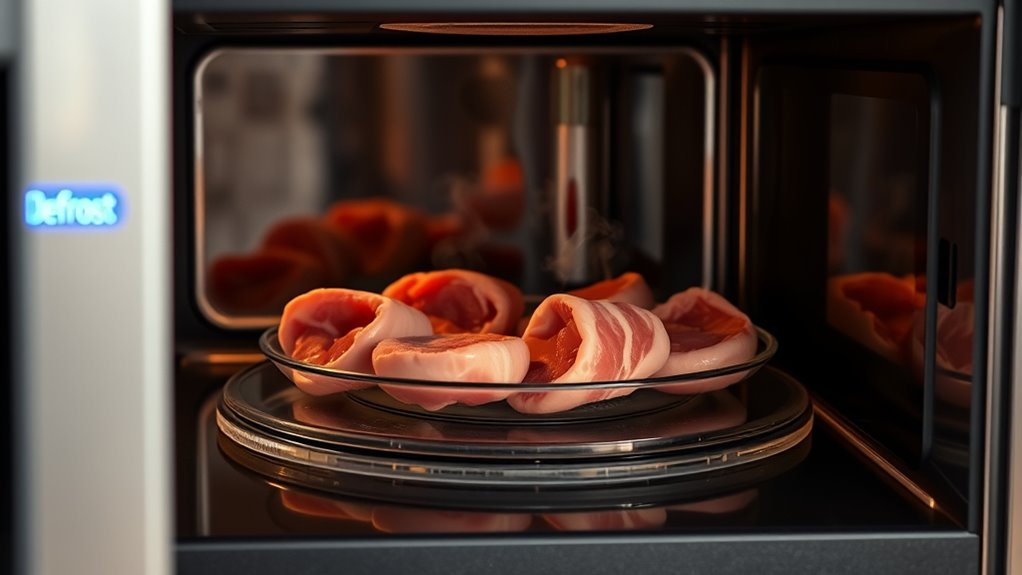

The “Defrost” setting on your microwave uses low-power electromagnetic waves to gently melt ice crystals in frozen food without cooking it. By cycling the power and applying precise timing, it thaws food evenly and safely. This process targets water molecules inside the food, causing them to vibrate and turn to liquid. To master even better thawing techniques and guarantee food safety, keep exploring how microwave defrosting works and best practices.
Key Takeaways
- The defrost setting uses low microwave power to thaw frozen foods evenly without cooking their outer layers.
- It generates electromagnetic waves that vibrate water molecules, melting ice crystals inside the food.
- Short bursts of energy with pauses prevent partial cooking and promote uniform thawing.
- Proper placement and turning of food during defrosting ensure even heat distribution.
- It speeds up thawing safely, reducing bacterial growth compared to room temperature methods.
How the Defrost Function Differs From Regular Microwave Settings
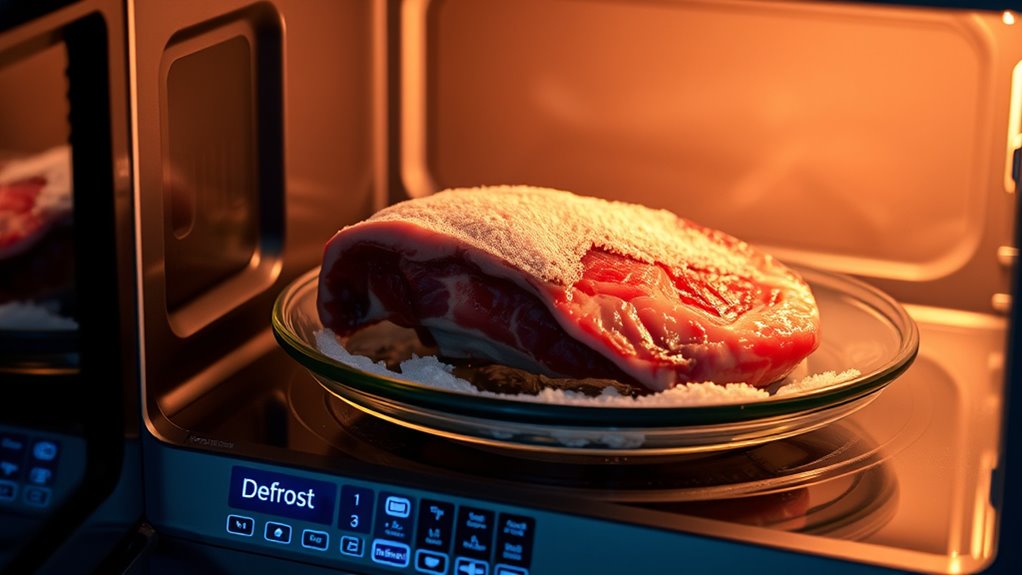
The defrost function on a microwave is specifically designed to thaw frozen food safely and evenly, unlike regular microwave settings that focus on cooking or reheating. This setting uses lower power levels to prevent the outer layers from cooking while the inside remains frozen. By doing so, it enhances microwave safety, reducing the risk of partially cooked food that can harbor bacteria. Additionally, it helps maintain food quality by avoiding overcooking or uneven thawing that can compromise texture and flavor. Regular microwave settings tend to heat food quickly, which can cause uneven heating and potentially dangerous hot spots. The defrost function ensures you thaw food gently, preserving its natural taste and texture, and making it safer and more effective for subsequent cooking or serving. Proper food safety practices during defrosting are essential to avoid foodborne illnesses, and understanding the specific function helps in preventing cross-contamination. An understanding of microwave power levels can further optimize thawing and cooking results for various types of food. For instance, microwave distribution plays a vital role in achieving consistent defrosting. Using the appropriate defrost time based on the weight and type of food also helps improve results and prevent partial cooking.
The Science Behind Microwave Defrosting
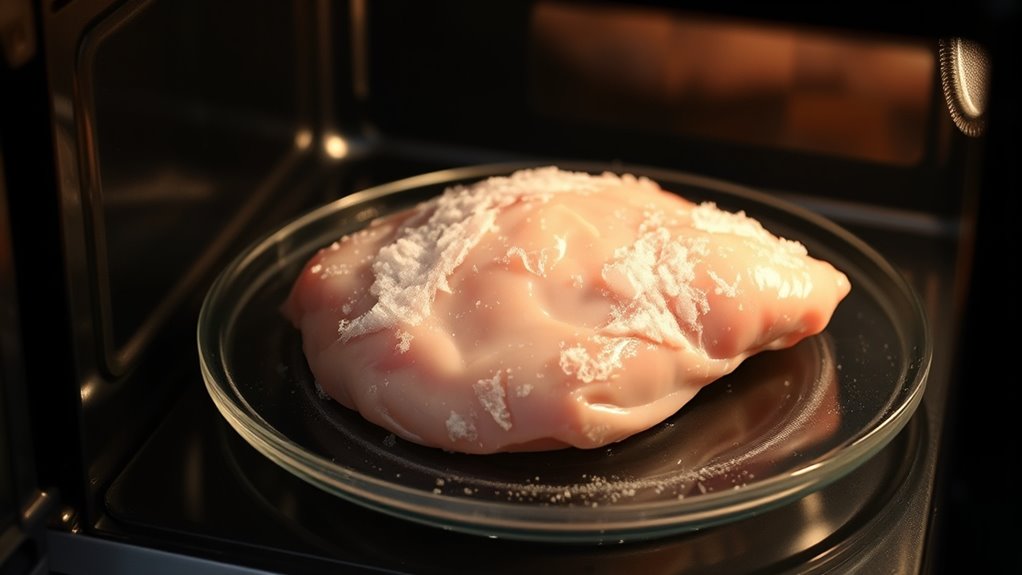
When you use the defrost setting, microwave energy transfers directly to the food, causing ice crystals to melt quickly. This process relies on precise temperature regulation to prevent cooking the outer layers while thawing the inside. Understanding how energy transfer and temperature control work together helps you achieve even and efficient defrosting. Additionally, knowing the different filtration options available for kitchen appliances can help ensure your food remains free from contaminants during preparation. Proper kitchen maintenance can also enhance the performance of your microwave’s defrost function and extend its lifespan. As with data privacy concerns in technology, implementing proper safeguards in kitchen appliances can protect against potential hazards and ensure safe operation. Mastering microwave technology can further optimize defrosting results and improve appliance longevity.
Microwave Energy Transfer
Have you ever wondered how microwaves heat food so quickly and evenly during defrosting? It’s all about microwave energy transfer. Microwaves generate electromagnetic waves that penetrate your food and excite water, fat, and sugar molecules, causing them to vibrate rapidly. This vibration produces heat, which spreads through the food. During defrosting, the microwave’s power is carefully controlled to prevent cooking edges while still thawing the center. To guarantee safe and effective operation, proper appliance maintenance is essential—clean vents, check door seals, and avoid metal objects. Microwave safety is crucial, so always follow manufacturer instructions to avoid uneven heating or potential hazards. Understanding microwave energy transfer helps you use your appliance more efficiently and keeps your food safe and evenly defrosted. Regularly inspecting your microwave’s components can also improve gadget performance and extend its lifespan. Additionally, ensuring that your microwave’s ventilation system is unobstructed helps maintain consistent performance and prevents overheating.
Ice Crystal Melting
Ever wonder how microwave ovens melt ice crystals so quickly during defrosting? It’s all about how microwave energy causes water molecules within ice to vibrate rapidly, turning solid ice into liquid. Proper microphone placement inside the microwave guarantees even energy distribution, helping melt ice uniformly. Additionally, good kitchen appliance maintenance prevents uneven heating that can leave ice behind. Here’s a quick comparison:
| Aspect | Effect on Ice Melting |
|---|---|
| Microwave Placement | Ensures even energy delivery, faster melting |
| Maintenance | Prevents hotspots, improves defrost efficiency |
| Ice Crystal Size | Smaller crystals melt faster due to increased surface area |
Furthermore, understanding the power output of the microwave can influence how effectively it melts ice, as higher wattage appliances tend to defrost more quickly. Proper microwave settings can also optimize energy use and improve defrosting results. For optimal performance, it’s helpful to consider microwave rotation to ensure even heating throughout the process. An additional factor to consider is container placement, as positioning the food correctly within the microwave can significantly impact the defrosting efficiency.
Temperature Regulation
Temperature regulation is essential for effective microwave defrosting because it controls how heat is distributed throughout the food. When your microwave maintains accurate temperature regulation, it ensures even thawing without overcooking edges or leaving cold spots. This temperature accuracy prevents parts of the food from becoming too warm, which could lead to uneven defrosting and spoilage. Proper temperature regulation also helps maintain the nutritional quality of the food by avoiding unnecessary cooking or nutrient loss. Additionally, good temperature regulation improves energy efficiency, as the microwave uses only the power necessary to reach and sustain the ideal defrosting temperature. By avoiding excessive heating, you save energy and reduce the risk of partially cooking your food. Proper temperature control ensures your food thaws safely and evenly, making your defrosting process more effective and reliable. Proper temperature regulation is also crucial for preventing bacterial growth during the thawing process, ensuring food safety. Maintaining precise temperature settings minimizes the risk of foodborne illness caused by uneven thawing and supports food safety standards.
How Microwaves Target Frozen Foods
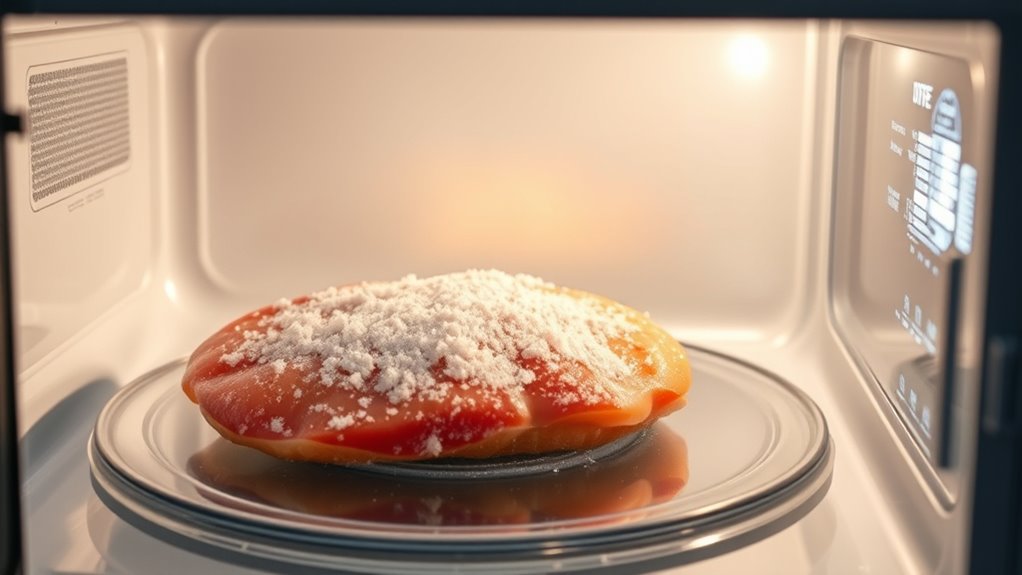
Microwaves target frozen foods by emitting electromagnetic waves that cause water molecules within the food to vibrate rapidly, generating heat. This process heats the food from the inside out, making it efficient for defrosting. However, to guarantee microwave safety, you should avoid uneven heating that can create hot spots or leave parts of the food frozen, which may promote bacterial growth. Properly targeting frozen foods helps preserve food quality by preventing overcooking or drying out delicate items. Using the microwave’s defrost setting minimizes these risks, allowing you to thaw food evenly. Additionally, understanding how microwaves work on frozen foods can help you prevent hot spots and ensure thorough thawing. Recognizing microwave energy distribution can help you achieve more uniform results. Remember, understanding how microwaves work on frozen foods helps you avoid potential hazards and maintain the integrity of your meals. This approach keeps your food safe and delicious.
The Role of Power Levels in Defrosting
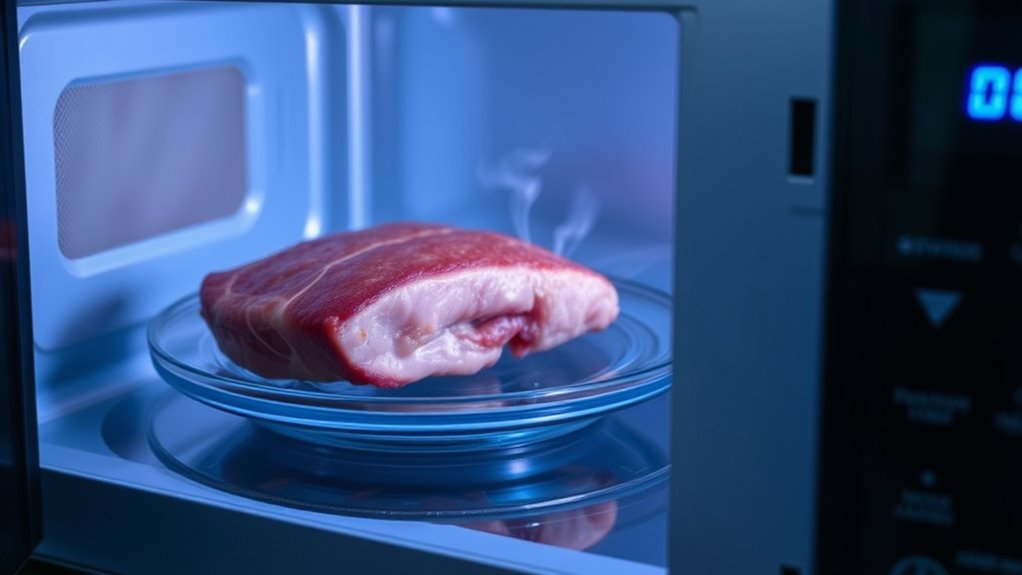
Using different power levels during microwave defrosting can considerably influence how evenly your food thaws. Adjusting the power level affects thawing speed and prevents partial cooking. When you lower the power, you give heat more time to penetrate, promoting uniform thawing without overcooking edges. Conversely, higher power speeds up thawing but risks unevenness. The key is to choose the right power level for your food’s size and thickness. Here’s a quick guide:
| Power Level | Thawing Speed | Food Texture Impact |
|---|---|---|
| Low (1-3) | Slow | Even, gentle thaw |
| Medium (4-6) | Moderate | Balanced thawing |
| High (7-10) | Fast | Risk of unevenness |
Mastering power level adjustments guarantees safer, more consistent defrosting.
Why Uniform Thawing Is Important and How to Achieve It
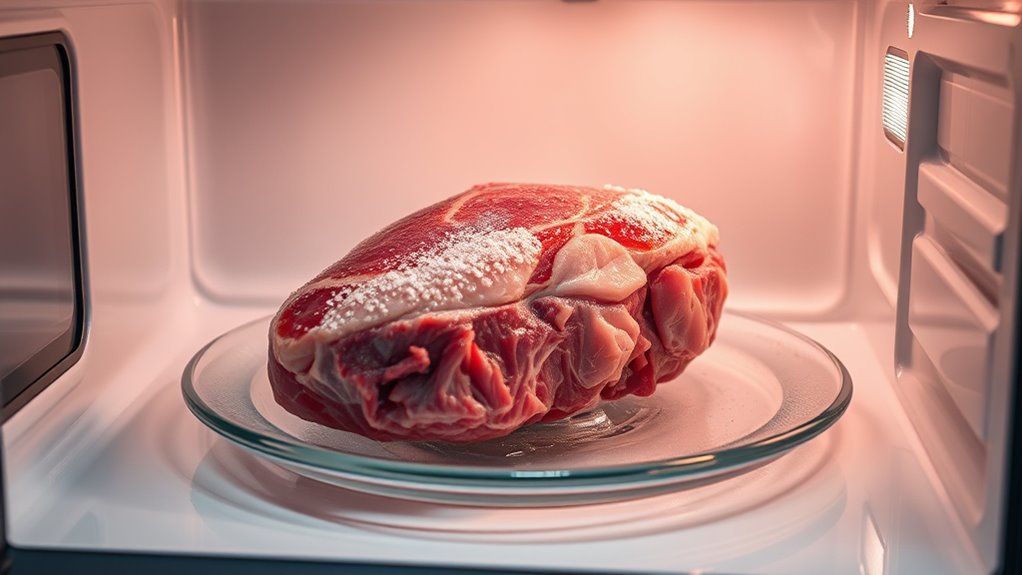
Achieving even heat distribution during thawing ensures your food warms safely and thoroughly. Cold spots can lead to bacteria growth or uneven cooking, so preventing them is vital. Using proper techniques, like turning or rearranging food, helps you get consistent, reliable results.
Even Heat Distribution
Even heat distribution is essential for guaranteeing that your food thaws evenly and safely. When your microwave heats food unevenly, cold spots can harbor bacteria, compromising microwave safety. To achieve uniform thawing, use the turntable feature, which helps rotate your food and promote even heat spread. Stir or rearrange items during the process to prevent cold areas and ensure thorough defrosting. Proper appliance maintenance, like cleaning the interior regularly, keeps microwave components functioning correctly and reduces hot spots caused by debris or dirt. These steps help maintain consistent heat distribution. By paying attention to even heat distribution, you reduce the risk of foodborne illness and improve your microwave’s performance, making defrosting faster, safer, and more reliable.
Preventing Cold Spots
Uneven heat distribution during defrosting can leave cold spots that trap bacteria and cause uneven thawing. To prevent this, guarantee proper air circulation inside the microwave by arranging food loosely and avoiding overcrowding. Stir or rotate the food halfway through the process to promote even exposure to microwave energy. Using microwave-safe utensils that are compatible with defrosting helps distribute heat more evenly and reduces cold spots. Avoid metal or non-compatible materials that can interfere with airflow and heat distribution. Covering food loosely with a microwave-safe cover or vented lid can also help maintain consistent temperature and moisture levels. By paying attention to air circulation and utensil compatibility, you improve uniform thawing and minimize the risk of bacteria growth in cold spots.
Proper Thawing Techniques
Proper thawing techniques are essential because uneven thawing can lead to bacteria growth and food safety risks. To guarantee food preservation and safety, you should thaw food evenly. Use the microwave’s defrost setting in short intervals, turning or rearranging items frequently. This promotes uniform thawing and prevents cold spots where bacteria can thrive. Cover food to retain moisture and monitor its progress closely. Avoid thawing at room temperature, as it increases contamination risk.
| Technique | Benefit |
|---|---|
| Rotate or flip food | Ensures even thawing |
| Use short intervals | Prevents partial cooking |
| Cover food | Maintains moisture, promotes uniform thawing |
| Keep at safe temperatures | Reduces bacteria growth |
Common Mistakes When Using the Defrost Setting
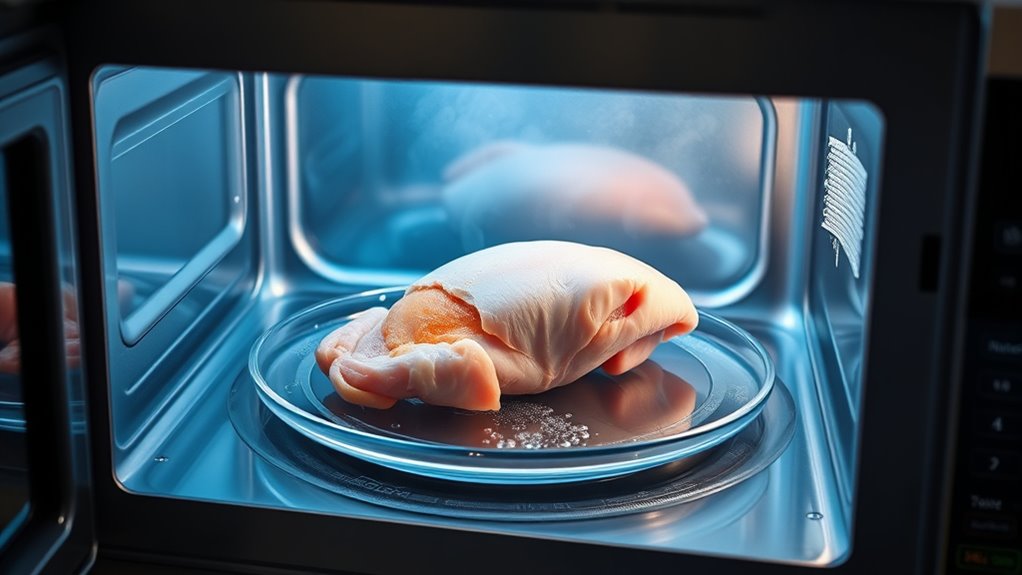
One common mistake when using the defrost setting on your microwave is setting the time too long, which can lead to partially cooked or over-thawed food. This not only affects food quality but also compromises microwave safety, as uneven thawing can promote bacterial growth. Over-defrosting can damage textures and make food less appealing, risking spoilage if not monitored properly. To preserve food integrity, avoid using the full recommended time without checking periodically. Instead, defrost in short intervals and turn or stir the food frequently. This approach ensures even thawing and maintains food preservation. Being mindful of these mistakes helps you defrost safely, reducing the risk of contamination and ensuring your food stays fresh and safe to eat.
Tips for Effective and Safe Defrosting
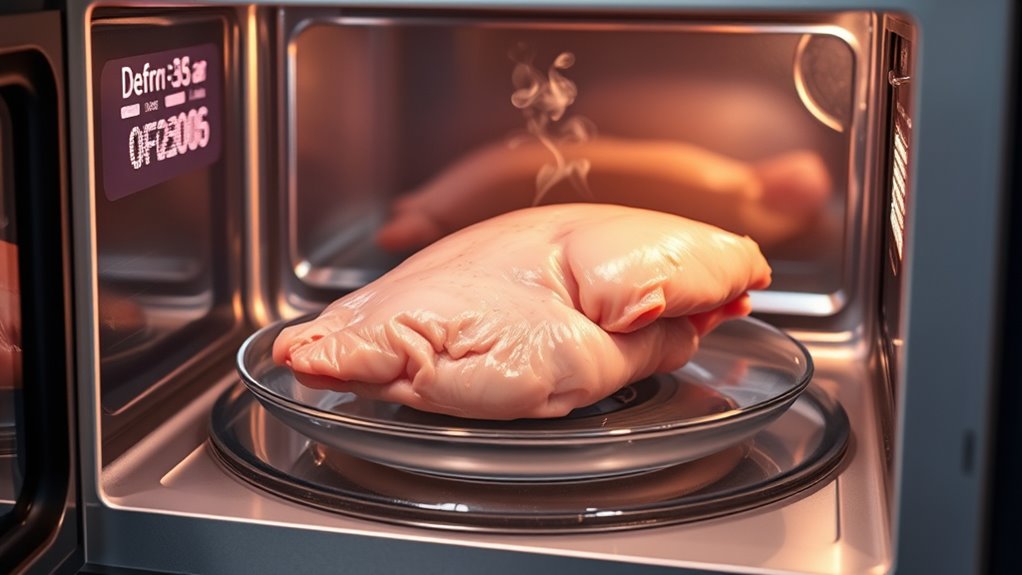
To guarantee your food stays safe and tastes its best, applying effective and safe defrosting techniques makes all the difference. Start by planning ahead, allowing enough time for gradual thawing to prevent uneven frozen textures. Use the microwave’s defrost setting in short intervals, checking frequently to avoid partially cooked spots. This helps maintain the food’s original texture and prevents bacterial growth that can occur when meat or other items stay in the temperature danger zone too long. Keep foods in airtight containers or covered to reduce contamination risks. Always cook thawed food promptly after defrosting, especially if you notice any uneven thawing or changes in texture. Following these tips ensures safe, even defrosting that minimizes bacterial growth and preserves the quality of your food.
When to Use the Microwave’s Defrost vs. Other Methods
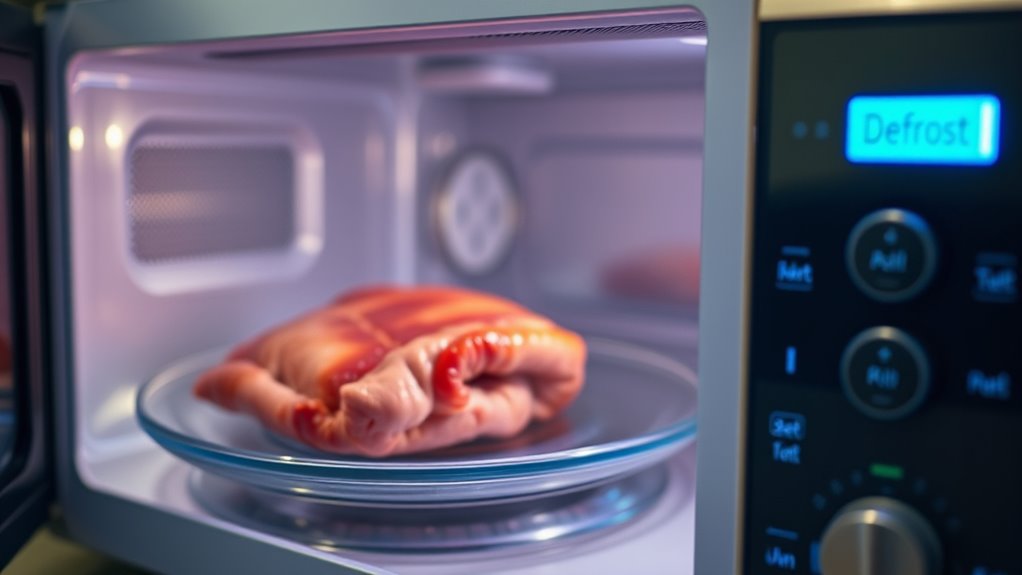
While the microwave’s defrost setting is a quick and convenient option, it’s best suited for certain situations. Use it when you need to thaw small quantities of frozen vegetables or meat quickly, especially if you plan to cook them immediately afterward. However, for larger cuts of meat or delicate items, other methods like refrigerator thawing are safer and more even. The microwave’s rapid process can partially cook edges or create uneven thawing, which isn’t ideal for quality. Consider this table:
| When to Use Microwave Defrost | When to Use Other Methods | Why |
|---|---|---|
| Small frozen vegetables | Large meat cuts | Even thawing |
| Quick thawing | Slow, controlled thawing | Better texture |
| Immediate cooking needed | Time allows for gradual thawing | Food safety |
| Thin or delicate items | Thick or dense items | Prevent partial cooking |
| Small portions | Bulk items | Uniform thawing |
Use your judgment based on food type and timing.
How to Properly Finish Off Thawed Foods After Microwave Defrosting
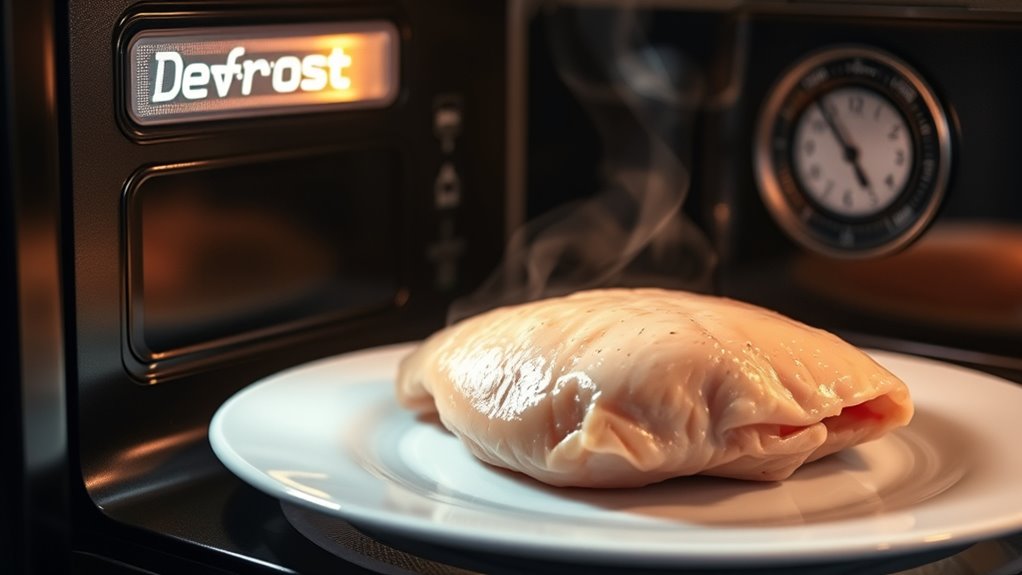
After microwaving to defrost your food, it’s essential to complete the process properly to guarantee food safety and maintain quality. First, check the food for any remaining ice crystals or uneven thawing. If parts are still frozen, reseed the microwave using short bursts of low power. Once thawed, cook the food immediately to prevent bacterial growth, as microwave thawing can leave some areas warmer than others. Use proper thawing techniques, like dividing large items into smaller pieces or rotating the food during the process. Always store leftovers promptly and at the correct temperature. Following these steps ensures your food remains safe to eat and preserves its flavor and texture. Proper finishing off after microwave defrosting is vital for best food safety and quality.
Frequently Asked Questions
Can the Defrost Function Be Used for Non-Food Items?
Yes, you can use the defrost function for non-food items, but you should be cautious about microwave safety. Confirm the items are microwave-safe and avoid anything with metal or foil. Use short intervals and monitor closely to prevent damage or fire hazards. Remember, the microwave’s defrost setting is designed for food, so using it for non-food items may lead to uneven warming or damage, risking safety concerns.
How Long Should I Use the Defrost Setting for Different Foods?
Picture a snowflake melting gently in your hand—that’s how your food should thaw. Use timing guidelines based on food types, like 2-3 minutes per pound for poultry or 1-2 minutes for vegetables. Adjust the time if needed, checking regularly. Smaller items need less time, while larger cuts require more. Always monitor to prevent partial cooking, ensuring even defrosting without starting to cook.
Does Microwave Defrosting Affect Food Quality or Safety?
Microwave defrosting can influence food quality by causing uneven thawing, which may change the food texture and lead to some parts becoming mushy. It also raises concerns about bacterial growth if the food isn’t cooked promptly after defrosting. To guarantee safety, always cook the food immediately after defrosting in the microwave, and avoid leaving it at room temperature for too long.
Can You Over-Defrost Food Using the Microwave?
Ever wonder if you can over-defrost food in a microwave? Yes, you can, especially if you leave it on too long or use high power. Over-defrosting can lead to uneven cooking, risking food safety and quality. To avoid this, follow microwave safety and defrosting tips, like turning food periodically and using the defrost setting carefully. This guarantees your food stays safe, tasty, and perfectly prepared every time.
Is It Necessary to Rotate or Flip Food During Microwave Defrosting?
Yes, you should rotate or flip food during microwave defrosting to guarantee even thawing and maintain microwave safety. This helps prevent cold spots that can harbor bacteria and keeps the food’s texture consistent. By doing so, you’re promoting safer food handling and avoiding uneven cooking later. Make sure to follow your microwave’s instructions and check the food regularly for the best results.
Conclusion
Now that you understand how the defrost setting works, you can confidently thaw your foods without turning your microwave into a hot mess. Picture the gentle hum as icy edges melt away, revealing tender, evenly thawed meat or veggies. With a little attention and your newfound knowledge, you’ll master safe, effective defrosting—making mealtime smoother and more delicious. So next time, let the microwave do its magic, turning frozen chaos into culinary perfection.