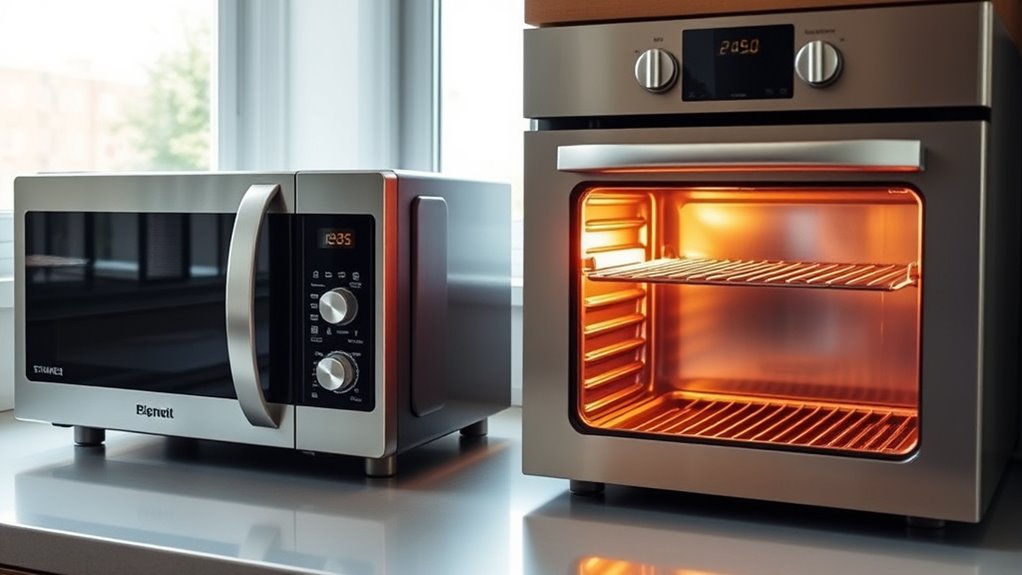

Microwaves are generally more energy-efficient than ovens because they heat food directly and quickly, reducing energy waste. They use less power for small tasks and take less time, making them ideal for reheating or cooking small portions. Ovens, on the other hand, consume more energy due to preheating and their larger space. If you want to discover tips on maximizing efficiency and environmental benefits, keep exploring how different appliances suit your needs.
Key Takeaways
- Microwaves use electromagnetic waves to directly heat water molecules, making them more energy-efficient for quick tasks.
- Ovens consume more energy due to longer preheating times and high-temperature maintenance.
- Microwaves typically have lower power consumption and shorter cooking durations, reducing overall energy use.
- For small portions or reheating, microwaves are generally more energy-efficient than ovens.
- Ovens are better suited for large meals but require more energy, making microwaves more sustainable for everyday quick heating.

Chefman Countertop Microwave Oven 0.7 Cu. Ft., 700 Watts with 10 Power Levels, 6 Cooking Presets with One-Touch Express Cook, Eco Mode, Child Safety Lock, & Mute Button – Black
EXTRA-QUICK COOKING: Choose from six popular presets for microwave ovens, including popcorn, pizza, beverages, veggies, potatoes, or leftovers….
As an affiliate, we earn on qualifying purchases.
As an affiliate, we earn on qualifying purchases.
How Do Microwaves and Ovens Use Energy?
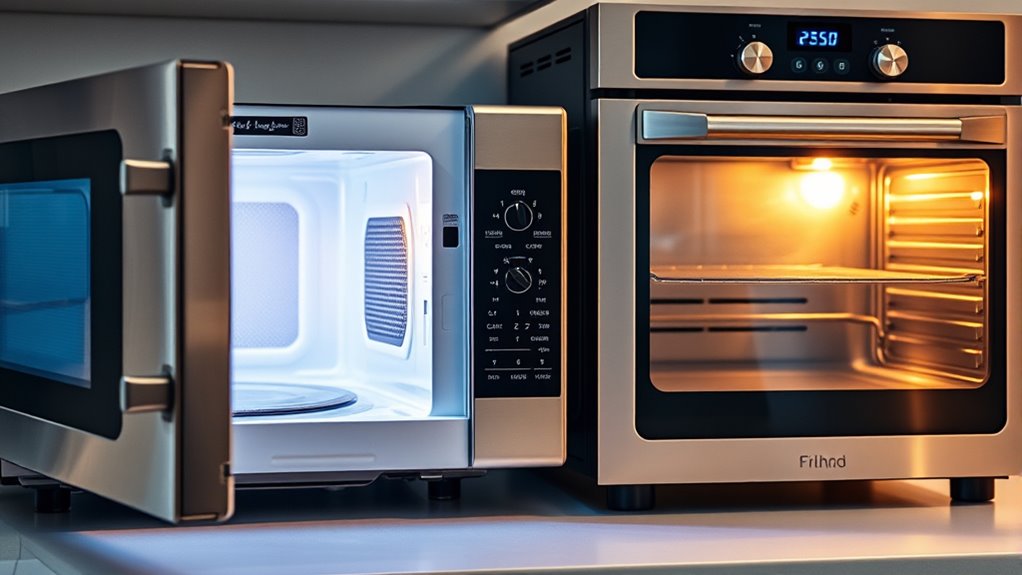
Microwaves and ovens use energy in different ways to heat your food. Microwaves generate electromagnetic waves that excite water molecules inside food, causing rapid heating. This is an example of an alternative cooking method that’s quick and energy-efficient for small portions. Ovens, on the other hand, rely on heating elements or hot air circulation, which consumes more energy to reach and maintain high temperatures. Proper appliance maintenance, like cleaning vents and checking door seals, helps guarantee both appliances operate efficiently, reducing energy waste. Regularly using the right appliance for your cooking task can also save energy. While microwaves excel at quick heating, ovens are better for larger, slow-cooked meals. Understanding how each appliance uses energy helps you make smarter, more efficient cooking choices. Additionally, choosing models with energy-saving features can further reduce power consumption during operation. Being aware of energy efficiency standards in appliance design can help consumers choose more sustainable options. Selecting appliances with advanced insulation can also improve their overall energy performance. Moreover, selecting appliances with efficient heating elements can significantly cut down on energy use over time.

Emerson MW7302B Compact Countertop Microwave Oven with Touch Control, LED Display, 700W, 10 Power Levels, 6 Auto Menus, Glass Turntable and Child Safe Lock, 0.7 Cu., Ft. Black
Precise cooking with 10 power levels: With 10 different power levels to choose from, you can fine-tune your…
As an affiliate, we earn on qualifying purchases.
As an affiliate, we earn on qualifying purchases.
Comparing the Energy Consumption of Microwaves and Ovens
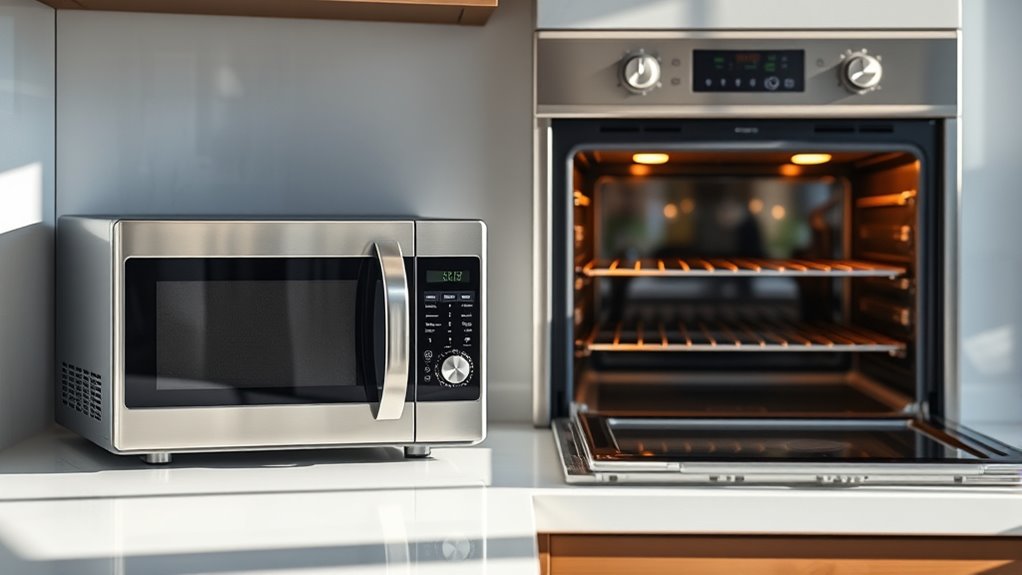
When comparing energy consumption, you’ll notice that microwaves usually use less power overall, especially for quick tasks. Ovens tend to consume more energy because they take longer to cook food thoroughly. Understanding these differences can help you choose the most efficient option for your cooking needs. Additionally, using a microwave for small meals can prevent unnecessary energy waste associated with preheating and longer cooking times in ovens, which relates to energy efficiency benefits. Selecting appliances with high energy efficiency ratings can further optimize your overall energy use in the kitchen. Moreover, choosing appliances with energy-efficient features can enhance long-term savings and reduce environmental impact.
Energy Usage Differences
While both microwaves and ovens serve the purpose of heating food, they differ markedly in their energy consumption. Microwaves are generally more efficient because they directly heat food molecules, reducing energy waste. Ovens, especially traditional ones, use more energy since they need to heat a larger space and maintain high temperatures over time. If you’re considering alternative cooking methods, microwaves often save energy by cooking faster and using less power. Proper appliance maintenance also plays a role; keeping your microwave clean and ensuring your oven’s seals are intact can improve efficiency. Additionally, using energy-conservation techniques such as proper maintenance and choosing the right appliance can enhance overall efficiency. Using the correct cookware and proper loading techniques can also make a difference; for instance, microwave cooking is most efficient when the food is spread evenly to ensure uniform heating. Incorporating modern appliances designed with energy efficiency in mind can further reduce consumption and save costs. For example, choosing appliances with energy-efficient features can significantly lower your overall energy usage. Overall, microwaves tend to use less energy for quick tasks, making them a more energy-efficient choice for everyday heating. However, for larger meals, ovens might still be necessary despite their higher energy use.
Cooking Time Variations
Because they heat food differently, microwaves typically consume less energy over a shorter period compared to ovens. This difference considerably impacts cooking time efficiency, making microwaves ideal for quick meal preparation. When you need to reheat leftovers or cook small portions, a microwave can often do the job in minutes, whereas an oven may take much longer. The faster cooking times of microwaves not only save energy but also enhance your meal preparation speed. Ovens generally require preheating and longer cooking durations, which increases energy consumption. If your goal is to prepare meals quickly and minimize energy use, microwaves offer a clear advantage. Additionally, understanding cooking time variations can help you choose the appliance that best fits your needs for efficiency and convenience.

COSTWAY Retro Countertop Microwave Oven, 0.7Cu.ft, 700-Watt, High Energy Efficiency, 5 Micro Power, Delayed Start Function, with Glass Turntable & Viewing Window, LED Display, Child Lock (Green)
[5 Micro Power Levels & 360° Heating Turntable]This mini microwave oven is equipped with a range of 5…
As an affiliate, we earn on qualifying purchases.
As an affiliate, we earn on qualifying purchases.
Factors Affecting Energy Efficiency in Your Kitchen Appliances
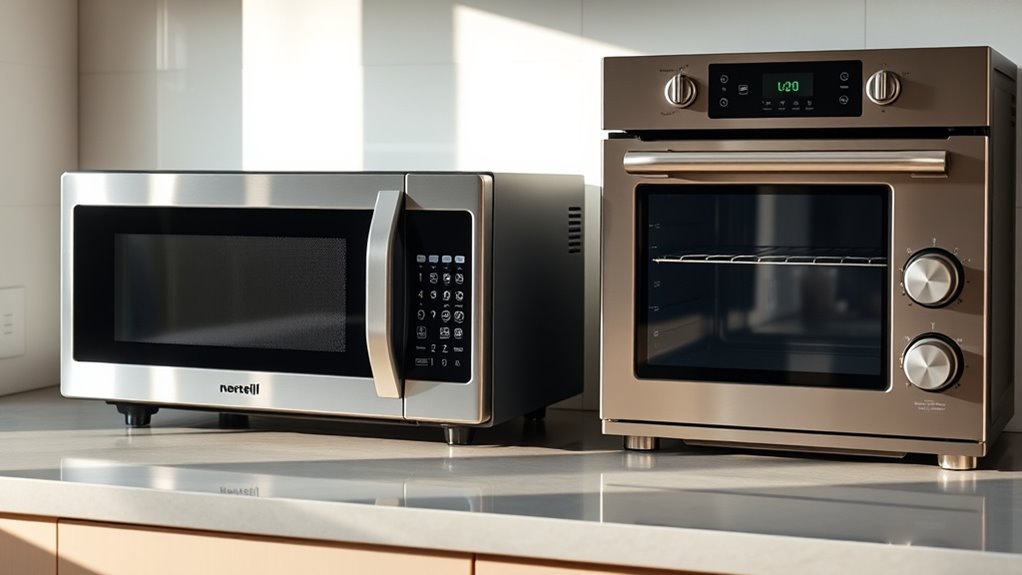
Your appliance’s size and power directly impact how much energy it uses, so choosing appropriately sized options can save you energy. How often and what you cook also influence efficiency—using appliances wisely makes a difference. Understanding your habits helps you pick the most efficient appliance for your needs. Additionally, being aware of vetted privacy and cookie policies can help you manage your online activity and data privacy effectively. Being mindful of energy-saving features in appliances can further optimize your energy consumption and reduce costs over time. Properly sizing and load planning ensures your appliances operate efficiently without unnecessary energy waste. Incorporating home decor elements such as wall organization and stylish serveware can also contribute to a more functional and aesthetically pleasing kitchen environment.
Appliance Size & Power
Appliance size and power considerably influence energy efficiency in your kitchen. Larger appliances typically have higher power consumption, which can lead to increased energy use even when they aren’t in full operation. A bigger oven may cook faster but also draws more electricity, while a smaller microwave uses less power overall. Choosing appliances that match your cooking needs helps reduce unnecessary energy waste. For example, using a compact microwave for quick heating can be more efficient than firing up a large oven for small tasks. Keep in mind that higher power consumption doesn’t always mean better performance; it’s about finding a balance between appliance size and your typical usage. Additionally, understanding energy efficiency can guide you in selecting appliances that optimize both performance and power consumption. Being aware of energy consumption patterns can further help in making informed choices for your kitchen appliances. Monitoring your energy usage over time can also reveal opportunities to improve efficiency and reduce costs.
Usage & Cooking Habits
How you use your microwave and oven considerably impacts their energy efficiency. Your cooking speed plays a key role; microwaves heat food quickly, reducing energy use, while preheating your oven unnecessarily wastes energy. To maximize efficiency, avoid opening the oven door during cooking, which prolongs cooking time and wastes heat. Your habits also influence food quality—overcooking or uneven heating can lead to waste and re-cooking. Using appropriate cookware and covering food helps food heat more evenly and effectively. Choosing the right appliance for the task matters too; for quick meals, a microwave saves energy, whereas an oven is better for larger, more complex dishes. Adjusting your habits ensures you get ideal food quality without unnecessary energy consumption. Incorporating sound healing techniques during cooking or breaks can also promote relaxation and mindfulness, enhancing overall kitchen efficiency. Additionally, understanding Gold IRA options can help diversify your investments, providing financial stability for the future.
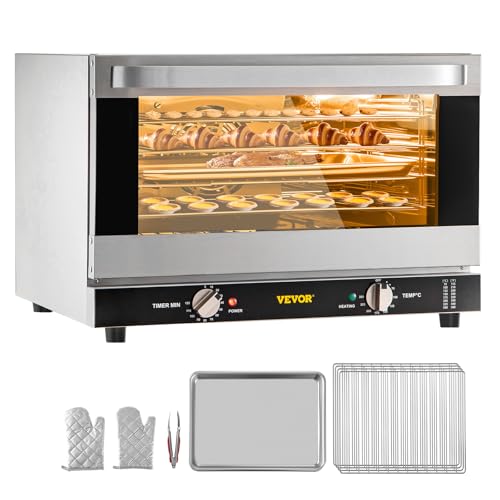
VEVOR Commercial Convection Oven, 47L/43Qt, Half-Size Conventional Oven Countertop, 1600W 4-Tier Toaster w/Front Glass Door, Electric Baking Oven w/Trays Wire Racks Clip Gloves, 120V
43Qt/47L Spacious Interior: Despite its compact structure, our commercial convection oven features a 43 Qt (47 L) inner…
As an affiliate, we earn on qualifying purchases.
As an affiliate, we earn on qualifying purchases.
Practical Tips to Reduce Energy Use When Cooking
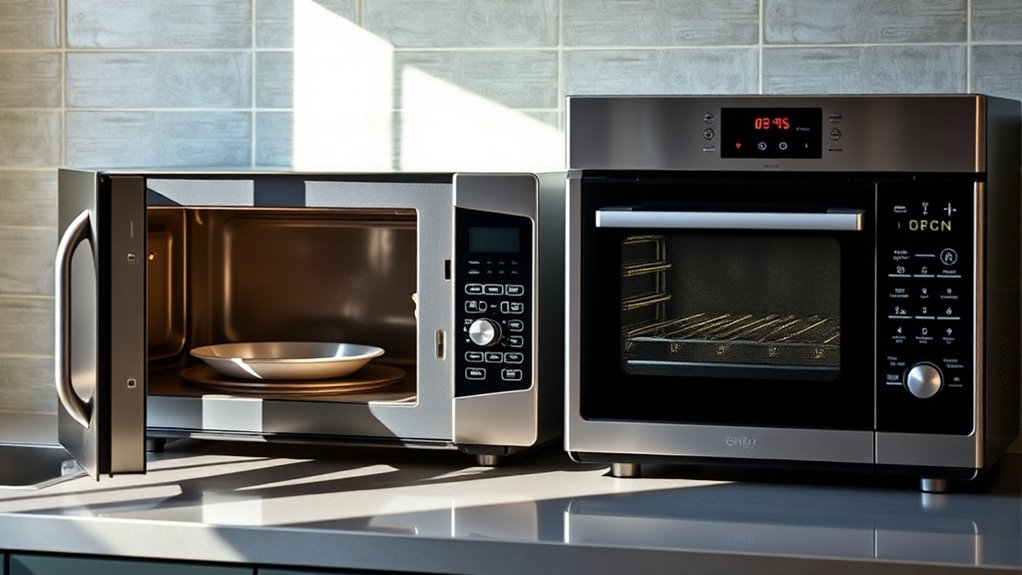
To cut down on energy consumption while cooking, start by using appliances efficiently and wisely. Opt for energy saving appliances that are designed to use less power without sacrificing performance. When cooking, employ smart cooking techniques, such as covering pots and pans to trap heat, which reduces cooking time and energy use. Use the microwave for reheating or cooking small portions, as it’s generally more energy-efficient than an oven. Plan meals to cook multiple items simultaneously, saving energy by consolidating cooking sessions. Avoid opening the oven door frequently, as this releases heat and extends cooking time. Additionally, defrost foods in the fridge or microwave rather than on the counter to streamline cooking and save energy. These simple strategies can markedly cut your energy bills.
Environmental Impact of Using Microwaves Vs Ovens
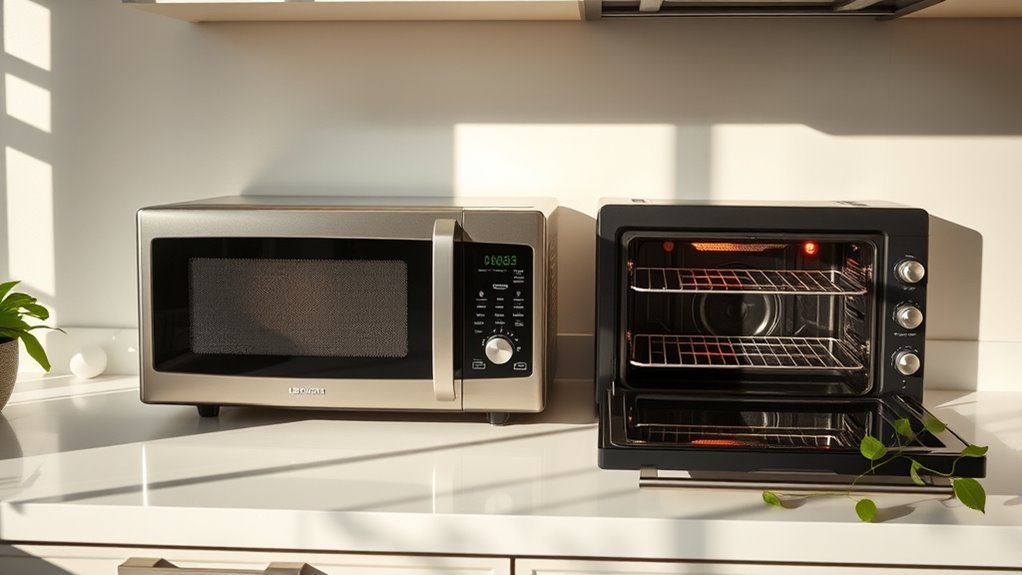
When considering the environmental impact of cooking methods, microwaves generally have a smaller carbon footprint than traditional ovens because they use less energy and heat food more efficiently. This efficiency reduces overall energy consumption, which benefits the environment, especially when powered by renewable energy sources. Additionally, microwaves tend to have a longer lifespan and fewer components than traditional ovens, making appliance recycling easier and more effective. Proper recycling of old appliances helps prevent hazardous materials from polluting the environment and allows valuable materials to be reused. While both appliances contribute to energy use and waste, microwaves often have a lesser environmental impact due to their energy efficiency and the potential for sustainable recycling practices. This makes microwaves a more eco-friendly choice overall.
Making an Informed Choice for Your Home and Planet
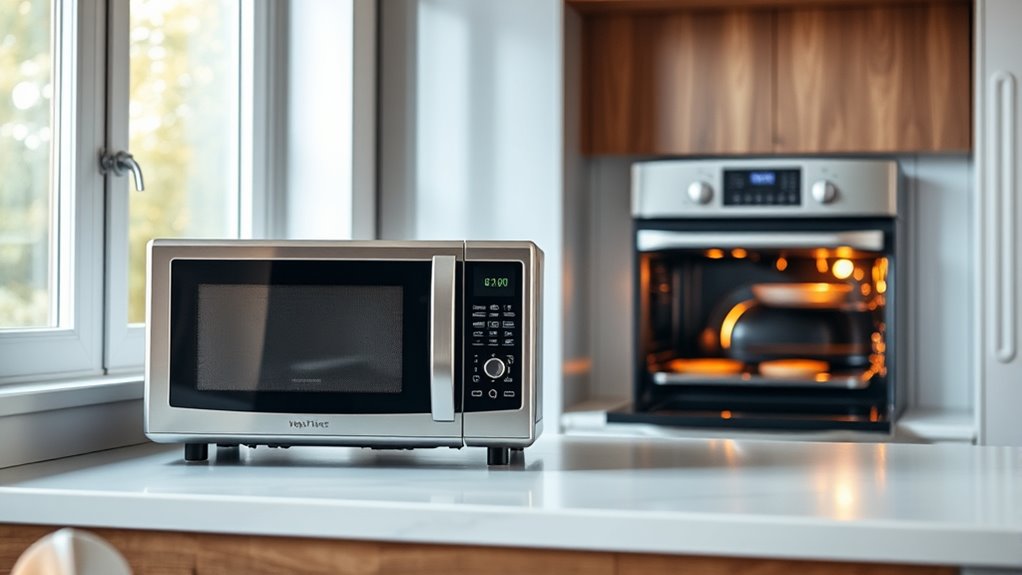
Choosing between a microwave and an oven involves considering both your household needs and the environmental impact of your decision. To make an informed choice, think about energy-saving tips like using appliances efficiently and only when needed. Proper appliance maintenance is also vital; regularly cleaning and servicing your microwave or oven ensures they operate at peak efficiency, reducing energy waste. For instance, a well-maintained oven heats faster and uses less power, while a microwave’s quick cooking saves energy compared to longer oven use. Consider your cooking habits and the types of meals you prepare most often. By balancing your household requirements with eco-friendly practices, you can select an appliance that not only suits your lifestyle but also minimizes your carbon footprint.
Frequently Asked Questions
How Does the Size of the Appliance Impact Energy Efficiency?
You’ll find that smaller appliances are generally more energy-efficient because they require less energy to heat or cook food. Larger appliances, however, often have better insulation, which can reduce standby power consumption when not in use. By choosing a size appropriate for your needs, you minimize energy waste, as smaller units heat up quickly and use less power overall. Proper insulation also helps keep energy use low during operation.
Are Newer Microwave and Oven Models More Energy-Efficient?
Yes, newer microwave and oven models are generally more energy-efficient. They often feature Energy Star ratings, which indicate lower power consumption and better efficiency. You’ll notice they use advanced technology to heat food faster and more evenly, reducing energy waste. By choosing these models, you’re making an eco-friendly choice that saves energy and lowers your utility bills. Always check for Energy Star certification to verify you’re getting a truly energy-efficient appliance.
Does Cooking Time Significantly Affect Overall Energy Consumption?
Cooking time does considerably impact your overall energy consumption, especially when you consider cooking temperature and food type. If you lower the temperature or cook smaller portions, you use less energy. For example, microwaves heat food faster at lower power levels, saving energy, whereas ovens require longer times at higher temperatures for certain foods. Adjusting your cooking time based on food type helps you save energy efficiently.
How Do Different Cooking Methods Influence Energy Use?
Imagine you’re cooking a meal, and the method you choose impacts energy use considerably. Faster cooking methods, like microwaves, often use less energy because of their efficient appliance design and quicker cooking speed. Conversely, traditional ovens may consume more energy due to longer heating times. Your choice of appliance and cooking technique directly influences how much energy you use, making it smarter to select methods aligned with faster cooking speeds for efficiency.
Can Smart Appliances Help Reduce Energy Consumption Effectively?
Yes, smart appliances can effectively reduce your energy consumption. They come with features like energy monitoring tools that track your usage, helping you identify habits that waste energy. Additionally, smart appliances adjust their operation based on your routines, optimizing energy use without sacrificing performance. By using these features, you can save money and reduce your carbon footprint while enjoying convenient, efficient cooking.
Conclusion
Choosing between a microwave and an oven is like picking the right tool for a job—you want efficiency without sacrificing results. I once heated a small snack in my microwave, using just a fraction of the energy my oven would need for the same task. By understanding their energy use, you can make smarter choices that save money and help the planet. Think of it as tuning your kitchen to run smoothly and sustainably—you’ll feel good every time you cook.