If you want quick reheating, the microwave is your best bet, but it can make your pizza soggy or unevenly heated. For better texture and a crispy crust, a toaster oven is ideal, though it takes more time. Your choice depends on whether speed or quality matters most. Keep going to discover tips on how to get the most out of each method and perfectly reheat your slice.
Key Takeaways
- Toaster ovens provide more even heating, restoring pizza’s crispy crust and better cheese melting compared to microwaves.
- Microwaves heat food quickly but can cause soggy crust and uneven cheese melting.
- For best quality, use a toaster oven; for speed, the microwave is more convenient.
- Toaster ovens take longer but produce a more visually appealing, crispy pizza slice.
- Choose based on whether you prioritize quick reheating or maintaining pizza’s original texture and appearance.
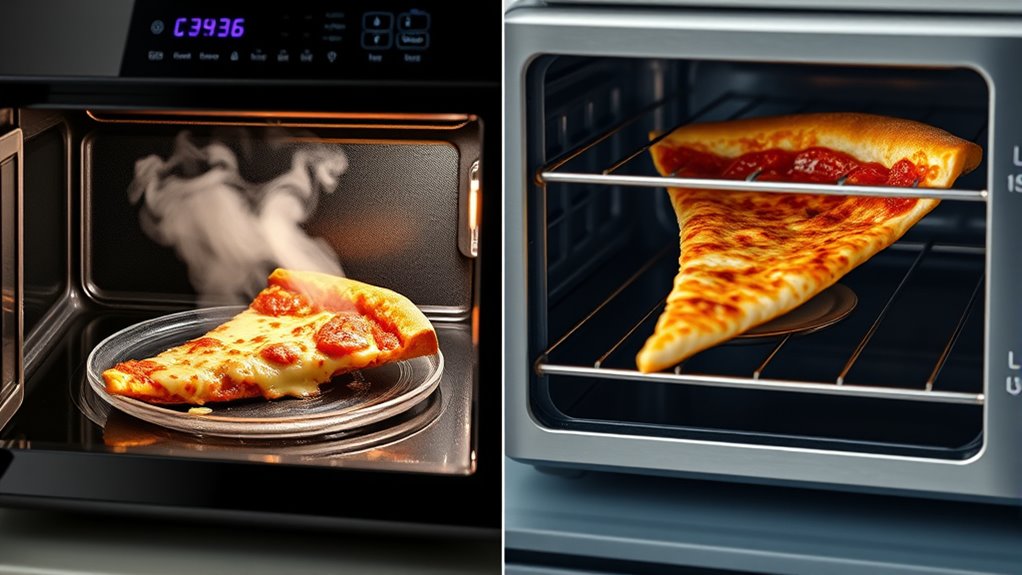
When choosing between a microwave and a toaster oven, understanding their differences can help you make the right decision for your kitchen. Both appliances excel at reheating food, but they do so in distinctly different ways. If you’re reheating leftover pizza, these differences become especially noticeable. A microwave heats food quickly by agitating water molecules, which can lead to uneven heating and soggy crusts. On the other hand, a toaster oven uses radiant heat, which helps restore the pizza’s original texture more effectively.
When you reheat pizza in a microwave, the process is fast, but it can compromise the pizza’s quality. The heat penetrates the pizza unevenly, often causing the cheese to melt unevenly and the crust to become chewy or soggy. You lose that satisfying crunch, and the crust may turn limp, which isn’t ideal if you want that perfect bite. The cheese melting in a microwave tends to be uneven as well, sometimes creating hot spots or rubbery textures. While microwave reheating is convenient, it’s not the best option if you’re craving a slice that tastes as good as when it was first baked.
Using a toaster oven changes the game. It heats more evenly and with dry, radiant heat, which helps to restore your pizza’s original texture. The crust becomes crispy again, providing that satisfying crunch you’re after. This method also promotes better cheese melting because the heat surrounds the pizza, allowing the cheese to soften uniformly without burning. Instead of a soggy mess, you get a reheated slice that looks and tastes closer to its original state. The toaster oven takes a little longer than the microwave, but the results are worth it. If you prefer your pizza hot with a crispy crust and perfectly melted cheese, then a toaster oven is your best bet.
Frequently Asked Questions
Which Method Retains the Pizza’s Original Flavor Better?
You’ll find that a toaster oven best preserves your pizza’s flavor and crispy texture. It heats evenly, maintaining the original taste and crunch, unlike a microwave which can make the crust soggy and alter flavor. By reheating in a toaster oven, you retain the pizza’s fresh, savory flavor and crispy crust, making each bite just as delicious as when it was first made.
How Energy-Efficient Are Microwave and Toaster Oven Reheating?
Reheating pizza with a microwave or toaster oven is surprisingly energy-efficient, saving you a ton on electricity bills. Microwaves use less energy overall because they heat food quickly, making them the most appliance-efficient choice. Toaster ovens, while slightly less efficient, still consume less energy than your oven. By choosing either, you’re making an energy-wise decision—saving power and helping the planet, one slice at a time.
Can Reheating Pizza in These Appliances Affect Its Texture Long-Term?
Reheating pizza in a microwave or toaster oven can impact its texture over time. You might notice the crust becoming soggy or losing its crispness, especially with the microwave, and flavor can diminish if reheated improperly. To keep your pizza tasting fresh, avoid over-reheating, and consider using the toaster oven for a crispier crust, which helps preserve flavor and texture longer.
Are There Health Concerns Associated With Reheating Pizza in These Devices?
You don’t need to worry too much about health concerns when reheating pizza in these devices, but it’s good to stay cautious. Guarantee proper food safety by reheating to the right temperature to kill bacteria. Avoid chemical leaching by not using damaged or non-food-safe containers, especially in microwaves. Using clean, appropriate cookware minimizes risks, so you can enjoy your reheated pizza without health worries.
What Is the Average Reheating Time for Each Method?
Think of reheating your pizza as tuning a guitar — each method has its own tempo. A microwave heats quickly, typically around 30 seconds to 1 minute for a slice, showcasing superior reheating speed and appliance efficiency. A toaster oven takes about 5-10 minutes, but offers more even heating. Your choice depends on whether you prioritize speed or quality, but both can get your pizza back to deliciousness.
Conclusion
Whether you choose the microwave’s quick, steamy hug or the toaster oven’s crisp, golden kiss, each method has its charm. Think of the microwave as a speedy flash of lightning—fast but fleeting—while the toaster oven is a slow, warm sunrise that brings out the best in your pizza. Whichever you pick, trust your craving’s melody. After all, reheating pizza is your personal symphony—crafted with love, patience, and a little bit of magic.