Never pour grease, fibrous foods like celery or onion skins, coffee grounds, or non-food items such as plastic and paper into your garbage disposal. Avoid putting hard foods like bones, shells, or fruit pits that can damage blades. Overloading the unit or running it without water can cause clogs or motor strain. Proper care and knowing what to avoid keep your disposal running smoothly—more tips on what not to put in it await inside.
Key Takeaways
- Avoid pouring grease, oils, or fats down the drain; they solidify and cause clogs.
- Do not put fibrous foods like celery, onion skins, or corn husks in the disposal.
- Never dispose of non-food items such as plastic, metal, or paper to prevent damage or jams.
- Refrain from putting hard objects like bones, shells, or fruit pits that can break blades.
- Do not run the disposal without water or overload it, as this can strain or damage the motor.
A garbage disposal can be a handy tool in your kitchen, but it’s not designed to handle everything you throw at it. Many people mistakenly believe they can put anything down there without consequences. In reality, certain items can damage your disposal or clog your pipes, leading to costly repairs. One common mistake is pouring dish soap directly into the disposal. While it might seem like a good way to clean it out, dish soap can create excessive suds that overflow, and it doesn’t do a thorough job of cleaning the blades or the drain. Instead, use cold water and run your disposal for a few seconds to flush out debris.
Avoid pouring dish soap directly into your disposal; it causes suds and doesn’t clean effectively. Use water and run the unit instead.
Another item to steer clear of is coffee grounds. Even though they’re small and seem harmless, coffee grounds tend to stick together and cling to the sides of your pipes. Over time, this buildup can lead to blockages that are difficult to clear. Coffee grounds don’t dissolve like other waste; they accumulate and form a sludge that hampers proper drainage. It’s best to compost coffee grounds or throw them in the trash rather than putting them in the disposal.
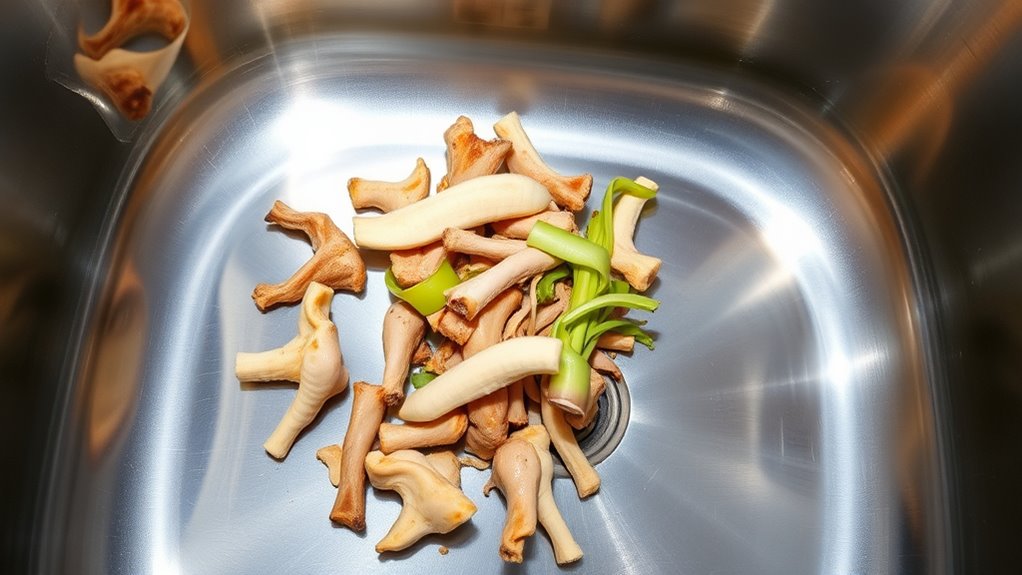
In addition to dish soap and coffee grounds, avoid putting fibrous or stringy foods like celery, onion skins, or corn husks into your garbage disposal. These items wrap around the blades or get tangled, causing jams and reducing the efficiency of your unit. Likewise, greasy or oily substances should stay far away. Pouring fats or oils down the drain might seem convenient, but they solidify as they cool, sticking to the pipes and creating stubborn clogs. Instead, wipe greasy pans with paper towels and dispose of fats in the trash.
Hard foods such as bones, shells, or fruit pits are also a no-go. These can break or dull the disposal blades, and sharp objects like shells can cause damage to the disposal’s interior. Never put non-food items—like plastic, metal, or paper—down your disposal, because they can jam or damage the motor.
Finally, avoid flushing large quantities of food waste at once. Overloading the disposal puts unnecessary strain on the motor and blades, increasing the risk of breakdowns. Always run cold water before, during, and after use to help flush waste efficiently and keep your disposal functioning smoothly. Remember, your garbage disposal isn’t a trash can—treat it with care, and it’ll serve you well for years to come. Proper disposal techniques can extend the life of your unit and prevent costly repairs.
Frequently Asked Questions
Can I Put Coffee Grounds in My Garbage Disposal?
You shouldn’t put coffee grounds in your garbage disposal because they can clump together and clog your pipes. While some suggest that eggshells help clean the blades, they’re not entirely safe, as they can also cause buildup. Instead, dispose of coffee grounds in the trash or compost, and avoid risking damage or clogs by putting these items in your disposal. Keep it running smoothly by avoiding coffee grounds and eggshells.
Is Eggshells Safe for Garbage Disposals?
Eggshells are usually safe for disposals, but the membrane can cause clumping and buildup. Imagine the frustration of a clogged sink, all from something seemingly harmless. For egg shell membrane removal, consider safer alternatives like composting or trash disposal. These methods prevent potential damage, ensuring your disposal stays functional and your plumbing remains clear. Keep your kitchen running smoothly by choosing safer, smarter disposal options instead of risking clogs.
How Often Should I Run My Garbage Disposal?
You should run your garbage disposal for about 15 seconds after each use to guarantee proper disposal and prevent buildup. Regular disposal maintenance helps extend its lifespan and keeps it functioning smoothly. Avoid overusing it, as continuous running can cause wear and tear. If you notice strange noises or slow draining, give it a break and check for clogs. Proper care keeps your disposal efficient and lasts longer.
Can I Put Citrus Peels in the Disposal?
Yes, you can put citrus peels in your disposal, but do so in moderation. Citrus oils from the peels can help freshen up the disposal and eliminate odors. However, avoid overloading the peel disposal, as the oils can be harsh on your plumbing and disposal components over time. Run cold water while grinding the peels, and consider using small amounts to keep your disposal running smoothly.
What Should I Do if My Disposal Is Jammed?
Did you know that over 50% of disposal issues are caused by improper use? If your disposal is jammed, turn off the power first. Use tongs or pliers to remove any visible objects, then press the reset button. Regular disposal maintenance and avoiding hard or fibrous items help prevent jams. Keep blades sharp and avoid putting unsuitable materials in to guarantee smooth operation and longer disposal life.
Conclusion
Avoid putting these items in your garbage disposal to prevent costly repairs. Did you know that over 80% of plumbing calls are due to improper disposal habits? By steering clear of things like grease, fibrous vegetables, and non-food items, you can extend your disposal’s lifespan and keep your kitchen running smoothly. Remember, a little caution goes a long way in maintaining a healthy, functional garbage disposal and avoiding unnecessary expenses.