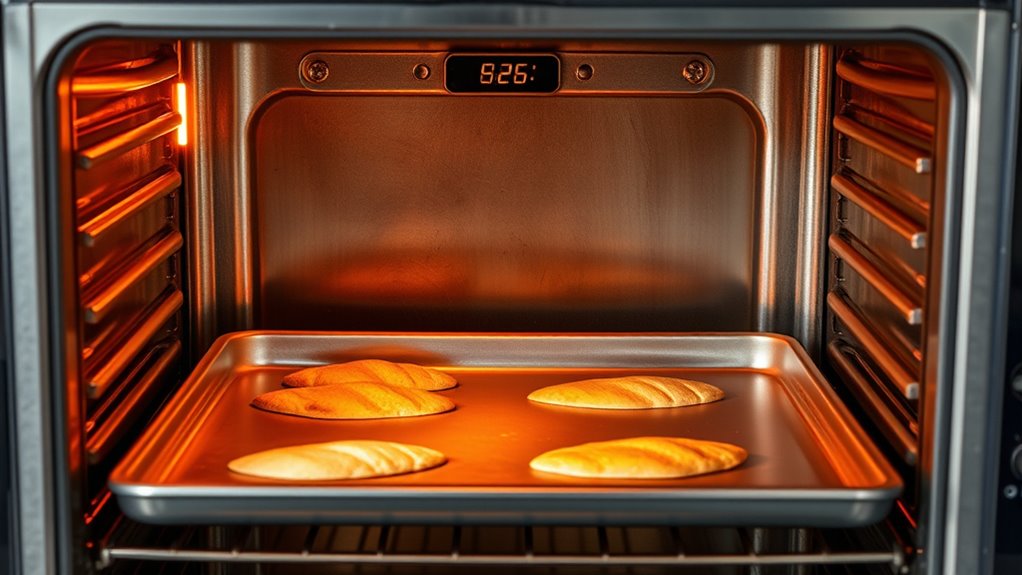
If your oven is cooking unevenly, it might be due to inaccurate temperature settings or hot spots inside. To fix this, use an oven thermometer to check the actual temperature and compare it with the display. Many modern ovens let you calibrate the temperature through settings or menus—just follow your manual. Regular calibration helps guarantee steady results. Keep exploring to discover how you can fine-tune your oven for perfect cooking every time.
Key Takeaways
- Use an oven thermometer to check actual temperature and identify discrepancies with the set temperature.
- Inaccurate temperature or hot spots can cause uneven cooking; calibration can help correct this.
- Many modern ovens have built-in calibration features to adjust temperature settings easily.
- Calibrate your oven by adjusting the temperature a few degrees based on thermometer readings.
- Regular calibration and maintenance ensure consistent, even cooking and baking results.
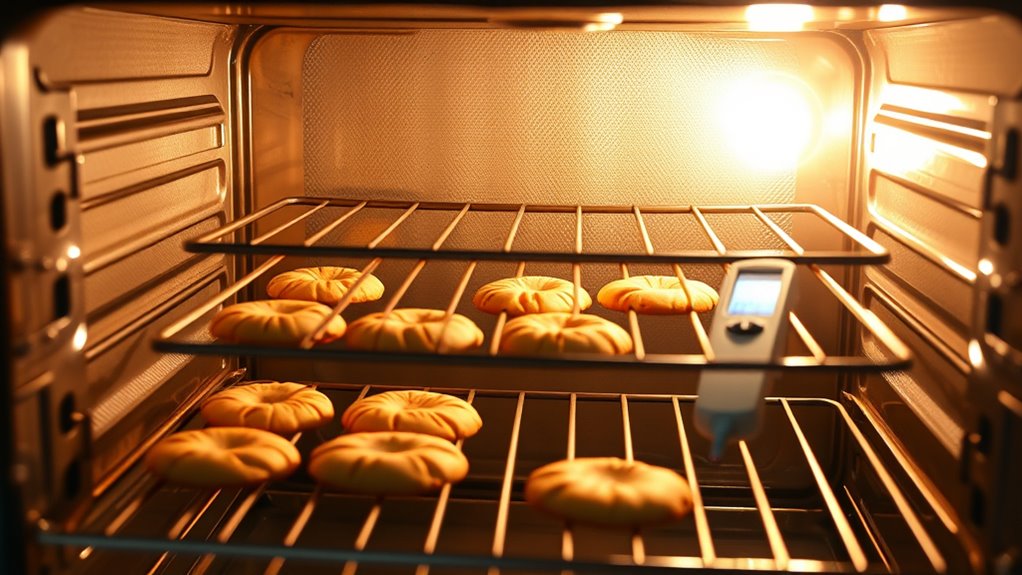
If your oven is cooking unevenly, it can be frustrating and confusing. You might notice that your baked goods turn out with spots that are overdone while others are undercooked, or that your roasts aren’t as tender as they should be. The root cause often comes down to inaccuracies in the oven temperature, which directly impacts your baking consistency. When your oven’s temperature isn’t precise, it throws off the entire cooking process, making it hard to achieve the results you want. Fortunately, you can calibrate your oven to improve its accuracy, ensuring more even cooking and better baked goods.
Uneven oven heat can ruin your baking; calibrate your oven for consistent, delicious results every time.
First, you need to determine if your oven’s temperature is off. A simple way is to use an oven thermometer—place it in the center of the oven and set the oven to a specific temperature, like 350°F. After about 15-20 minutes, check the thermometer. If it reads higher or lower than the setting, your oven’s temperature is inaccurate. This discrepancy is often why your baked items may burn on the edges but remain raw inside or why certain spots get hotter than others. Once you know the difference, you can adjust your oven’s calibration to restore proper baking consistency.
Many modern ovens have a built-in calibration feature, allowing you to tweak the temperature setting by a few degrees. Check your user manual for instructions on how to access this feature. Typically, it involves pressing a combination of buttons or navigating through the oven’s menu. If your oven doesn’t have this option, don’t worry—you can manually adjust your baking techniques. For example, if your oven runs hot, you might lower the temperature by 5 to 10 degrees when baking. Conversely, if it runs cool, increasing the temperature slightly can help. Keep in mind that these are just estimates; the key is to test and adjust gradually until your oven maintains a more accurate temperature.
Calibrating your oven enhances baking consistency, helping your baked goods come out evenly browned and cooked through. This simple step improves not only your baking results but also your confidence in your oven’s performance. Regular calibration is a good idea, especially if you notice a sudden change in cooking results or if your oven is older. Remember, an accurately calibrated oven ensures your recipes turn out as intended, saving you time and frustration. Proper oven calibration involves understanding the contrast ratio, which affects how well your oven can produce a range of black and white levels in images or baked goods. Ultimately, taking the time to calibrate your oven means you’ll enjoy more predictable, delicious results with every bake, making your cooking experience more enjoyable and consistent.

AcuRite 00620A2 Stainless Steel Oven Thermometer (150°F to 600°F)
Oven and grill safe for leave-in use while cooking
As an affiliate, we earn on qualifying purchases.
As an affiliate, we earn on qualifying purchases.
Frequently Asked Questions
How Often Should I Calibrate My Oven?
You should calibrate your oven every 1-2 years or if you notice uneven cooking or temperature discrepancies. Use calibration techniques like a simple oven thermometer to check the actual oven temperature against the dial setting. If there’s a difference, adjust the oven’s temperature settings accordingly. Regular calibration guarantees consistent oven temperature, helping you achieve perfectly cooked meals every time.
Can Uneven Cooking Be Caused by Faulty Heating Elements?
Yes, faulty heating elements can cause uneven cooking by disrupting oven temperature accuracy. When your heating element issues, it might not heat evenly or maintain consistent heat, leading to cold spots or overheated areas. This impacts how your food cooks, making calibration less effective. You should inspect your heating elements regularly and replace any that show signs of damage to guarantee your oven heats evenly and maintains proper temperature accuracy.
Does the Oven Door Seal Affect Cooking Consistency?
Yes, a faulty oven door seal can affect your cooking consistency. When the seal isn’t tight, heat escapes, causing uneven temperatures inside the oven. This leads to inconsistent cooking results and longer cooking times. To fix this, check the oven door seal regularly, replace it if it’s damaged, and ensure it closes tightly. Maintaining a good seal helps sustain a stable temperature and even cooking every time you bake or roast.
Are There Specific Foods More Prone to Uneven Cooking?
Certain foods, like baked goods and casseroles, are more prone to uneven cooking due to their baking challenges. You might notice your bread or cakes develop hot spots, leading to inconsistent texture and food quality. To improve results, make sure your oven is properly calibrated, use oven thermometers, and rotate dishes midway. These steps help guarantee even heat distribution, reducing baking challenges and giving you better, more consistent food quality.
What Tools Do I Need to Calibrate My Oven?
Imagine your oven as a symphony needing perfect tuning. To calibrate it, you’ll need basic kitchen tools like an oven thermometer, screwdriver, and possibly an oven calibration chart. Use calibration techniques to adjust the temperature dial or control panel. An oven thermometer provides accurate readings, guiding you to make precise adjustments. With these tools and techniques, you can guarantee your oven cooks evenly, turning every dish into a culinary masterpiece.
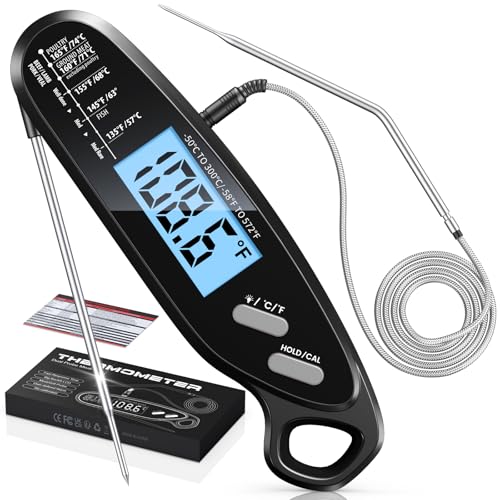
Vuwwey Instant Read Meat Thermometer Digital with Dual Probe, Food Thermometer for Cooking & Grilling, Large Backlit & Calibration, Grill Thermometer for Outside/Kitchen/Oven//Smoker/BBQ/Baking, Black
【Dual Safe Probes for Multi-Use】Vuwwey meat thermometer probe is great for meat, liquids, oil frying, baking, candy making,…
As an affiliate, we earn on qualifying purchases.
As an affiliate, we earn on qualifying purchases.
Conclusion
Now that you know how to spot and fix uneven cooking, you’ll enjoy perfectly baked dishes every time. Did you know that an improperly calibrated oven can cause temperature inaccuracies of up to 20°F? That’s enough to make your favorite recipes turn out inconsistent. Regularly calibrating your oven not only improves cooking results but also extends its lifespan. So, take a few minutes to calibrate your oven — your taste buds will thank you!

Hotloop Digital Oven Thermometer Heat Resistant up to 572°F/300°C, LCD
EASY READING: you can see the actual temperature that your oven is registering with the digital LCD display,…
As an affiliate, we earn on qualifying purchases.
As an affiliate, we earn on qualifying purchases.

Rattleware 5-Inch Dial Thermometer Kit, Stainless Steel Easy Steam Probe with 1.75-Inch Dial NSF Approved Calibration Tool and Adjustable Clip for Barista Milk Temperature Control
𝐃𝐔𝐑𝐀𝐁𝐋𝐄 𝐁𝐔𝐈𝐋𝐃 𝐀𝐍𝐃 𝐒𝐈𝐌𝐏𝐋𝐄 𝐂𝐀𝐋𝐈𝐁𝐑𝐀𝐓𝐈𝐎𝐍: The milk thermometer is built to withstand daily cafe use and frequent cleaning….
As an affiliate, we earn on qualifying purchases.
As an affiliate, we earn on qualifying purchases.