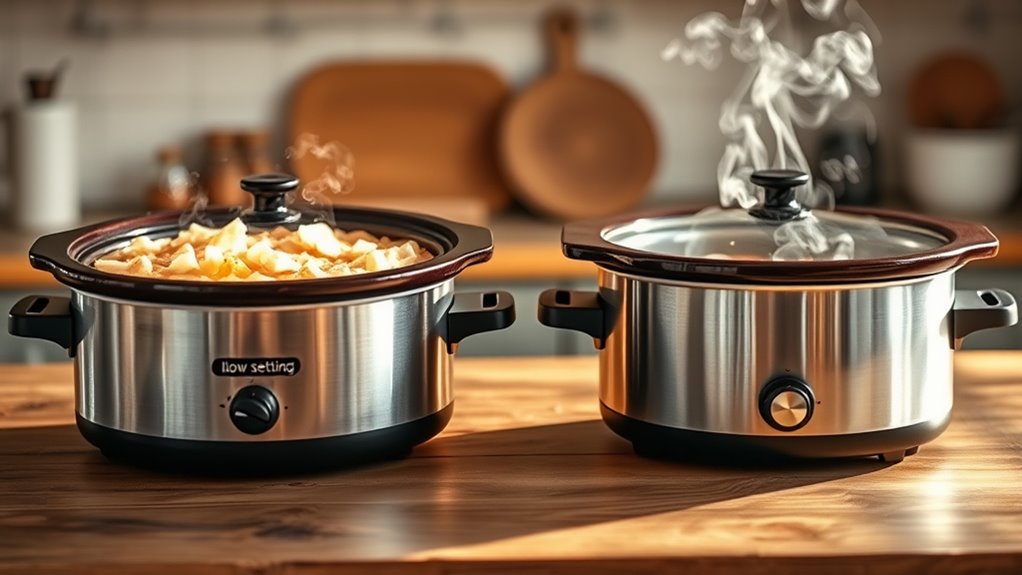
When you cook on high in a slow cooker, it usually takes about half the time as on low, so you can expect 3 to 4 hours instead of 6 to 8 hours. High heat speeds up the cooking process, but be careful not to overcook delicate ingredients. If you want to learn about how this affects flavors and textures, keep exploring more tips and insights.
Key Takeaways
- High setting cooks food in about 3 to 4 hours, while low takes 6 to 8 hours or more.
- Higher temperature speeds up the cooking process but risks overcooking delicate ingredients.
- Low setting allows for longer cook times, resulting in tender, flavor-rich dishes.
- Quick meals are better suited for high heat, whereas slow, low heat enhances flavor development.
- Adjusting between high and low depends on recipe type and desired tenderness or flavor depth.
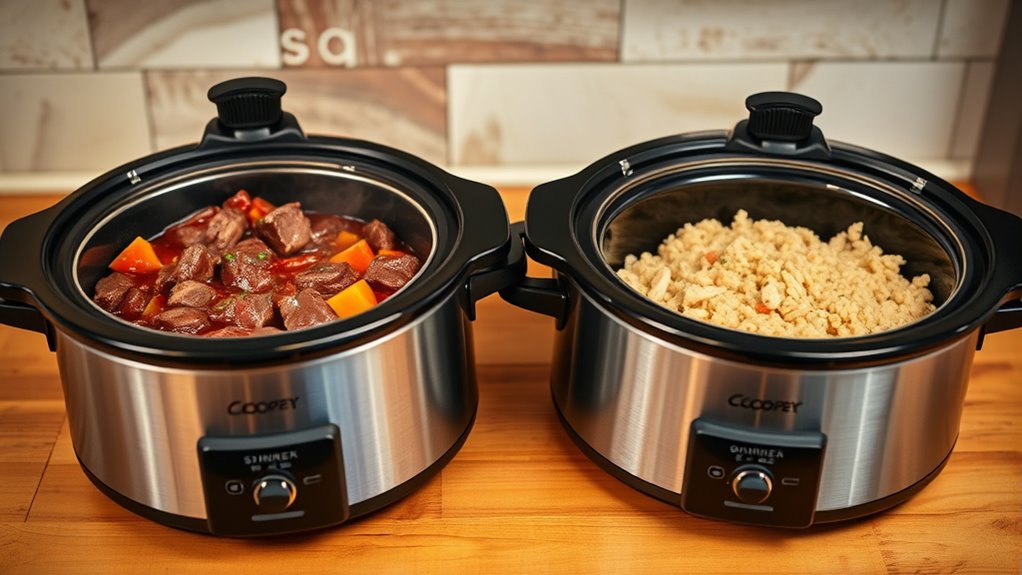
When using a slow cooker, choosing between the high and low settings can substantially impact your meal’s outcome. One of the key differences lies in the cooking temperature, which directly influences how your food develops flavor. On the high setting, the temperature is typically between 300°F to 325°F, while the low setting hovers around 200°F to 225°F. This difference in temperature affects not just how quickly your dish cooks but also how flavors meld and intensify over time.
Cooking at a high temperature speeds up the process, meaning your meal will be ready in a shorter period—usually around 3 to 4 hours for many recipes. This is convenient when you’re short on time but still want to enjoy a flavorful, well-cooked dish. However, because the cooking temperature is higher, there’s a risk of overcooking delicate ingredients or drying out certain foods if you’re not careful with timing. On the other hand, the low setting allows for a gentler, slower cook, often taking 6 to 8 hours or more. This extended cooking time lets flavors develop more fully, especially in tough cuts of meat or stews, resulting in tender, melt-in-your-mouth textures.
High heat cooks faster but risks overcooking delicate ingredients; low heat yields tender, flavor-rich results over time.
Flavor development is profoundly influenced by the temperature you choose. When you cook on high, the faster heat can sometimes cause ingredients to sear or brown quickly, adding depth to the flavor. But it may also prevent some subtle flavors from fully emerging, as the shorter cooking time doesn’t allow ingredients to fully break down and meld together. Conversely, cooking on low gives ingredients ample time to release their flavors gradually, creating a richer, more integrated taste profile. This slow process allows spices, herbs, and seasonings to infuse deeply into the dish, enhancing overall flavor complexity. Additionally, understanding how temperature affects color accuracy can help you better control the visual appeal of your dish during cooking.
Ultimately, your choice depends on the dish you’re preparing and your schedule. If you’re in a rush, high heat can be a practical option, but for deeper flavor and better tenderness, low heat is usually preferable. Keep in mind that both settings can produce delicious results when used appropriately, but understanding how cooking temperature influences flavor development helps you make smarter decisions. So, next time you’re setting your slow cooker, consider what you want from your meal—speed or depth of flavor—and adjust the setting accordingly to get the best possible outcome.
Top picks for "slow cooker high"
Open Amazon search results for this keyword.
As an affiliate, we earn on qualifying purchases.
Frequently Asked Questions
Can I Switch Between High and Low Settings During Cooking?
Yes, you can switch between high and low settings during cooking, but do so carefully to maintain cooking consistency. Setting switch can affect the dish’s texture and timing, so it’s best to keep changes minimal and avoid frequent toggling. If you need to adjust, do it early in the cooking process and monitor your food closely. This way, you guarantee even cooking and avoid disrupting the overall outcome.
How Does Altitude Affect Cooking Times on High Vs Low?
Remember, “the higher you go, the longer it takes,” and altitude greatly impacts your slow cooker’s cooking time. You’ll need to make altitude adjustments because cooking time variations increase at higher elevations. As you cook on high or low, expect longer times to achieve tender results due to lower boiling points and reduced pressure. Keep an eye on your dish, and don’t be surprised if it takes a bit longer than usual.
Are There Recipes That Only Work on a Specific Setting?
Yes, some recipes are setting specific dishes due to their ingredients and cooking method. For example, delicate seafood or quick-cooking vegetables often require the low setting to prevent overcooking, while tough cuts of meat may need the high setting for proper tenderization. You should check the recipe compatibility before choosing a setting, as using the wrong one can affect texture, flavor, and overall success of your dish.
Does the Type of Meat Influence Whether to Use High or Low?
Yes, the type of meat influences whether you should use high or low. For tender meats like chicken breasts, high heat helps reduce cooking time without sacrificing tenderness. For tougher cuts like brisket or pork shoulder, low heat ensures meat becomes tender and maintains consistent cooking results. Choosing the right setting based on meat tenderness helps you achieve ideal flavor and texture, making your slow-cooked dishes more delicious.
How Do I Adjust Cooking Times if I Forget to Switch Settings?
If you forget to switch settings, you can adjust the temperature by extending or reducing the cooking time. For instance, if you realize late that you used high instead of low, add extra cooking time to guarantee thorough cooking, or reduce it if you used low unintentionally. Keep an eye on your dish’s consistency and use a meat thermometer if needed, to make sure it’s cooked properly.
Conclusion
Choosing between slow cooker high and low depends on your schedule and meal timing. Did you know that recipes cooked on high typically take about half the time of low settings? For example, a stew that takes 8 hours on low might only need 4 hours on high. So, understanding these differences helps you plan better and get delicious results whether you’re in a hurry or savoring a slow cook.