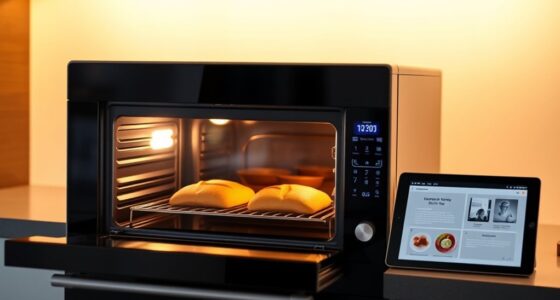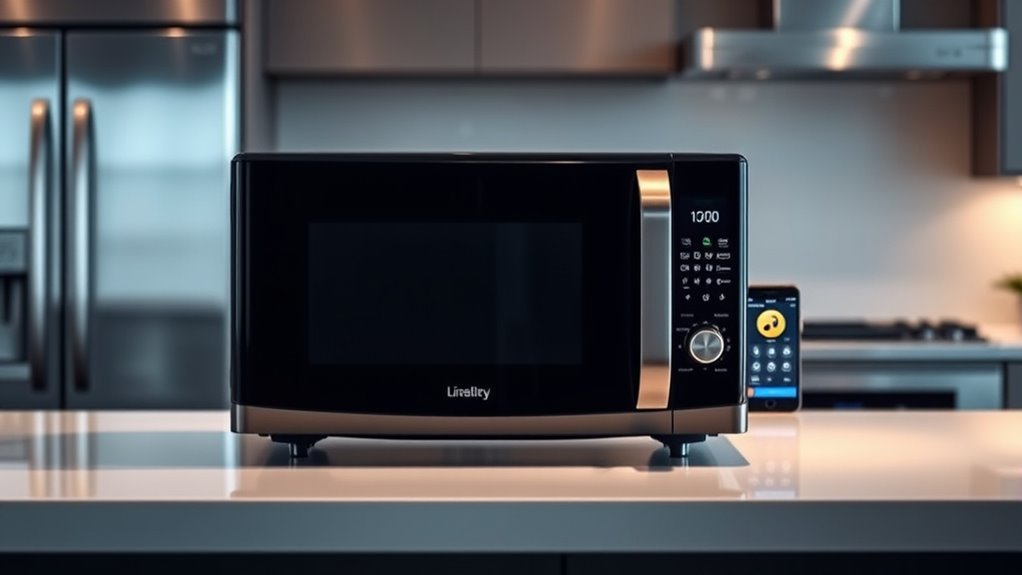

Smart microwave ovens can seem like a great upgrade, offering convenience with features like remote control, voice commands, and app integration. However, their usefulness often depends on the reliability of Wi-Fi connections and how well the AI functions for your needs. For tech-savvy users, they offer real benefits, but others might find them more gimmicky than practical. Want to discover if these features truly deliver or just add complexity? Keep exploring to find out more.
Key Takeaways
- Smart microwave ovens offer convenience through remote control and automation but may face connectivity issues and glitches.
- Advanced features like AI and voice control enhance usability but can sometimes cause misinterpretations or require troubleshooting.
- For tech-savvy users, smart microwaves provide personalized cooking and integration with smart home systems; others may prefer simplicity.
- The additional cost and potential reliability concerns might outweigh benefits if the tech malfunctions or isn’t fully developed.
- Overall, smart microwaves are a useful upgrade for those seeking automation, but traditional models remain reliable and straightforward options.

Smart microwave ovens promise to revolutionize your kitchen with features like Wi-Fi connectivity, voice control, and app integration. These innovations are designed to make your cooking experience more seamless and efficient. With AI integration at their core, these appliances can recognize patterns, suggest cooking times, and even adapt to your preferences over time. The idea is to enhance user convenience, eliminating guesswork and reducing the effort needed to prepare meals. You can simply tell your microwave what you want to cook, and it will automatically adjust settings for ideal results. This level of automation aims to save you time, streamline routines, and make your kitchen smarter.
However, as impressive as these features sound, it’s worth questioning whether they truly deliver on their promises or if they’re just a tech gimmick. While AI integration can indeed offer personalized suggestions and automate certain tasks, it’s not always flawless. Sometimes, the microwave might misinterpret voice commands or struggle to connect to Wi-Fi, causing frustration instead of convenience. You might find yourself spending more time troubleshooting connectivity issues or adjusting settings manually, which defeats the purpose of having a smart appliance in the first place. The sophistication of AI is still evolving, and in some cases, it may not be advanced enough to replace traditional, straightforward microwave controls.
Additionally, the effectiveness of these smart features can depend heavily on the technology’s reliability, which varies between brands and models. User convenience is a key selling point for these smart devices, but it depends heavily on your tech comfort level. If you’re tech-savvy and enjoy experimenting with new gadgets, you’ll likely appreciate the features and find them useful. You can preheat your microwave remotely or check on your food’s progress from anywhere using an app. For others, however, these added functionalities might feel unnecessary or even complicated. The more complex a device’s system becomes, the more potential there is for glitches, updates, and compatibility issues to interfere with your everyday use. If your priority is simple, reliable performance, a traditional microwave might still be the better choice.
In essence, smart microwave ovens can offer significant user convenience when they work properly and suit your lifestyle. They do bring cutting-edge AI integration into your kitchen, promising a more intuitive cooking experience. But, it’s essential to weigh whether these features justify the extra cost and potential hassle. Are you genuinely ready to embrace a more connected, automated kitchen, or do you prefer the simplicity and reliability of conventional appliances? In the end, it’s about finding the right balance between modern innovation and practical usability in your cooking routine.
Frequently Asked Questions
Are Smart Microwave Ovens Energy-Efficient Compared to Traditional Models?
Smart microwave ovens can be more energy-efficient than traditional models because they often have better power management features and lower standby mode consumption. You’ll notice they use less power when idle, thanks to advanced standby modes. However, their overall efficiency depends on usage patterns and settings. If you operate them wisely, smart microwaves can save energy, but be mindful of extra features that might increase power consumption when in use.
Can Smart Microwave Ovens Be Controlled via Voice Commands Reliably?
You can control smart microwave ovens with voice commands, but voice command reliability varies depending on your device and environment. Usually, they offer decent control accuracy, but background noise or unclear speech can cause issues. To guarantee smooth operation, speak clearly and minimize noise. While convenient, don’t rely solely on voice control for critical functions—double-check settings to avoid mistakes. Overall, they work well if your setup is optimized for voice commands.
Do Smart Features Significantly Improve Cooking Results or Convenience?
Smart features can turn your microwave into a precision tool, like a conductor guiding an orchestra, enhancing both cooking results and user convenience. They simplify tasks, adapt to your preferences, and help prevent overcooking or undercooking. While they don’t revolutionize every meal, these features make everyday cooking more reliable and effortless, giving you greater confidence and saving time in the kitchen.
How Secure Are the Wi-Fi Connections in Smart Microwave Ovens?
You should know that Wi-Fi security in smart microwave ovens varies, but many use encryption protocols like WPA2 or WPA3 to protect your connection. While these measures help prevent unauthorized access, no system is completely foolproof. To keep your Wi-Fi connection secure, verify your router’s firmware is updated regularly, use strong passwords, and disable remote access if you don’t need it. Staying vigilant helps safeguard your smart appliances.
Are Smart Microwave Ovens Compatible With Other Smart Home Devices?
Yes, smart microwave ovens are compatible with other smart home devices, enabling seamless smart home integration. You can connect your microwave to your smart hub or voice assistants like Alexa or Google Assistant, making kitchen automation effortless. This compatibility allows you to control your microwave remotely, set timers, or start cooking with simple commands, enhancing convenience and making your kitchen smarter and more efficient.
Conclusion
So, as you stand before these “smart” microwaves, remember they’re more than just shiny gadgets—they’re potential game-changers or clever tricks. It’s easy to get caught in the hype, but ultimately, it’s your kitchen, your choice. Will you embrace the tech symphony, or see it as a passing breeze? Trust your gut, pick what truly serves you, and let your countertop become a stage for your culinary rhythm, not just a showcase for gadgets.