
Your toaster oven might trip the circuit breaker if its power demands exceed the circuit’s capacity or if there’s faulty wiring or loose connections. High wattage appliances draw more current, and plugging them into a standard outlet without proper calibration can overload the circuit. Additionally, damaged wiring or outdated electrical systems can cause faults, leading to trips. To prevent this, make sure your appliance matches your circuit’s limits and consider inspecting for wiring issues to keep safety intact. If you continue exploring, you’ll discover more ways to resolve these problems effectively.
Key Takeaways
- Overloading the circuit with a high-wattage toaster oven can cause the breaker to trip.
- Faulty or damaged wiring increases electrical resistance, leading to trips under load.
- Using extension cords or incompatible outlets may create poor connections, triggering circuit protection.
- Multiple high-power appliances on the same circuit can exceed capacity and trip the breaker.
- The breaker may trip if the toaster oven’s power requirements surpass the circuit’s rated capacity.
If your toaster oven keeps tripping the circuit breaker, it’s a sign that something’s wrong with either the appliance or your electrical system. This issue often stems from wiring safety concerns or a mismatch between the appliance’s power needs and your circuit’s capacity. When an appliance repeatedly causes a breaker to trip, it’s your way of alerting you to potential hazards, so addressing it promptly is vital.
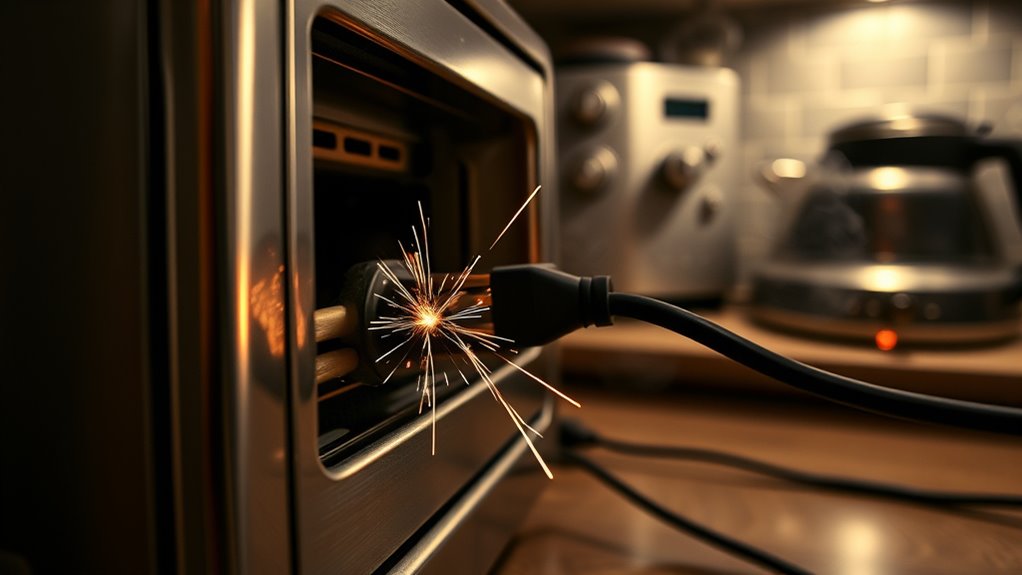
One common cause relates to wiring safety. Faulty or degraded wiring within the toaster oven or in your home’s electrical system can cause short circuits or overloads, leading the breaker to trip as a protective response. If the internal wiring isn’t properly insulated or has become damaged over time, it increases the risk of sparks, fires, or appliance failure. Ensuring that all wiring connections are secure and up to code is essential. If you’re not familiar with electrical work, it’s best to have a professional inspect the wiring to identify any issues. Proper wiring safety not only prevents tripping but also safeguards your home and family from potential hazards.
Faulty wiring or damage inside the toaster oven can cause shorts and trip the breaker.
Another significant factor is appliance compatibility. Toaster ovens are designed to operate within specific electrical parameters, usually indicated on their labels. If your toaster oven requires a certain voltage or wattage that exceeds your circuit’s capacity, it will draw more current than the breaker can handle, causing it to trip. For example, plugging a high-wattage toaster oven into a standard 15-amp circuit may lead to overloads. Always check the appliance’s specifications and compare them with your electrical system’s capacity. Using a dedicated circuit for high-power appliances is a wise move to prevent overloads and ensure smooth operation.
Additionally, consider whether your toaster oven’s plug and outlet are compatible. Using an incompatible outlet or extension cord can create poor connections and increase the risk of electrical faults. Always plug your toaster oven directly into a grounded, properly rated outlet. If you notice frequent tripping, verify that your circuit breaker is appropriate for the appliance’s load. Sometimes, replacing a standard breaker with a higher-rated one isn’t advisable, as it can compromise safety. Instead, you might need to upgrade your electrical system or add a dedicated circuit for your appliance.
Furthermore, understanding the electrical load and how it interacts with your home’s wiring can help prevent recurrent issues and ensure safe operation of your toaster oven.
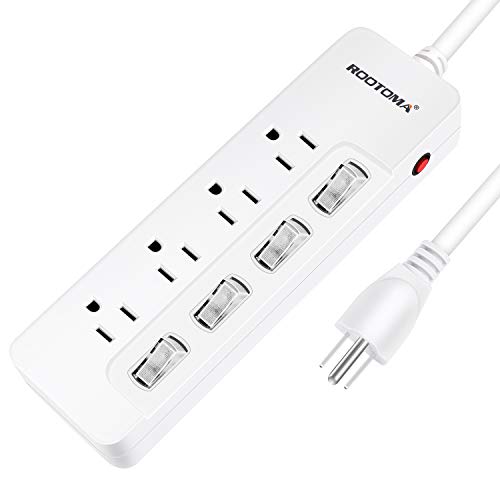
Appliance Extension Cord with Individual Switches on Off – 6 FT, 14 Gauge Heavy Duty Extension Cord with 4 AC Outlets, Wall Mountable, High Wattage for Microwave Workbench Garage Must Have, ETL Listed
【Convenient Individual on off Switches】ROOTOMA 4 AC Outlet 6ft Surge Protector power strip has 4 separate switches. It…
As an affiliate, we earn on qualifying purchases.
As an affiliate, we earn on qualifying purchases.
Frequently Asked Questions
Can a Faulty Toaster Oven Cause Electrical Fires?
Yes, a faulty toaster oven can cause electrical fires by creating electrical hazards. If the appliance has damaged wiring or a malfunctioning heating element, it may overheat or spark, increasing fire risk. To guarantee appliance safety, regularly inspect your toaster oven for signs of damage, avoid overloading circuits, and unplug it when not in use. Staying vigilant helps prevent electrical hazards and keeps your home safe.
How Do I Reset a Tripped Circuit Breaker?
You might be surprised how easy it is to reset a tripped circuit breaker. First, locate your breaker box, then find the switch that’s in the “off” position or between “off” and “on.” Flip it fully to “off,” wait a few seconds, then switch it back to “on.” This resets the circuit, ensuring electrical safety. Regular circuit maintenance helps prevent future trips and keeps your home safe.
Is It Safe to Use a Toaster Oven on a Shared Circuit?
Using a toaster oven on a shared circuit can be risky if the appliance isn’t compatible with the circuit’s electrical load. You might trip the breaker if the combined power draws too much current, causing inconvenience or potential hazards. To stay safe, check your shared circuit’s capacity and make certain your toaster oven’s wattage doesn’t overload it. If unsure, consult an electrician for proper appliance compatibility and safe usage.
What Amperage Should My Circuit Breaker Be for a Toaster Oven?
Think of your circuit breaker as a vigilant gatekeeper, ready to step in when the load gets too heavy. For most toaster ovens, a 15-amp circuit breaker fits the bill, matching their power requirements and ensuring smooth operation. If your oven has higher wattage, like 1800 watts, a 20-amp circuit might be necessary. Always check the appliance’s power requirements and match it to your circuit capacity for safe, reliable use.
How Often Should I Have My Home’s Wiring Inspected?
You should have your home’s wiring inspected every 3 to 5 years, especially if you notice wiring corrosion or outdated panels. Regular inspections help identify potential issues before they cause problems, like tripped breakers or electrical fires. If your home is older or shows signs of wear, more frequent checks are wise. Staying proactive guarantees your wiring remains safe and reliable, preventing costly repairs and enhancing your home’s safety.

RKURCK Thermal Circuit Breaker 20 Amps, Thermal Overload Protector L1 Series 125-250V AC 50V DC Push Button Manual Reset Circuit Breaker 20A 2 Pcs
Compact, single pole, push-to-reset thermal circuit breakers
As an affiliate, we earn on qualifying purchases.
As an affiliate, we earn on qualifying purchases.
Conclusion
Now, understanding your toaster oven’s electrical load means recognizing when it’s too much, when it’s overloading, and when it’s causing your circuit breaker to trip. By managing your appliance’s power, avoiding overloads, and ensuring proper wiring, you prevent trips, protect your electronics, and keep your kitchen running smoothly. Remember, a well-balanced load is a safe load, a safe load is a happy home, and a happy home is a worry-free kitchen.
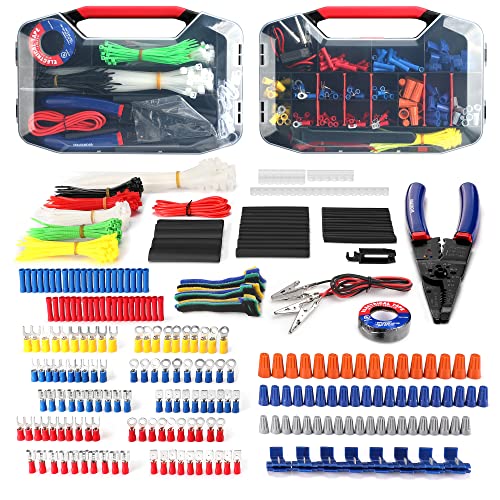
WORKPRO 582-piece Crimp Terminals, Wire Connectors, Heat Shrink Tube, Electrical Repair Kit with Wire Cutter Stripper
Assorted 582 electrical wire terminals and other accessories with transparent box for easy access
As an affiliate, we earn on qualifying purchases.
As an affiliate, we earn on qualifying purchases.

Klein Tools RT110 Outlet Tester, AC Electrical Receptacle Tester for North American Outlets
CLEAR LIGHT SEQUENCE: Outlet tester's light sequence indicates correct/incorrect wiring, ensuring easy identification of wiring issues
As an affiliate, we earn on qualifying purchases.
As an affiliate, we earn on qualifying purchases.